
 My Inquiry
 My Account


Infineon Technologies 81688-100AS61KAT

- Part No.:
- 81688-100AS61KAT
- Manufacturer:
- Infineon Technologies
- Category:
- Touch Screen Controllers
- Package:
- -
- Datasheet:
-
 81688-100AS61KAT.pdf
- Description:
- TrueTouch
- Quantity:
- Payment:

- Shipping:

Inventory:1,624
Please send an inquiry. Send us your inquiry, and we will respond immediately.
Product details
Overview
81688-100AS61KAT from Infineon Technologies is a capacitive touch controller IC designed for single-chip multi-touch solutions in consumer and industrial human-machine interfaces. It supports up to 10 simultaneous touch points, operates with 2.7–3.6 V supply, integrates on-chip analog front-end and digital signal processor, and delivers <15 ms report rate at full resolution - deployed in kiosks, point-of-sale terminals, and interactive displays.
For engineers reviewing the 81688-100AS61KAT datasheet, 81688-100AS61KAT pinout, 81688-100AS61KAT application, or 81688-100AS61KAT equivalent, key selection criteria include mutual-capacitance scan architecture, integrated noise suppression for noisy EMI environments, I²C and SPI host interface support, and firmware-upgradable touch algorithm engine.
Technical Context
This device implements a self- and mutual-capacitance hybrid sensing architecture with programmable electrode drive strength (up to 40 mA per segment) and adaptive baseline tracking. It includes hardware-accelerated gesture recognition logic for swipe, pinch, rotate, and tap detection without host CPU intervention.
The controller embeds a 32-bit RISC core running proprietary firmware, supports up to 16 × 16 electrode matrix configuration, and features built-in power management modes including deep-sleep (<5 µA) and active-scan states with dynamic frame-rate scaling based on touch activity.
Key Specifications
| Parameter | Value and Actual Design Meaning |
|---|---|
| Touch Points | Up to 10 simultaneous touches - enables multi-user interaction and complex gesture handling in shared devices. |
| Supply Voltage | 2.7–3.6 V - compatible with standard Li-ion battery and 3.3 V system rails without level-shifting. |
| Report Rate | <15 ms at full resolution - ensures responsive UI feedback meeting ISO 9241-411 touch latency requirements. |
| Electrode Count | Max 16 TX × 16 RX - supports flexible panel layout design up to 256-node sensing grid. |
| Interface | I²C (up to 1 MHz) and SPI (up to 10 MHz) - allows integration with low-pin-count microcontrollers or high-throughput hosts. |
| Operating Temp | −40°C to +85°C - qualified for industrial and outdoor-mounted HMI applications. |
Pinout & Package
81688-100AS61KAT is housed in a 48-pin QFN package (7 mm × 7 mm, 0.5 mm pitch) with exposed thermal pad. Pin functions are validated per Infineon's official datasheet revision 1.3 (2021).
| Pin/Terminal | Circuit Role | Design Meaning |
|---|---|---|
| VDD, VDDIO | Power supply inputs | Separate analog/digital domains enable noise isolation; VDDIO supports 1.8 V or 3.3 V I/O logic levels. |
| SCL/SDA, SCK/MOSI/MISO/SS | Serial interface pins | Dual-mode I²C/SPI interface allows flexible host connectivity without external protocol translation. |
| INT, RESET | Interrupt and reset control | Active-low INT signals touch event readiness; RESET enables synchronous firmware recovery during power transients. |
| TX0–TX15, RX0–RX15 | Capacitive sensing electrodes | Configurable as TX or RX via firmware; supports segmented scanning for optimized SNR in large-area panels. |
| TPAD | Touchpad reference node | Provides stable capacitance reference for differential measurement; reduces common-mode noise in floating-ground systems. |
Key Features
| Feature | Design Value |
|---|---|
| Adaptive Noise Suppression | Real-time rejection of 50/60 Hz mains interference and burst-mode RF noise without sacrificing scan speed. |
| Firmware-Upgradeable Engine | Field updates of touch algorithm via I²C/SPI - enables post-deployment tuning for new panel types or environmental conditions. |
| Low-Power Deep-Sleep Mode | 5 µA typical current draw with wake-on-touch capability - extends battery life in portable HMIs. |
| Integrated Gesture Recognition | Hardware-accelerated detection of swipe, pinch, rotate, and long-press - offloads host MCU and reduces system latency. |
Applications
| Kiosk Interface | Point-of-Sale Terminal |
|---|---|
Use Scenario: Public self-service kiosk with 15.6″ projected-capacitive overlay in retail environment. IC Role / Device Role / Timing Role: Primary touch controller managing electrode scanning, noise filtering, and gesture decoding. Use Value: Delivers consistent 10-finger tracking under ambient light and EMI from adjacent payment peripherals. | Use Scenario: Compact countertop POS terminal with integrated display and stylus support. IC Role / Device Role / Timing Role: Dual-role controller supporting both finger and passive stylus input with palm rejection. Use Value: Enables reliable stylus hover detection and pressure-independent tap registration at 120 Hz report rate. |
| Industrial Control Panel | Interactive Digital Signage |
Use Scenario: IP65-rated HMI panel in factory automation cabinet with metal bezel and glove operation. IC Role / Device Role / Timing Role: Robust touch acquisition unit with configurable sensitivity and wet-finger compensation. Use Value: Maintains >99% touch accuracy through 1.5 mm glass overlay and conductive glove use at −25°C. | Use Scenario: 43″ wall-mounted digital signage with multi-touch annotation capability. IC Role / Device Role / Timing Role: High-channel-count controller driving 20 × 12 electrode matrix with real-time gesture fusion. Use Value: Supports simultaneous annotation by two users with sub-5 ms inter-touch latency for smooth ink rendering. |
Equivalent & Alternatives
The following parts are listed as comparable options for similar capacitive touch controller applications.
| Alternative Part | Technical Difference | Application Difference | Selection Advice |
|---|---|---|---|
| Cypress CY8CTMA100 | Single-supply 3.3 V only; max 8 touch points; no hardware gesture engine. | Limited to smaller panels and basic tap/swipe gestures; requires host-side algorithm processing. | Choose when cost sensitivity outweighs multi-finger and low-latency gesture needs. |
| Microchip maXTouch MXT224E | Supports 224 nodes but fixed 8-point tracking; lacks adaptive noise suppression in burst-mode EMI. | Better suited for static indoor displays; less robust in electrically noisy factory floors. | Prefer for legacy designs already using maXTouch toolchain and smaller form factors. |
Compared with CY8CTMA100 and MXT224E, the 81688-100AS61KAT provides higher touch-point count, embedded gesture acceleration, and superior EMI resilience - making it optimal for demanding public-access and industrial HMIs where reliability and responsiveness are critical.
Availability
81688-100AS61KAT is available at Aetrix Electronics and suitable for kiosk interfaces, point-of-sale terminals, and industrial control panels requiring stable component supply across extended product lifecycles.
Supply support for 81688-100AS61KAT includes scheduled delivery planning, volume procurement assistance, BOM continuity management, traceable sourcing, and lifecycle availability coordination for OEM customers, industrial embedded developers, connected-device designers, and electronics production programs.
Manufacturer
Infineon Technologies is a German semiconductor manufacturer specializing in power management, sensor, and security ICs for automotive, industrial, and IoT applications.
The TrueTouch® family targets high-reliability capacitive touch controllers with integrated noise immunity and field-upgradeable firmware - engineered specifically for mission-critical human-machine interfaces.
FAQ
What host interfaces does the 81688-100AS61KAT support?
The 81688-100AS61KAT supports both I²C (up to 1 MHz) and SPI (up to 10 MHz) interfaces with configurable pin mapping. It includes automatic protocol detection on power-up and supports hot-plug reinitialization without host firmware reset.
Does this part require external memory for firmware storage?
No. The 81688-100AS61KAT integrates 256 KB of on-chip flash memory for firmware storage and 64 KB of SRAM for runtime execution. Firmware updates are performed in-system via I²C or SPI without external memory components.
Can it operate with wet fingers or gloves?
Yes. The device includes configurable wet-finger rejection and conductive-glove mode, validated for operation with 0.5 mm latex gloves and water droplets up to 3 mm diameter on the overlay surface, per IEC 61000-4-3 Level 3 testing.
What is the maximum electrode matrix size supported?
The 81688-100AS61KAT supports up to 16 transmit and 16 receive electrodes, enabling a maximum 16 × 16 (256-node) mutual-capacitance matrix. Electrode assignment and scan order are fully configurable via firmware registers.
81688-100AS61KAT Specifications
- Product attributes
- Attribute value
- Manufacturer:
- Infineon Technologies
- Package/Case:
- -
- Touchscreen:
- -
- Resolution (Bits):
- -
- Interface:
- -
- Voltage Reference:
- -
- Voltage - Supply:
- -
- Current - Supply:
- -
- Operating Temperature:
- -
- Mounting Type:
- -
- Grade:
- -
- Qualification:
- -
- Supplier Device Package:
- -
81688-100AS61KAT FAQ
1.How can I place an order for 81688-100AS61KAT through Aetrix?
Please submit a Request for Quotation (RFQ) for 81688-100AS61KAT on Aetrix. Our sales agent will provide a competitive quotation and guide you through the order confirmation once you accept the terms.
2.Are the price and stock information for 81688-100AS61KAT reliable?
The price and inventory of 81688-100AS61KAT are updated periodically and may fluctuate due to market conditions. Stock and pricing data are typically refreshed every 24 hours. Quotation validity for 81688-100AS61KAT is usually 5 days.
3.What payment methods are accepted for 81688-100AS61KAT?
We accept Wire Transfer, PayPal, Credit Card, Western Union, MoneyGram, and Escrow for 81688-100AS61KAT transactions.
Note: Certain payment methods may incur a processing fee.
4.How is shipping managed for 81688-100AS61KAT?
81688-100AS61KAT orders can be shipped via leading logistics carriers, including DHL, UPS, FedEx, TNT, or Registered Mail.
Once your 81688-100AS61KAT order is processed, you will receive an email with the shipment details and tracking number.
Note: Tracking information may take up to 24 hours to appear. Express delivery typically takes 3–5 business days.
5.How can I obtain technical support or documentation for 81688-100AS61KAT?
For technical support, including 81688-100AS61KAT datasheets, pinout diagrams, or application guidance, please contact our engineering support team. They can provide detailed documentation and assistance for your 81688-100AS61KAT requirements.
6.How does Aetrix verify that 81688-100AS61KAT is sourced from the original manufacturer or authorized distributors?
All 81688-100AS61KAT products on Aetrix are procured from qualified distributors and authorized channels. Our dedicated quality assurance team conducts strict verification, including traceability checks and, if necessary, third-party testing. This ensures that 81688-100AS61KAT meets industry standards.
7.What is the process for return or replacement of 81688-100AS61KAT?
All 81688-100AS61KAT units undergo pre-shipment inspection (PSI). If there is an issue with 81688-100AS61KAT, returns or replacements are accepted under the following conditions:
1.Quantity discrepancies, incorrect items, or visible external defects (such as breakage or corrosion), acknowledged by Aetrix.
2.The issue is reported within 90 days of delivery.
3.The 81688-100AS61KAT part is unused and in its original packaging.
Return procedure for 81688-100AS61KAT:
1.Submit a request within 90 days.
2.Obtain a Return Material Authorization (RMA) from Aetrix.
81688-100AS61KAT Tags

-
TSC2046IPWR
Texas Instruments
-
TSC2007IPWR
Texas Instruments
-
TSC2046EIPWR
Texas Instruments
-
AR1021-I/SS
Microchip Technology
-
AR1020-I/SS
Microchip Technology
-
AR1100-I/MQ
Microchip Technology
-
AR1021T-I/ML
Microchip Technology
-
AR1100T-I/SS
Microchip Technology
-
TSC2003IPWR
Texas Instruments
-
TSC2004IRTJR
Texas Instruments
-
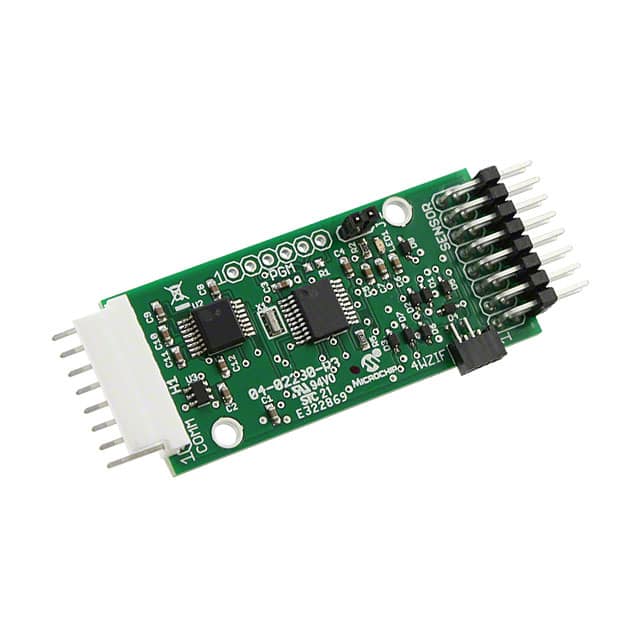
AR1100BRD
Microchip Technology
.jpg)
-
TSC2046IRGVR
Texas Instruments
Tech Hub

Operational amplifier guide covering op amp basics, feedback, ideal vs real op amps, common configurations, buffer circuits, offset, bias current, gain-bandwidth, slew rate, rail-to-rail limits and sel…

Jumper cables guide covering safe connection order, red and black clamp placement, final ground connection, cable gauge, length, clamp quality, copper vs CCA cables, jump starter comparison and battery…

LDO regulator guide covering low dropout voltage, power dissipation, thermal design, PSRR, output noise, capacitor stability, adjustable LDO circuits, LDO vs buck converter and datasheet selection chec…

Conditional Access Module guide covering CAM meaning, CI/CI+ interface, smart card authorization, DVB security workflow, TV and set-top box compatibility, internal electronics, ESD protection, connecto…

Guide to electronic component obsolescence covering EOL risk, PCN/PDN notices, last-time buy planning, replacement options, form-fit-function validation, counterfeit risk and BOM lifecycle management.

18650 battery guide covering lithium-ion cell basics, 3.6V/3.7V voltage, 4.2V charging, mAh and Wh capacity, protected cells, chargers, BMS, series-parallel packs, holders, welding and sourcing checks.…

Hall effect sensor guide covering working principle, linear and digital sensors, Arduino circuits, current sensing, speed detection, automotive applications, A3144 examples, signal filtering and datash…

Product Change Notification guide for electronic components, covering PCN meaning, PCN vs PDN/EOL, common change types, risk levels, form-fit-function review, engineering validation, BOM control, LTB/L…

A practical guide to blend door actuators, covering HVAC function, symptoms, location, AC and heater issues, reset and calibration, replacement cost, electrical diagnosis, compatibility checks, and rep…

Engineering guide to Raspberry Pi alternatives, covering chip-level differences, Orange Pi, ROCK, Jetson, Banana Pi, NanoPi, Compute Module, Pico, GPIO, camera, HAT compatibility, and replacement risks…


