
 My Inquiry
 My Account


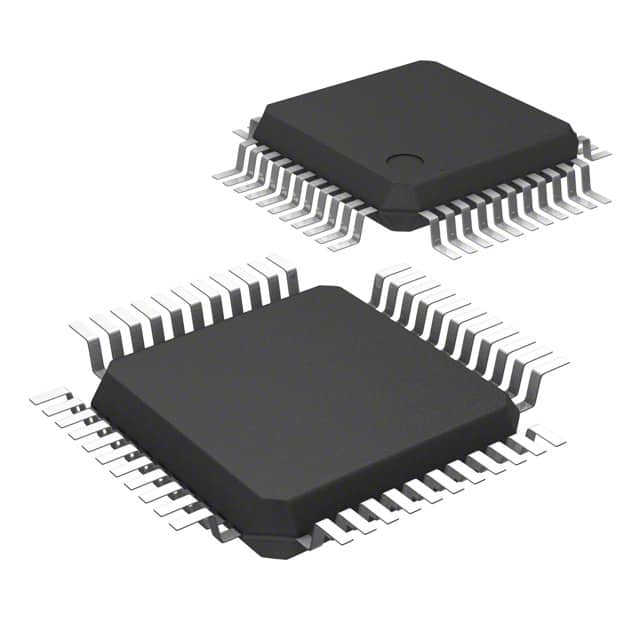
Renesas 82V2041EPPG
- Part No.:
- 82V2041EPPG
- Manufacturer:
- Renesas
- Category:
- Telecom
- Package:
- 44-LQFP
- Datasheet:
-
 82V2041EPPG.pdf
- Description:
- IC TELECOM INTERFACE 44TQFP
- Quantity:
- Payment:

- Shipping:

Inventory:4,769
Please send an inquiry. Send us your inquiry, and we will respond immediately.
Product details
Overview
82V2041EPPG from IDT (now Renesas) is a single-channel T1/E1/J1 short-haul line interface unit (LIU) performing clock/data recovery, AMI/B8ZS/HDB3 encoding/decoding, adaptive equalization, jitter attenuation, and LOS/AIS detection. It supports programmable line impedance (75 Ω, 100 Ω, 110 Ω, 120 Ω), PRBS/QRSS pattern generation/detection, and analog/digital/remote/inband loopbacks. Used in CSU/DSU, IADs, wireless base stations, and frame relay access devices.
For engineers reviewing the 82V2041EPPG datasheet, 82V2041EPPG pinout, 82V2041EPPG application, or 82V2041EPPG equivalent, key selection considerations include T1/E1/J1 mode switchability, software/hardware control flexibility, adaptive receive sensitivity up to –20 dB (Host Mode), integrated jitter attenuator placement (RX/TX path or disabled), and compliance with ANSI T1.102, ITU G.703/G.823, and ETSI 300-166.
Technical Context
The 82V2041EPPG integrates a CDR with adaptive equalizer for short-haul line signal conditioning, supporting T1 (1.544 MHz), E1 (2.048 MHz), and J1 line rates. Its dual-rail or single-rail system interface accommodates NRZ data input/output with selectable active edge/polarity on TCLK/RCLK and programmable transmit waveform shaping via 4-bit PULS[3:0] registers.
Jitter attenuation is implemented as a configurable block placed either before or after the decoder in the receive path or before the encoder in the transmit path - or fully disabled. Line monitoring includes real-time BPV/EXZ error counting, AIS detection, and four loopback modes (analog, digital, remote, inband) controlled via dedicated register bits and hardware pins (LP[1:0], MONT).
Key Specifications
| Parameter | Value and Actual Design Meaning |
|---|---|
| T1/E1/J1 Support | Single-channel configurable for T1 (1.544 MHz), E1 (2.048 MHz), or J1 line standards - enables one BOM across global telecom variants. |
| Line Impedance | Selectable 75 Ω (E1), 100 Ω (T1), 110 Ω (J1), or 120 Ω (E1) termination - matches regional cable plant without external components. |
| Receive Sensitivity | Up to –20 dB (Host Mode only) with adaptive equalizer - extends reach over lossy twisted-pair lines without external amplification. |
| Jitter Attenuation | Configurable placement in RX or TX path (or disabled); meets ITU-T G.823 jitter transfer/tolerance specs for T1/E1 networks. |
| Error Monitoring | Integrated 16-bit BPV/EXZ/PRBS/QRSS counter - provides real-time line health metrics without host CPU overhead. |
| Control Interface | Serial (SPI/I²C-compatible), parallel Motorola/Intel multiplexed, or hardware pin mode - supports legacy and modern MCU integration. |
| Power Supply | Single 3.3 V core supply with 5 V-tolerant digital I/O - simplifies power design and interfaces directly with 5 V logic systems. |
Pinout & Package
82V2041EPPG is housed in a 44-pin TQFP package (10 mm × 10 mm, 0.8 mm pitch) with green (RoHS-compliant) option available. Pin functions are validated per IDT DSC-6775/1 Rev. 1 (Dec 2005), Figure-2 and Table-1.
| Pin/Terminal | Circuit Role | Design Meaning |
|---|---|---|
| TTIP / TRING | Differential line driver outputs | Drive bipolar T1/E1/J1 line signals; enter high-Z when THZ=1, power-down enabled, or MCLK/TCLK lost. |
| RTIP / RRING | Differential line receiver inputs | Accept raw line signals; feed adaptive equalizer and CDR - no external termination required. |
| TD / TDP / TDN | Transmit data input (single/dual rail) | NRZ data sampled on TCLK edge; dual-rail mode encodes pulse polarity via TDP/TDN logic states (00=space, 01=+pulse, etc.). |
| RD / RDP / RDN | Receive data output (single/dual rail) | NRZ decoded data clocked on RCLK; dual-rail outputs retimed slicer data or raw RZ pulses depending on CDR bypass setting. |
| MCLK, TCLK, RCLK | Master/transmit/receive clocks | MCLK (2.048/1.544 MHz) drives internal timing; TCLK/RCLK are synchronous references for data sampling and output timing. |
| MODE[1:0], TERM, JA[1:0] | Hardware configuration pins | Set T1/E1/J1 mode, line termination, and jitter attenuator position at power-up - eliminates boot-time register writes. |
Key Features
| Feature | Design Value |
|---|---|
| HPS support (1+1 protection) | Hitless Protection Switching without external relays - enables carrier-grade redundancy in CSU/DSU and gateway designs. |
| Programmable waveform shaping | Four preset templates + user-defined arbitrary pulse shape via PULS[3:0] - meets regional T1/E1 mask requirements (ANSI T1.403, ITU G.703). |
| Multi-loopback diagnostics | Analog, digital, remote, and inband loopback modes - isolates fault domains (line vs. PHY vs. MAC) during field maintenance. |
| LOS level programmability | Adjustable threshold in Host Mode - adapts detection sensitivity to varying line loss profiles without hardware change. |
| 5 V-tolerant digital I/O | All digital interface pins (CS, SDO, SDI, SCLK, AD[7:0], etc.) accept 5 V logic - interoperates with legacy 5 V microcontrollers. |
| Pin compatibility | Pin-compatible with 82V2081 (long/short haul) and 82V2051E (E1 short haul) - allows platform reuse across product tiers. |
Applications
| CSU/DSU Equipment | Wireless Base Stations |
|---|---|
|
Use Scenario: Aggregating T1/E1 backhaul links from remote cell sites into central switching nodes. IC Role / Device Role / Timing Role: Line interface unit providing physical layer framing, clock recovery, and jitter cleanup for synchronous transport. Use Value: Enables stable synchronization over copper pairs up to 655 ft (T1) or 400 m (E1), meeting ITU G.823 wander limits. |
Use Scenario: Connecting BTS controllers to microwave or fiber backhaul via T1/E1 leased lines. IC Role / Device Role / Timing Role: Short-haul LIU handling line coding, AIS/LOS reporting, and PRBS testing for link commissioning. Use Value: Integrated loopbacks and error counters reduce field test time; HPS support ensures zero-downtime failover. |
| IADs & Gateways | Frame Relay Access Devices |
|
Use Scenario: Providing T1/E1 WAN interfaces in residential or SMB voice/data gateways. IC Role / Device Role / Timing Role: Physical layer transceiver converting between digital system bus (single/dual rail) and bipolar line signals. Use Value: Single-rail/dual-rail flexibility simplifies interface to DSP or FPGA; 3.3 V supply lowers system power vs. legacy 5 V LIUs. |
Use Scenario: Terminating frame relay circuits at customer premises equipment (CPE) for enterprise WAN connectivity. IC Role / Device Role / Timing Role: Line interface with embedded maintenance features (BPV counting, QRSS testing) for SLA verification. Use Value: Real-time error monitoring satisfies carrier SLA reporting requirements; AIS detection triggers upstream alarm forwarding. |
Equivalent & Alternatives
The following parts are listed as comparable options for similar line interface unit applications.
| Alternative Part | Technical Difference | Application Difference | Selection Advice |
|---|---|---|---|
| 82V2081PPG | Supports both long-haul and short-haul T1/E1/J1; higher power consumption; includes extended jitter tolerance per ANSI T1.403 Annex A. | Required for >655 ft T1 or >400 m E1 deployments; adds transformer-coupled line drive capability. | Choose 82V2081PPG when long-haul reach or stricter jitter specs are mandated - not drop-in due to different biasing and thermal design. |
| 82V2051EPPG | E1-only operation; no T1/J1 support; simplified register map; lacks HPS and some loopback modes. | Targeted at cost-sensitive E1-only infrastructure (e.g., European metro access nodes). | Choose 82V2051EPPG for E1-only designs where T1/J1 flexibility and HPS are unnecessary - pin-compatible but firmware not interchangeable. |
Compared with 82V2081PPG and 82V2051EPPG, the 82V2041EPPG uniquely balances short-haul reach, multi-standard flexibility, and diagnostic depth - making it optimal for globally deployable CSU/DSU and IAD platforms requiring one hardware design across T1/E1/J1 markets.
Availability
82V2041EPPG is available at Aetrix Electronics and suitable for CSU/DSU equipment, wireless base station backhaul, and IAD/gateway designs requiring stable component supply, long-term lifecycle support, and RoHS-compliant packaging.
Supply support for 82V2041EPPG includes scheduled delivery planning, volume procurement assistance, BOM continuity management, traceable sourcing, and lifecycle availability coordination for OEM customers, industrial embedded developers, connected-device designers, and electronics production programs.
Manufacturer
IDT (Integrated Device Technology), now part of Renesas Electronics, is a fabless semiconductor company specializing in timing, interface, and RF solutions for communications and computing infrastructure.
The 82V2041EPPG belongs to IDT's legacy LIU product line, designed specifically for carrier-class T1/E1/J1 short-haul physical layer interfacing in telecom access and enterprise edge equipment.
FAQ
What line standards does the 82V2041EPPG support?
The 82V2041EPPG supports T1 (1.544 MHz), E1 (2.048 MHz), and J1 line standards in a single-channel configuration. It performs AMI/B8ZS/HDB3 encoding and decoding, meets ANSI T1.102 and ITU G.703 specifications, and allows software- or hardware-based mode selection - enabling one bill of materials across North American, European, and Japanese telecom deployments.
Does the 82V2041EPPG include integrated jitter attenuation?
Yes, the 82V2041EPPG includes a configurable jitter attenuator that can be placed in the receive path, transmit path, or disabled entirely. Its performance complies with ITU-T G.823 for T1/E1 networks, and placement is selected via JA[1:0] pins or register bit JACF[1:0]. This feature stabilizes clock recovery in noisy environments and ensures compliant output jitter for downstream equipment.
How is line termination impedance configured on the 82V2041EPPG?
Line termination impedance on the 82V2041EPPG is selectable via the TERM register or hardware TERM pin, supporting 75 Ω (E1), 100 Ω (T1), 110 Ω (J1), and 120 Ω (E1). The device integrates internal termination resistors - eliminating external components and reducing PCB area. Impedance selection is synchronized with T1/E1/J1 mode to ensure compliance with regional cabling standards.
What diagnostic features does the 82V2041EPPG provide for field maintenance?
The 82V2041EPPG provides analog, digital, remote, and inband loopback modes; PRBS/QRSS generation and detection (2¹⁵–1 for E1, 2²⁰–1 for T1/J1); and real-time 16-bit BPV/EXZ error counting. These features enable rapid isolation of faults between line, PHY, and system layers - critical for minimizing truck rolls and meeting SLA response times in carrier networks using the 82V2041EPPG.
Is the 82V2041EPPG pin-compatible with other IDT LIUs?
Yes, the 82V2041EPPG is pin-compatible with the 82V2081 (T1/E1/J1 long/short haul) and 82V2051E (E1 short haul) LIUs. This allows shared PCB layouts across product families. However, firmware and register initialization differ - especially for HPS, adaptive equalizer, and jitter attenuator configuration - so software must be adapted even when hardware is reused.
82V2041EPPG Specifications
- Product attributes
- Attribute value
- Manufacturer:
- Renesas
- Series:
- -
- Package/Case:
- 44-LQFP
- Packaging:
- Tray
- Product Status:
- Active
- Function:
- Line Interface Unit (LIU)
- Interface:
- LIU
- Number of Circuits:
- -
- Voltage - Supply:
- 3.13V ~ 3.47V
- Current - Supply:
- -
- Power (Watts):
- -
- Operating Temperature:
- -40°C ~ 85°C
- Grade:
- -
- Qualification:
- -
- Mounting Type:
- Surface Mount
- Supplier Device Package:
- 44-TQFP (10x10)
82V2041EPPG FAQ
1.How can I place an order for 82V2041EPPG through Aetrix?
Please submit a Request for Quotation (RFQ) for 82V2041EPPG on Aetrix. Our sales agent will provide a competitive quotation and guide you through the order confirmation once you accept the terms.
2.Are the price and stock information for 82V2041EPPG reliable?
The price and inventory of 82V2041EPPG are updated periodically and may fluctuate due to market conditions. Stock and pricing data are typically refreshed every 24 hours. Quotation validity for 82V2041EPPG is usually 5 days.
3.What payment methods are accepted for 82V2041EPPG?
We accept Wire Transfer, PayPal, Credit Card, Western Union, MoneyGram, and Escrow for 82V2041EPPG transactions.
Note: Certain payment methods may incur a processing fee.
4.How is shipping managed for 82V2041EPPG?
82V2041EPPG orders can be shipped via leading logistics carriers, including DHL, UPS, FedEx, TNT, or Registered Mail.
Once your 82V2041EPPG order is processed, you will receive an email with the shipment details and tracking number.
Note: Tracking information may take up to 24 hours to appear. Express delivery typically takes 3–5 business days.
5.How can I obtain technical support or documentation for 82V2041EPPG?
For technical support, including 82V2041EPPG datasheets, pinout diagrams, or application guidance, please contact our engineering support team. They can provide detailed documentation and assistance for your 82V2041EPPG requirements.
6.How does Aetrix verify that 82V2041EPPG is sourced from the original manufacturer or authorized distributors?
All 82V2041EPPG products on Aetrix are procured from qualified distributors and authorized channels. Our dedicated quality assurance team conducts strict verification, including traceability checks and, if necessary, third-party testing. This ensures that 82V2041EPPG meets industry standards.
7.What is the process for return or replacement of 82V2041EPPG?
All 82V2041EPPG units undergo pre-shipment inspection (PSI). If there is an issue with 82V2041EPPG, returns or replacements are accepted under the following conditions:
1.Quantity discrepancies, incorrect items, or visible external defects (such as breakage or corrosion), acknowledged by Aetrix.
2.The issue is reported within 90 days of delivery.
3.The 82V2041EPPG part is unused and in its original packaging.
Return procedure for 82V2041EPPG:
1.Submit a request within 90 days.
2.Obtain a Return Material Authorization (RMA) from Aetrix.
82V2041EPPG Tags

-
LMC567CMX/NOPB
Texas Instruments
-
LM567CMX/NOPB
Texas Instruments
-
LM567CM/NOPB
Texas Instruments
-
VSC8531XMW-02
Microchip Technology
-
VSC8531XMW-05
Microchip Technology

-
GPY115C0VI
MaxLinear, Inc.
-
SI32185-A-FMR
Skyworks Solutions Inc.
-
VSC8541XMV-05
Microchip Technology
-
SI32178-B-FM1R
Skyworks Solutions Inc.
-
GPY215C0VI
MaxLinear, Inc.
-
CPC7514ZTR
Littelfuse Inc.
-
VSC8502XML-03
Microchip Technology
Tech Hub

TTL and CMOS logic families differ in thresholds, loading, output drive, power and timing. This engineering guide compares 74HC and 74HCT, calculates noise margins and checks 3.3 V/5 V compatibility.

A practical engineering guide to 3.3V and 5V logic compatibility, input thresholds, resistor dividers, translator ICs, MOSFET level shifting, I2C pull-ups, timing limits and power-sequencing risks.

The 74HC595 uses push-pull logic outputs, while the TPIC6B595 uses 50 V open-drain DMOS sinks for higher-power loads. This guide compares timing, current limits, 3.3 V interfacing, load wiring, thermal…

The 74HC595 converts serial data into eight stable parallel outputs. This guide covers pin functions, shift and storage timing, OE and MR behavior, drive-current limits, cascading, voltage compatibilit…

A technical comparison of level-sensitive latches and edge-triggered flip-flops, covering timing windows, setup and hold limits, master–slave operation, time borrowing, race-through, HDL inference and…

A D latch stores one bit while Enable controls when data can pass. This reference covers gate-level operation, truth tables, transparency, setup and hold timing, LE versus OE, common ICs and practical …

An SR latch stores one bit through cross-coupled feedback. This engineering reference covers NOR and NAND implementations, truth tables, forbidden-state recovery, gated operation, switch debouncing, fa…

Latch circuits retain one bit through feedback. This technical reference covers SR and D latches, truth tables, transparency, timing limits, latch-versus-flip-flop behavior, applications and common log…

An engineering guide to LED driver operation, constant-current and constant-voltage outputs, linear and switching topologies, dimming, IC selection, calculations, replacement compatibility, and fault c…

Operational amplifier guide covering op amp basics, feedback, ideal vs real op amps, common configurations, buffer circuits, offset, bias current, gain-bandwidth, slew rate, rail-to-rail limits and sel…


