
 My Inquiry
 My Account


Renesas 89HPEB383ZAEM
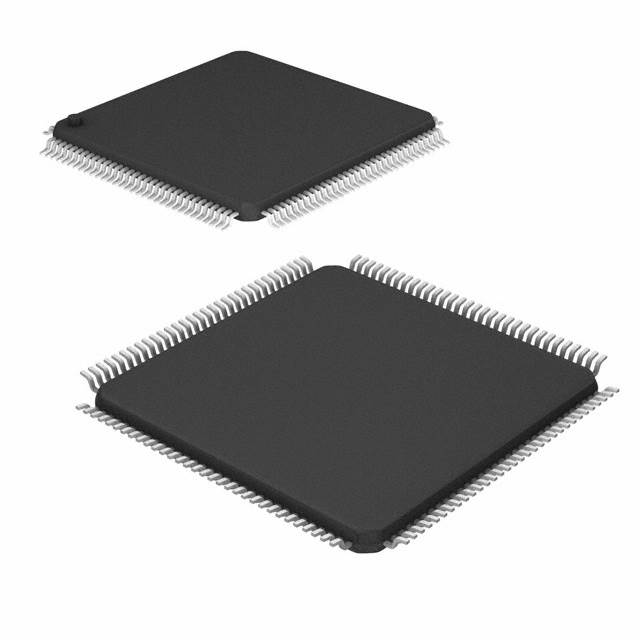
- Part No.:
- 89HPEB383ZAEM
- Manufacturer:
- Renesas
- Category:
- Specialized
- Package:
- 128-TQFP
- Datasheet:
-
 89HPEB383ZAEM.pdf
- Description:
- IC INTERFACE SPECIALIZED 128TQFP
- Quantity:
- Payment:

- Shipping:

Inventory:2,987
Please send an inquiry. Send us your inquiry, and we will respond immediately.
Product details
Overview
89HPEB383ZAEM from Integrated Device Technology, Inc. is a transparent x1 PCI Express to 32-bit/66 MHz PCI bridge IC supporting plug-and-play BIOS enumeration, ultra-low standby power (130 mW), 128-byte PCIe max payload, and 5V-tolerant PCI I/O with VIO pins. It enables legacy PCI expansion on modern PCIe-based motherboards and DVR adapter cards.
For engineers reviewing the 89HPEB383ZAEM datasheet, 89HPEB383ZAEM pinout, 89HPEB383ZAEM application, or 89HPEB383ZAEM equivalent, key selection criteria include transparent/non-transparent bridging mode support, PCIe 1.1 & PCI 3.0 compliance, ASPM L0s/L1 power states, 1-KB PCI read completion buffer, and 10×10 mm 132-pin QFN package compatibility with 4-layer PCB routing.
Technical Context
The 89HPEB383ZAEM implements a dual-domain bridge architecture with independent PCIe and PCI transaction layers, supporting both transparent forwarding and non-transparent address remapping. It integrates a 4-master PCI arbiter and supports subtractive decode for legacy cycle forwarding.
PCIe interface complies with Base Spec 1.1 and includes Advanced Error Reporting (AER), end-to-end CRC (ECRC), up to four outstanding memory reads, and 512-byte read completion buffer. PCI interface meets Local Bus Spec 3.0 with 66 MHz operation, 5V-tolerant I/O, and 1-KB read completion buffer.
Key Specifications
| Parameter | Value and Actual Design Meaning |
|---|---|
| PCIe Interface | Compliant with PCI Express Base Spec 1.1; supports x1 link, 128-byte max payload, AER, ECRC |
| PCI Interface | Compliant with PCI Local Bus Spec 3.0; 32-bit/66 MHz, 5V-tolerant I/O, 1-KB read completion buffer |
| Bridging Modes | Transparent (flow-through) and non-transparent (address remapping between PCIe and PCI domains) |
| Power Management | Supports D0/D3hot/D3cold states, ASPM L0s/L1, standby power 130 mW, ±10% supply tolerance |
| Package | 10×10 mm, 132-pin QFN - optimized for 4-layer PCB escape routing |
| Legacy Support | Subtractive decode enabled; masquerade mode for vendor/device ID overwrite via EEPROM |
| JTAG | IEEE 1149.1 and 1149.6 compliant for boundary-scan testing |
Pinout & Package
89HPEB383ZAEM is housed in a 10×10 mm, 132-pin QFN package with exposed thermal pad. Pin assignments are defined per IDT PEB383 Product Brief Rev. 1.0 (Jan 2010), including dedicated VIO pins for 5V-tolerant PCI I/O, PCIe differential pairs (CLK±, RX±, TX±), JTAG (TCK/TMS/TDI/TDO/TRST), and PCI bus signals (AD[31:0], C/BE[3:0]#, PAR, FRAME#, IRDY#, TRDY#, DEVSEL#, STOP#, LOCK#, PERR#, SERR#).
| Pin/Terminal | Circuit Role | Design Meaning |
|---|---|---|
| VIO_0–VIO_3 | PCI I/O voltage reference | Enable 5V-tolerant operation on corresponding PCI signal groups; decoupling required per datasheet |
| CLK_P / CLK_N | PCIe reference clock input | Differential 100 MHz PCIe reference clock; requires AC-coupled 100 Ω termination |
| RX_P / RX_N / TX_P / TX_N | PCIe serial data lanes | x1 bidirectional differential lanes; impedance-controlled routing critical for signal integrity |
| AD[31:0]# | PCI address/data multiplexed bus | 32-bit time-multiplexed address/data lines; require proper setup/hold timing relative to C/BE# |
| TCK / TMS / TDI / TDO / TRST# | JTAG boundary-scan interface | IEEE 1149.1/1149.6 compliant; used for test, debug, and configuration verification |
Key Features
| Feature | Design Value |
|---|---|
| Short-Term Caching | Improves PCIe-to-PCI read throughput by 5× vs. standard bridging-critical for high-bandwidth video decoder adapters |
| Integrated 4-Master Arbiter | Eliminates need for external arbitration logic on PCI bus, reducing BOM count and layout complexity |
| Subtractive Decode Support | Enables forwarding of legacy PCI cycles (e.g., ISA bridge accesses) across the bridge without configuration overhead |
| Masquerade Mode | Allows EEPROM-programmable vendor/device ID override-supports OEM branding and system-level device enumeration control |
| ASPM L0s/L1 Link Power States | Reduces dynamic link power during idle periods while maintaining low-latency resume-essential for consumer platform energy compliance |
Applications
| Motherboard Expansion | DVR Adapter Card |
|---|---|
Use Scenario: Adding legacy PCI slots to modern PCIe-based motherboards using Platform Controller Hub (PCH) interfaces. IC Role / Device Role / Timing Role: Transparent bridge translating PCIe transactions to PCI protocol; handles address decoding, burst splitting, and latency buffering. Use Value: Enables full PCI 3.0 interoperability with zero BIOS modification; supports matching PCH supply voltages and 4-layer PCB routing to minimize BOM cost. | Use Scenario: Connecting multiple PCI-based video decoder chips to a single x1 PCIe host slot in surveillance DVR systems. IC Role / Device Role / Timing Role: High-throughput, low-latency bridge with proprietary short-term caching for sustained video frame read bursts. Use Value: Delivers 500% higher read performance than standard bridges-enabling simultaneous multi-camera decode without PCIe bandwidth bottleneck. |
| Set-Top Box Expansion | PC ExpressCard Adapter |
Use Scenario: Integrating PCI peripherals (e.g., DVB-T tuners, conditional access modules) into space-constrained set-top box designs. IC Role / Device Role / Timing Role: Non-transparent bridge enabling address remapping between PCIe host domain and isolated PCI peripheral domain. Use Value: Isolates legacy PCI devices from host memory map; supports SSID/SSVID for OEM-specific device identification and driver binding. | Use Scenario: Converting compact ExpressCard slots into full-function PCI expansion interfaces for mobile workstations and field-deployable test equipment. IC Role / Device Role / Timing Role: Plug-and-play transparent bridge initialized under standard BIOS enumeration without custom drivers or firmware. Use Value: Eliminates need for OS-specific bridge drivers; leverages native Windows/Linux PCI enumeration-reducing qualification time and driver maintenance overhead. |
Equivalent & Alternatives
The following parts are listed as comparable options for similar PCI Express-to-PCI bridge applications.
| Alternative Part | Technical Difference | Application Difference | Selection Advice |
|---|---|---|---|
| Pericom PI7C9X2G304 | PCIe 2.0 x1 interface; supports 128/256-byte payloads; no Short-Term Caching; 144-pin QFP only | Targeted at industrial embedded systems requiring PCIe 2.0 backward compatibility but not ultra-low power | Choose when PCIe 2.0 speed and larger payload are prioritized over standby power and caching performance |
| PLX Technology PEX8112 | PCIe 1.0a x1; 64-byte max payload; no non-transparent mode; 128-pin QFP; higher standby power (~220 mW) | Designed for cost-sensitive PC adapter cards where legacy BIOS compatibility is primary requirement | Choose when strict PCIe 1.0a compliance and lowest gate count are more critical than power efficiency or advanced bridging features |
Compared with PI7C9X2G304 and PEX8112, the 89HPEB383ZAEM uniquely combines PCIe 1.1 compliance, 5× read caching, 130 mW standby power, and non-transparent mode in a 10×10 mm QFN-making it optimal for consumer motherboard and DVR adapter designs demanding size, power, and performance balance.
Availability
89HPEB383ZAEM is available at Aetrix Electronics and suitable for motherboard expansion, digital video recorder (DVR) adapter cards, set-top box peripheral integration, and ExpressCard-based PC adapters requiring stable component supply and long-lifecycle support.
Supply support for 89HPEB383ZAEM includes scheduled delivery planning, volume procurement assistance, BOM continuity management, traceable sourcing, and lifecycle availability coordination for OEM customers, industrial embedded developers, connected-device designers, and electronics production programs.
Manufacturer
Integrated Device Technology, Inc. (IDT) is a fabless semiconductor company specializing in timing, interface, and interconnect solutions, acquired by Renesas Electronics in 2019.
The PEB383 product line was designed specifically for ultra-low-power, high-interoperability bridging between emerging PCIe platforms and legacy PCI peripherals in consumer electronics and embedded video systems.
FAQ
Is the 89HPEB383ZAEM a transparent or non-transparent bridge?
The 89HPEB383ZAEM supports both transparent and non-transparent bridging modes. In transparent mode, it enables flow-through PCI enumeration and memory-mapped I/O without address translation. In non-transparent mode, it performs address remapping between PCIe and PCI domains-ideal for isolated peripheral subsystems like set-top box tuner modules. Configuration is controlled via internal registers and EEPROM settings.
What power states does the 89HPEB383ZAEM support?
The 89HPEB383ZAEM supports D0 (fully active), D3hot (soft off with power maintained), and D3cold (hard off) states per PCI Power Management Specification 1.2, plus ASPM L0s and L1 link power states per PCIe 1.1. Its 130 mW standby power reflects operation in D3cold with auxiliary power applied-verified in IDT's PEB383 Product Brief (Jan 2010).
Does the 89HPEB383ZAEM support 5V-tolerant PCI I/O?
Yes, the 89HPEB383ZAEM supports 5V-tolerant PCI I/O through dedicated VIO pins (VIO_0–VIO_3), allowing direct connection to legacy 5V PCI buses without level-shifting circuitry. This feature enhances reliability and simplifies design in mixed-voltage systems such as motherboards interfacing with older PCI add-in cards.
What is the purpose of Short-Term Caching in the 89HPEB383ZAEM?
Short-Term Caching in the 89HPEB383ZAEM is a proprietary hardware acceleration feature that buffers recent PCIe read completions to accelerate repeated or sequential PCI read requests. As documented in the IDT PEB383 Product Brief, this delivers up to 5× higher read throughput-particularly beneficial in DVR adapter cards streaming data from multiple video decoders.
Can the 89HPEB383ZAEM be used in a 4-layer PCB design?
Yes, the 89HPEB383ZAEM's 10×10 mm 132-pin QFN package is explicitly designed for 4-layer PCB escape routing, as stated in the IDT PEB383 Product Brief. Its pinout and thermal pad layout minimize trace congestion and reduce layer count requirements-lowering manufacturing cost and improving signal integrity for high-speed PCIe and PCI buses.
89HPEB383ZAEM Specifications
- Product attributes
- Attribute value
- Manufacturer:
- Renesas
- Series:
- -
- Package/Case:
- 128-TQFP
- Packaging:
- Tray
- Product Status:
- Obsolete
- Applications:
- Set-Top Boxes, Video Players, Recorders
- Interface:
- PCI Express
- Voltage - Supply:
- 5V
- Supplier Device Package:
- 128-TQFP (14x14)
- Grade:
- -
- Qualification:
- -
- Mounting Type:
- Surface Mount
89HPEB383ZAEM FAQ
1.How can I place an order for 89HPEB383ZAEM through Aetrix?
Please submit a Request for Quotation (RFQ) for 89HPEB383ZAEM on Aetrix. Our sales agent will provide a competitive quotation and guide you through the order confirmation once you accept the terms.
2.Are the price and stock information for 89HPEB383ZAEM reliable?
The price and inventory of 89HPEB383ZAEM are updated periodically and may fluctuate due to market conditions. Stock and pricing data are typically refreshed every 24 hours. Quotation validity for 89HPEB383ZAEM is usually 5 days.
3.What payment methods are accepted for 89HPEB383ZAEM?
We accept Wire Transfer, PayPal, Credit Card, Western Union, MoneyGram, and Escrow for 89HPEB383ZAEM transactions.
Note: Certain payment methods may incur a processing fee.
4.How is shipping managed for 89HPEB383ZAEM?
89HPEB383ZAEM orders can be shipped via leading logistics carriers, including DHL, UPS, FedEx, TNT, or Registered Mail.
Once your 89HPEB383ZAEM order is processed, you will receive an email with the shipment details and tracking number.
Note: Tracking information may take up to 24 hours to appear. Express delivery typically takes 3–5 business days.
5.How can I obtain technical support or documentation for 89HPEB383ZAEM?
For technical support, including 89HPEB383ZAEM datasheets, pinout diagrams, or application guidance, please contact our engineering support team. They can provide detailed documentation and assistance for your 89HPEB383ZAEM requirements.
6.How does Aetrix verify that 89HPEB383ZAEM is sourced from the original manufacturer or authorized distributors?
All 89HPEB383ZAEM products on Aetrix are procured from qualified distributors and authorized channels. Our dedicated quality assurance team conducts strict verification, including traceability checks and, if necessary, third-party testing. This ensures that 89HPEB383ZAEM meets industry standards.
7.What is the process for return or replacement of 89HPEB383ZAEM?
All 89HPEB383ZAEM units undergo pre-shipment inspection (PSI). If there is an issue with 89HPEB383ZAEM, returns or replacements are accepted under the following conditions:
1.Quantity discrepancies, incorrect items, or visible external defects (such as breakage or corrosion), acknowledged by Aetrix.
2.The issue is reported within 90 days of delivery.
3.The 89HPEB383ZAEM part is unused and in its original packaging.
Return procedure for 89HPEB383ZAEM:
1.Submit a request within 90 days.
2.Obtain a Return Material Authorization (RMA) from Aetrix.
89HPEB383ZAEM Tags
-
NVT4857UKAZ
NXP Semiconductors
-
TCA8418RTWR
Texas Instruments

-
PCA9546APWR
Texas Instruments

-
MD0100N8-G
Microchip Technology
-
PCA9548APW,118
NXP Semiconductors
-
PCA9540BDP,118
NXP Semiconductors
-
PCA9548APWR
Texas Instruments
-
PCA9546APW,118
NXP Semiconductors
-
PTN3360DBS,518
NXP Semiconductors
-
PCA9546ABS,118
NXP Semiconductors
-
PCA9518PWR
Texas Instruments
-
PCA9545APW,118
NXP Semiconductors
Tech Hub

TTL and CMOS logic families differ in thresholds, loading, output drive, power and timing. This engineering guide compares 74HC and 74HCT, calculates noise margins and checks 3.3 V/5 V compatibility.

A practical engineering guide to 3.3V and 5V logic compatibility, input thresholds, resistor dividers, translator ICs, MOSFET level shifting, I2C pull-ups, timing limits and power-sequencing risks.

The 74HC595 uses push-pull logic outputs, while the TPIC6B595 uses 50 V open-drain DMOS sinks for higher-power loads. This guide compares timing, current limits, 3.3 V interfacing, load wiring, thermal…

The 74HC595 converts serial data into eight stable parallel outputs. This guide covers pin functions, shift and storage timing, OE and MR behavior, drive-current limits, cascading, voltage compatibilit…

A technical comparison of level-sensitive latches and edge-triggered flip-flops, covering timing windows, setup and hold limits, master–slave operation, time borrowing, race-through, HDL inference and…

A D latch stores one bit while Enable controls when data can pass. This reference covers gate-level operation, truth tables, transparency, setup and hold timing, LE versus OE, common ICs and practical …

An SR latch stores one bit through cross-coupled feedback. This engineering reference covers NOR and NAND implementations, truth tables, forbidden-state recovery, gated operation, switch debouncing, fa…

Latch circuits retain one bit through feedback. This technical reference covers SR and D latches, truth tables, transparency, timing limits, latch-versus-flip-flop behavior, applications and common log…

An engineering guide to LED driver operation, constant-current and constant-voltage outputs, linear and switching topologies, dimming, IC selection, calculations, replacement compatibility, and fault c…

Operational amplifier guide covering op amp basics, feedback, ideal vs real op amps, common configurations, buffer circuits, offset, bias current, gain-bandwidth, slew rate, rail-to-rail limits and sel…


