
 My Inquiry
 My Account


Microchip Technology 93C56C-E/MS
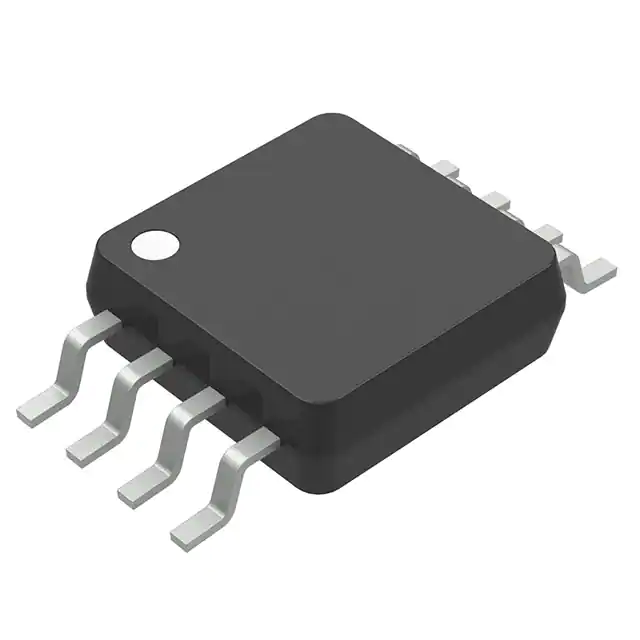
- Part No.:
- 93C56C-E/MS
- Manufacturer:
- Microchip Technology
- Category:
- Memory
- Package:
- 8-TSSOP, 8-MSOP (0.118", 3.00mm Width)
- Datasheet:
-
 93C56C-E/MS.pdf
- Description:
- IC EEPROM 2KBIT MICROWIRE 8MSOP
- Quantity:
- Payment:

- Shipping:

Inventory:2,834
Please send an inquiry. Send us your inquiry, and we will respond immediately.
Product details
Overview
93C56C-E/MS from Microchip Technology Inc. is a 2 Kbit Microwire-compatible serial EEPROM with configurable 8-/16-bit word organization via the ORG pin, 4.5–5.5 V supply range, industrial and automotive temperature support (−40°C to +125°C), and MSOP-8 package. It delivers self-timed erase/write cycles, automatic ERAL/WRAL, and Ready/Busy status signaling for embedded system configuration storage.
For engineers reviewing the 93C56C-E/MS datasheet, 93C56C-E/MS pinout, 93C56C-E/MS application, or 93C56C-E/MS equivalent, key selection considerations include ORG-pin-dependent memory width, 2 ms write cycle time, 1 million endurance cycles, 200-year data retention, and compatibility with legacy Microwire controllers in space-constrained industrial control modules.
Technical Context
The 93C56C-E/MS implements a synchronous 3-wire Microwire interface (CS, CLK, DI/DO) with start-bit detection and opcode-driven command execution. Its dual-word-size architecture relies on external logic applied to the ORG pin-VCC selects 128 × 16-bit mode, VSS selects 256 × 8-bit mode-enabling flexible data bus alignment without hardware redesign.
Internal operation includes auto-erase-before-write, dedicated EWEN/EWDS protection states, and DO pin multiplexing for both read data output and Ready/Busy polling. Write initiation differs from AA/LC variants: for 93C56C-E/MS, the rising edge of CLK on the final data bit triggers the self-timed 2 ms programming cycle, not the CS falling edge.
Key Specifications
| Parameter | Value and Actual Design Meaning |
|---|---|
| Memory size | 2 Kbit (256 × 8 or 128 × 16, selectable via ORG pin) |
| VCC range | 4.5 V to 5.5 V - ensures stable operation in 5 V systems with marginal rail tolerance |
| Write cycle time | 2 ms - fixed duration for all erase/write operations, enabling deterministic timing in firmware |
| Endurance | 1,000,000 erase/write cycles - supports frequent field-updatable parameter storage |
| Data retention | 200 years at 25°C - guarantees long-term nonvolatile storage without refresh |
| Interface | Microwire-compatible 3-wire serial (CS, CLK, DI/DO) - interoperable with legacy microcontrollers lacking SPI peripherals |
| Temp range | −40°C to +125°C (Automotive E-grade) - qualified for under-hood and industrial motor drive environments |
Pinout & Package
8-pin MSOP (Micro Small Outline Package), 3.0 mm × 3.0 mm body, 0.65 mm pitch, exposed pad optional (VSS or floating).
| Pin/Terminal | Circuit Role | Design Meaning |
|---|---|---|
| CS | Chip Select | Active-high enable; must be held low ≥250 ns between instructions to reset internal state |
| CLK | Serial Clock | Rising-edge synchronized I/O; clock stops freely during transmission; rising edge of final CLK initiates write on 93C56C-E/MS |
| DI | Data Input | Accepts start bit, opcode, address, and write data; shares net with DO only with series resistor to prevent bus conflict |
| DO | Data Output / Status | Outputs read data or Ready/Busy (low = busy); enters High-Z when CS low or after status read |
| VSS | Ground | Reference for all signals; connects to exposed pad in MSOP for thermal/mechanical stability |
| ORG | Organization Control | Logic high → 128 × 16-bit mode; logic low → 256 × 8-bit mode; must be statically biased |
| NC | No Connection | Pin 7 in MSOP - no internal bond; must be left unconnected or tied to VSS for mechanical stability |
| VCC | Power Supply | 4.5–5.5 V only; POR threshold at 3.8 V - prevents spurious writes during power ramp |
Key Features
| Feature | Design Value |
|---|---|
| ORG-pin word-size selection | Enables single BOM to support both 8-bit and 16-bit host interfaces without changing firmware or PCB layout |
| Self-timed 2 ms write cycle | Eliminates need for external timing components or software delay loops; simplifies driver implementation |
| Auto-erase-before-write | Guarantees clean write regardless of prior data state - no manual erase required before each write |
| ERAL and WRAL commands | Full-array erase (6 ms) and full-array write (15 ms) with built-in ERAL - enables factory calibration reset or firmware rollback |
| EWEN/EWDS security | Hardware-enforced write lock: device powers up in EWDS state; accidental overwrites prevented unless explicit EWEN issued |
Applications
| Industrial Sensor Calibration | Automotive ECU Configuration |
|---|---|
Use Scenario: Storing temperature-compensation coefficients and sensor offset values in factory-calibrated pressure transmitters. IC Role / Device Role / Timing Role: Nonvolatile configuration register accessed infrequently during commissioning or recalibration. Use Value: 200-year data retention ensures calibration integrity across product lifetime without battery backup or refresh routines. | Use Scenario: Holding adaptive learning parameters (e.g., idle air control trim) in engine control units operating under hood temperatures up to +125°C. IC Role / Device Role / Timing Role: Automotive-grade EEPROM interfaced via Microwire to 8-bit MCU with limited peripheral resources. Use Value: −40°C to +125°C qualification and 1M endurance support repeated relearning cycles over 15+ years of vehicle service. |
| Legacy Industrial PLC I/O Module | Medical Infusion Pump Setup |
Use Scenario: Retaining module identification, channel scaling factors, and safety-critical alarm thresholds in DIN-rail mounted I/O expanders using aging 8051-based controllers. IC Role / Device Role / Timing Role: Pin-compatible drop-in replacement for obsolete 93C46/93C56A devices in existing Microwire designs. Use Value: Identical instruction set and timing allows firmware reuse; MSOP-8 footprint reduces board area vs. SOIC-8 while maintaining solderability. | Use Scenario: Storing drug library profiles, dose limits, and user preferences in battery-powered infusion pumps requiring FDA-compliant data integrity. IC Role / Device Role / Timing Role: Secure configuration store with hardware write protection (EWEN/EWDS) and power-on data validation. Use Value: VCC POR at 3.8 V prevents partial writes during brown-out; 1M endurance supports >10,000 pump setup changes over device life. |
Equivalent & Alternatives
The following parts are listed as comparable options for similar serial EEPROM applications.
| Alternative Part | Technical Difference | Application Difference | Selection Advice |
|---|---|---|---|
| 93LC56C-E/MS | 2.5–5.5 V VCC, 6 ms write cycle, same pinout and ORG functionality | Better suited for mixed-voltage systems (e.g., 3.3 V logic with 5 V peripherals); slower write impacts high-frequency logging | Select when wider voltage margin or lower VCC operation is required; verify 6 ms timing fits host firmware |
| 93AA56C-E/MS | 1.8–5.5 V VCC, 6 ms write cycle, identical ORG behavior and package | Enables ultra-low-power sleep modes (<1 µA standby); not rated for 125°C operation | Choose for battery-powered portable equipment where extended temperature range is unnecessary |
Compared with 93LC56C-E/MS and 93AA56C-E/MS, the 93C56C-E/MS offers the fastest 2 ms write time and highest VCC noise immunity (3.8 V POR), making it optimal for robust 5 V industrial control where speed and reliability outweigh voltage flexibility.
Availability
93C56C-E/MS is available at Aetrix Electronics and suitable for industrial sensor calibration, automotive ECU configuration, and legacy PLC I/O modules requiring stable component supply across extended temperature ranges and multi-year production cycles.
Supply support for 93C56C-E/MS includes scheduled delivery planning, volume procurement assistance, BOM continuity management, traceable sourcing, and lifecycle availability coordination for OEM customers, industrial embedded developers, connected-device designers, and electronics production programs.
Manufacturer
Microchip Technology Inc. is a leading provider of microcontroller, analog, and Flash-IP solutions, headquartered in Chandler, Arizona, with global design and manufacturing operations.
The 93Cxx EEPROM family was designed for cost-sensitive, space-constrained embedded systems needing reliable nonvolatile storage with minimal external components and compatibility with legacy Microwire controllers.
FAQ
What is the function of the ORG pin on the 93C56C-E/MS?
The ORG pin on the 93C56C-E/MS configures memory organization: tied to VCC, it selects 128 × 16-bit mode; tied to VSS, it selects 256 × 8-bit mode. This pin must be statically biased-no dynamic switching during operation. The 93C56C-E/MS requires this pin to be connected; unlike A/B versions, it is not NC. Proper ORG biasing determines address width and data bus alignment in the host system.
How does the 93C56C-E/MS differ from the 93C56A-E/MS in write timing?
The 93C56C-E/MS initiates its 2 ms self-timed write cycle on the rising edge of CLK at the final data bit, whereas the 93C56A-E/MS uses the falling edge of CS. This difference affects firmware timing margins and interrupt handling. Both share identical VCC range (4.5–5.5 V), package, and instruction set, but the 93C56C-E/MS adds ORG-pin configurability absent in the A-version.
Is the 93C56C-E/MS pin-compatible with SOIC-8 packages?
Yes-the 93C56C-E/MS in MSOP-8 (3.0 × 3.0 mm) shares identical pin numbering and signal mapping with SOIC-8 (3.9 × 4.9 mm) variants like 93C56C-E/SN, per Microchip's DS21794G-page 12 pin function table. However, MSOP requires tighter stencil design and reflow profiling due to smaller pad pitch (0.65 mm vs. 1.27 mm) and thermal mass differences.
What is the minimum VCC required for ERAL and WRAL operations on the 93C56C-E/MS?
The 93C56C-E/MS requires VCC ≥ 4.5 V for proper execution of ERAL (Erase All) and WRAL (Write All) commands, as specified in DS21794G-page 8 and page 11. Below 4.5 V, these commands may fail silently or produce incomplete erasure. This threshold is higher than the general operating minimum (4.5 V), confirming that full-array operations demand nominal rail voltage.
Does the 93C56C-E/MS support sequential read mode?
Yes-the 93C56C-E/MS supports sequential read: when CS remains high after a READ instruction, the internal address counter automatically increments, and subsequent clock edges output data from consecutive memory locations on DO. This eliminates the need to resend the opcode and address for each byte/word, reducing transaction overhead in firmware drivers.
93C56C-E/MS Specifications
- Product attributes
- Attribute value
- Manufacturer:
- Microchip Technology
- Series:
- -
- Package/Case:
- 8-TSSOP, 8-MSOP (0.118", 3.00mm Width)
- Packaging:
- Tube
- Product Status:
- Active
- Programmable:
- Not Verified
- Memory Type:
- Non-Volatile
- Memory Format:
- EEPROM
- Technology:
- EEPROM
- Memory Size:
- 2Kbit
- Memory Organization:
- 256 x 8, 128 x 16
- Memory Interface:
- Microwire
- Clock Frequency:
- 3 MHz
- Write Cycle Time - Word, Page:
- 2ms
- Access Time:
- -
- Voltage - Supply:
- 4.5V ~ 5.5V
- Operating Temperature:
- -40°C ~ 125°C (TA)
- Grade:
- -
- Qualification:
- -
- Mounting Type:
- Surface Mount
- Supplier Device Package:
- 8-MSOP
93C56C-E/MS FAQ
1.How can I place an order for 93C56C-E/MS through Aetrix?
Please submit a Request for Quotation (RFQ) for 93C56C-E/MS on Aetrix. Our sales agent will provide a competitive quotation and guide you through the order confirmation once you accept the terms.
2.Are the price and stock information for 93C56C-E/MS reliable?
The price and inventory of 93C56C-E/MS are updated periodically and may fluctuate due to market conditions. Stock and pricing data are typically refreshed every 24 hours. Quotation validity for 93C56C-E/MS is usually 5 days.
3.What payment methods are accepted for 93C56C-E/MS?
We accept Wire Transfer, PayPal, Credit Card, Western Union, MoneyGram, and Escrow for 93C56C-E/MS transactions.
Note: Certain payment methods may incur a processing fee.
4.How is shipping managed for 93C56C-E/MS?
93C56C-E/MS orders can be shipped via leading logistics carriers, including DHL, UPS, FedEx, TNT, or Registered Mail.
Once your 93C56C-E/MS order is processed, you will receive an email with the shipment details and tracking number.
Note: Tracking information may take up to 24 hours to appear. Express delivery typically takes 3–5 business days.
5.How can I obtain technical support or documentation for 93C56C-E/MS?
For technical support, including 93C56C-E/MS datasheets, pinout diagrams, or application guidance, please contact our engineering support team. They can provide detailed documentation and assistance for your 93C56C-E/MS requirements.
6.How does Aetrix verify that 93C56C-E/MS is sourced from the original manufacturer or authorized distributors?
All 93C56C-E/MS products on Aetrix are procured from qualified distributors and authorized channels. Our dedicated quality assurance team conducts strict verification, including traceability checks and, if necessary, third-party testing. This ensures that 93C56C-E/MS meets industry standards.
7.What is the process for return or replacement of 93C56C-E/MS?
All 93C56C-E/MS units undergo pre-shipment inspection (PSI). If there is an issue with 93C56C-E/MS, returns or replacements are accepted under the following conditions:
1.Quantity discrepancies, incorrect items, or visible external defects (such as breakage or corrosion), acknowledged by Aetrix.
2.The issue is reported within 90 days of delivery.
3.The 93C56C-E/MS part is unused and in its original packaging.
Return procedure for 93C56C-E/MS:
1.Submit a request within 90 days.
2.Obtain a Return Material Authorization (RMA) from Aetrix.
93C56C-E/MS Tags
-
M24C02-WMN6TP
STMicroelectronics
-
AT24C02C-XHM-T
Microchip Technology
-
AT21CS01-STUM10-T
Microchip Technology

-
AT24C02C-SSHM-T
Microchip Technology
-
24LC01BT-I/OT
Microchip Technology
-
M24C02-FMC6TG
STMicroelectronics
-
AT24CS02-SSHM-T
Microchip Technology

-
93LC46BT-I/OT
Microchip Technology
-
AT24C04C-SSHM-T
Microchip Technology

-
24LC01BT-I/SN
Microchip Technology
-
24AA02UIDT-I/OT
Microchip Technology
-
AT24C08C-STUM-T
Microchip Technology
Tech Hub

TTL and CMOS logic families differ in thresholds, loading, output drive, power and timing. This engineering guide compares 74HC and 74HCT, calculates noise margins and checks 3.3 V/5 V compatibility.

A practical engineering guide to 3.3V and 5V logic compatibility, input thresholds, resistor dividers, translator ICs, MOSFET level shifting, I2C pull-ups, timing limits and power-sequencing risks.

The 74HC595 uses push-pull logic outputs, while the TPIC6B595 uses 50 V open-drain DMOS sinks for higher-power loads. This guide compares timing, current limits, 3.3 V interfacing, load wiring, thermal…

The 74HC595 converts serial data into eight stable parallel outputs. This guide covers pin functions, shift and storage timing, OE and MR behavior, drive-current limits, cascading, voltage compatibilit…

A technical comparison of level-sensitive latches and edge-triggered flip-flops, covering timing windows, setup and hold limits, master–slave operation, time borrowing, race-through, HDL inference and…

A D latch stores one bit while Enable controls when data can pass. This reference covers gate-level operation, truth tables, transparency, setup and hold timing, LE versus OE, common ICs and practical …

An SR latch stores one bit through cross-coupled feedback. This engineering reference covers NOR and NAND implementations, truth tables, forbidden-state recovery, gated operation, switch debouncing, fa…

Latch circuits retain one bit through feedback. This technical reference covers SR and D latches, truth tables, transparency, timing limits, latch-versus-flip-flop behavior, applications and common log…

An engineering guide to LED driver operation, constant-current and constant-voltage outputs, linear and switching topologies, dimming, IC selection, calculations, replacement compatibility, and fault c…

Operational amplifier guide covering op amp basics, feedback, ideal vs real op amps, common configurations, buffer circuits, offset, bias current, gain-bandwidth, slew rate, rail-to-rail limits and sel…


