
 My Inquiry
 My Account


Allegro MicroSystems A19250LUBATN

- Part No.:
- A19250LUBATN
- Manufacturer:
- Allegro MicroSystems
- Package:
- 2-SIP Module
- Datasheet:
-
 A19250LUBATN.pdf
- Description:
- HIGH ACCURACY, GMR WHEEL SPEED S
- Quantity:
- Payment:

- Shipping:

Inventory:4,142
Please send an inquiry. Send us your inquiry, and we will respond immediately.
Product details
Overview
A19250LUBATN from Allegro MicroSystems is a high-accuracy giant magnetoresistance (GMR) wheel speed sensor IC with two-wire current-source output, ASIL B safety compliance per ISO 26262, integrated 2.2 nF ceramic capacitor, and operation up to 5000 Hz in automotive wheel speed sensing applications.
For engineers reviewing the A19250LUBATN datasheet, A19250LUBATN pinout, A19250LUBATN application, or A19250LUBATN equivalent, this page delivers verified technical context, pin-level design meaning, real-world automotive use cases, and validated alternative options for safety-critical wheel speed sensing designs.
Technical Context
The A19250LUBATN integrates differential GMR sensing elements spaced 1.75 mm apart to reject common-mode magnetic interference and deliver ≤0.3% repeatability jitter. Its SolidSpeed Digital Architecture enables robust edge detection under extreme EMI and mechanical vibration.
It implements ASIL B-compliant diagnostics including internal regulator and front-end fault monitoring, with two distinct error protocols (EP1/EP2) triggered by over-frequency or hard failures - outputting defined safe-state current pulses of 145–215 μs or 4–7.5 ms duration.
Key Specifications
| Parameter | Value and Actual Design Meaning |
|---|---|
| Supply Voltage Range | 4.25 V to 24 V - supports wide automotive battery range with undervoltage lockout at 3.75 V turn-on / 3.5 V turn-off |
| Operating Frequency | 0–5000 Hz - maps directly to wheel speed × pole-pair count, enabling accurate RPM measurement up to ~200 km/h with standard 48-pole ring magnets |
| Differential Magnetic Input | 2.5 G pk-pk minimum - ensures reliable switching with low-strength ferrite ring magnets across full –40°C to +150°C ambient |
| Output Current States | ICC(LOW) = 5.9–8.4 mA / ICC(HIGH) = 12–16 mA - two-wire interface eliminates separate ground return, simplifying harness routing |
| Thermal Resistance | RθJA = 213 °C/W - defines maximum power dissipation limit (e.g., 70.4 mW at TA = 150°C) for junction temperature control on single-layer PCBs |
| Integrated Capacitor | 2.2 nF between pins 1–2 - provides local high-frequency decoupling and improves EMC robustness without external components |
| ASIL Safety Current | IRESET = 1.5–3.9 mA - enables diagnostic reset and safe-state confirmation in safety-managed systems per ISO 26262 |
Pinout & Package
The A19250LUBATN is housed in a 2-pin single-in-line (SIP) overmolded package (UB), Pb-free with tin-plated leadframe, featuring a molded lead-stabilizing bar for shipping robustness and assembly reliability.
| Pin/Terminal | Circuit Role | Design Meaning |
|---|---|---|
| VCC | Supply Voltage Input | Pin 1 accepts 4.25–24 V DC; powers internal regulator, GMR front-end, digital controller, and current-output stage |
| GND | Ground Reference | Pin 2 serves as return path for supply current and output current sink; forms 2-wire loop with external load resistor |
Key Features
| Feature | Design Value |
|---|---|
| GMR Differential Sensing | 1.75 mm element spacing rejects common-mode fields and enables <0.3% repeatability jitter at full temperature range |
| Drop-in Hall Replacement | Same physical orientation and mounting footprint as legacy Hall sensors - no mechanical redesign required |
| ASIL B SEooC Compliance | Hardware safety element developed per ISO 26262; diagnostics cover regulator, front-end, and signal chain faults |
| Integrated EEPROM | Scratch memory enables full device traceability through wafer fab, assembly, and test - critical for automotive PPAP |
| Overmolded SIP Package | Single-package integration of IC + 2.2 nF capacitor improves EMC immunity and reduces board space vs discrete solutions |
Applications
| ABS Wheel Speed Sensing | ESC Vehicle Dynamics Control |
|---|---|
Use Scenario: Mounted adjacent to rotating ring magnet on brake hub or CV joint to monitor individual wheel rotational speed in real time. IC Role / Device Role / Timing Role: Provides precise zero-crossing timing of differential magnetic field transitions to compute instantaneous wheel RPM and direction. Use Value: Enables ≤0.3% edge repeatability jitter and 5000 Hz bandwidth - meeting strict ABS response latency and accuracy requirements under vibration and EMI. | Use Scenario: Installed on all four wheels to feed real-time speed differentials into electronic stability control (ESC) algorithms. IC Role / Device Role / Timing Role: Delivers synchronized, ASIL B-compliant speed pulses with diagnostic-safe states to detect loss-of-signal or sensor failure. Use Value: Dual error protocols (EP1/EP2) allow ESC ECU to distinguish transient over-speed events from permanent hardware faults - minimizing false interventions. |
| Traction Control System (TCS) | Electric Power Steering (EPS) Speed Feedback |
Use Scenario: Detects driven-wheel slip during acceleration by comparing wheel speeds against vehicle reference speed. IC Role / Device Role / Timing Role: Supplies high-fidelity speed data with dynamic threshold adaptation to track rapidly changing magnetic signals during torque transients. Use Value: GMR sensitivity and differential architecture maintain signal integrity even with air-gap variations up to ±40 G offset - ensuring consistent slip detection across suspension travel. | Use Scenario: Monitors motor shaft or pinion rotation speed in EPS modules to close torque/speed control loops. IC Role / Device Role / Timing Role: Acts as primary speed feedback sensor with built-in diagnostics to satisfy ASIL B requirements for steering assist functions. Use Value: Integrated EEPROM traceability and ASIL B safety manual alignment support functional safety certification (ISO 26262 Part 5/6) for EPS Tier-1 suppliers. |
Equivalent & Alternatives
The following parts are listed as comparable options for similar GMR wheel speed sensing applications.
| Alternative Part | Technical Difference | Application Difference | Selection Advice |
|---|---|---|---|
| A19350LUBATN | Higher operating frequency (0–7500 Hz); enhanced thermal derating (RθJA = 185 °C/W); same UB package and pinout | Supports higher-speed EV drivetrains and dual-ring magnet configurations requiring >5000 Hz response | Select when target speed exceeds 5000 Hz or ambient temperature exceeds 150°C with limited heatsinking |
| ATS6849LSGTN | Two-wire GMR sensor with integrated ASIC; 0–4000 Hz range; different pinout (3-pin SOT-23W); no integrated capacitor | Requires external decoupling; lower max frequency; used in cost-sensitive chassis modules where layout space allows discrete capacitor | Choose for non-ASIL applications or where existing 3-pin footprint and lower bandwidth suffice |
Compared with A19250LUBATN, A19350LUBATN extends frequency headroom and thermal margin while maintaining drop-in compatibility, whereas ATS6849LSGTN offers a smaller footprint but requires external EMC components and lacks ASIL B certification - making it suitable only for non-safety-critical subsystems.
Availability
A19250LUBATN is available at Aetrix Electronics and suitable for ABS wheel speed sensing, ESC vehicle dynamics control, and traction control system (TCS) applications requiring stable component supply, automotive-grade lifecycle management, and ASIL B-compliant sourcing.
Supply support for A19250LUBATN includes scheduled delivery planning, volume procurement assistance, BOM continuity management, traceable sourcing, and lifecycle availability coordination for OEM customers, industrial embedded developers, connected-device designers, and electronics production programs.
Manufacturer
Allegro MicroSystems is a U.S.-based designer and manufacturer of high-performance magnetic sensing and power ICs, specializing in automotive and industrial motion control solutions.
The A19250 product line delivers ASIL B-compliant GMR wheel speed sensors optimized for demanding automotive safety systems - combining differential sensing, integrated passive components, and diagnostic-ready output protocols.
FAQ
What is the operating temperature range for the A19250LUBATN?
The A19250LUBATN operates across an ambient temperature range of –40°C to +150°C, with a maximum junction temperature of 165°C. Its magnetic temperature coefficient of 0.2%/°C compensates for ring magnet strength drift, ensuring consistent performance across the full range. Thermal derating must be applied above 150°C ambient using RθJA = 213°C/W to maintain TJ ≤ 165°C.
Does the A19250LUBATN require an external capacitor?
No, the A19250LUBATN does not require an external capacitor. It integrates a 2.2 nF high-temperature ceramic capacitor between pins 1 and 2 within its overmolded UB package. This monolithic integration enhances EMC robustness, eliminates board-level placement variability, and reduces bill-of-materials count for automotive manufacturers.
How does the A19250LUBATN support ASIL B compliance?
The A19250LUBATN is certified as an ASIL B hardware safety element out-of-context (SEooC) per ISO 26262. It includes continuous diagnostics for regulator, front-end, and signal chain faults, with two distinct error protocols (EP1/EP2) that output defined current pulses upon detection. Full compliance requires integration per the A19250 Safety Manual and proper system-level fault handling.
What is the pin configuration and package type of the A19250LUBATN?
The A19250LUBATN uses a 2-pin single-in-line (SIP) overmolded package designated UB. Pin 1 is VCC (supply input), and Pin 2 is GND (ground return). The package includes a molded lead-stabilizing bar, Pb-free construction with tin-plated leadframe, and branded face orientation aligned for front-biased ring magnet mounting.
Can the A19250LUBATN replace Hall-effect sensors in existing designs?
Yes, the A19250LUBATN is designed as a drop-in replacement for Hall-effect wheel speed sensors. It uses identical mechanical orientation and mounting geometry, supports the same two-wire interface, and delivers improved accuracy, lower jitter, and inherent common-mode magnetic rejection - all without requiring PCB or housing modifications.
A19250LUBATN Specifications
- Product attributes
- Attribute value
- Manufacturer:
- Allegro MicroSystems
- Series:
- -
- Package/Case:
- 2-SIP Module
- Packaging:
- Tape & Reel (TR)
- Product Status:
- Active
- Type:
- Hall Effect
- Output Type:
- Current
- Actuator Material:
- Magnet
- Termination Style:
- -
- Frequency:
- 5 kHz
- Voltage - Supply:
- 4.25V ~ 24V
- Must Operate:
- -
- Must Release:
- -
- Operating Temperature:
- -40°C ~ 150°C
- Grade:
- -
- Qualification:
- -
A19250LUBATN FAQ
1.How can I place an order for A19250LUBATN through Aetrix?
Please submit a Request for Quotation (RFQ) for A19250LUBATN on Aetrix. Our sales agent will provide a competitive quotation and guide you through the order confirmation once you accept the terms.
2.Are the price and stock information for A19250LUBATN reliable?
The price and inventory of A19250LUBATN are updated periodically and may fluctuate due to market conditions. Stock and pricing data are typically refreshed every 24 hours. Quotation validity for A19250LUBATN is usually 5 days.
3.What payment methods are accepted for A19250LUBATN?
We accept Wire Transfer, PayPal, Credit Card, Western Union, MoneyGram, and Escrow for A19250LUBATN transactions.
Note: Certain payment methods may incur a processing fee.
4.How is shipping managed for A19250LUBATN?
A19250LUBATN orders can be shipped via leading logistics carriers, including DHL, UPS, FedEx, TNT, or Registered Mail.
Once your A19250LUBATN order is processed, you will receive an email with the shipment details and tracking number.
Note: Tracking information may take up to 24 hours to appear. Express delivery typically takes 3–5 business days.
5.How can I obtain technical support or documentation for A19250LUBATN?
For technical support, including A19250LUBATN datasheets, pinout diagrams, or application guidance, please contact our engineering support team. They can provide detailed documentation and assistance for your A19250LUBATN requirements.
6.How does Aetrix verify that A19250LUBATN is sourced from the original manufacturer or authorized distributors?
All A19250LUBATN products on Aetrix are procured from qualified distributors and authorized channels. Our dedicated quality assurance team conducts strict verification, including traceability checks and, if necessary, third-party testing. This ensures that A19250LUBATN meets industry standards.
7.What is the process for return or replacement of A19250LUBATN?
All A19250LUBATN units undergo pre-shipment inspection (PSI). If there is an issue with A19250LUBATN, returns or replacements are accepted under the following conditions:
1.Quantity discrepancies, incorrect items, or visible external defects (such as breakage or corrosion), acknowledged by Aetrix.
2.The issue is reported within 90 days of delivery.
3.The A19250LUBATN part is unused and in its original packaging.
Return procedure for A19250LUBATN:
1.Submit a request within 90 days.
2.Obtain a Return Material Authorization (RMA) from Aetrix.
A19250LUBATN Tags
-
HS-3511-02-0300
PIC GmbH
-
ATS19480LSNBTN
Allegro MicroSystems
-
55100-2M-02-A
Littelfuse Inc.
-
55100-3H-02-A
Littelfuse Inc.
-
55100-3M-02-A
Littelfuse Inc.
-
55100-3M-03-A
Littelfuse Inc.
-
55100-3H-04-A
Littelfuse Inc.
-
55140-3H-02-A
Littelfuse Inc.
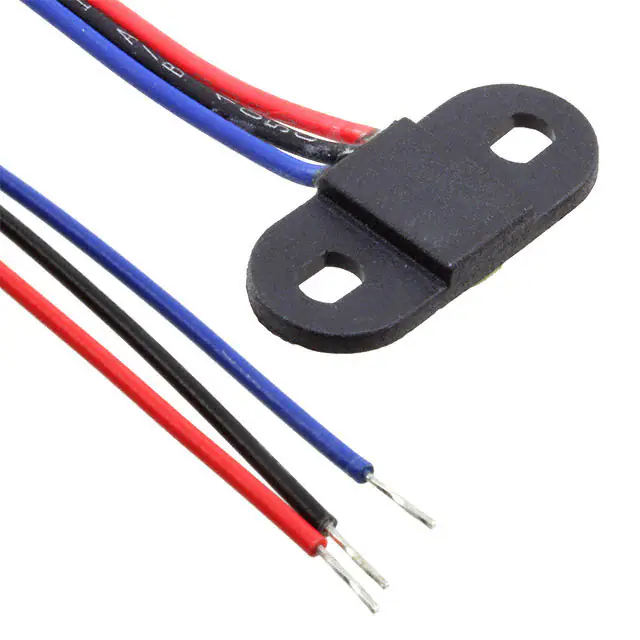
-
55100-AP-02-A
Littelfuse Inc.
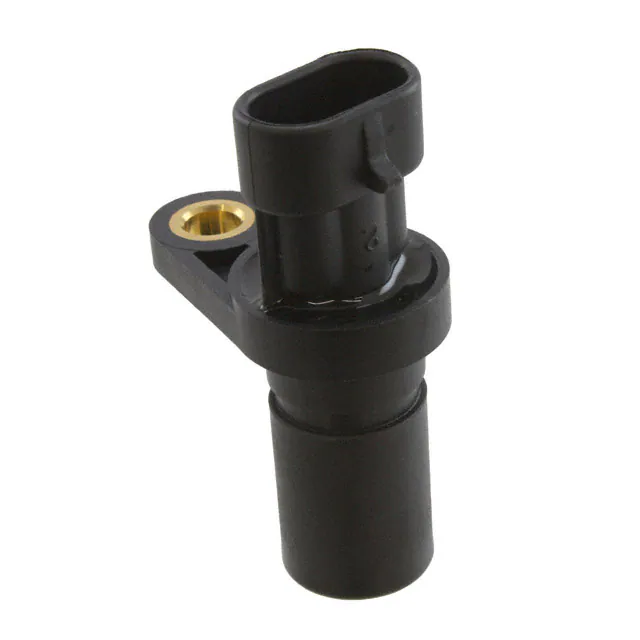
-
GS101201
ZF Electronics
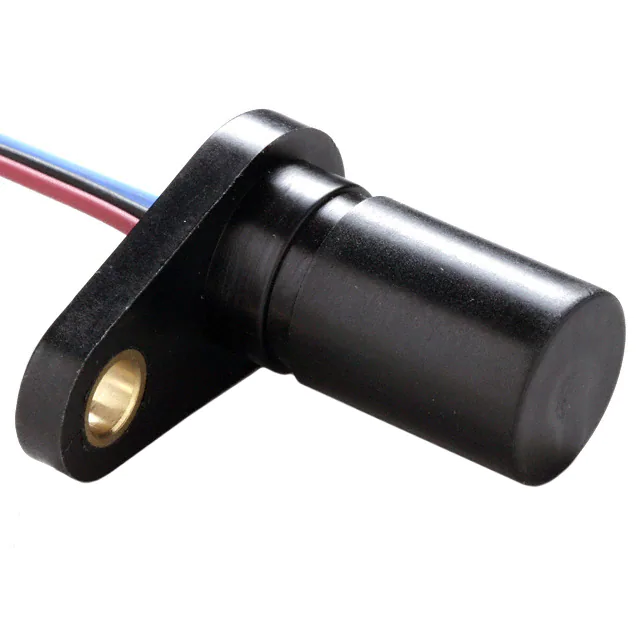
-
55505-00-02-A
Littelfuse Inc.
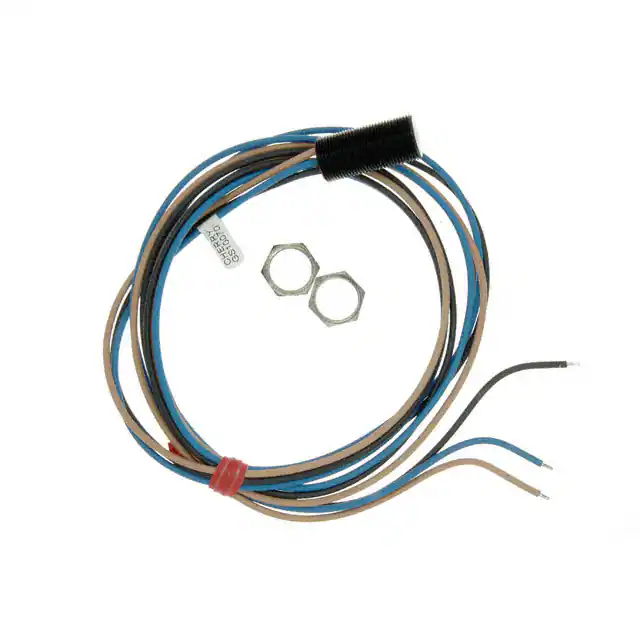
-
GS100701
ZF Electronics
Tech Hub

A practical engineering and sourcing framework covering lifecycle verification, lifetime-buy calculations, replacement qualification, supplier checks and counterfeit-risk controls.

TTL and CMOS logic families differ in thresholds, loading, output drive, power and timing. This engineering guide compares 74HC and 74HCT, calculates noise margins and checks 3.3 V/5 V compatibility.

A practical engineering guide to 3.3V and 5V logic compatibility, input thresholds, resistor dividers, translator ICs, MOSFET level shifting, I2C pull-ups, timing limits and power-sequencing risks.

The 74HC595 uses push-pull logic outputs, while the TPIC6B595 uses 50 V open-drain DMOS sinks for higher-power loads. This guide compares timing, current limits, 3.3 V interfacing, load wiring, thermal…

The 74HC595 converts serial data into eight stable parallel outputs. This guide covers pin functions, shift and storage timing, OE and MR behavior, drive-current limits, cascading, voltage compatibilit…

A technical comparison of level-sensitive latches and edge-triggered flip-flops, covering timing windows, setup and hold limits, master–slave operation, time borrowing, race-through, HDL inference and…

A D latch stores one bit while Enable controls when data can pass. This reference covers gate-level operation, truth tables, transparency, setup and hold timing, LE versus OE, common ICs and practical …

An SR latch stores one bit through cross-coupled feedback. This engineering reference covers NOR and NAND implementations, truth tables, forbidden-state recovery, gated operation, switch debouncing, fa…

Latch circuits retain one bit through feedback. This technical reference covers SR and D latches, truth tables, transparency, timing limits, latch-versus-flip-flop behavior, applications and common log…

An engineering guide to LED driver operation, constant-current and constant-voltage outputs, linear and switching topologies, dimming, IC selection, calculations, replacement compatibility, and fault c…


