
 My Inquiry
 My Account


Allegro MicroSystems A19570LUBBTN-FSWPH

- Part No.:
- A19570LUBBTN-FSWPH
- Manufacturer:
- Allegro MicroSystems
- Package:
- 2-SIP Module
- Datasheet:
-
 A19570LUBBTN-FSWPH.pdf
- Description:
- LARGE AIR GAP, VIBRATION IMMUNE,
- Quantity:
- Payment:

- Shipping:

Inventory:2,647
Please send an inquiry. Send us your inquiry, and we will respond immediately.
Product details
Overview
A19570LUBBTN-FSWPH from Allegro MicroSystems is a giant magnetoresistance (GMR) transmission speed and direction sensor IC in a 2-pin SIP UB package, delivering two-wire current-source output with forward/reverse pulse-width encoding (tW(FWD) = 45 µs typ., tW(REV) = 90 µs typ.), ASIL B safety compliance, and vibration immunity for automotive transmission applications.
For engineers reviewing the A19570LUBBTN-FSWPH datasheet, A19570LUBBTN-FSWPH pinout, A19570LUBBTN-FSWPH application, or A19570LUBBTN-FSWPH equivalent, this page provides verified technical context, real-world timing behavior under vibration, magnetic input thresholds (BDIFF(pk-pk) = 5 G min. parallel), EMC-robust integrated capacitor (10 nF), and functional alternatives for legacy design support.
Technical Context
The A19570LUBBTN-FSWPH implements SolidSpeed Digital Architecture with differential GMR sensing elements (E1–E4) and on-chip BiCMOS signal conditioning to reject common-mode magnetic interference. It operates over –40°C to +150°C ambient and supports front-biased ring magnet targets with 1.4–8 mm pitch.
Its two-wire current-source output uses pulse-width modulation: forward rotation (pin 1 → pin 2) yields 45 µs pulses, reverse yields 90 µs pulses, both referenced to ICC(LOW)/ICC(HIGH) thresholds. Integrated diagnostics detect regulator or front-end faults, triggering Error Protocol 1 (90 µs reset) or Error Protocol 2 (3–6 ms reset).
Key Specifications
| Parameter | Value and Actual Design Meaning |
|---|---|
| Supply Voltage | 4–24 V - Enables direct connection to automotive battery rails without external regulation. |
| Output Current Ratio | 1.9:1 (ICC(HIGH)/ICC(LOW)) - Provides robust signal margin against noise and line impedance variations. |
| Forward Pulse Width | 45 µs typ. - Encodes rotational direction unambiguously without additional wiring or protocol overhead. |
| Reverse Pulse Width | 90 µs typ. - Doubles forward width to ensure reliable direction discrimination at high speeds. |
| Differential Magnetic Input | 5 G pk-pk min. (parallel orientation) - Supports large air gaps (>2 mm) typical in transmission housings. |
| Vibration Immunity | High mode (–H suffix): 2× TCYCLE error window - Maintains valid output during gear-shift shock and driveline resonance. |
| ASIL Compliance | ASIL B certified - Meets ISO 26262 requirements via integrated diagnostics and EEPROM-traceable production. |
| Package | UB 2-pin SIP - Integrates 10 nF ceramic capacitor for enhanced EMC robustness and simplified PCB layout. |
Pinout & Package
Package: UB - 2-pin single-in-line (SIP), overmolded, lead-free with tin-plated leadframe, includes integrated 10 nF supply capacitor.
| Pin/Terminal | Circuit Role | Design Meaning |
|---|---|---|
| VCC | Supply Voltage | Pin 1 accepts 4–24 V input; internal zener clamp limits to 28 V for load-dump protection. |
| GND | Ground | Pin 2 serves as return path and current-sink reference; output current flows from VCC through load to GND. |
Key Features
| Feature | Design Value |
|---|---|
| GMR Differential Sensing | Rejects common-mode magnetic fields up to 80 G (Bx) while detecting <5 G differential signals - enables operation near motors and solenoids. |
| Integrated Capacitor | 10 nF ceramic capacitor embedded in UB package - eliminates external decoupling, reduces EMI susceptibility, and simplifies board layout. |
| SolidSpeed Architecture | Real-time adaptive thresholding and dynamic calibration - maintains accurate edge detection despite target runout, thermal drift, or mechanical misalignment. |
| Flexible Orientation | Operates in parallel, perpendicular, or intermediate mounting angles - allows drop-in replacement of Hall or other MR sensors without redesign. |
| EEPROM Traceability | Built-in scratch memory stores device-specific calibration and manufacturing data - supports IATF 16949 traceability requirements. |
| Two-Wire Protocol | Single-loop current output (5.9–16 mA swing) - reduces wiring cost and connector count versus three-wire voltage-output sensors. |
Applications
| Automatic Transmission Speed Sensing | Electric Power Steering (EPS) Motor Position |
|---|---|
|
Use Scenario: Monitoring input shaft speed and direction in 8-speed automatic transmissions under high-vibration, high-temperature conditions. IC Role / Device Role / Timing Role: GMR-based speed/direction sensor interfacing with ring magnet on gear carrier; outputs pulse-width-encoded current signal to transmission control unit (TCU). Use Value: Large air gap tolerance (≥2.5 mm) accommodates thermal expansion and housing tolerances; vibration immunity prevents false direction reporting during gear shifts. |
Use Scenario: Detecting motor rotor position and rotation direction in brushless EPS assist motors exposed to road shock and under-hood heat. IC Role / Device Role / Timing Role: Two-wire directional sensor replacing Hall latches; delivers forward/reverse pulses synchronized to motor pole transitions. Use Value: ASIL B compliance satisfies functional safety requirements for steering assist; integrated capacitor ensures EMC robustness in noisy motor drive environments. |
| Hybrid Vehicle Gearbox Monitoring | Commercial Vehicle Driveline Diagnostics |
|
Use Scenario: Measuring dual-motor engagement sequence and direction in hybrid power-split gearboxes where precise torque vectoring depends on relative shaft motion. IC Role / Device Role / Timing Role: Direction-sensitive speed sensor mounted on planetary carrier; outputs time-stamped pulse widths to hybrid control module for clutch actuation logic. Use Value: High sensitivity (5 G min.) enables use with low-coercivity magnets; wide temperature range (–40°C to +150°C) supports under-hood placement without heatsinking. |
Use Scenario: Real-time driveline direction validation in heavy-duty trucks to detect unintended reverse creep or driveline lockup during hill descent. IC Role / Device Role / Timing Role: Vibration-immune directional sensor on driveshaft flange; feeds direction-change timing data to vehicle stability control system. Use Value: First-direction-pulse delay ≤3.75×TCYCLE after vibration event ensures rapid recovery of directional integrity - critical for ESC intervention timing. |
Equivalent & Alternatives
The following parts are listed as comparable options for similar GMR transmission speed and direction sensing applications.
| Alternative Part | Technical Difference | Application Difference | Selection Advice |
|---|---|---|---|
| A19350LUBBTN-FSWPH | Lower operating frequency (≤7 kHz vs. 12 kHz), no ASIL B certification, same UB package and pinout. | Lacks integrated diagnostics and EEPROM; suitable only for non-safety-critical industrial gearbox monitoring. | Select when ASIL B is not required and cost optimization is prioritized over functional safety compliance. |
| ATS6858LSGT-T | Programmable output protocol (PWM or SENT), higher resolution (16-bit), but requires 3-wire interface and external capacitor. | Supports multi-pole counting and angular position estimation - extends beyond binary speed/direction into advanced motion profiling. | Choose when system-level diagnostics, programmable timing, or angular interpolation are needed beyond basic direction sensing. |
Compared with A19570LUBBTN-FSWPH, A19350LUBBTN-FSWPH sacrifices safety certification and high-speed capability for lower BOM cost, while ATS6858LSGT-T trades simplicity and two-wire integration for greater configurability and precision - neither offers pin-compatible replacement, but both serve overlapping transmission sensing roles with distinct trade-offs.
Availability
A19570LUBBTN-FSWPH is available at Aetrix Electronics and suitable for automotive transmission control, electric power steering systems, and hybrid driveline diagnostics requiring stable component supply despite end-of-life status.
Supply support for A19570LUBBTN-FSWPH includes scheduled delivery planning, volume procurement assistance, BOM continuity management, traceable sourcing, and lifecycle availability coordination for OEM customers, industrial embedded developers, connected-device designers, and electronics production programs.
Manufacturer
Allegro MicroSystems is a U.S.-based designer and manufacturer of high-performance magnetic sensing and power ICs, specializing in automotive-grade solutions for motion, current, and position sensing.
The A19570 product line was developed specifically for robust speed-and-direction sensing in automotive powertrain applications, emphasizing large air gap operation, vibration resilience, and ASIL-compliant diagnostics.
FAQ
What is the operating temperature range for the A19570LUBBTN-FSWPH?
The A19570LUBBTN-FSWPH operates across –40°C to +150°C ambient temperature, validated for under-hood automotive environments. Its GMR elements and BiCMOS circuitry maintain specified performance throughout this range, including magnetic temperature compensation (0.2%/°C) to counteract ferrite magnet weakening at elevated temperatures. This full-range specification applies directly to the A19570LUBBTN-FSWPH variant.
Does the A19570LUBBTN-FSWPH require an external capacitor?
No, the A19570LUBBTN-FSWPH integrates a 10 nF high-temperature ceramic capacitor within its UB package between pins 1 and 2. This eliminates the need for external decoupling components, reduces PCB footprint, and enhances EMC robustness - a key differentiator confirmed in the device's functional block diagram and package drawing.
How does the A19570LUBBTN-FSWPH indicate direction of rotation?
The A19570LUBBTN-FSWPH encodes direction via pulse-width modulation: forward rotation (pin 1 → pin 2) produces ~45 µs output pulses, while reverse rotation (pin 2 → pin 1) produces ~90 µs pulses. These widths are measured at the (ICC(HIGH) + ICC(LOW))/2 threshold and remain stable across voltage, temperature, and air gap - a core feature of the A19570LUBBTN-FSWPH's SolidSpeed architecture.
Is the A19570LUBBTN-FSWPH still in production?
No, the A19570LUBBTN-FSWPH is a discontinued product per Allegro's official status change dated December 16, 2025. It is no longer manufactured, and samples are unavailable. However, Aetrix Electronics maintains legacy inventory and supports last-time-buy procurement with full traceability and documentation for ongoing production programs.
What safety certification does the A19570LUBBTN-FSWPH hold?
The A19570LUBBTN-FSWPH is ASIL B compliant per ISO 26262, achieved through integrated diagnostics (regulator, front-end, oscillator monitoring) and a certified safety design process. Its ASIL-safe state outputs IRESET = 1.5–3.9 mA with defined reset times (90 µs for EP1, 3–6 ms for EP2), all verified and documented for the A19570LUBBTN-FSWPH variant.
A19570LUBBTN-FSWPH Specifications
- Product attributes
- Attribute value
- Manufacturer:
- Allegro MicroSystems
- Series:
- -
- Package/Case:
- 2-SIP Module
- Packaging:
- Tape & Reel (TR)
- Product Status:
- Last Time Buy
- Type:
- Hall Effect
- Output Type:
- Current
- Actuator Material:
- Magnet
- Termination Style:
- -
- Frequency:
- 12 kHz
- Voltage - Supply:
- 4V ~ 24V
- Must Operate:
- -
- Must Release:
- -
- Operating Temperature:
- -40°C ~ 150°C
- Grade:
- -
- Qualification:
- -
A19570LUBBTN-FSWPH FAQ
1.How can I place an order for A19570LUBBTN-FSWPH through Aetrix?
Please submit a Request for Quotation (RFQ) for A19570LUBBTN-FSWPH on Aetrix. Our sales agent will provide a competitive quotation and guide you through the order confirmation once you accept the terms.
2.Are the price and stock information for A19570LUBBTN-FSWPH reliable?
The price and inventory of A19570LUBBTN-FSWPH are updated periodically and may fluctuate due to market conditions. Stock and pricing data are typically refreshed every 24 hours. Quotation validity for A19570LUBBTN-FSWPH is usually 5 days.
3.What payment methods are accepted for A19570LUBBTN-FSWPH?
We accept Wire Transfer, PayPal, Credit Card, Western Union, MoneyGram, and Escrow for A19570LUBBTN-FSWPH transactions.
Note: Certain payment methods may incur a processing fee.
4.How is shipping managed for A19570LUBBTN-FSWPH?
A19570LUBBTN-FSWPH orders can be shipped via leading logistics carriers, including DHL, UPS, FedEx, TNT, or Registered Mail.
Once your A19570LUBBTN-FSWPH order is processed, you will receive an email with the shipment details and tracking number.
Note: Tracking information may take up to 24 hours to appear. Express delivery typically takes 3–5 business days.
5.How can I obtain technical support or documentation for A19570LUBBTN-FSWPH?
For technical support, including A19570LUBBTN-FSWPH datasheets, pinout diagrams, or application guidance, please contact our engineering support team. They can provide detailed documentation and assistance for your A19570LUBBTN-FSWPH requirements.
6.How does Aetrix verify that A19570LUBBTN-FSWPH is sourced from the original manufacturer or authorized distributors?
All A19570LUBBTN-FSWPH products on Aetrix are procured from qualified distributors and authorized channels. Our dedicated quality assurance team conducts strict verification, including traceability checks and, if necessary, third-party testing. This ensures that A19570LUBBTN-FSWPH meets industry standards.
7.What is the process for return or replacement of A19570LUBBTN-FSWPH?
All A19570LUBBTN-FSWPH units undergo pre-shipment inspection (PSI). If there is an issue with A19570LUBBTN-FSWPH, returns or replacements are accepted under the following conditions:
1.Quantity discrepancies, incorrect items, or visible external defects (such as breakage or corrosion), acknowledged by Aetrix.
2.The issue is reported within 90 days of delivery.
3.The A19570LUBBTN-FSWPH part is unused and in its original packaging.
Return procedure for A19570LUBBTN-FSWPH:
1.Submit a request within 90 days.
2.Obtain a Return Material Authorization (RMA) from Aetrix.
A19570LUBBTN-FSWPH Tags
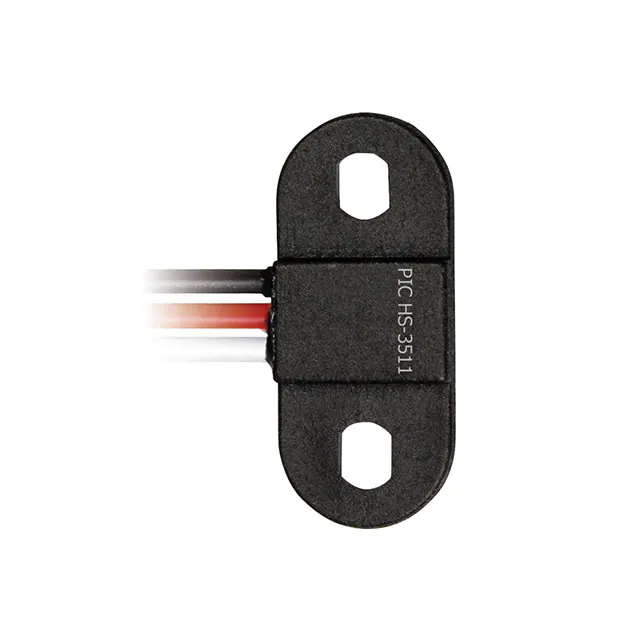
-
HS-3511-02-0300
PIC GmbH
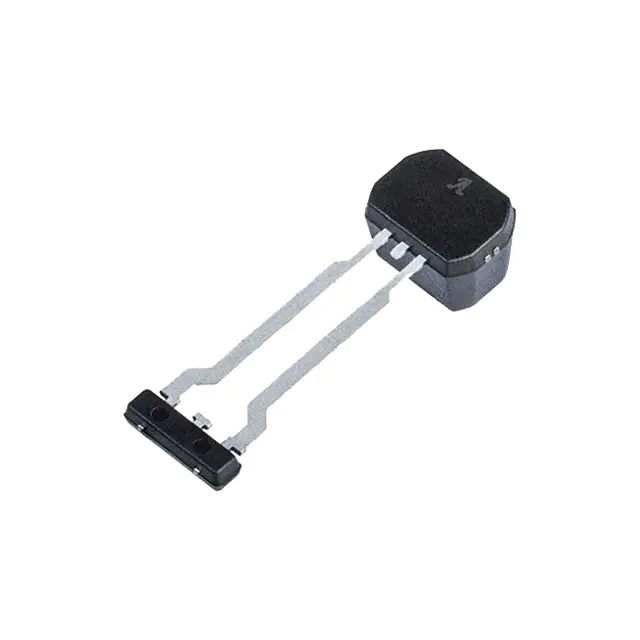
-
ATS19480LSNBTN
Allegro MicroSystems
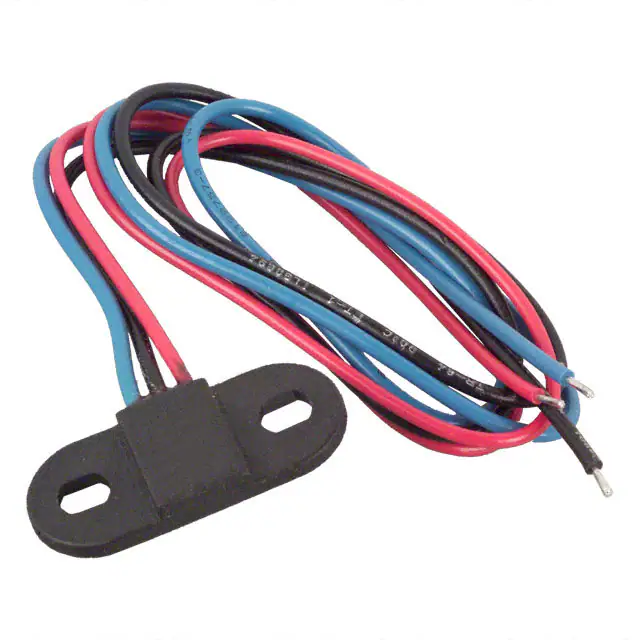
-
55100-2M-02-A
Littelfuse Inc.
-
55100-3H-02-A
Littelfuse Inc.
-
55100-3M-02-A
Littelfuse Inc.
-
55100-3M-03-A
Littelfuse Inc.
-
55100-3H-04-A
Littelfuse Inc.
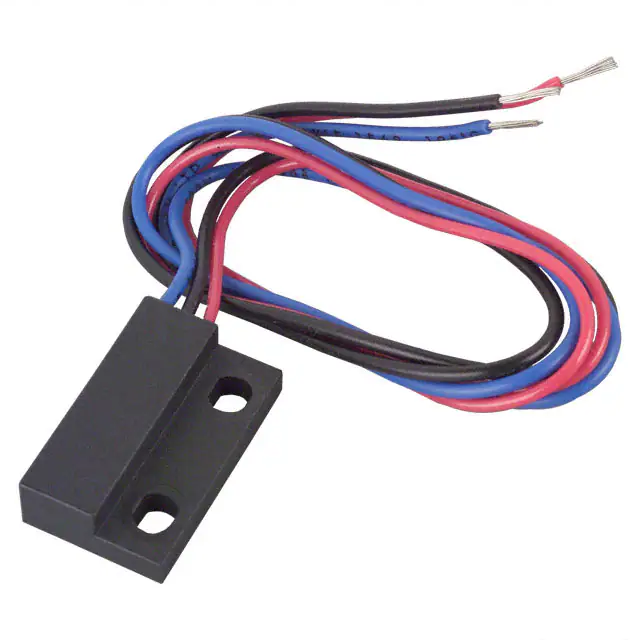
-
55140-3H-02-A
Littelfuse Inc.
-
55100-AP-02-A
Littelfuse Inc.
-
GS101201
ZF Electronics
-
55505-00-02-A
Littelfuse Inc.
-
GS100701
ZF Electronics
Tech Hub

A practical engineering and sourcing framework covering lifecycle verification, lifetime-buy calculations, replacement qualification, supplier checks and counterfeit-risk controls.

TTL and CMOS logic families differ in thresholds, loading, output drive, power and timing. This engineering guide compares 74HC and 74HCT, calculates noise margins and checks 3.3 V/5 V compatibility.

A practical engineering guide to 3.3V and 5V logic compatibility, input thresholds, resistor dividers, translator ICs, MOSFET level shifting, I2C pull-ups, timing limits and power-sequencing risks.

The 74HC595 uses push-pull logic outputs, while the TPIC6B595 uses 50 V open-drain DMOS sinks for higher-power loads. This guide compares timing, current limits, 3.3 V interfacing, load wiring, thermal…

The 74HC595 converts serial data into eight stable parallel outputs. This guide covers pin functions, shift and storage timing, OE and MR behavior, drive-current limits, cascading, voltage compatibilit…

A technical comparison of level-sensitive latches and edge-triggered flip-flops, covering timing windows, setup and hold limits, master–slave operation, time borrowing, race-through, HDL inference and…

A D latch stores one bit while Enable controls when data can pass. This reference covers gate-level operation, truth tables, transparency, setup and hold timing, LE versus OE, common ICs and practical …

An SR latch stores one bit through cross-coupled feedback. This engineering reference covers NOR and NAND implementations, truth tables, forbidden-state recovery, gated operation, switch debouncing, fa…

Latch circuits retain one bit through feedback. This technical reference covers SR and D latches, truth tables, transparency, timing limits, latch-versus-flip-flop behavior, applications and common log…

An engineering guide to LED driver operation, constant-current and constant-voltage outputs, linear and switching topologies, dimming, IC selection, calculations, replacement compatibility, and fault c…


