
 My Inquiry
 My Account


Allegro MicroSystems A19520LUBLTN-RSNLBYUG-A

- Part No.:
- A19520LUBLTN-RSNLBYUG-A
- Manufacturer:
- Allegro MicroSystems
- Category:
- Position, Proximity, Speed (Modules)
- Package:
- 2-SIP Module
- Datasheet:
-
 A19520LUBLTN-RSNLBYUG-A.pdf
- Description:
- SPD AND DIR SENSOR IC
- Quantity:
- Payment:

- Shipping:

Inventory:2,423
Please send an inquiry. Send us your inquiry, and we will respond immediately.
Product details
Overview
A19520LUBLTN-RSNLBYUG-A from Allegro MicroSystems is a vibration-tolerant, differential Hall-effect IC for transmission speed and direction sensing. It measures rotating ring magnets or ferrous targets with back-biasing, delivers two-wire current-source output using pulse-width protocol, supports ASIL B diagnostics, and operates from –40 °C to 150 °C in automotive transmission systems.
For engineers reviewing the A19520LUBLTN-RSNLBYUG-A datasheet, A19520LUBLTN-RSNLBYUG-A pinout, A19520LUBLTN-RSNLBYUG-A application, or A19520LUBLTN-RSNLBYUG-A equivalent, key selection factors include differential stray-field immunity, integrated 22 nF EMC capacitor, high-vibration immunity mode (–H variant), EEPROM traceability, and ISO 26262-certified safety design process.
Technical Context
The A19520LUBLTN-RSNLBYUG-A implements a SolidSpeed Digital Architecture with adaptive algorithms that dynamically adjust thresholds based on detected magnetic signal peaks, enabling stable operation under high-vibration and rapidly varying air gap conditions. Its dual-channel differential front end (E1–E2 and E2–E3) rejects common-mode magnetic interference while resolving direction via pulse-width encoding.
This variant uses the UBL package (2-pin SIP) with 22 nF integrated supply capacitor, features low-vibration immunity startup (1× TCYCLE), immediate direction change detection (–L suffix), and enables non-direction pulses during calibration (–Y suffix). It outputs ASIL warning pulses (63–121 μs) and critical error pulses (4–8 ms) per ISO 26262 compliance.
Key Specifications
| Parameter | Value and Actual Design Meaning |
|---|---|
| Supply Voltage Range | 4 V to 24 V - supports wide automotive battery range without external regulation |
| Operating Temperature | –40 °C to +150 °C - qualified for under-hood transmission control environments |
| Differential Magnetic Input | ±750 G peak-to-peak - enables robust sensing across large air gaps with ring magnets or ferrous targets |
| Pulse Width (Forward) | 45 μs typical - encodes rotation direction in two-wire current-loop output without additional wiring |
| Pulse Width (Reverse) | 90 μs typical - provides unambiguous direction discrimination at up to 12 kHz forward frequency |
| Internal Capacitor | 22 nF - integrated into overmolded UB package for guaranteed EMC performance and reduced PCB footprint |
| Vibration Immunity Mode | Low (–L) - detects direction changes within one target cycle, optimized for rapid gear engagement monitoring |
Pinout & Package
The A19520LUBLTN-RSNLBYUG-A is housed in a lead-free 2-pin miniature SIP package (suffix UB), overmolded with integrated capacitor and molded lead-stabilizing bar for mechanical robustness during shipping and SMT assembly.
| Pin/Terminal | Circuit Role | Design Meaning |
|---|---|---|
| 1 | VCC | Supply voltage input - accepts 4–24 V; includes undervoltage lockout (3.6–3.95 V) and reverse supply protection (–18 V) |
| 2 | GND | Ground reference - forms two-wire current-source output loop with VCC; referenced for internal diagnostics and EEPROM |
Key Features
| Feature | Design Value |
|---|---|
| Differential Hall Sensing | Rejects stray magnetic fields via E1–E2/E2–E3 channel pairing - eliminates need for external shielding in noisy transmission environments |
| Vibration-Tolerant Algorithm | Adapts switching thresholds in real time during oscillation - maintains direction accuracy even under 1× TCYCLE vibration events |
| ASIL B Diagnostics | Detects internal faults affecting output protocol integrity - reports ASIL warning (63–121 μs) or critical (4–8 ms) pulses without external controller intervention |
| Integrated 22 nF Capacitor | Embedded in UB package between pins 1 and 2 - ensures repeatable EMC performance and eliminates discrete capacitor placement and soldering |
| EEPROM Traceability | Factory-programmed identifier stored on-chip - enables full lot-level traceability for automotive OEM quality audits |
Applications
| Automatic Transmission Gear Position Sensing | CVT Ratio Monitoring |
|---|---|
Use Scenario: Detecting rotational speed and direction of input/output shafts in automatic transmissions to determine gear engagement state and torque transfer direction. IC Role / Device Role / Timing Role: Two-wire differential Hall sensor providing real-time speed/direction data to TCU via pulse-width modulated current output. Use Value: Enables closed-loop shift control with vibration immunity during clutch engagement, reducing shift shock and improving durability. | Use Scenario: Monitoring pulley rotation direction and speed in continuously variable transmissions to calculate ratio and prevent belt slippage. IC Role / Device Role / Timing Role: High-temperature Hall-effect sensor delivering direction-encoded pulses to CVT controller for real-time ratio calculation. Use Value: Supports precise ratio tracking under thermal cycling and mechanical vibration, extending belt life and improving fuel economy. |
| Electric Powertrain Motor Rotor Position | Hybrid Vehicle Regenerative Braking Detection |
Use Scenario: Sensing rotor position and direction in e-axle traction motors where space-constrained packaging and EMI resilience are critical. IC Role / Device Role / Timing Role: Compact 2-pin SIP sensor interfacing directly to motor control unit via two-wire current loop, eliminating isolated communication interfaces. Use Value: Reduces system BOM by integrating EMC capacitor and diagnostics, while maintaining ASIL B compliance for functional safety. | Use Scenario: Detecting wheel rotation reversal during regenerative braking to trigger brake-by-wire coordination and energy recovery optimization. IC Role / Device Role / Timing Role: Vibration-immune direction sensor feeding real-time reversal event detection to vehicle dynamics controller. Use Value: Enables immediate torque vectoring response upon direction change, improving braking stability and maximizing energy capture efficiency. |
Equivalent & Alternatives
The following parts are listed as comparable options for similar Hall-effect speed and direction sensing applications.
| Alternative Part | Technical Difference | Application Difference | Selection Advice |
|---|---|---|---|
| A19350LUBBTN-RSNHPYUE-A | Single-ended Hall architecture; no differential pair; 10 nF internal capacitor; lacks ASIL diagnostics | Suitable for non-safety-critical gearbox feedback where cost is prioritized over vibration immunity | Select only when ISO 26262 compliance is not required and target vibration levels are low |
| ATS6858LSGTN-RSNLBYUG-A | Differential Hall with integrated magnet; 125 °C max ambient; no EEPROM; ASIL B support limited to external monitoring | Designed for crankshaft/camshaft sensing; lacks transmission-specific vibration algorithms and calibrated pulse widths | Use only if integrated magnet simplifies mechanical design and lower temperature rating is acceptable |
Compared with A19350LUBBTN-RSNHPYUE-A and ATS6858LSGTN-RSNLBYUG-A, the A19520LUBLTN-RSNLBYUG-A uniquely combines differential vibration immunity, on-chip ASIL B diagnostics, EEPROM traceability, and transmission-optimized pulse timing - making it the only option qualified for ASIL B-compliant transmission control systems requiring zero-speed detection and dynamic air gap tolerance.
Availability
A19520LUBLTN-RSNLBYUG-A is available at Aetrix Electronics and suitable for automatic transmission control, CVT ratio monitoring, and electric powertrain rotor position sensing requiring stable component supply across automotive production lifecycles.
Supply support for A19520LUBLTN-RSNLBYUG-A includes scheduled delivery planning, volume procurement assistance, BOM continuity management, traceable sourcing, and lifecycle availability coordination for OEM customers, industrial embedded developers, connected-device designers, and electronics production programs.
Manufacturer
Allegro MicroSystems is a U.S.-based semiconductor company specializing in high-performance magnetic sensing and power ICs for automotive, industrial, and consumer applications.
The A19520 product line was developed specifically for vibration-prone transmission speed and direction sensing, with emphasis on ISO 26262 ASIL B compliance, differential stray-field rejection, and integrated EMC components.
FAQ
What is the function of the integrated 22 nF capacitor in the A19520LUBLTN-RSNLBYUG-A?
The integrated 22 nF capacitor in the A19520LUBLTN-RSNLBYUG-A is connected between pins 1 (VCC) and 2 (GND) to provide local supply decoupling and electromagnetic compatibility (EMC) filtering. It eliminates the need for an external capacitor on the PCB, ensuring consistent noise suppression across all units and simplifying layout in space-constrained transmission control modules. This capacitor is part of the overmolded UB package and is validated for operation across the full –40 °C to +150 °C temperature range.
How does the A19520LUBLTN-RSNLBYUG-A detect direction of rotation?
The A19520LUBLTN-RSNLBYUG-A detects direction by measuring phase relationships between two differential Hall channels (E1–E2 and E2–E3) and encoding direction into output pulse width: forward rotation produces ~45 μs pulses, reverse produces ~90 μs pulses. The –R suffix in the part number indicates reversed pin interpretation (pin 2 to pin 1 = forward), but A19520LUBLTN-RSNLBYUG-A uses the –F configuration (pin 1 to pin 2 = forward). Direction output is available after initial calibration completes within 4× TCYCLE.
What safety certifications apply to the A19520LUBLTN-RSNLBYUG-A?
The A19520LUBLTN-RSNLBYUG-A is designed to the ISO 26262:2011 ASIL B safety standard, with certified development processes and integrated diagnostics that monitor internal failures affecting output protocol accuracy. It generates ASIL warning pulses (63–121 μs) for recoverable faults and ASIL critical pulses (4–8 ms) for unrecoverable faults. The device does not require external safety monitors to meet ASIL B requirements, though system-level integration must follow the A19520 Safety Manual.
Can the A19520LUBLTN-RSNLBYUG-A be used with ferrous targets?
Yes, the A19520LUBLTN-RSNLBYUG-A can be used with ferrous targets when back-biased with an appropriate permanent magnet placed behind the sensor. In this configuration, the ferrous target modulates the bias field, and the differential Hall elements detect the resulting field variations. The IC's solid-state algorithm adapts to the signal amplitude and provides stable speed/direction output regardless of whether ring magnets or ferrous targets are used - a key feature confirmed in the A19520 datasheet Rev. 5 functional description.
What is the meaning of the "-RSNLBYUG-A" suffix in A19520LUBLTN-RSNLBYUG-A?
The "-RSNLBYUG-A" suffix in A19520LUBLTN-RSNLBYUG-A decodes as follows: R = forward rotation defined as pin 2 to pin 1; S = single pulse per pole pair; N = narrow pulse width option (45/90/180 μs); L = low vibration immunity mode; B = blanked non-direction pulses during running mode; Y = enabled non-direction pulses during calibration; U = extended sudden air gap feature disabled; G = 0.04%/°C magnetic temperature coefficient; and -A = ASIL protocol enabled. This exact configuration is documented in the A19520 Selection Guide and verified in the datasheet Rev. 5.
A19520LUBLTN-RSNLBYUG-A Specifications
- Product attributes
- Attribute value
- Manufacturer:
- Allegro MicroSystems
- Series:
- A19520
- Package/Case:
- 2-SIP Module
- Packaging:
- Tape & Reel (TR)
- Product Status:
- Active
- Type:
- Hall Effect Sensor
- Output Type:
- Digital
- Actuator Material:
- Magnet
- Termination Style:
- PC Pin
- Frequency:
- 12 kHz
- Voltage - Supply:
- 4V ~ 24V
- Must Operate:
- 3mT
- Must Release:
- -
- Operating Temperature:
- -40°C ~ 150°C
- Grade:
- -
- Qualification:
- -
A19520LUBLTN-RSNLBYUG-A FAQ
1.How can I place an order for A19520LUBLTN-RSNLBYUG-A through Aetrix?
Please submit a Request for Quotation (RFQ) for A19520LUBLTN-RSNLBYUG-A on Aetrix. Our sales agent will provide a competitive quotation and guide you through the order confirmation once you accept the terms.
2.Are the price and stock information for A19520LUBLTN-RSNLBYUG-A reliable?
The price and inventory of A19520LUBLTN-RSNLBYUG-A are updated periodically and may fluctuate due to market conditions. Stock and pricing data are typically refreshed every 24 hours. Quotation validity for A19520LUBLTN-RSNLBYUG-A is usually 5 days.
3.What payment methods are accepted for A19520LUBLTN-RSNLBYUG-A?
We accept Wire Transfer, PayPal, Credit Card, Western Union, MoneyGram, and Escrow for A19520LUBLTN-RSNLBYUG-A transactions.
Note: Certain payment methods may incur a processing fee.
4.How is shipping managed for A19520LUBLTN-RSNLBYUG-A?
A19520LUBLTN-RSNLBYUG-A orders can be shipped via leading logistics carriers, including DHL, UPS, FedEx, TNT, or Registered Mail.
Once your A19520LUBLTN-RSNLBYUG-A order is processed, you will receive an email with the shipment details and tracking number.
Note: Tracking information may take up to 24 hours to appear. Express delivery typically takes 3–5 business days.
5.How can I obtain technical support or documentation for A19520LUBLTN-RSNLBYUG-A?
For technical support, including A19520LUBLTN-RSNLBYUG-A datasheets, pinout diagrams, or application guidance, please contact our engineering support team. They can provide detailed documentation and assistance for your A19520LUBLTN-RSNLBYUG-A requirements.
6.How does Aetrix verify that A19520LUBLTN-RSNLBYUG-A is sourced from the original manufacturer or authorized distributors?
All A19520LUBLTN-RSNLBYUG-A products on Aetrix are procured from qualified distributors and authorized channels. Our dedicated quality assurance team conducts strict verification, including traceability checks and, if necessary, third-party testing. This ensures that A19520LUBLTN-RSNLBYUG-A meets industry standards.
7.What is the process for return or replacement of A19520LUBLTN-RSNLBYUG-A?
All A19520LUBLTN-RSNLBYUG-A units undergo pre-shipment inspection (PSI). If there is an issue with A19520LUBLTN-RSNLBYUG-A, returns or replacements are accepted under the following conditions:
1.Quantity discrepancies, incorrect items, or visible external defects (such as breakage or corrosion), acknowledged by Aetrix.
2.The issue is reported within 90 days of delivery.
3.The A19520LUBLTN-RSNLBYUG-A part is unused and in its original packaging.
Return procedure for A19520LUBLTN-RSNLBYUG-A:
1.Submit a request within 90 days.
2.Obtain a Return Material Authorization (RMA) from Aetrix.
A19520LUBLTN-RSNLBYUG-A Tags
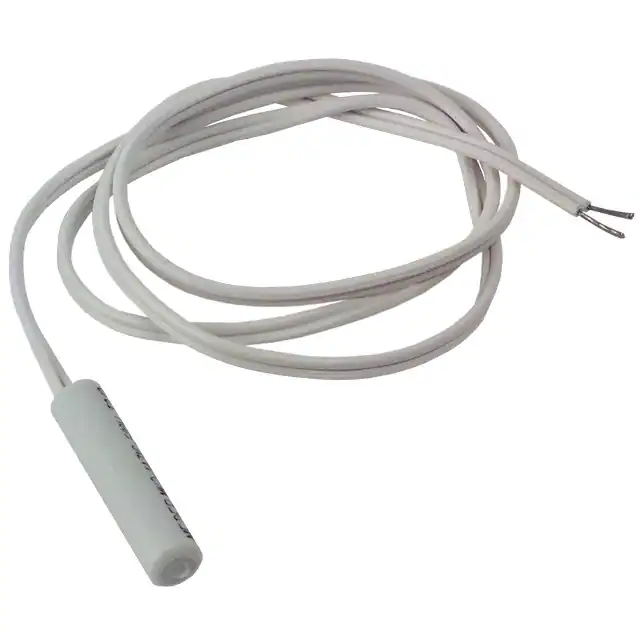
-
MK03-1A66B-500W
Standex-Meder Electronics
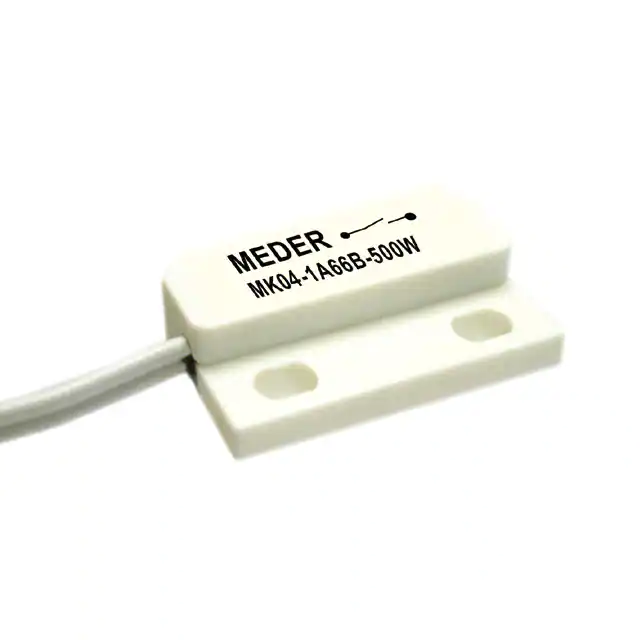
-
MK04-1A66B-500W
Standex-Meder Electronics
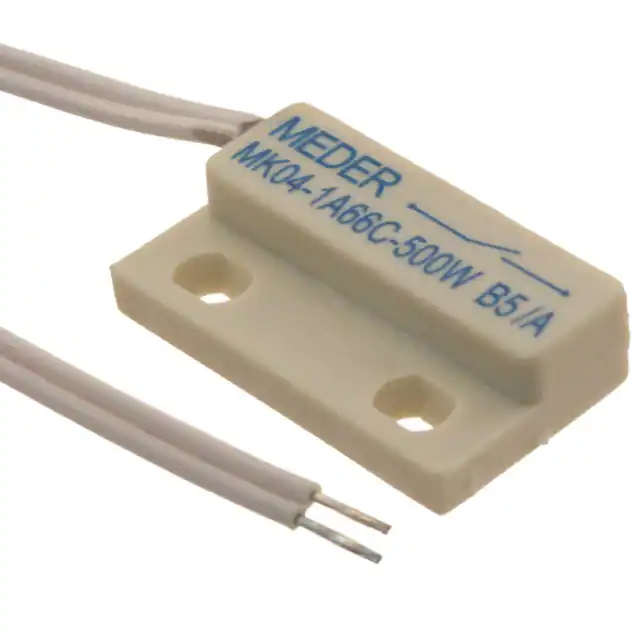
-
MK04-1A66C-500W
Standex-Meder Electronics
-
MK03-1A66C-500W
Standex-Meder Electronics
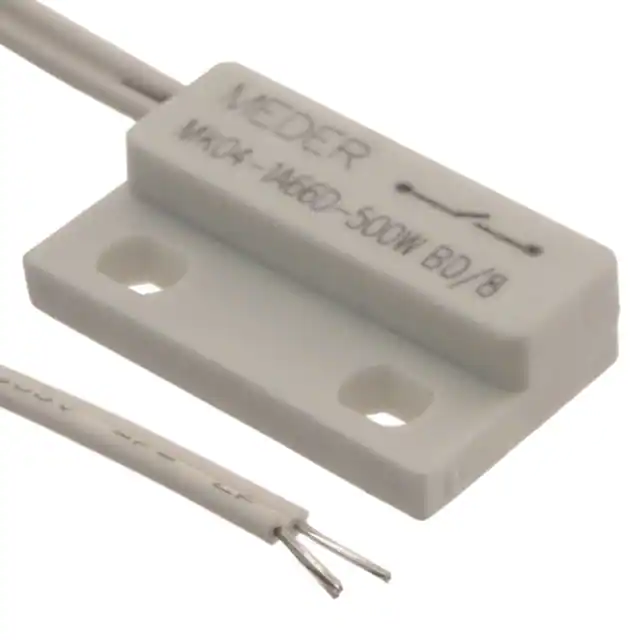
-
MK04-1A66D-500W
Standex-Meder Electronics
-
59025-1-U-05-A
Littelfuse Inc.
-
59145-010
Littelfuse Inc.
-
59150-010
Littelfuse Inc.
-
59140-010
Littelfuse Inc.
-
59025-1-S-02-A
Littelfuse Inc.
-
59145-1-S-02-A
Littelfuse Inc.
-
59150-1-S-02-A
Littelfuse Inc.
Tech Hub

A practical engineering and sourcing framework covering lifecycle verification, lifetime-buy calculations, replacement qualification, supplier checks and counterfeit-risk controls.

TTL and CMOS logic families differ in thresholds, loading, output drive, power and timing. This engineering guide compares 74HC and 74HCT, calculates noise margins and checks 3.3 V/5 V compatibility.

A practical engineering guide to 3.3V and 5V logic compatibility, input thresholds, resistor dividers, translator ICs, MOSFET level shifting, I2C pull-ups, timing limits and power-sequencing risks.

The 74HC595 uses push-pull logic outputs, while the TPIC6B595 uses 50 V open-drain DMOS sinks for higher-power loads. This guide compares timing, current limits, 3.3 V interfacing, load wiring, thermal…

The 74HC595 converts serial data into eight stable parallel outputs. This guide covers pin functions, shift and storage timing, OE and MR behavior, drive-current limits, cascading, voltage compatibilit…

A technical comparison of level-sensitive latches and edge-triggered flip-flops, covering timing windows, setup and hold limits, master–slave operation, time borrowing, race-through, HDL inference and…

A D latch stores one bit while Enable controls when data can pass. This reference covers gate-level operation, truth tables, transparency, setup and hold timing, LE versus OE, common ICs and practical …

An SR latch stores one bit through cross-coupled feedback. This engineering reference covers NOR and NAND implementations, truth tables, forbidden-state recovery, gated operation, switch debouncing, fa…

Latch circuits retain one bit through feedback. This technical reference covers SR and D latches, truth tables, transparency, timing limits, latch-versus-flip-flop behavior, applications and common log…

An engineering guide to LED driver operation, constant-current and constant-voltage outputs, linear and switching topologies, dimming, IC selection, calculations, replacement compatibility, and fault c…


