
 My Inquiry
 My Account


Allegro MicroSystems A3904ECGTR
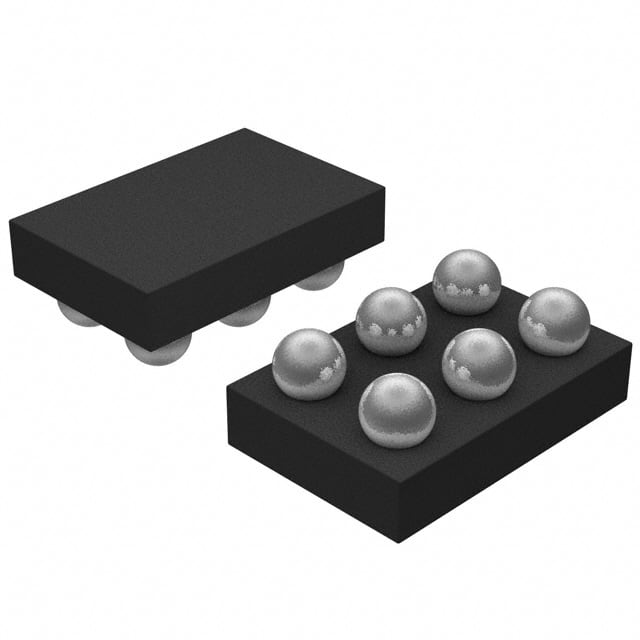
- Part No.:
- A3904ECGTR
- Manufacturer:
- Allegro MicroSystems
- Category:
- Motor Drivers, Controllers
- Package:
- 6-XFBGA, WLCSP
- Datasheet:
-
 A3904ECGTR.pdf
- Description:
- IC MOTOR DRIVER 2.4V-5.5V 6WLCSP
- Quantity:
- Payment:

- Shipping:

Inventory:3,126
Please send an inquiry. Send us your inquiry, and we will respond immediately.
Product details
Overview
A3904ECGTR from Allegro MicroSystems is a discontinued low-voltage voice coil motor (VCM) driver IC with I²C-compatible serial interface, designed for camera autofocus and zoom actuation in portable devices. It delivers programmable sink output current up to 127.5 mA in 500 µA steps, operates from 2.4 V to 5.5 V, features thermal shutdown and undervoltage lockout, and uses a 6-ball WLCSP (1.1 mm × 0.7 mm) package.
For engineers reviewing the A3904ECGTR datasheet, A3904ECGTR pinout, A3904ECGTR application, or A3904ECGTR equivalent, this page provides verified technical context, validated pin functions, confirmed electrical specifications, real-world use scenarios in optical modules, and two documented alternative drivers for legacy design support.
Technical Context
The A3904ECGTR integrates an 8-bit DAC with ±4 LSB relative accuracy and ±1 LSB differential nonlinearity, directly controlling a MOSFET sink output stage. Its I²C interface supports up to 400 kHz clock rate and fixed logic thresholds (VIH = 1.26 V, VIL = 0.84 V), enabling interoperability with 1.8 V microcontrollers independent of VDD.
Internal protection includes undervoltage lockout (2.1–2.395 V enable threshold with 100 mV hysteresis) and thermal shutdown at 165°C with 15°C hysteresis. Sleep mode reduces supply current to <100 nA when SLEEPZ is pulled low, preserving battery life in standby.
Key Specifications
| Parameter | Value and Actual Design Meaning |
|---|---|
| Output Current Range | 0 to 127.5 mA in 500 µA increments - enables precise VCM positioning for autofocus resolution |
| Supply Voltage Range | 2.4 V to 5.5 V - compatible with single-cell Li-ion and dual-cell alkaline power rails |
| I²C Clock Frequency | Up to 400 kHz - supports fast register writes for responsive motor control loops |
| Sleep Mode Current | <100 nA - extends battery life during idle periods in mobile camera modules |
| Operating Temperature | –40°C to +85°C - qualified for consumer handheld and automotive cabin camera environments |
| Package Dimensions | 1.1 mm × 0.7 mm, 0.5 mm max height WLCSP - fits ultra-thin camera module PCBs |
| Output On-Resistance | 3 Ω typical - minimizes voltage drop and power loss at full 127.5 mA load |
Pinout & Package
Package: 6-ball bumped wafer-level chip-scale package (WLCSP), RoHS-compliant, Pb-free chip with high-temperature solder balls.
| Pin/Terminal | Circuit Role | Design Meaning |
|---|---|---|
| A1 | SDA | I²C bidirectional data line - open-drain, fixed-threshold input/output for level-shifted communication |
| A2 | SCL | I²C clock input - synchronous timing reference for register access and DAC updates |
| A3 | VDD | Power supply input - powers internal bandgap reference, DAC, and output stage |
| B3 | GND | Ground reference - common return path for supply, logic, and output current |
| B2 | IOUT | Sink output terminal - drives VCM coil by sinking current from external supply through motor winding |
| B1 | SLEEPZ | Active-low standby control - disables output MOSFET and reduces quiescent current to <100 nA |
Key Features
| Feature | Design Value |
|---|---|
| Fixed I²C logic thresholds | VIH = 1.26 V, VIL = 0.84 V - allows direct interfacing with 1.8 V microcontrollers without level shifters |
| 8-bit DAC with 500 µA LSB | 255-step linear current control - supports fine-grained focus adjustment in compact camera modules |
| Integrated clamp diode | Diode from IOUT to VDD - suppresses inductive kickback during motor turn-off, eliminating external protection |
| Undervoltage lockout | 2.1–2.395 V activation with 100 mV hysteresis - prevents erratic operation during brown-out conditions |
| Thermal shutdown | 165°C trip point with 15°C hysteresis - protects device and adjacent components under sustained overload |
Applications
| Smartphone Camera Autofocus | Tablet Camera Zoom Actuation |
|---|---|
|
Use Scenario: Precise lens positioning in space-constrained rear-facing smartphone cameras requiring sub-millisecond response and minimal power draw between focus events. IC Role / Device Role / Timing Role: VCM driver providing digitally programmable sink current to move lens elements via closed-loop I²C commands from baseband processor. Use Value: 500 µA current resolution enables micron-level lens displacement; 1.1 mm × 0.7 mm WLCSP fits within 3.5 mm camera module height envelope. |
Use Scenario: Dual-motor zoom control in mid-size tablets where mechanical travel distance exceeds autofocus range and thermal dissipation must be managed across extended video capture sessions. IC Role / Device Role / Timing Role: Primary current sink driver for zoom coil, coordinated with companion A3904ECGTR or similar to maintain synchronized motion profiles. Use Value: 127.5 mA max output sustains zoom acceleration without external boost circuitry; thermal shutdown prevents coil overheating during continuous operation. |
| Automotive Cabin Monitoring Camera | UAV Optical Stabilization Module |
|
Use Scenario: Driver-facing and occupant-monitoring cameras in vehicles operating across –40°C to +85°C ambient, requiring reliable startup and stable current delivery despite battery voltage sag. IC Role / Device Role / Timing Role: VCM actuator driver receiving I²C commands from ADAS SoC to adjust field-of-view or compensate for vehicle vibration. Use Value: UVLO with 2.1 V threshold ensures clean initialization during cold cranking; wide temperature rating avoids calibration drift over thermal cycles. |
Use Scenario: Gimbal-mounted imaging payload in small UAVs where weight, size, and power efficiency constrain actuator electronics. IC Role / Device Role / Timing Role: Low-power VCM driver for image stabilization coils, activated only during flight phases requiring active correction. Use Value: <100 nA sleep current extends flight time; 0.5 mm max package height reduces center-of-gravity impact on gimbal dynamics. |
Equivalent & Alternatives
The following parts are listed as comparable options for similar voice coil motor driver applications.
| Alternative Part | Technical Difference | Application Difference | Selection Advice |
|---|---|---|---|
| TI DRV2605L | Integrated haptic driver with programmable waveform engine; 250 mA peak output; I²C interface; requires external current-sense resistor for VCM mode | Designed primarily for ERM/LRA haptics; VCM support is secondary and lacks dedicated linear current DAC architecture | Use only if migrating to multi-function haptic/VCM platform; requires firmware adaptation and layout changes for current sensing |
| ROHM BU3052FV | Dedicated VCM driver with 100 mA max output; 1.8 V to 5.5 V supply; SPI interface; no integrated clamp diode | Lower max current and different serial protocol; requires external flyback diode and level-shifting for 1.8 V MCU compatibility | Consider for cost-sensitive designs where 100 mA suffices and SPI infrastructure already exists; adds BOM and layout overhead |
Compared with A3904ECGTR, DRV2605L offers higher peak current but sacrifices precision linear control and integrated protection, while BU3052FV matches the VCM focus but lacks I²C compatibility and built-in clamp diode-both require hardware and firmware rework not needed with the original A3904ECGTR implementation.
Availability
A3904ECGTR is available at Aetrix Electronics and suitable for legacy camera module repair, end-of-life production continuity, and industrial inspection system maintenance requiring stable component supply amid obsolescence challenges.
Supply support for A3904ECGTR includes scheduled delivery planning, volume procurement assistance, BOM continuity management, traceable sourcing, and lifecycle availability coordination for OEM customers, industrial embedded developers, connected-device designers, and electronics production programs.
Manufacturer
Allegro MicroSystems is a U.S.-based designer and manufacturer of high-performance magnetic sensors and power ICs, headquartered in Worcester, Massachusetts.
The A3904ECGTR belongs to Allegro's low-voltage motor driver product line, engineered specifically for miniature optical actuation in battery-powered imaging systems where size, precision, and power efficiency are critical.
FAQ
Is A3904ECGTR still in production?
No, the A3904ECGTR is a discontinued product. Allegro officially ended production on March 4, 2013. It is not recommended for new designs, and samples are no longer available. Aetrix Electronics maintains limited legacy stock for existing production continuity and repair applications, with full traceability and documentation for A3904ECGTR.
What is the function of the SLEEPZ pin on A3904ECGTR?
The SLEEPZ pin on A3904ECGTR is an active-low standby control input. When driven logic low, it disables the internal output MOSFET and reduces total supply current to less than 100 nA. This feature preserves battery life in portable camera modules during idle periods, and the A3904ECGTR resumes normal operation within 10 µs after SLEEPZ returns high.
Does A3904ECGTR support I²C level shifting?
Yes, A3904ECGTR supports I²C level shifting: its SDA and SCL input thresholds are fixed at approximately 1.26 V (VIH) and 0.84 V (VIL), independent of VDD. This allows direct connection to 1.8 V microcontrollers while operating from a 2.4–5.5 V supply, eliminating external level shifters in systems using A3904ECGTR.
What protection features are integrated into A3904ECGTR?
A3904ECGTR integrates thermal shutdown (trip at 165°C with 15°C hysteresis), undervoltage lockout (enable threshold 2.1–2.395 V), and an internal clamp diode from IOUT to VDD. These protect against overtemperature, brown-out, and inductive voltage spikes during VCM coil de-energization-no external components required for basic protection in A3904ECGTR implementations.
Can A3904ECGTR drive both autofocus and zoom motors simultaneously?
No, a single A3904ECGTR drives one VCM coil via its single IOUT sink output. Dual-motor systems (e.g., separate AF and zoom actuators) require two A3904ECGTR units or a multi-channel driver. Each A3904ECGTR supports independent I²C addressing (0x18, 0x1A, 0x1C, or 0x1E), enabling coexistence on the same bus without conflict.
A3904ECGTR Specifications
- Product attributes
- Attribute value
- Manufacturer:
- Allegro MicroSystems
- Series:
- -
- Package/Case:
- 6-XFBGA, WLCSP
- Packaging:
- Tape & Reel (TR)
- Product Status:
- Obsolete
- Motor Type - Stepper:
- -
- Motor Type - AC, DC:
- Voice Coil Motor
- Function:
- Driver - Fully Integrated, Control and Power Stage
- Output Configuration:
- Low Side
- Interface:
- I2C
- Technology:
- Power MOSFET
- Step Resolution:
- -
- Applications:
- Camera
- Current - Output:
- 127.5mA
- Voltage - Supply:
- 2.4V ~ 5.5V
- Voltage - Load:
- 2.4V ~ 5.5V
- Operating Temperature:
- -40°C ~ 150°C (TJ)
- Grade:
- -
- Qualification:
- -
- Mounting Type:
- Surface Mount
- Supplier Device Package:
- 6-WLCSP (1.1x0.70)
A3904ECGTR FAQ
1.How can I place an order for A3904ECGTR through Aetrix?
Please submit a Request for Quotation (RFQ) for A3904ECGTR on Aetrix. Our sales agent will provide a competitive quotation and guide you through the order confirmation once you accept the terms.
2.Are the price and stock information for A3904ECGTR reliable?
The price and inventory of A3904ECGTR are updated periodically and may fluctuate due to market conditions. Stock and pricing data are typically refreshed every 24 hours. Quotation validity for A3904ECGTR is usually 5 days.
3.What payment methods are accepted for A3904ECGTR?
We accept Wire Transfer, PayPal, Credit Card, Western Union, MoneyGram, and Escrow for A3904ECGTR transactions.
Note: Certain payment methods may incur a processing fee.
4.How is shipping managed for A3904ECGTR?
A3904ECGTR orders can be shipped via leading logistics carriers, including DHL, UPS, FedEx, TNT, or Registered Mail.
Once your A3904ECGTR order is processed, you will receive an email with the shipment details and tracking number.
Note: Tracking information may take up to 24 hours to appear. Express delivery typically takes 3–5 business days.
5.How can I obtain technical support or documentation for A3904ECGTR?
For technical support, including A3904ECGTR datasheets, pinout diagrams, or application guidance, please contact our engineering support team. They can provide detailed documentation and assistance for your A3904ECGTR requirements.
6.How does Aetrix verify that A3904ECGTR is sourced from the original manufacturer or authorized distributors?
All A3904ECGTR products on Aetrix are procured from qualified distributors and authorized channels. Our dedicated quality assurance team conducts strict verification, including traceability checks and, if necessary, third-party testing. This ensures that A3904ECGTR meets industry standards.
7.What is the process for return or replacement of A3904ECGTR?
All A3904ECGTR units undergo pre-shipment inspection (PSI). If there is an issue with A3904ECGTR, returns or replacements are accepted under the following conditions:
1.Quantity discrepancies, incorrect items, or visible external defects (such as breakage or corrosion), acknowledged by Aetrix.
2.The issue is reported within 90 days of delivery.
3.The A3904ECGTR part is unused and in its original packaging.
Return procedure for A3904ECGTR:
1.Submit a request within 90 days.
2.Obtain a Return Material Authorization (RMA) from Aetrix.
A3904ECGTR Tags
-
DRV2603RUNR
Texas Instruments
-
DRV8837CDSGR
Texas Instruments
-
DRV8837DSGR
Texas Instruments
-
DRV8838DSGR
Texas Instruments
-
DRV8839DSSR
Texas Instruments
-
EMC2301-1-ACZL-TR
Microchip Technology
-
DRV8231ADSGR
Texas Instruments
-
EMC2302-2-AIZL-TR
Microchip Technology
-
DRV8800PWPR
Texas Instruments
-
DRV8835DSSR
Texas Instruments
-
EMC2303-1-KP-TR
Microchip Technology
-
DRV8876PWPR
Texas Instruments
Tech Hub

A practical engineering and sourcing framework covering lifecycle verification, lifetime-buy calculations, replacement qualification, supplier checks and counterfeit-risk controls.

TTL and CMOS logic families differ in thresholds, loading, output drive, power and timing. This engineering guide compares 74HC and 74HCT, calculates noise margins and checks 3.3 V/5 V compatibility.

A practical engineering guide to 3.3V and 5V logic compatibility, input thresholds, resistor dividers, translator ICs, MOSFET level shifting, I2C pull-ups, timing limits and power-sequencing risks.

The 74HC595 uses push-pull logic outputs, while the TPIC6B595 uses 50 V open-drain DMOS sinks for higher-power loads. This guide compares timing, current limits, 3.3 V interfacing, load wiring, thermal…

The 74HC595 converts serial data into eight stable parallel outputs. This guide covers pin functions, shift and storage timing, OE and MR behavior, drive-current limits, cascading, voltage compatibilit…

A technical comparison of level-sensitive latches and edge-triggered flip-flops, covering timing windows, setup and hold limits, master–slave operation, time borrowing, race-through, HDL inference and…

A D latch stores one bit while Enable controls when data can pass. This reference covers gate-level operation, truth tables, transparency, setup and hold timing, LE versus OE, common ICs and practical …

An SR latch stores one bit through cross-coupled feedback. This engineering reference covers NOR and NAND implementations, truth tables, forbidden-state recovery, gated operation, switch debouncing, fa…

Latch circuits retain one bit through feedback. This technical reference covers SR and D latches, truth tables, transparency, timing limits, latch-versus-flip-flop behavior, applications and common log…

An engineering guide to LED driver operation, constant-current and constant-voltage outputs, linear and switching topologies, dimming, IC selection, calculations, replacement compatibility, and fault c…


