
 My Inquiry
 My Account


Allegro MicroSystems A3938SEQ
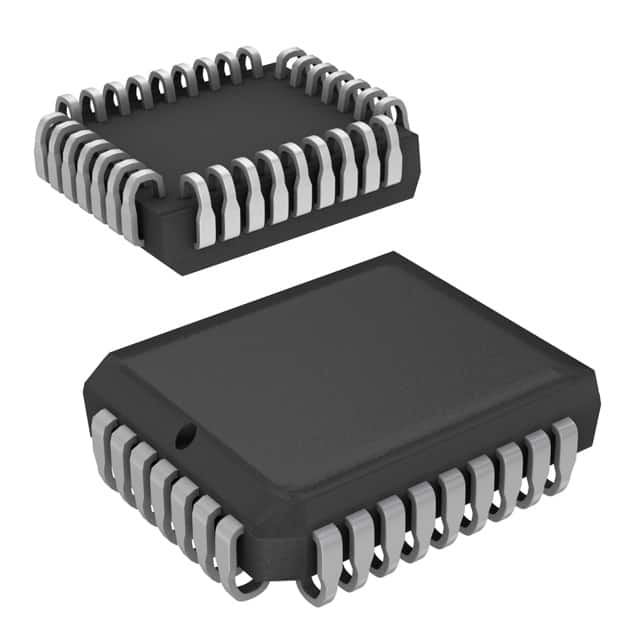
- Part No.:
- A3938SEQ
- Manufacturer:
- Allegro MicroSystems
- Category:
- Motor Drivers, Controllers
- Package:
- 32-LCC (J-Lead)
- Datasheet:
-
 A3938SEQ.pdf
- Description:
- IC MOTOR DRIVER 18V-50V 32PLCC
- Quantity:
- Payment:

- Shipping:

Inventory:1,120
Please send an inquiry. Send us your inquiry, and we will respond immediately.
Product details
Overview
A3938SEQ from Allegro MicroSystems is a three-phase brushless DC motor controller IC with integrated high-current N-channel MOSFET gate drivers, 50 V motor supply support, internal 5 V logic regulator (LCAP), and fixed off-time PWM current control. It implements Hall-sensor-based 120° commutation, synchronous rectification, and comprehensive protection including thermal shutdown, VREG undervoltage lockout, and motor lead short-to-ground detection - used in industrial BLDC fans, power tools, and automated HVAC actuators.
For engineers reviewing the A3938SEQ datasheet, A3938SEQ pinout, A3938SEQ application, or A3938SEQ equivalent, key selection considerations include its 38-pin TSSOP-LD package, adjustable dead time via DEAD pin, dual decay mode (fast/slow) controlled by MODE input, RC-timed fixed off-time, and Hall-input fault handling with latched short-to-ground detection.
Technical Context
The A3938SEQ integrates bootstrapped high-side drivers for N-channel MOSFETs, eliminating external charge-pump circuitry while supporting up to 50 V motor supply. Its internal fixed off-time PWM current regulation uses REF and SENSE inputs with user-defined RT/CT network on RC pin, enabling precise peak current limiting per ITRIP = VREF/RSENSE.
Commutation logic accepts 120°-spaced Hall inputs (H1–H3) with internal 50 kΩ pull-ups to LCAP; fault reporting occurs via open-drain FAULT output indicating thermal shutdown, invalid Hall code, VREG UVLO, or short-to-ground - only the latter is latched and cleared at each commutation edge.
Key Specifications
| Parameter | Value and Actual Design Meaning |
|---|---|
| Motor Supply Voltage | Up to 50 V - supports wide-range BLDC systems without external step-down regulation. |
| Logic Regulator Output | LCAP = 4.75–5.25 V @ –3 mA - powers internal logic and provides reference for pull-ups on H1/H2/H3, DIR, MODE, etc. |
| VREG Output | 12.4–13.6 V @ –10 mA - supplies low-side gate drivers and bootstrap charging circuitry. |
| Current Limit Accuracy | ±5 mV input offset on SENSE - ensures stable trip point under varying common-mode voltage (0–1.5 V). |
| Dead Time Range | 100 ns to 5.5 µs - set externally via resistor from DEAD to LCAP to prevent cross-conduction in external MOSFETs. |
| Thermal Shutdown | 165°C junction temperature - disables outputs and asserts FAULT; 10°C hysteresis prevents oscillation near threshold. |
| Short-to-Ground Detection | Triggers when VBB – VSx > 2.0 V on active high-side - protects against phase-to-ground faults with automatic clearing per commutation. |
Pinout & Package
Package: 38-pin TSSOP-LD (lead-free, 100% matte tin plating), 9.7 mm × 4.4 mm footprint, 1.2 mm max height, JEDEC MO-153 compliant.
| Pin/Terminal | Circuit Role | Design Meaning |
|---|---|---|
| RESET | Enable/fault-clear control input | Active-low logic input with internal 50 kΩ pull-up to LCAP; overrides BRAKE and forces coast/brake per BRKSEL state. |
| H1, H2, H3 | Hall sensor interface inputs | Accept 120°-spaced digital Hall signals; internal pull-ups ensure valid logic levels during noise or open-circuit conditions. |
| GHA/GHB/GHC | High-side gate drive outputs | Drive N-channel high-side MOSFET gates via bootstrapped supply; output swing up to VBB + 17 V enables full enhancement. |
| GLA/GLB/GLC | Low-side gate drive outputs | Drive N-channel low-side MOSFET gates referenced to PGND; sink/source capability supports synchronous rectification. |
| CA/CB/CC | Bootstrap capacitor positive terminals | Connect to floating high-side driver supplies; charged to ~VREG when Sx is low, enabling high-side turn-on above VBB. |
| SA/SB/SC | Motor phase connections & bootstrap returns | Directly connect to motor windings; serve as source nodes for high-side FETs and negative terminals for bootstrap capacitors. |
| FAULT | Open-drain fault indicator | Pulled high externally (e.g., 5.1 kΩ); asserts low for thermal shutdown, VREG UVLO, invalid Hall code, or short-to-ground. |
| RC | Fixed off-time timing node | Connects external RT and CT to set tOFF ≈ RT × CT (10–50 µs); also sets blanking time to suppress sense comparator false triggers. |
Key Features
| Feature | Design Value |
|---|---|
| Low-side synchronous rectification | Enables recirculation current path through low-side FETs instead of body diodes - reduces conduction loss and eliminates need for external clamp diodes. |
| Selectable fast/slow current decay | MODE pin selects decay behavior during PWM off-cycle: fast decay (both high/low sides off) or slow decay (high side off, low side on) - optimizes torque ripple and acoustic noise. |
| Adjustable dead time | Resistor from DEAD to LCAP sets delay between high/low side switching - prevents shoot-through across external MOSFETs across process/temperature variation. |
| Power-loss braking | BRKCAP reservoir capacitor sustains low-side gate drive after VBB collapse - enables controlled dynamic brake even during supply interruption when BRKSEL = 1. |
| Hall input fault management | Detects illegal codes (000/111) and asserts FAULT while coasting motor - prevents erratic commutation due to noisy or disconnected Hall sensors. |
Applications
| Industrial BLDC Fans | Power Tool Motor Control |
|---|---|
Use Scenario: High-efficiency, variable-speed cooling fans in PLC cabinets and server racks requiring EMI-optimized commutation and thermal resilience. IC Role / Device Role / Timing Role: Three-phase gate driver with Hall-based commutation, internal current regulation, and synchronous rectification - manages motor timing, torque, and thermal safety. Use Value: Reduces system power loss by replacing body-diode conduction with low-RDS(on) FET paths; integrated VREG and LCAP eliminate two external regulators. | Use Scenario: Cordless drill/driver motor control where rapid torque response, stall protection, and battery-efficient braking are critical. IC Role / Device Role / Timing Role: BLDC controller with dynamic brake, short-to-ground detection, and adjustable decay modes - handles high-current transients and safe shutdown on fault. Use Value: Enables immediate dynamic braking via BRAKE pin and power-loss braking via BRKCAP - improves tool responsiveness and operator safety. |
| HVAC Damper Actuators | Automated Conveyor Systems |
Use Scenario: Precision-positioned damper motors in commercial HVAC systems needing quiet operation, position stability, and long-term reliability. IC Role / Device Role / Timing Role: Hall-commutated motor driver with fixed off-time current control and thermal shutdown - regulates torque and prevents overheating during extended duty cycles. Use Value: Adjustable RC-timed off-time (10–50 µs) minimizes audible noise; latched short-to-ground detection prevents damage from wiring faults. | Use Scenario: Medium-power conveyor belt drives in packaging lines requiring robust fault handling and consistent speed/torque under load variation. IC Role / Device Role / Timing Role: Three-phase gate driver with PWM speed control, REF-set current limit, and FAULT reporting - maintains motion integrity and enables predictive maintenance. Use Value: Integrated FAULT output simplifies system-level diagnostics; VREG undervoltage lockout prevents erratic startup during brownout conditions. |
Equivalent & Alternatives
The following parts are listed as comparable options for similar three-phase BLDC motor controller applications.
| Alternative Part | Technical Difference | Application Difference | Selection Advice |
|---|---|---|---|
| STSPIN32F0A | Integrated 32-bit ARM Cortex-M0 MCU + gate drivers; requires firmware development; no Hall-only mode - operates in sensorless or Hall modes. | Best for designs needing closed-loop speed control, field-oriented control (FOC), or programmable features beyond basic commutation. | Choose STSPIN32F0A if embedded processing, sensorless startup, or custom control algorithms are required - not a drop-in replacement for A3938SEQ. |
| TB9083FG | Three-phase pre-driver with Hall inputs; lacks integrated VREG/LCAP regulators - requires external 5 V and 12–13 V supplies; no synchronous rectification control. | Suitable for systems with existing regulated supplies and discrete gate drivers; higher BOM count but greater flexibility in MOSFET selection. | Choose TB9083FG when external regulation is already present and design prioritizes MOSFET independence over integration level. |
Compared with STSPIN32F0A and TB9083FG, the A3938SEQ delivers highest integration for Hall-based BLDC systems - combining gate drivers, dual regulators (VREG/LCAP), synchronous rectification, and fault diagnostics in one 38-pin TSSOP, minimizing external components and layout complexity for cost-sensitive industrial motion control.
Availability
A3938SEQ is available at Aetrix Electronics and suitable for industrial BLDC fans, power tool motor control, and HVAC damper actuators requiring stable component supply, long-lifecycle assurance, and automotive-grade reliability validation.
Supply support for A3938SEQ includes scheduled delivery planning, volume procurement assistance, BOM continuity management, traceable sourcing, and lifecycle availability coordination for OEM customers, industrial embedded developers, connected-device designers, and electronics production programs.
Manufacturer
Allegro MicroSystems is a U.S.-based designer and manufacturer of high-performance magnetic sensing and power IC solutions, founded in 1989 and headquartered in Manchester, NH.
The A3938SEQ belongs to Allegro's family of integrated three-phase BLDC motor controllers engineered for industrial motion systems requiring robust Hall-based commutation, integrated protection, and minimal external component count.
FAQ
What is the maximum motor supply voltage supported by the A3938SEQ?
The A3938SEQ supports a maximum motor supply voltage (VBB) of 50 V, as specified in its Absolute Maximum Ratings table. This rating applies continuously under normal operating conditions and allows direct interfacing with common 24 V and 48 V industrial BLDC motor systems without intermediate regulation. Exceeding 50 V risks permanent damage to internal high-side driver circuitry and bootstrap charge circuitry.
How does the A3938SEQ implement synchronous rectification?
The A3938SEQ implements low-side-only synchronous rectification during PWM off-cycles by turning on the appropriate low-side gate driver (GLA/GLB/GLC) while keeping high-side drivers off. This routes recirculating current through the low-side MOSFET's RDS(on) instead of the high-side body diode, reducing conduction losses and eliminating need for external clamp diodes. The feature is automatic and enabled by default - no configuration required.
Can the A3938SEQ operate without external Hall sensors?
No, the A3938SEQ requires three Hall-effect sensor inputs (H1, H2, H3) configured for 120° electrical spacing to perform commutation. It does not support sensorless operation or alternative position feedback methods. The device monitors these inputs for valid 3-bit codes (excluding 000 and 111) and asserts FAULT on invalid states. For sensorless designs, consider Allegro's A4964 or ST's STSPIN32F0A instead of the A3938SEQ.
What is the function of the RC pin on the A3938SEQ?
The RC pin on the A3938SEQ connects to an external resistor (RT) and capacitor (CT) network that sets both the fixed off-time duration (tOFF ≈ RT × CT) and the blanking time (tBLANK) for the current sense comparator. Recommended tOFF range is 10–50 µs; values below 10 µs risk instability, while larger values may cause audible noise. CT also determines blanking window to suppress false trips from MOSFET body diode reverse recovery spikes.
Does the A3938SEQ provide overcurrent protection during dynamic braking?
No, the A3938SEQ does not monitor or limit current during dynamic braking (BRAKE = 1). In this mode, all low-side MOSFETs are forced on and high-sides off, shorting motor back-EMF - but the sense resistor is bypassed, so ITRIP regulation is inactive. Designers must ensure external MOSFETs and PCB traces can handle peak brake current IBRAKEPEAK = VBEMF/RLOAD, as no internal protection limits this condition in the A3938SEQ.
A3938SEQ Specifications
- Product attributes
- Attribute value
- Manufacturer:
- Allegro MicroSystems
- Series:
- -
- Package/Case:
- 32-LCC (J-Lead)
- Packaging:
- Tube
- Product Status:
- Obsolete
- Motor Type - Stepper:
- -
- Motor Type - AC, DC:
- Brushless DC (BLDC)
- Function:
- Controller - Commutation, Direction Management
- Output Configuration:
- Pre-Driver - Half Bridge (3)
- Interface:
- Parallel, PWM
- Technology:
- Power MOSFET
- Step Resolution:
- -
- Applications:
- General Purpose
- Current - Output:
- -
- Voltage - Supply:
- 18V ~ 50V
- Voltage - Load:
- -
- Operating Temperature:
- -20°C ~ 85°C (TA)
- Grade:
- -
- Qualification:
- -
- Mounting Type:
- Surface Mount
- Supplier Device Package:
- 32-PLCC (11.43x13.97)
A3938SEQ FAQ
1.How can I place an order for A3938SEQ through Aetrix?
Please submit a Request for Quotation (RFQ) for A3938SEQ on Aetrix. Our sales agent will provide a competitive quotation and guide you through the order confirmation once you accept the terms.
2.Are the price and stock information for A3938SEQ reliable?
The price and inventory of A3938SEQ are updated periodically and may fluctuate due to market conditions. Stock and pricing data are typically refreshed every 24 hours. Quotation validity for A3938SEQ is usually 5 days.
3.What payment methods are accepted for A3938SEQ?
We accept Wire Transfer, PayPal, Credit Card, Western Union, MoneyGram, and Escrow for A3938SEQ transactions.
Note: Certain payment methods may incur a processing fee.
4.How is shipping managed for A3938SEQ?
A3938SEQ orders can be shipped via leading logistics carriers, including DHL, UPS, FedEx, TNT, or Registered Mail.
Once your A3938SEQ order is processed, you will receive an email with the shipment details and tracking number.
Note: Tracking information may take up to 24 hours to appear. Express delivery typically takes 3–5 business days.
5.How can I obtain technical support or documentation for A3938SEQ?
For technical support, including A3938SEQ datasheets, pinout diagrams, or application guidance, please contact our engineering support team. They can provide detailed documentation and assistance for your A3938SEQ requirements.
6.How does Aetrix verify that A3938SEQ is sourced from the original manufacturer or authorized distributors?
All A3938SEQ products on Aetrix are procured from qualified distributors and authorized channels. Our dedicated quality assurance team conducts strict verification, including traceability checks and, if necessary, third-party testing. This ensures that A3938SEQ meets industry standards.
7.What is the process for return or replacement of A3938SEQ?
All A3938SEQ units undergo pre-shipment inspection (PSI). If there is an issue with A3938SEQ, returns or replacements are accepted under the following conditions:
1.Quantity discrepancies, incorrect items, or visible external defects (such as breakage or corrosion), acknowledged by Aetrix.
2.The issue is reported within 90 days of delivery.
3.The A3938SEQ part is unused and in its original packaging.
Return procedure for A3938SEQ:
1.Submit a request within 90 days.
2.Obtain a Return Material Authorization (RMA) from Aetrix.
A3938SEQ Tags
-
DRV2603RUNR
Texas Instruments
-
DRV8837CDSGR
Texas Instruments
-
DRV8837DSGR
Texas Instruments
-
DRV8838DSGR
Texas Instruments
-
DRV8839DSSR
Texas Instruments
-
EMC2301-1-ACZL-TR
Microchip Technology
-
DRV8231ADSGR
Texas Instruments
-
EMC2302-2-AIZL-TR
Microchip Technology
-
DRV8800PWPR
Texas Instruments
-
DRV8835DSSR
Texas Instruments
-
EMC2303-1-KP-TR
Microchip Technology
-
DRV8876PWPR
Texas Instruments
Tech Hub

A practical engineering and sourcing framework covering lifecycle verification, lifetime-buy calculations, replacement qualification, supplier checks and counterfeit-risk controls.

TTL and CMOS logic families differ in thresholds, loading, output drive, power and timing. This engineering guide compares 74HC and 74HCT, calculates noise margins and checks 3.3 V/5 V compatibility.

A practical engineering guide to 3.3V and 5V logic compatibility, input thresholds, resistor dividers, translator ICs, MOSFET level shifting, I2C pull-ups, timing limits and power-sequencing risks.

The 74HC595 uses push-pull logic outputs, while the TPIC6B595 uses 50 V open-drain DMOS sinks for higher-power loads. This guide compares timing, current limits, 3.3 V interfacing, load wiring, thermal…

The 74HC595 converts serial data into eight stable parallel outputs. This guide covers pin functions, shift and storage timing, OE and MR behavior, drive-current limits, cascading, voltage compatibilit…

A technical comparison of level-sensitive latches and edge-triggered flip-flops, covering timing windows, setup and hold limits, master–slave operation, time borrowing, race-through, HDL inference and…

A D latch stores one bit while Enable controls when data can pass. This reference covers gate-level operation, truth tables, transparency, setup and hold timing, LE versus OE, common ICs and practical …

An SR latch stores one bit through cross-coupled feedback. This engineering reference covers NOR and NAND implementations, truth tables, forbidden-state recovery, gated operation, switch debouncing, fa…

Latch circuits retain one bit through feedback. This technical reference covers SR and D latches, truth tables, transparency, timing limits, latch-versus-flip-flop behavior, applications and common log…

An engineering guide to LED driver operation, constant-current and constant-voltage outputs, linear and switching topologies, dimming, IC selection, calculations, replacement compatibility, and fault c…


