
 My Inquiry
 My Account


Allegro MicroSystems A3977SLP
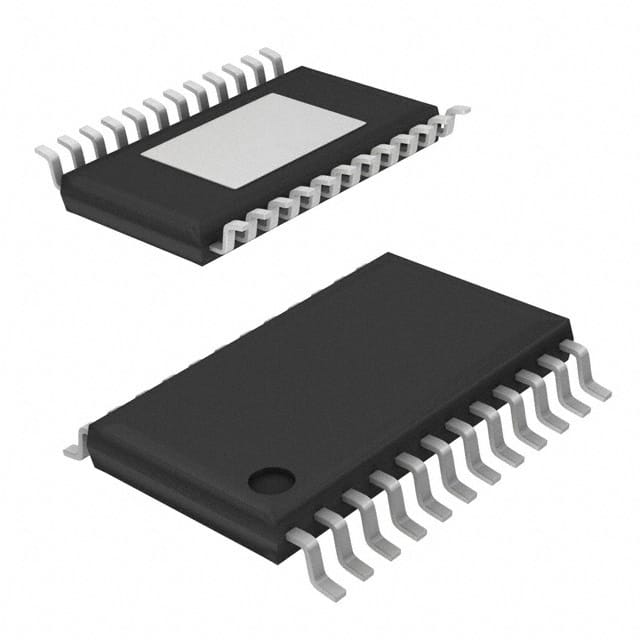
- Part No.:
- A3977SLP
- Manufacturer:
- Allegro MicroSystems
- Category:
- Motor Drivers, Controllers
- Package:
- 28-TSSOP (0.173", 4.40mm Width) Exposed Pad
- Datasheet:
-
 A3977SLP.pdf
- Description:
- IC MTR DRV BIPOLR 3-5.5V 28TSSOP
- Quantity:
- Payment:

- Shipping:

Inventory:2,467
Please send an inquiry. Send us your inquiry, and we will respond immediately.
Product details
Overview
A3977SLP from Allegro MicroSystems is a bipolar stepper motor driver IC with integrated translator, supporting full-, half-, quarter-, and eighth-step microstepping modes. It delivers ±2.5 A output current at up to 35 V, features automatic mixed/fast/slow decay mode selection, and operates with 3.0–5.5 V logic supply-enabling precise motion control in compact industrial positioning systems.
For engineers reviewing the A3977SLP datasheet, A3977SLP pinout, A3977SLP application, or A3977SLP equivalent, key selection criteria include its 28-pin TSSOP-LP package with exposed thermal pad, fixed off-time PWM current regulation, synchronous rectification for reduced power dissipation, and HOME/STEP/DIR interface simplicity for microprocessor-constrained designs.
Technical Context
The A3977SLP implements dual N-channel DMOS H-bridges with fixed off-time current regulation, where trip current is set by external sense resistors and VREF (ITRIPmax = VREF / (8 × RS)). Decay mode-slow, fast, or mixed-is automatically selected per step transition based on DAC output direction and PFD voltage level (0.21×VDD to 0.6×VDD).
Its translator eliminates phase sequencing logic: a single STEP pulse advances one microstep, with resolution controlled by MS1/MS2 inputs. Internal charge pump (CP1/CP2/VCP) enables high-side gate drive above VBB, while synchronous rectification (controlled by SR input) replaces body diodes with low-RDS(on) MOSFET conduction during decay, cutting power loss and audible noise.
Key Specifications
| Parameter | Value and Actual Design Meaning |
|---|---|
| Output Current Rating | ±2.5 A continuous - supports NEMA 17–23 bipolar stepper motors without external current amplification |
| Load Supply Voltage | 8–35 V operating range - compatible with 12 V and 24 V industrial DC bus systems |
| Logic Supply Range | 3.0–5.5 V - interfaces directly with 3.3 V or 5 V microcontrollers without level shifting |
| Microstep Resolution | Full/half/quarter/eighth-step - selectable via MS1/MS2, enabling 1.8° motor to achieve 0.225° step angle |
| RDS(on) (Source/Sink) | 0.28 Ω / 0.22 Ω typical - reduces conduction loss and thermal load at rated current |
| Thermal Shutdown | 165°C junction temperature with 15°C hysteresis - protects against sustained overload or poor heatsinking |
| Maximum STEP Frequency | 500 kHz - supports high-speed microstepping up to ~10,000 full steps/sec with proper timing margins |
Pinout & Package
Package: 28-pin thin shrink small-outline package (TSSOP-LP), 9.7 mm × 4.4 mm × 1.2 mm max height, with exposed thermal pad for enhanced PCB heat transfer.
| Pin/Terminal | Circuit Role | Design Meaning |
|---|---|---|
| SENSE1, SENSE2 | Current sense inputs | Connect to low-side sense resistors for Bridge 1 and Bridge 2; max 0.5 V input limits peak sensing voltage |
| OUT1A/OUT1B, OUT2A/OUT2B | H-bridge outputs | Drive two motor phases; each pair forms independent bipolar winding interface with ±2.5 A capability |
| STEP, DIR, MS1, MS2 | Translator control inputs | STEP advances one microstep; DIR sets rotation; MS1/MS2 select resolution per truth table (L/L = full, H/H = eighth) |
| PFD | Percent Fast Decay control | Analog input setting decay mode: <0.21×VDD = fast, >0.6×VDD = slow, intermediate = mixed decay |
| HOME | Logic output | Active-low signal indicating translator home state (initial power-up/reset position) |
| SLEEP, ENABLE | Power/control enable | SLEEP disables internal regulators/charge pump for <20 µA quiescent; ENABLE globally disables H-bridge outputs |
| VBB1/VBB2 | Motor supply inputs | Independent load supplies per bridge; decoupling required near pins to suppress switching transients |
| VCP, CP1, CP2 | Charge pump network | VCP is reservoir node; CP1/CP2 form flying capacitor pair generating gate drive >VBB for high-side N-MOSFETs |
Key Features
| Feature | Design Value |
|---|---|
| Integrated translator | Eliminates need for external step-sequence generation-single STEP pulse drives precise microstep without firmware overhead |
| Automatic decay mode selection | Dynamically chooses slow/fast/mixed decay per step transition to minimize BEMF-induced current distortion and improve step accuracy |
| Synchronous rectification | Replaces lossy body diodes with active MOSFET conduction during decay, reducing power dissipation and eliminating need for external Schottky diodes |
| Home state initialization | Power-on or RESET forces translator to known initial condition (HOME output low), ensuring repeatable startup position |
| Comprehensive protection | Includes thermal shutdown (165°C), UVLO (2.7 V turn-on), crossover-current prevention, and fault-latched output disable |
Applications
| Industrial CNC Positioning | Medical Infusion Pumps |
|---|---|
Use Scenario: Precise linear actuation of X/Y/Z axes in desktop CNC mills using NEMA 17 stepper motors. IC Role / Device Role / Timing Role: A3977SLP acts as the complete motor interface-translating MCU STEP pulses into calibrated microsteps while regulating phase current and managing decay dynamics. Use Value: Eighth-step resolution (0.225°) enables sub-micron positioning repeatability; low RDS(on) and synchronous rectification reduce thermal rise during extended duty cycles. | Use Scenario: Controlled syringe advancement in portable infusion pumps requiring silent, vibration-free delivery. IC Role / Device Role / Timing Role: A3977SLP serves as the motion controller-accepting low-frequency STEP commands from safety-critical MCU and executing smooth, low-noise microstepping via mixed-decay optimization. Use Value: Reduced audible noise from optimized decay control meets medical acoustic requirements; built-in thermal/UVLO protection ensures fail-safe motor stop during power anomaly. |
| Automated Laboratory Equipment | 3D Printer Extruder Control |
Use Scenario: Sample carousel indexing and pipette tip alignment in automated liquid handlers. IC Role / Device Role / Timing Role: A3977SLP functions as the stepper interface-using DIR/STEP/MS inputs to execute repeatable angular moves with programmable resolution and HOME-referenced zeroing. Use Value: HOME output provides deterministic homing without external sensors; 3.0–5.5 V logic compatibility simplifies integration with 3.3 V ARM-based controllers. | Use Scenario: Filament feed control in FDM 3D printers where extruder motor must respond rapidly to variable print speed demands. IC Role / Device Role / Timing Role: A3977SLP operates as the extruder driver-regulating current to maintain torque across speed changes while suppressing resonance via adaptive decay mode selection. Use Value: Fixed off-time PWM with blanking (700–1200 ns) prevents false overcurrent trips during high dv/dt transitions; 500 kHz STEP support enables responsive acceleration profiles. |
Equivalent & Alternatives
The following parts are listed as comparable options for similar bipolar stepper motor driver applications.
| Alternative Part | Technical Difference | Application Difference | Selection Advice |
|---|---|---|---|
| TB6600HG | Higher 4.5 A rating, 40 V max, but requires external translator and separate decay control logic | Used in high-torque industrial drives where discrete control flexibility outweighs integration benefit | Select when higher current or custom decay sequencing is required; not drop-in due to different pinout and interface architecture |
| DRV8825 | Lower 2.2 A rating, 45 V max, integrated translator, but lacks HOME output and has fixed decay mode per configuration | Common in hobbyist 3D printer boards where cost and basic microstepping suffice | Choose for cost-sensitive, lower-current applications; lacks A3977SLP's automatic decay adaptation and deterministic homing signal |
Compared with TB6600HG and DRV8825, the A3977SLP uniquely combines ±2.5 A drive, automatic mixed-decay selection, and a dedicated HOME output-making it optimal for applications demanding repeatable startup position, minimal MCU overhead, and thermally efficient operation without external diodes.
Availability
A3977SLP is available at Aetrix Electronics and suitable for industrial CNC positioning, medical infusion pumps, automated laboratory equipment, and 3D printer extruder control requiring stable component supply and long-term design continuity.
Supply support for A3977SLP includes scheduled delivery planning, volume procurement assistance, BOM continuity management, traceable sourcing, and lifecycle availability coordination for OEM customers, industrial embedded developers, connected-device designers, and electronics production programs.
Manufacturer
Allegro MicroSystems is a U.S.-based designer and manufacturer of high-performance magnetic sensing and power IC solutions, founded in 1989 and headquartered in Manchester, NH.
The A3977 product line delivers fully integrated stepper motor drivers with on-chip translators and smart current regulation-designed specifically for space-constrained, noise-sensitive, and thermally demanding motion control applications in industrial automation and precision instrumentation.
FAQ
What is the maximum continuous output current supported by the A3977SLP?
The A3977SLP supports ±2.5 A continuous output current per bridge under specified thermal conditions (TA ≤ 85°C, 4-layer PCB, RθJA = 28°C/W). Actual current capability depends on ambient temperature, PCB copper area, and heatsinking-exceeding 2.5 A risks thermal shutdown at junction temperatures above 165°C. The A3977SLP datasheet specifies ITRIPmax = VREF / (8 × RS), with VREF up to 4 V in microstepping modes.
How does the A3977SLP handle motor current decay, and what controls it?
The A3977SLP supports slow, fast, and mixed current decay modes, automatically selected per microstep transition based on DAC output direction and the analog voltage applied to the PFD pin (0.21×VDD to 0.6×VDD). When stepping to a lower current level, decay mode follows PFD; when stepping to equal/higher level, slow decay is enforced. This adaptive behavior minimizes BEMF-induced current waveform distortion, improving step accuracy and reducing audible noise in the A3977SLP.
Does the A3977SLP require external Schottky diodes for flyback protection?
No, the A3977SLP does not require external Schottky diodes due to its integrated synchronous rectification feature. When the SR pin is held low, the device actively turns on low-RDS(on) MOSFETs during current decay instead of relying on lossy body diodes-reducing power dissipation and eliminating external diode need in most applications. The A3977SLP's 0.22 Ω sink and 0.28 Ω source RDS(on) values ensure efficient recirculation without added components.
What is the function of the HOME output on the A3977SLP, and when is it asserted?
HOME is an active-low logic output that signals when the A3977SLP translator is in its predefined initial state-occurring at power-up or after a low pulse on the RESET input. It remains low during the home state and transitions high only after the first STEP command advances the translator. This provides deterministic mechanical referencing without external sensors, making the A3977SLP ideal for applications requiring repeatable zero-position recovery after reset or power cycle.
Can the A3977SLP operate with a 3.3 V logic supply, and what are the voltage thresholds?
Yes, the A3977SLP supports 3.0–5.5 V logic supply (VDD), making it fully compatible with 3.3 V microcontrollers. Input logic thresholds scale with VDD: VIN(1) ≥ 0.7×VDD (≥2.31 V at 3.3 V) and VIN(0) ≤ 0.3×VDD (≤0.99 V). The A3977SLP also tolerates pulsed inputs down to –1.0 V, enhancing noise immunity in electrically noisy environments common in motor drive applications.
A3977SLP Specifications
- Product attributes
- Attribute value
- Manufacturer:
- Allegro MicroSystems
- Series:
- -
- Package/Case:
- 28-TSSOP (0.173", 4.40mm Width) Exposed Pad
- Packaging:
- Tube
- Product Status:
- Obsolete
- Motor Type - Stepper:
- Bipolar
- Motor Type - AC, DC:
- -
- Function:
- Driver - Fully Integrated, Control and Power Stage
- Output Configuration:
- Half Bridge (4)
- Interface:
- Logic
- Technology:
- DMOS
- Step Resolution:
- 1, 1/2, 1/4, 1/8
- Applications:
- General Purpose
- Current - Output:
- 2.5A
- Voltage - Supply:
- 3V ~ 5.5V
- Voltage - Load:
- 8V ~ 35V
- Operating Temperature:
- -20°C ~ 150°C (TJ)
- Grade:
- -
- Qualification:
- -
- Mounting Type:
- Surface Mount
- Supplier Device Package:
- 28-TSSOP-EP
A3977SLP FAQ
1.How can I place an order for A3977SLP through Aetrix?
Please submit a Request for Quotation (RFQ) for A3977SLP on Aetrix. Our sales agent will provide a competitive quotation and guide you through the order confirmation once you accept the terms.
2.Are the price and stock information for A3977SLP reliable?
The price and inventory of A3977SLP are updated periodically and may fluctuate due to market conditions. Stock and pricing data are typically refreshed every 24 hours. Quotation validity for A3977SLP is usually 5 days.
3.What payment methods are accepted for A3977SLP?
We accept Wire Transfer, PayPal, Credit Card, Western Union, MoneyGram, and Escrow for A3977SLP transactions.
Note: Certain payment methods may incur a processing fee.
4.How is shipping managed for A3977SLP?
A3977SLP orders can be shipped via leading logistics carriers, including DHL, UPS, FedEx, TNT, or Registered Mail.
Once your A3977SLP order is processed, you will receive an email with the shipment details and tracking number.
Note: Tracking information may take up to 24 hours to appear. Express delivery typically takes 3–5 business days.
5.How can I obtain technical support or documentation for A3977SLP?
For technical support, including A3977SLP datasheets, pinout diagrams, or application guidance, please contact our engineering support team. They can provide detailed documentation and assistance for your A3977SLP requirements.
6.How does Aetrix verify that A3977SLP is sourced from the original manufacturer or authorized distributors?
All A3977SLP products on Aetrix are procured from qualified distributors and authorized channels. Our dedicated quality assurance team conducts strict verification, including traceability checks and, if necessary, third-party testing. This ensures that A3977SLP meets industry standards.
7.What is the process for return or replacement of A3977SLP?
All A3977SLP units undergo pre-shipment inspection (PSI). If there is an issue with A3977SLP, returns or replacements are accepted under the following conditions:
1.Quantity discrepancies, incorrect items, or visible external defects (such as breakage or corrosion), acknowledged by Aetrix.
2.The issue is reported within 90 days of delivery.
3.The A3977SLP part is unused and in its original packaging.
Return procedure for A3977SLP:
1.Submit a request within 90 days.
2.Obtain a Return Material Authorization (RMA) from Aetrix.
A3977SLP Tags
-
DRV2603RUNR
Texas Instruments
-
DRV8837CDSGR
Texas Instruments
-
DRV8837DSGR
Texas Instruments
-
DRV8838DSGR
Texas Instruments
-
DRV8839DSSR
Texas Instruments
-
EMC2301-1-ACZL-TR
Microchip Technology
-
DRV8231ADSGR
Texas Instruments
-
EMC2302-2-AIZL-TR
Microchip Technology
-
DRV8800PWPR
Texas Instruments
-
DRV8835DSSR
Texas Instruments
-
EMC2303-1-KP-TR
Microchip Technology
-
DRV8876PWPR
Texas Instruments
Tech Hub

A practical engineering and sourcing framework covering lifecycle verification, lifetime-buy calculations, replacement qualification, supplier checks and counterfeit-risk controls.

TTL and CMOS logic families differ in thresholds, loading, output drive, power and timing. This engineering guide compares 74HC and 74HCT, calculates noise margins and checks 3.3 V/5 V compatibility.

A practical engineering guide to 3.3V and 5V logic compatibility, input thresholds, resistor dividers, translator ICs, MOSFET level shifting, I2C pull-ups, timing limits and power-sequencing risks.

The 74HC595 uses push-pull logic outputs, while the TPIC6B595 uses 50 V open-drain DMOS sinks for higher-power loads. This guide compares timing, current limits, 3.3 V interfacing, load wiring, thermal…

The 74HC595 converts serial data into eight stable parallel outputs. This guide covers pin functions, shift and storage timing, OE and MR behavior, drive-current limits, cascading, voltage compatibilit…

A technical comparison of level-sensitive latches and edge-triggered flip-flops, covering timing windows, setup and hold limits, master–slave operation, time borrowing, race-through, HDL inference and…

A D latch stores one bit while Enable controls when data can pass. This reference covers gate-level operation, truth tables, transparency, setup and hold timing, LE versus OE, common ICs and practical …

An SR latch stores one bit through cross-coupled feedback. This engineering reference covers NOR and NAND implementations, truth tables, forbidden-state recovery, gated operation, switch debouncing, fa…

Latch circuits retain one bit through feedback. This technical reference covers SR and D latches, truth tables, transparency, timing limits, latch-versus-flip-flop behavior, applications and common log…

An engineering guide to LED driver operation, constant-current and constant-voltage outputs, linear and switching topologies, dimming, IC selection, calculations, replacement compatibility, and fault c…


