
 My Inquiry
 My Account


Allegro MicroSystems A4409KLPTR-T
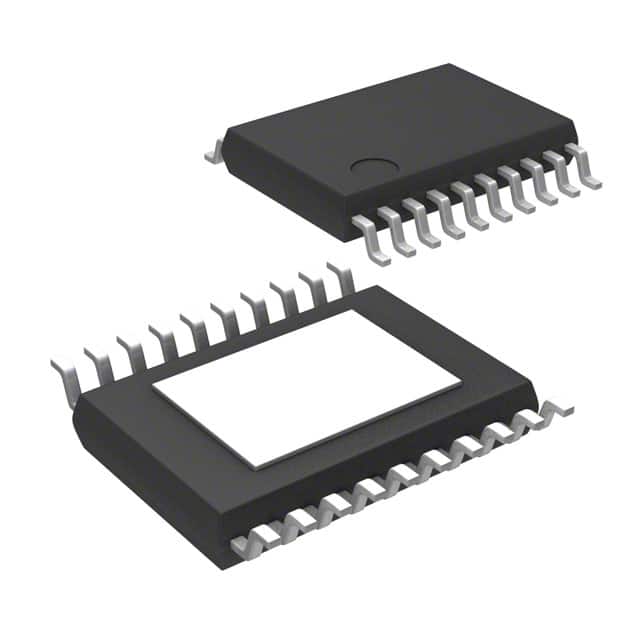
- Part No.:
- A4409KLPTR-T
- Manufacturer:
- Allegro MicroSystems
- Category:
- Voltage Regulators - Linear + Switching
- Package:
- 20-TSSOP (0.173", 4.40mm Width) Exposed Pad
- Datasheet:
-
 A4409KLPTR-T.pdf
- Description:
- IC REG TRPL BUCK/BST/LNR 20TSSOP
- Quantity:
- Payment:

- Shipping:

Inventory:2,644
Please send an inquiry. Send us your inquiry, and we will respond immediately.
Product details
Overview
A4409KLPTR-T from Allegro MicroSystems is an automotive-grade power management IC featuring a configurable buck/buck-boost pre-regulator, dual 5 V LDOs (300 mA and 200 mA), programmable window watchdog timer, and power-on-reset output. It operates from 3–36 V input, supports −40°C to 150°C junction temperature, and delivers tightly regulated intermediate voltage for CAN transceivers and microcontrollers in underhood applications.
For engineers reviewing the A4409KLPTR-T datasheet, A4409KLPTR-T pinout, A4409KLPTR-T application, or A4409KLPTR-T equivalent, this device is selected for high-temperature automotive power sequencing where integrated diagnostics, dual bandgap reliability, and ignition-enable (ENBAT) control are required.
Technical Context
The A4409KLPTR-T implements a synchronous buck-boost pre-regulator with adjustable PWM frequency (250 kHz–2.4 MHz), frequency synchronization capability, and dithering for EMI reduction. Its internal architecture includes two independent bandgap references (BG1 for regulation, BG2 for fault detection) and a charge pump enabling gate drive for external boost MOSFETs.
Control logic integrates soft-start sequencing, hiccup-mode overcurrent protection, and multi-rail undervoltage monitoring (VREG, 5V0, V5, VCP). The NPOR output provides fixed 22.5 ms delay, while the window watchdog timer features programmable timeout ranges (0.5–100 ms), 30 ms activation delay, and active-low enable (WDENn) for factory programming.
Key Specifications
| Parameter | Value and Actual Design Meaning |
|---|---|
| VIN Range | 3 V to 36 V operating; 40 V absolute max - supports full automotive battery range including load dump. |
| VREG Output | 6.6 V ±2% at 1 A - supplies internal LDOs and external circuitry with tight regulation and hiccup-mode OCP. |
| 5V0 LDO | 5 V ±2%, 300 mA max with foldback short-circuit protection - powers CAN transceivers or sensor interfaces. |
| V5 LDO | 5 V ±2%, 200 mA max with foldback short-circuit protection - supplies microcontroller I/O or peripherals. |
| Watchdog Timer | Programmable window timeout (0.5–100 ms), 30 ms activation delay - ensures safe MCU startup before watchdog monitoring begins. |
| NPOR Delay | 22.5 ms typical fixed delay - provides deterministic reset timing for downstream logic after power stabilization. |
| Thermal Range | −40°C to +150°C junction - qualified per AEC-Q100 Grade 0 for underhood placement without derating. |
Pinout & Package
Package: 20-pin eTSSOP (suffix LP) with exposed thermal pad, 1.2 mm max height, matte tin lead frame.
| Pin/Terminal | Circuit Role | Design Meaning |
|---|---|---|
| VCP | Charge pump reservoir | Connects to external capacitor to generate boosted gate drive voltage for LG output. |
| VIN | Main input supply | Accepts 3–36 V automotive battery; includes 40 V abs max rating and UVLO thresholds (5 V start / 2.9 V stop). |
| ENBAT | Ignition-enable input | High-voltage compatible (−13 V to 40 V with resistor); enables system only when key is ON (2.8–3.5 V threshold). |
| GND / PGND | Analog / power ground | Separate ground pins minimize noise coupling between control and switching circuits. |
| FSET/SYNC | Frequency setting/sync | Resistor-programmable oscillator (250 kHz–2.4 MHz) or external clock input (0.5–2 MHz, 20–80% duty). |
| NPOR | Active-low open-drain POR | Asserts low for ≥22.5 ms after valid V5V0; used as system reset signal with deglitch filtering (10–20 µs). |
| WDENn | Watchdog enable | Active-low pin: open or low enables WWDT; high disables - supports factory flash and field reprogramming. |
| WDIN | Watchdog refresh | Rising-edge triggered input; must be toggled within programmed window to prevent fault assertion. |
| 5V0 / V5 | LDO outputs | 5 V, 300 mA and 5 V, 200 mA regulated outputs with foldback current limiting and UV detection. |
| VREG | Pre-regulator feedback | Connects to output capacitor of buck-boost stage; sets 6.6 V regulation point via internal divider. |
Key Features
| Feature | Design Value |
|---|---|
| Dual independent bandgaps | BG1 regulates VREG/5V0/VCP; BG2 monitors faults - eliminates single-point failure and improves long-term system reliability. |
| Configurable pre-regulator topology | Supports both buck-only (LG connected to VCC) and buck-boost modes - enables flexible design across 5–36 V and 3–36 V input ranges. |
| EMI-reduction dithering | ±12% frequency modulation with VIN-dependent on/off thresholds - reduces peak spectral energy without external components. |
| Robust fault handling | Includes pulse-by-pulse current limit, LX short-circuit protection, missing diode detection, and latched MPOR for critical faults. |
| Pin-to-pin and pin-to-ground tolerance | All pins withstand −0.3 V to +7.5 V (except VIN/LX/VCP); prevents latch-up during transients or miswiring. |
Applications
| Electronic Power Steering (EPS) | Transmission Control Unit (TCU) |
|---|---|
Use Scenario: High-vibration, high-temperature environment under hood with wide battery voltage swings and strict ASIL-B functional safety requirements. IC Role / Device Role / Timing Role: Primary power sequencer supplying 5 V to EPS MCU, CAN transceiver, and torque sensor interface; NPOR and WWDT provide fail-safe reset and watchdog supervision. Use Value: Dual bandgap monitoring and latched MPOR ensure deterministic fault response; 150°C operation eliminates need for external heatsinking. | Use Scenario: Integrated TCU module requiring stable 5 V rails for dual-core MCU, LIN gateway, and solenoid drivers amid engine cranking and load dump events. IC Role / Device Role / Timing Role: Central PMIC delivering regulated 5V0 (300 mA) for CAN FD communication and V5 (200 mA) for MCU I/O, with ENBAT-controlled ignition-aware startup. Use Value: Buck-boost topology maintains regulation down to 3 V during cranking; foldback LDO protection prevents thermal runaway during solenoid surge currents. |
| Advanced Braking System (ABS) | Emissions Control Module |
Use Scenario: Safety-critical ABS controller mounted near brake master cylinder, exposed to extreme thermal cycling and EMI from motor drivers. IC Role / Device Role / Timing Role: Supplies isolated 5 V domains for ABS MCU, wheel speed sensor interface, and valve driver ICs; NPOR synchronizes reset across subsystems. Use Value: Frequency dithering and separate PGND/GND reduce conducted EMI; thermal shutdown (170°C typ) with 20°C hysteresis prevents false trips during transient overheating. | Use Scenario: Under-hood emissions module with OBD-II interface, NOx sensor heater control, and diesel particulate filter (DPF) logic. IC Role / Device Role / Timing Role: Powers 5 V CAN bus interface and microcontroller core; WDENn allows disabling watchdog during DPF regeneration firmware updates. Use Value: Programmable WWDT timeout (0.5–100 ms) accommodates variable DPF heater ramp times; ENBAT input ensures power only during engine run. |
Equivalent & Alternatives
The following parts are listed as comparable options for similar automotive power management applications.
| Alternative Part | Technical Difference | Application Difference | Selection Advice |
|---|---|---|---|
| MAX20090ATPA/V+T | Single 5 V LDO (300 mA), no secondary LDO; integrated FET buck pre-regulator (no external boost FET required); lacks window watchdog. | Suitable for simpler systems needing only one 5 V rail and no CAN node-level watchdog supervision. | Select when board space is constrained and dual-LDO redundancy is not required; verify absence of window watchdog meets functional safety goals. |
| TPS65381A-Q1 | Three LDOs (5 V/3.3 V/1.2 V), integrated CAN transceiver, no buck-boost capability; fixed 2.2 MHz switching frequency. | Targeted at MCU-centric modules requiring multiple voltage domains and embedded CAN PHY, not external transceivers. | Choose when integrating CAN PHY saves BOM cost and layout area; confirm buck-only input range (4.5–40 V) fits vehicle architecture. |
Compared with MAX20090ATPA/V+T and TPS65381A-Q1, the A4409KLPTR-T uniquely combines buck-boost flexibility, dual independent LDOs with foldback, and a programmable window watchdog - making it optimal for underhood modules requiring robust fault containment and multi-rail sequencing without integrated CAN PHY.
Availability
A4409KLPTR-T is available at Aetrix Electronics and suitable for electronic power steering (EPS), transmission control units (TCU), and advanced braking systems (ABS) requiring stable component supply across extended temperature and automotive qualification cycles.
Supply support for A4409KLPTR-T includes scheduled delivery planning, volume procurement assistance, BOM continuity management, traceable sourcing, and lifecycle availability coordination for OEM customers, industrial embedded developers, connected-device designers, and electronics production programs.
Manufacturer
Allegro MicroSystems is a U.S.-based semiconductor company specializing in high-performance power ICs, magnetic sensors, and motor driver solutions for automotive and industrial markets.
The A4409 product line is designed specifically for demanding automotive power management applications - delivering integrated pre-regulation, LDOs, diagnostics, and watchdog functionality in a single AEC-Q100 qualified package for underhood deployment.
FAQ
What is the maximum junction temperature rating for the A4409KLPTR-T?
The A4409KLPTR-T is rated for −40°C to +150°C junction temperature and qualified to AEC-Q100 Grade 0. Thermal shutdown activates at 170°C typical with 20°C hysteresis, ensuring reliable operation in underhood environments without external cooling. This specification is validated across the full operating voltage and load range specified in the datasheet.
How does the ENBAT pin function in the A4409KLPTR-T?
The ENBAT pin on the A4409KLPTR-T is an ignition-enable input that accepts high-voltage signals (−13 V to 40 V with current-limiting resistor) directly from the vehicle key switch. It triggers system enable when voltage rises above 3.2 V typical and disables all regulators when falling below 2.5 V typical, providing precise control over power sequencing aligned with engine runtime. The 700 mV hysteresis prevents chatter during transition.
Can the A4409KLPTR-T operate in buck-only mode?
Yes, the A4409KLPTR-T supports buck-only operation by connecting the LG pin to VCC. In this configuration, the pre-regulator functions as a standard buck converter with input range 5.5–36 V, eliminating the need for external boost components. The device retains all LDO regulation, watchdog, and diagnostic features regardless of topology selection.
What is the purpose of the dual bandgap architecture in the A4409KLPTR-T?
The A4409KLPTR-T uses two independent bandgap references: BG1 regulates VREG, 5V0, and VCP; BG2 monitors fault conditions for those same rails. This separation prevents a single bandgap failure from compromising both regulation and fault detection - significantly improving long-term reliability and meeting ASIL-B functional safety requirements for automotive control modules.
How is the window watchdog timeout programmed on the A4409KLPTR-T?
The window watchdog timeout on the A4409KLPTR-T is programmed by connecting an external resistor (RADJ) from the WDADJ pin to ground. RADJ values from 13 kΩ to 324 kΩ set timeout ranges: 0.5–12.5 ms (FAST) or 4–100 ms (SLOW), with corresponding clock-dependent values. The fixed 30 ms activation delay ensures the MCU completes boot before watchdog monitoring begins.
A4409KLPTR-T Specifications
- Product attributes
- Attribute value
- Manufacturer:
- Allegro MicroSystems
- Series:
- -
- Package/Case:
- 20-TSSOP (0.173", 4.40mm Width) Exposed Pad
- Packaging:
- Tape & Reel (TR)
- Product Status:
- Active
- Topology:
- Step-Down (Buck) (1) or Step-Down/Step-Up (Buck/Boost) (1), Linear (LDO) (2)
- Number of Outputs:
- 3
- Frequency - Switching:
- 400kHz ~ 2.4MHz
- Voltage/Current - Output 1:
- 0.8V ~ 3.3V, 800mA
- Voltage/Current - Output 2:
- 6V/6.6V, 1A
- Voltage/Current - Output 3:
- 5V, 150mA
- w/LED Driver:
- No
- w/Supervisor:
- No
- w/Sequencer:
- Yes
- Voltage - Supply:
- 3V ~ 36V
- Operating Temperature:
- -40°C ~ 135°C
- Grade:
- Automotive
- Qualification:
- AEC-Q100
- Mounting Type:
- Surface Mount
- Supplier Device Package:
- 20-TSSOP-EP
A4409KLPTR-T FAQ
1.How can I place an order for A4409KLPTR-T through Aetrix?
Please submit a Request for Quotation (RFQ) for A4409KLPTR-T on Aetrix. Our sales agent will provide a competitive quotation and guide you through the order confirmation once you accept the terms.
2.Are the price and stock information for A4409KLPTR-T reliable?
The price and inventory of A4409KLPTR-T are updated periodically and may fluctuate due to market conditions. Stock and pricing data are typically refreshed every 24 hours. Quotation validity for A4409KLPTR-T is usually 5 days.
3.What payment methods are accepted for A4409KLPTR-T?
We accept Wire Transfer, PayPal, Credit Card, Western Union, MoneyGram, and Escrow for A4409KLPTR-T transactions.
Note: Certain payment methods may incur a processing fee.
4.How is shipping managed for A4409KLPTR-T?
A4409KLPTR-T orders can be shipped via leading logistics carriers, including DHL, UPS, FedEx, TNT, or Registered Mail.
Once your A4409KLPTR-T order is processed, you will receive an email with the shipment details and tracking number.
Note: Tracking information may take up to 24 hours to appear. Express delivery typically takes 3–5 business days.
5.How can I obtain technical support or documentation for A4409KLPTR-T?
For technical support, including A4409KLPTR-T datasheets, pinout diagrams, or application guidance, please contact our engineering support team. They can provide detailed documentation and assistance for your A4409KLPTR-T requirements.
6.How does Aetrix verify that A4409KLPTR-T is sourced from the original manufacturer or authorized distributors?
All A4409KLPTR-T products on Aetrix are procured from qualified distributors and authorized channels. Our dedicated quality assurance team conducts strict verification, including traceability checks and, if necessary, third-party testing. This ensures that A4409KLPTR-T meets industry standards.
7.What is the process for return or replacement of A4409KLPTR-T?
All A4409KLPTR-T units undergo pre-shipment inspection (PSI). If there is an issue with A4409KLPTR-T, returns or replacements are accepted under the following conditions:
1.Quantity discrepancies, incorrect items, or visible external defects (such as breakage or corrosion), acknowledged by Aetrix.
2.The issue is reported within 90 days of delivery.
3.The A4409KLPTR-T part is unused and in its original packaging.
Return procedure for A4409KLPTR-T:
1.Submit a request within 90 days.
2.Obtain a Return Material Authorization (RMA) from Aetrix.
A4409KLPTR-T Tags

-
TPS6521905RHBR
Texas Instruments
-
MIC3385YHL-TR
Microchip Technology
-
A4402ELPTR-T
Allegro MicroSystems
-
LM26480SQ-AA/NOPB
Texas Instruments
-
A4402KLPTR-T
Allegro MicroSystems
-
BD71847AMWV-E2
ROHM Semiconductor
-
ADP5040ACPZ-1-R7
Analog Devices Inc.
-
LT3048IDC#TRPBF
Analog Devices Inc.
-
ADP5037ACPZ-R7
Analog Devices Inc.
-
XRP7714ILB-F
MaxLinear, Inc.
-
LTC3260EDE#TRPBF
Analog Devices Inc.
-
LTC3260EMSE#PBF
Analog Devices Inc.
Tech Hub

A practical engineering and sourcing framework covering lifecycle verification, lifetime-buy calculations, replacement qualification, supplier checks and counterfeit-risk controls.

TTL and CMOS logic families differ in thresholds, loading, output drive, power and timing. This engineering guide compares 74HC and 74HCT, calculates noise margins and checks 3.3 V/5 V compatibility.

A practical engineering guide to 3.3V and 5V logic compatibility, input thresholds, resistor dividers, translator ICs, MOSFET level shifting, I2C pull-ups, timing limits and power-sequencing risks.

The 74HC595 uses push-pull logic outputs, while the TPIC6B595 uses 50 V open-drain DMOS sinks for higher-power loads. This guide compares timing, current limits, 3.3 V interfacing, load wiring, thermal…

The 74HC595 converts serial data into eight stable parallel outputs. This guide covers pin functions, shift and storage timing, OE and MR behavior, drive-current limits, cascading, voltage compatibilit…

A technical comparison of level-sensitive latches and edge-triggered flip-flops, covering timing windows, setup and hold limits, master–slave operation, time borrowing, race-through, HDL inference and…

A D latch stores one bit while Enable controls when data can pass. This reference covers gate-level operation, truth tables, transparency, setup and hold timing, LE versus OE, common ICs and practical …

An SR latch stores one bit through cross-coupled feedback. This engineering reference covers NOR and NAND implementations, truth tables, forbidden-state recovery, gated operation, switch debouncing, fa…

Latch circuits retain one bit through feedback. This technical reference covers SR and D latches, truth tables, transparency, timing limits, latch-versus-flip-flop behavior, applications and common log…

An engineering guide to LED driver operation, constant-current and constant-voltage outputs, linear and switching topologies, dimming, IC selection, calculations, replacement compatibility, and fault c…


