
 My Inquiry
 My Account


Allegro MicroSystems A4410KLVTR-T
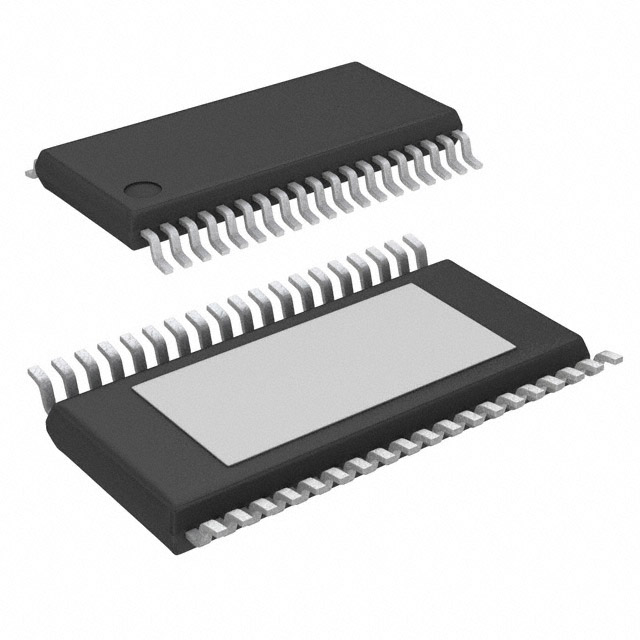
- Part No.:
- A4410KLVTR-T
- Manufacturer:
- Allegro MicroSystems
- Category:
- Voltage Regulators - Linear + Switching
- Package:
- 38-TFSOP (0.173", 4.40mm Width) Exposed Pad
- Datasheet:
-
 A4410KLVTR-T.pdf
- Description:
- IC REG QD BUCK/BST/LNR 38ETSSOP
- Quantity:
- Payment:

- Shipping:

Inventory:3,260
Please send an inquiry. Send us your inquiry, and we will respond immediately.
Product details
Overview
A4410KLVTR-T from Allegro MicroSystems is an automotive-grade power management IC featuring a configurable buck/buck-boost pre-regulator, a 1.25 V/750 mA synchronous buck regulator, three internal LDOs (5 V/150 mA, 3.3 V/160 mA, and 5 V tracking/250 mA), a programmable window watchdog timer with 30 ms activation delay, and NPOR output. It operates across 2.8–36 V input, supports AEC-Q100 qualification, and targets under-hood microprocessor and CAN power supply applications.
For engineers reviewing the A4410KLVTR-T datasheet, A4410KLVTR-T pinout, A4410KLVTR-T application, or A4410KLVTR-T equivalent, key selection criteria include its dual enable architecture (ENBAT1/ENBAT2 + ENB), TRACK-selectable 5 V LDO reference, foldback short-circuit protection on all LDOs, short-to-battery protection on V5P, and thermal shutdown at 155–185°C junction temperature.
Technical Context
The A4410KLVTR-T integrates a buck/buck-boost pre-regulator (VREG) that supplies regulated 5.35 V to feed four downstream regulators: a 1.25 V/750 mADC synchronous buck (1V25), two fixed-output LDOs (3.3 V/160 mA and 5 V/150 mA), and a tracking 5 V/250 mA LDO (V5P) whose reference is selectable between 3.3 V and 5 V via the TRACK pin. Its dual bandgap architecture (BGVREF for regulation, BGFAULT for fault checking) ensures long-term reliability in harsh automotive environments.
Control logic includes three independent enable inputs (ENB, ENBAT1, ENBAT2), status outputs (ENBAT1S, ENBAT2S, POK5V, NPOR), and a window watchdog with WDIN refresh, WDADJ timing adjustment, and active-low WDENn disable. Protection features span UV/OV lockout on all rails, pulse-by-pulse current limiting, hiccup-mode short-circuit response, LX short-circuit detection, missing diode protection, and thermal shutdown with 20°C hysteresis.
Key Specifications
| Parameter | Value and Actual Design Meaning |
|---|---|
| Input voltage range | 2.8 V to 36 V (40 V absolute max); supports cold-crank and load-dump conditions in automotive battery systems. |
| Pre-regulator output (VREG) | 5.25–5.45 V @ 1.25 A; supplies all internal LDOs and synchronous buck regulator. |
| 1.25 V synchronous buck | 1.23–1.27 V output, 750 mADC / 1 APEAK; integrated high-side (200–400 mΩ) and low-side (55–110 mΩ) MOSFETs. |
| 3.3 V LDO | 3.23–3.37 V @ 160 mA; foldback short-circuit protection limits current to 40–130 mA at 0 V output. |
| 5 V tracking LDO (V5P) | 4.9–5.1 V @ 250 mA; tracks either 3.3 V (±0.66%) or 5 V (±35 mV); protected against short-to-battery. |
| Watchdog timer | Programmable window type with 30 ms startup delay; enabled/disabled via active-low WDENn pin. |
| Operating temperature | −40°C to +135°C ambient; junction rated to +150°C with thermal shutdown at 155–185°C. |
| Package | 38-pin eTSSOP with exposed thermal pad; RθJC = 30°C/W for effective under-hood thermal management. |
Pinout & Package
Package: 38-pin eTSSOP (suffix LV) with exposed thermal pad, optimized for automotive under-hood thermal dissipation (RθJC = 30°C/W).
| Pin/Terminal | Circuit Role | Design Meaning |
|---|---|---|
| VIN (pins 2,3) | Main input voltage supply | Accepts 2.8–36 V automotive battery input; dual pins reduce trace resistance and improve current handling. |
| GND (pins 4,9) | Analog/digital ground reference | Separate ground return paths minimize noise coupling between control and power sections. |
| TRACK (pin 10) | Tracking reference selector | Logic-high selects 3.3 V as V5P reference; logic-low selects 5 V - enables platform reuse across sensor rail variants. |
| NPOR (pin 11) | Active-low power-on reset | Open-drain output with fixed 15 ms delay; asserts during VREG, 3.3 V, or 5 V UV/OV faults. |
| POK5V (pin 12) | PowerOK status indicator | Asserts when both V5 and V5P are within UV/OV tolerance; used for system-level power sequencing validation. |
| ENBAT1/ENBAT2 (pins 16,17) | Ignition enable inputs | High-voltage tolerant (−13 V to 40 V); detect ignition switch state with 2.9–3.5 V rising threshold and 700 mV hysteresis. |
| ENB (pin 18) | Logic enable input | Microcontroller-controlled enable with 0.8–2.0 V thresholds; supports low-power sleep mode (IQ,SLEEP ≤ 10 µA). |
| WDENn (pin 22) | Watchdog enable/disable | Active-low pin; held high to disable watchdog during factory programming or field firmware updates. |
| V5P (pin 23) | 5 V tracking LDO output | Delivers 250 mA with short-to-battery protection; output voltage accuracy ±2% over temp and load. |
| LX1 (pins 35,36) | Buck/boost switching node | Drives external inductor; slew rate adjustable via SLEW pin (RSLEW) to optimize EMI performance. |
Key Features
| Feature | Design Value |
|---|---|
| Dual-bandgap architecture | Independent BGVREF (regulation) and BGFAULT (diagnostic) references enhance long-term stability and fault detection reliability. |
| Configurable pre-regulator topology | Supports both buck-only and buck/boost modes - adapts to wide VIN ranges including cold-crank (down to 2.8 V). |
| Three-tier enable architecture | ENBAT1/ENBAT2 (ignition) + ENB (microcontroller) allows flexible power sequencing and fail-safe shutdown coordination. |
| EMI-reduction controls | SLEW pin adjusts LX1 rise time; frequency dithering (±12%) reduces peak spectral energy without affecting regulation. |
| Short-to-battery protection | Exclusive to V5P output - prevents damage during reverse-battery or jump-start events in automotive wiring harnesses. |
| Pin-to-pin and pin-to-ground tolerance | All I/O pins withstand −0.3 V to +7 V (except VIN, ENBATx, LX, CP); eliminates need for external clamping in noisy environments. |
Applications
| Electronic Power Steering (EPS) | Transmission Control Unit (TCU) |
|---|---|
Use Scenario: High-temperature EPS module requiring stable 3.3 V MCU core supply and 5 V sensor interface rails under hood. IC Role / Device Role / Timing Role: A4410KLVTR-T provides tightly regulated 3.3 V/160 mA and 5 V/150 mA LDO outputs, plus 1.25 V/750 mA for motor driver logic, all derived from battery input. Use Value: Dual bandgap monitoring and thermal shutdown (155–185°C) ensure functional safety compliance in continuous-duty EPS operation. | Use Scenario: TCU demanding robust power sequencing, watchdog supervision, and fault reporting during gear-shift transients. IC Role / Device Role / Timing Role: A4410KLVTR-T delivers synchronized power-up via NPOR (15 ms delay) and POK5V, while WDIN/WDENn enable processor-initiated watchdog refresh and safe firmware update windows. Use Value: Programmable window watchdog with 30 ms activation delay accommodates boot-time processor initialization without false timeouts. |
| Advanced Braking Systems (ABS) | Emissions Control Modules |
Use Scenario: ABS controller needing redundant power monitoring and short-circuit resilience during aggressive braking cycles. IC Role / Device Role / Timing Role: A4410KLVTR-T monitors all four supply rails (V5, V5P, 3.3 V, 1.25 V) for UV/OV faults and reports via NPOR and POK5V outputs. Use Value: Foldback current limiting on all LDOs and hiccup-mode protection on switching regulators prevent thermal runaway during sustained overload. | Use Scenario: Diesel emissions module operating in high-temp exhaust proximity with strict EMI requirements. IC Role / Device Role / Timing Role: A4410KLVTR-T supplies 5 V/250 mA tracking LDO (V5P) to oxygen sensors while suppressing conducted emissions via SLEW-adjusted LX1 slew rate and ±12% frequency dithering. Use Value: TRACK pin enables identical hardware design across multiple sensor types - V5P tracks 3.3 V for newer narrowband sensors or 5 V for legacy wideband units. |
Equivalent & Alternatives
The following parts are listed as comparable options for similar automotive power management applications.
| Alternative Part | Technical Difference | Application Difference | Selection Advice |
|---|---|---|---|
| A4408KLVTR-T | Successor device with updated watchdog architecture, improved thermal performance, and extended VIN start-up capability (down to 2.5 V). | Designed for new designs requiring longer lifecycle support; not pin-compatible due to revised pinout and internal protection logic. | Select A4408KLVTR-T for new designs where A4410KLVTR-T is discontinued; verify ENBATx timing and watchdog refresh protocol compatibility. |
| TPS65381A-Q1 | TI automotive PMIC with integrated CAN transceiver, different LDO count (2x LDOs), no tracking regulator, and fixed 2.2 MHz switching frequency. | Targets CAN-node integration; lacks V5P tracking and dual ignition enables, limiting use in multi-rail sensor hubs. | Choose TPS65381A-Q1 only when CAN physical layer integration is required and V5P tracking is unnecessary. |
Compared with A4408KLVTR-T and TPS65381A-Q1, the A4410KLVTR-T uniquely combines TRACK-selectable 5 V LDO, dual ignition enables, and short-to-battery protection - making it irreplaceable in legacy under-hood modules where those features are architecturally embedded.
Availability
A4410KLVTR-T is available at Aetrix Electronics and suitable for Electronic Power Steering (EPS), Transmission Control Units (TCU), and Advanced Braking Systems (ABS) requiring stable component supply despite its discontinued status.
Supply support for A4410KLVTR-T includes scheduled delivery planning, volume procurement assistance, BOM continuity management, traceable sourcing, and lifecycle availability coordination for OEM customers, industrial embedded developers, connected-device designers, and electronics production programs.
Manufacturer
Allegro MicroSystems is a U.S.-based designer of high-performance magnetic sensing and power IC solutions, specializing in automotive, industrial, and green energy applications.
The A4410 product line was engineered specifically for under-hood automotive control modules, delivering integrated power conversion, diagnostics, and functional safety features compliant with AEC-Q100 Grade 0 (−40°C to +150°C).
FAQ
What is the recommended replacement for A4410KLVTR-T in new designs?
The A4408KLVTR-T is the officially recommended substitution for new designs, offering enhanced watchdog functionality, improved thermal characteristics, and extended input voltage start-up capability down to 2.5 V. While A4410KLVTR-T remains available for legacy production, Allegro explicitly states that A4410KLVTR-T should not be purchased for new design applications - making A4408KLVTR-T the primary migration path for ongoing development.
Does A4410KLVTR-T support both buck and buck-boost pre-regulator modes?
Yes, A4410KLVTR-T supports both topologies: buck mode activates when VIN ≥ 5.1 V, enabling efficient step-down conversion; buck-boost mode engages below 5.1 V (down to 2.8 V), maintaining regulation during cold-crank events. The mode is automatically selected based on input voltage - no external configuration is required, and the VREG output remains stable at 5.25–5.45 V across both modes.
How does the TRACK pin affect the V5P output behavior in A4410KLVTR-T?
The TRACK pin on A4410KLVTR-T determines the reference voltage for the 5 V tracking LDO (V5P): when pulled high or left open, V5P tracks the 3.3 V output with ±0.66% ratio accuracy; when pulled low, V5P tracks the 5 V output with ±35 mV offset accuracy. This flexibility allows a single A4410KLVTR-T design to support multiple sensor families - for example, legacy 5 V oxygen sensors versus modern 3.3 V digital sensors - without hardware changes.
What protection features does A4410KLVTR-T provide for the V5P output?
A4410KLVTR-T provides three distinct protections for the V5P output: foldback short-circuit current limiting (115 mA typical at 0 V), overcurrent shutdown (400 mA typical at 5 V), and short-to-battery protection - a unique feature that safeguards the regulator during reverse-battery or jump-start events. These protections are implemented independently and do not rely on external components, ensuring robustness in automotive wiring harness environments.
Is A4410KLVTR-T still in production, and what is its lifecycle status?
No, A4410KLVTR-T is a discontinued product: Allegro MicroSystems confirmed it is no longer in production as of December 5, 2018, with samples unavailable and new design usage discouraged. However, Aetrix Electronics maintains limited inventory for legacy production support, backed by BOM continuity management and traceable sourcing - enabling continued manufacturing for existing automotive platforms until formal obsolescence transition is complete.
A4410KLVTR-T Specifications
- Product attributes
- Attribute value
- Manufacturer:
- Allegro MicroSystems
- Series:
- -
- Package/Case:
- 38-TFSOP (0.173", 4.40mm Width) Exposed Pad
- Packaging:
- Tape & Reel (TR)
- Product Status:
- Obsolete
- Topology:
- Step-Down (Buck) (1) Synchronous or Step-Down/Step-Up (Buck/Boost) (1), Linear (LDO) (3)
- Number of Outputs:
- 4
- Frequency - Switching:
- 250kHz ~ 2.4MHz
- Voltage/Current - Output 1:
- 1.25V, 750mA
- Voltage/Current - Output 2:
- 5V, 250mA
- Voltage/Current - Output 3:
- 3.3V, 160mA
- w/LED Driver:
- No
- w/Supervisor:
- No
- w/Sequencer:
- Yes
- Voltage - Supply:
- 2.8V ~ 36V
- Operating Temperature:
- -40°C ~ 135°C
- Grade:
- Automotive
- Qualification:
- AEC-Q100
- Mounting Type:
- Surface Mount
- Supplier Device Package:
- 38-eTSSOP
A4410KLVTR-T FAQ
1.How can I place an order for A4410KLVTR-T through Aetrix?
Please submit a Request for Quotation (RFQ) for A4410KLVTR-T on Aetrix. Our sales agent will provide a competitive quotation and guide you through the order confirmation once you accept the terms.
2.Are the price and stock information for A4410KLVTR-T reliable?
The price and inventory of A4410KLVTR-T are updated periodically and may fluctuate due to market conditions. Stock and pricing data are typically refreshed every 24 hours. Quotation validity for A4410KLVTR-T is usually 5 days.
3.What payment methods are accepted for A4410KLVTR-T?
We accept Wire Transfer, PayPal, Credit Card, Western Union, MoneyGram, and Escrow for A4410KLVTR-T transactions.
Note: Certain payment methods may incur a processing fee.
4.How is shipping managed for A4410KLVTR-T?
A4410KLVTR-T orders can be shipped via leading logistics carriers, including DHL, UPS, FedEx, TNT, or Registered Mail.
Once your A4410KLVTR-T order is processed, you will receive an email with the shipment details and tracking number.
Note: Tracking information may take up to 24 hours to appear. Express delivery typically takes 3–5 business days.
5.How can I obtain technical support or documentation for A4410KLVTR-T?
For technical support, including A4410KLVTR-T datasheets, pinout diagrams, or application guidance, please contact our engineering support team. They can provide detailed documentation and assistance for your A4410KLVTR-T requirements.
6.How does Aetrix verify that A4410KLVTR-T is sourced from the original manufacturer or authorized distributors?
All A4410KLVTR-T products on Aetrix are procured from qualified distributors and authorized channels. Our dedicated quality assurance team conducts strict verification, including traceability checks and, if necessary, third-party testing. This ensures that A4410KLVTR-T meets industry standards.
7.What is the process for return or replacement of A4410KLVTR-T?
All A4410KLVTR-T units undergo pre-shipment inspection (PSI). If there is an issue with A4410KLVTR-T, returns or replacements are accepted under the following conditions:
1.Quantity discrepancies, incorrect items, or visible external defects (such as breakage or corrosion), acknowledged by Aetrix.
2.The issue is reported within 90 days of delivery.
3.The A4410KLVTR-T part is unused and in its original packaging.
Return procedure for A4410KLVTR-T:
1.Submit a request within 90 days.
2.Obtain a Return Material Authorization (RMA) from Aetrix.
A4410KLVTR-T Tags

-
TPS6521905RHBR
Texas Instruments
-
MIC3385YHL-TR
Microchip Technology
-
A4402ELPTR-T
Allegro MicroSystems
-
LM26480SQ-AA/NOPB
Texas Instruments
-
A4402KLPTR-T
Allegro MicroSystems
-
BD71847AMWV-E2
ROHM Semiconductor
-
ADP5040ACPZ-1-R7
Analog Devices Inc.
-
LT3048IDC#TRPBF
Analog Devices Inc.
-
ADP5037ACPZ-R7
Analog Devices Inc.
-
XRP7714ILB-F
MaxLinear, Inc.
-
LTC3260EDE#TRPBF
Analog Devices Inc.
-
LTC3260EMSE#PBF
Analog Devices Inc.
Tech Hub

A practical engineering and sourcing framework covering lifecycle verification, lifetime-buy calculations, replacement qualification, supplier checks and counterfeit-risk controls.

TTL and CMOS logic families differ in thresholds, loading, output drive, power and timing. This engineering guide compares 74HC and 74HCT, calculates noise margins and checks 3.3 V/5 V compatibility.

A practical engineering guide to 3.3V and 5V logic compatibility, input thresholds, resistor dividers, translator ICs, MOSFET level shifting, I2C pull-ups, timing limits and power-sequencing risks.

The 74HC595 uses push-pull logic outputs, while the TPIC6B595 uses 50 V open-drain DMOS sinks for higher-power loads. This guide compares timing, current limits, 3.3 V interfacing, load wiring, thermal…

The 74HC595 converts serial data into eight stable parallel outputs. This guide covers pin functions, shift and storage timing, OE and MR behavior, drive-current limits, cascading, voltage compatibilit…

A technical comparison of level-sensitive latches and edge-triggered flip-flops, covering timing windows, setup and hold limits, master–slave operation, time borrowing, race-through, HDL inference and…

A D latch stores one bit while Enable controls when data can pass. This reference covers gate-level operation, truth tables, transparency, setup and hold timing, LE versus OE, common ICs and practical …

An SR latch stores one bit through cross-coupled feedback. This engineering reference covers NOR and NAND implementations, truth tables, forbidden-state recovery, gated operation, switch debouncing, fa…

Latch circuits retain one bit through feedback. This technical reference covers SR and D latches, truth tables, transparency, timing limits, latch-versus-flip-flop behavior, applications and common log…

An engineering guide to LED driver operation, constant-current and constant-voltage outputs, linear and switching topologies, dimming, IC selection, calculations, replacement compatibility, and fault c…


