
 My Inquiry
 My Account


Allegro MicroSystems A4413KETTR-J
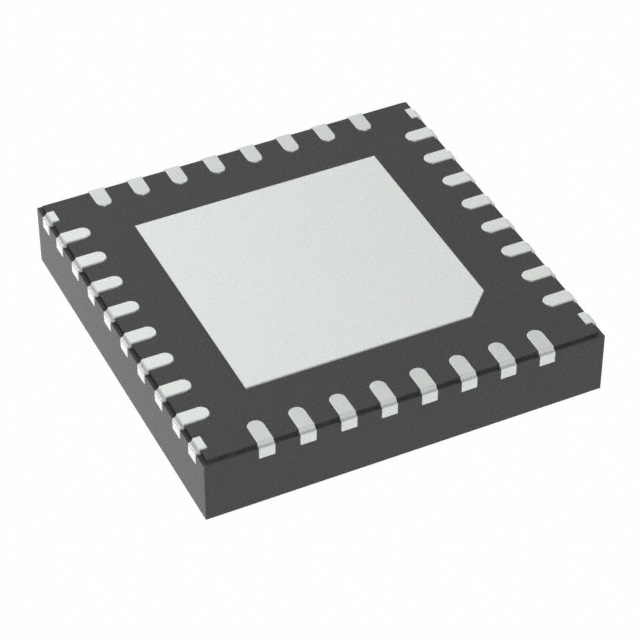
- Part No.:
- A4413KETTR-J
- Manufacturer:
- Allegro MicroSystems
- Category:
- Voltage Regulators - Linear + Switching
- Package:
- 32-VFQFN Exposed Pad
- Datasheet:
-
 A4413KETTR-J.pdf
- Description:
- IC REG 5OUT BUCK/BST/LNR 32QFN
- Quantity:
- Payment:

- Shipping:

Inventory:2,880
Please send an inquiry. Send us your inquiry, and we will respond immediately.
Product details
Overview
A4413KETTR-J from Allegro MicroSystems is an automotive-grade power management IC configured as a buck or buck-boost pre-regulator, delivering tightly regulated 5.35 V (VREG) to feed both a 5 V/75 mA protected LDO (V5P) and an adjustable 0.8–3.3 V/800 mA synchronous buck regulator (ADJ), with integrated pulse-width window watchdog, NPOR, and dual bandgap architecture for under-hood microprocessor power supplies.
For engineers reviewing the A4413KETTR-J datasheet, A4413KETTR-J pinout, A4413KETTR-J application, or A4413KETTR-J equivalent, this device supports high-temperature automotive power sequencing, fault-tolerant sensor supply, and programmable watchdog supervision in systems requiring AEC-Q100-compliant, multi-rail PMIC functionality with ENBAT ignition enable and thermal shutdown.
Technical Context
The A4413KETTR-J integrates two independent switching regulators: a buck-boost pre-regulator (VREG) with 3.5–36 V input range and 250 kHz–2.4 MHz adjustable PWM frequency, and an adjustable synchronous buck (ADJ) with 800 mA output and 787–813 mV feedback reference. Both include pulse-by-pulse current limit, hiccup-mode short-circuit protection, and LX node short-circuit detection.
Its diagnostic subsystem features active-low open-drain NPOR (2 ms rising delay), POK5V, and ENBATS outputs; a programmable pulse-width window watchdog (WDIN, WDADJ, WDTOL, WDENn) with ±8%/±13%/±18% tolerance selection and scalable activation delay; and dual bandgaps (BGVREF, BGFAULT) for regulation and fault detection-enabling long-term reliability in −40°C to 135°C ambient operation.
Key Specifications
| Parameter | Value and Actual Design Meaning |
|---|---|
| Input Voltage Range | 3.5 V to 36 V (supports cold-crank and load-dump conditions in automotive battery systems) |
| VREG Output Voltage | 5.25–5.45 V (tightly regulated intermediate rail for downstream LDO and buck stages) |
| V5P Output | 4.9–5.1 V at 75 mA, with foldback overcurrent and short-to-battery protection |
| ADJ Output Range | 0.8–3.3 V, adjustable via FBADJ feedback, with 787–813 mV reference voltage |
| Switching Frequency | 250 kHz to 2.4 MHz (programmable via FSET/SYNC resistor or external clock sync) |
| Watchdog Window Tolerance | Selectable ±8%, ±13%, or ±18% (via WDTOL pin logic state) |
| Junction Temperature | −40°C to 150°C (AEC-Q100 qualified for under-hood deployment) |
| Package | 32-pin QFN (5 mm × 5 mm, 0.5 mm pitch) with exposed thermal pad (ET suffix) |
Pinout & Package
Package: 32-lead, 5 mm × 5 mm, 0.5 mm pitch QFN with exposed thermal pad (suffix "ET").
| Pin/Terminal | Circuit Role | Design Meaning |
|---|---|---|
| VIN (1,2) | Main input voltage supply | Accepts 3.5–36 V automotive battery input; dual pins reduce IR drop and improve thermal path |
| GND (3,10) | Analog/digital ground reference | Separate low-noise ground return for control circuitry and error amplifiers |
| VREG (26) | Pre-regulator output rail | 5.35 V intermediate supply feeding V5P LDO and ADJ buck regulator; monitored by NPOR |
| V5P (17) | Protected 5 V LDO output | 75 mA max output with foldback OCP and short-to-battery protection for remote sensors |
| FBADJ (19) | Feedback input for ADJ regulator | Connects to resistor divider to set 0.8–3.3 V output; 800 mV nominal reference |
| ENBAT (8) | High-voltage ignition enable input | Accepts 2.9–3.5 V threshold from key-switch; tolerant to −13 V to 40 V transients |
| WDIN (16) | Watchdog pulse train input | Accepts processor-generated pulses (1–2 ms width); triggers PWWD timer on edge detection |
| NPOR (5) | Active-low power-on-reset output | Open-drain signal with 2 ms rising delay; asserts when ADJ output is out of regulation |
Key Features
| Feature | Design Value |
|---|---|
| Buck-boost pre-regulator with adjustable frequency | Enables stable VREG across wide input range (3.5–36 V), supporting start-stop and cold-crank without rail collapse |
| Programmable pulse-width window watchdog (PWWD) | Configurable activation delay and ±8%/±13%/±18% tolerance ensures robust MCU supervision during boot and runtime |
| Dual independent bandgaps (BGVREF, BGFAULT) | Separates regulation reference from fault detection path, improving long-term accuracy and failure mode resilience |
| SLEW rate control and frequency dithering | Reduces EMI/EMC emissions by controlling LX1 rise time and spreading switching spectrum |
| Pin-to-pin and pin-to-ground fault tolerance | All pins withstand −0.3 V to +8 V (except VIN/ENBAT), enabling robustness against board-level transients and assembly faults |
| Thermal shutdown with 155–185°C trip and 20°C hysteresis | Protects against sustained overload or poor heatsinking in confined under-hood environments |
Applications
| Electronic Power Steering (EPS) | Automotive Powertrain Control Unit |
|---|---|
|
Use Scenario: EPS module requires isolated, fault-tolerant 5 V supply for torque sensors and 3.3 V for MCU core, operating continuously at 125°C ambient. IC Role / Device Role / Timing Role: A4413KETTR-J serves as primary PMIC, generating VREG → V5P (sensor rail) and ADJ (MCU rail), with NPOR coordinating system reset timing. Use Value: Dual bandgap architecture and short-to-battery protection ensure sensor data integrity during battery reversal events; thermal shutdown prevents latch-up at junction temperatures up to 150°C. |
Use Scenario: Powertrain ECU demands redundant diagnostics, watchdog supervision, and stable multi-rail power during engine cranking and transient load dumps. IC Role / Device Role / Timing Role: A4413KETTR-J provides ENBAT-triggered startup sequencing, POK5V monitoring, and PWWD supervision synchronized to MCU boot timeline. Use Value: Programmable watchdog window and scalable activation delay accommodate variable processor boot times; ENBAT status (ENBATS) enables ignition-state awareness in firmware. |
| CAN Transceiver Power Supply | High-Temperature Industrial Sensor Hub |
|
Use Scenario: CAN FD node in transmission control module needs clean, protected 5 V rail immune to battery reverse polarity and load dump spikes. IC Role / Device Role / Timing Role: A4413KETTR-J delivers V5P with foldback OCP and short-to-battery protection, while NPOR gates CAN controller initialization until VREG stabilizes. Use Value: V5P's −1 V to 40 V absolute rating and built-in short-to-battery clamp eliminate need for external TVS or diode protection, reducing BOM count. |
Use Scenario: Under-hood temperature sensor hub operates at 135°C ambient and requires reliable 3.3 V for ADC and 5 V for analog front-end, with field-programmable watchdog. IC Role / Device Role / Timing Role: A4413KETTR-J acts as ruggedized PMIC with WDENn-enabled factory reflash capability and WDCLK(IN) option for ultra-precise timing. Use Value: External WD clock input (WDCLK(IN)) enables ±0.1% watchdog accuracy; SLEW pin allows dynamic EMI tuning without hardware change. |
Equivalent & Alternatives
The following parts are listed as comparable options for similar multi-rail automotive PMIC applications.
| Alternative Part | Technical Difference | Application Difference | Selection Advice |
|---|---|---|---|
| MPQ4333-AEC1 | Single buck pre-regulator only (no buck-boost mode); no integrated 5 V protected LDO or PWWD; 3.5–36 V input, 3 A output | Lacks V5P short-to-battery protection, NPOR, and programmable watchdog-requires external components for full A4413KETTR-J functionality | Choose when only high-current pre-regulation is needed and diagnostics can be implemented externally |
| TPS65381A-Q1 | Three-output PMIC (2 buck + LDO), but fixed 5 V LDO (not protected), no buck-boost topology, no PWWD; includes SPI interface | Offers digital configuration and fault reporting via SPI, but lacks ENBAT ignition enable, short-to-battery protection, and pulse-width window watchdog | Prefer when system-level configurability and telemetry outweigh need for analog watchdog and ignition-aware sequencing |
Compared with MPQ4333-AEC1 and TPS65381A-Q1, the A4413KETTR-J uniquely integrates buck-boost pre-regulation, 5 V short-to-battery-protected LDO, and programmable pulse-width window watchdog in a single AEC-Q100 package-enabling simplified, high-reliability power architecture for safety-critical automotive modules without external supervision ICs.
Availability
A4413KETTR-J is available at Aetrix Electronics and suitable for electronic power steering (EPS), automotive powertrain control units, and CAN transceiver power supplies requiring stable component supply, AEC-Q100 compliance, and long-lifecycle support.
Supply support for A4413KETTR-J includes scheduled delivery planning, volume procurement assistance, BOM continuity management, traceable sourcing, and lifecycle availability coordination for OEM customers, industrial embedded developers, connected-device designers, and electronics production programs.
Manufacturer
Allegro MicroSystems is a U.S.-based semiconductor company specializing in high-performance power ICs, magnetic sensors, and motor driver solutions for automotive and industrial markets.
The A4413 product line is designed specifically for demanding automotive power management applications-including under-hood ECUs, EPS, and ADAS modules-where high-temperature operation, fault resilience, and integrated diagnostics are critical.
FAQ
What is the maximum input voltage rating for the A4413KETTR-J?
The A4413KETTR-J has an absolute maximum input voltage (VIN) rating of 40 V, with continuous operation supported from 3.5 V to 36 V. This enables robust performance during automotive load-dump transients and cold-crank conditions. The ENBAT pin tolerates −13 V to 40 V with current limiting, making the A4413KETTR-J suitable for direct connection to ignition-switched battery rails without external clamping.
How does the pulse-width window watchdog (PWWD) function in the A4413KETTR-J?
The A4413KETTR-J implements a programmable pulse-width window watchdog that monitors WDIN pulses from the host MCU. Pulse widths are configurable from 1 to 2 ms via WDADJ, with tolerance selectable as ±8%, ±13%, or ±18% using the WDTOL pin. An activation delay scales with pulse width to accommodate processor startup, and WDENn provides active-low enable control-allowing safe factory programming or field reflash without unintended resets.
Does the A4413KETTR-J support both buck and buck-boost topologies?
Yes, the A4413KETTR-J's pre-regulator (VREG) can be configured as either buck-only or buck-boost, depending on external component selection (e.g., presence of boost diode D2 and MOSFET Q1). In buck-boost mode, it maintains regulation down to 3.5 V input; in buck-only mode, minimum input is 5.7 V. The FSET/SYNC pin allows frequency setting or synchronization to an external clock, supporting EMI-sensitive designs.
What protections are included for the V5P 5 V LDO output in the A4413KETTR-J?
The A4413KETTR-J's V5P LDO includes foldback overcurrent protection (−90 to −130 mA limit, −20 to −70 mA foldback) and dedicated short-to-battery protection-ensuring safe operation even if the 5 V rail is directly shorted to the vehicle battery. It also features UV/OV lockout on the V5P rail, with POK5V providing open-drain status indication. These protections eliminate the need for external TVS or current-limiting components in sensor-supply applications.
What is the operating temperature range for the A4413KETTR-J?
The A4413KETTR-J is rated for −40°C to 135°C ambient temperature operation and −40°C to 150°C junction temperature, meeting AEC-Q100 Grade 1 requirements. Its thermal shutdown activates at 155–185°C with 20°C hysteresis, and the 32-pin QFN package includes an exposed thermal pad optimized for PCB heat dissipation-making it suitable for under-hood automotive modules where passive cooling is limited.
A4413KETTR-J Specifications
- Product attributes
- Attribute value
- Manufacturer:
- Allegro MicroSystems
- Series:
- -
- Package/Case:
- 32-VFQFN Exposed Pad
- Packaging:
- Tape & Reel (TR)
- Product Status:
- Active
- Topology:
- Step-Down (Buck) (1) or Step-Down/Step-Up (Buck/Boost) (1), Linear (LDO) (3)
- Number of Outputs:
- 5
- Frequency - Switching:
- 250kHz ~ 2MHz
- Voltage/Current - Output 1:
- 5.35V
- Voltage/Current - Output 2:
- 0.8V ~ 3.3V, 800mA
- Voltage/Current - Output 3:
- 5V, 75mA
- w/LED Driver:
- No
- w/Supervisor:
- No
- w/Sequencer:
- Yes
- Voltage - Supply:
- 3.5V ~ 36V
- Operating Temperature:
- -40°C ~ 135°C
- Grade:
- Automotive
- Qualification:
- AEC-Q100
- Mounting Type:
- Surface Mount, Wettable Flank
- Supplier Device Package:
- 32-QFN (5x5)
A4413KETTR-J FAQ
1.How can I place an order for A4413KETTR-J through Aetrix?
Please submit a Request for Quotation (RFQ) for A4413KETTR-J on Aetrix. Our sales agent will provide a competitive quotation and guide you through the order confirmation once you accept the terms.
2.Are the price and stock information for A4413KETTR-J reliable?
The price and inventory of A4413KETTR-J are updated periodically and may fluctuate due to market conditions. Stock and pricing data are typically refreshed every 24 hours. Quotation validity for A4413KETTR-J is usually 5 days.
3.What payment methods are accepted for A4413KETTR-J?
We accept Wire Transfer, PayPal, Credit Card, Western Union, MoneyGram, and Escrow for A4413KETTR-J transactions.
Note: Certain payment methods may incur a processing fee.
4.How is shipping managed for A4413KETTR-J?
A4413KETTR-J orders can be shipped via leading logistics carriers, including DHL, UPS, FedEx, TNT, or Registered Mail.
Once your A4413KETTR-J order is processed, you will receive an email with the shipment details and tracking number.
Note: Tracking information may take up to 24 hours to appear. Express delivery typically takes 3–5 business days.
5.How can I obtain technical support or documentation for A4413KETTR-J?
For technical support, including A4413KETTR-J datasheets, pinout diagrams, or application guidance, please contact our engineering support team. They can provide detailed documentation and assistance for your A4413KETTR-J requirements.
6.How does Aetrix verify that A4413KETTR-J is sourced from the original manufacturer or authorized distributors?
All A4413KETTR-J products on Aetrix are procured from qualified distributors and authorized channels. Our dedicated quality assurance team conducts strict verification, including traceability checks and, if necessary, third-party testing. This ensures that A4413KETTR-J meets industry standards.
7.What is the process for return or replacement of A4413KETTR-J?
All A4413KETTR-J units undergo pre-shipment inspection (PSI). If there is an issue with A4413KETTR-J, returns or replacements are accepted under the following conditions:
1.Quantity discrepancies, incorrect items, or visible external defects (such as breakage or corrosion), acknowledged by Aetrix.
2.The issue is reported within 90 days of delivery.
3.The A4413KETTR-J part is unused and in its original packaging.
Return procedure for A4413KETTR-J:
1.Submit a request within 90 days.
2.Obtain a Return Material Authorization (RMA) from Aetrix.
A4413KETTR-J Tags

-
TPS6521905RHBR
Texas Instruments
-
MIC3385YHL-TR
Microchip Technology
-
A4402ELPTR-T
Allegro MicroSystems
-
LM26480SQ-AA/NOPB
Texas Instruments
-
A4402KLPTR-T
Allegro MicroSystems
-
BD71847AMWV-E2
ROHM Semiconductor
-
ADP5040ACPZ-1-R7
Analog Devices Inc.
-
LT3048IDC#TRPBF
Analog Devices Inc.
-
ADP5037ACPZ-R7
Analog Devices Inc.
-
XRP7714ILB-F
MaxLinear, Inc.
-
LTC3260EDE#TRPBF
Analog Devices Inc.
-
LTC3260EMSE#PBF
Analog Devices Inc.
Tech Hub

A practical engineering and sourcing framework covering lifecycle verification, lifetime-buy calculations, replacement qualification, supplier checks and counterfeit-risk controls.

TTL and CMOS logic families differ in thresholds, loading, output drive, power and timing. This engineering guide compares 74HC and 74HCT, calculates noise margins and checks 3.3 V/5 V compatibility.

A practical engineering guide to 3.3V and 5V logic compatibility, input thresholds, resistor dividers, translator ICs, MOSFET level shifting, I2C pull-ups, timing limits and power-sequencing risks.

The 74HC595 uses push-pull logic outputs, while the TPIC6B595 uses 50 V open-drain DMOS sinks for higher-power loads. This guide compares timing, current limits, 3.3 V interfacing, load wiring, thermal…

The 74HC595 converts serial data into eight stable parallel outputs. This guide covers pin functions, shift and storage timing, OE and MR behavior, drive-current limits, cascading, voltage compatibilit…

A technical comparison of level-sensitive latches and edge-triggered flip-flops, covering timing windows, setup and hold limits, master–slave operation, time borrowing, race-through, HDL inference and…

A D latch stores one bit while Enable controls when data can pass. This reference covers gate-level operation, truth tables, transparency, setup and hold timing, LE versus OE, common ICs and practical …

An SR latch stores one bit through cross-coupled feedback. This engineering reference covers NOR and NAND implementations, truth tables, forbidden-state recovery, gated operation, switch debouncing, fa…

Latch circuits retain one bit through feedback. This technical reference covers SR and D latches, truth tables, transparency, timing limits, latch-versus-flip-flop behavior, applications and common log…

An engineering guide to LED driver operation, constant-current and constant-voltage outputs, linear and switching topologies, dimming, IC selection, calculations, replacement compatibility, and fault c…


