
 My Inquiry
 My Account


Allegro MicroSystems A4481KLJTR-T
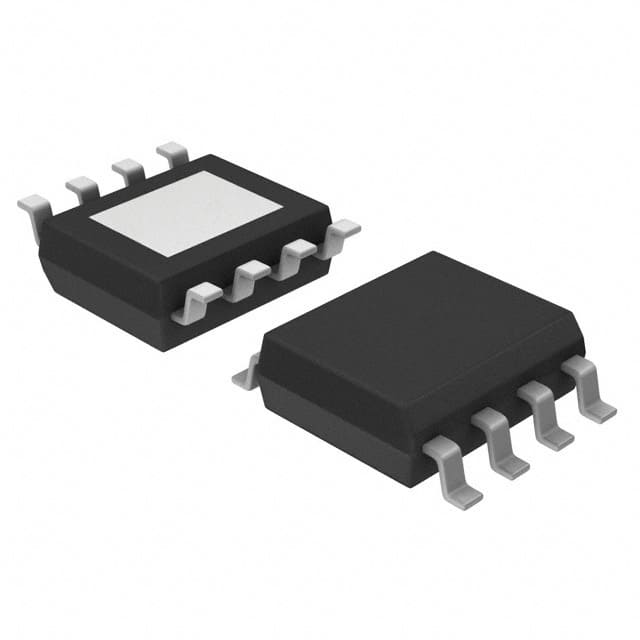
- Part No.:
- A4481KLJTR-T
- Manufacturer:
- Allegro MicroSystems
- Package:
- 8-SOIC (0.154", 3.90mm Width) Exposed Pad
- Datasheet:
-
 A4481KLJTR-T.pdf
- Description:
- IC REG LINEAR 5V 50MA 8SOIC
- Quantity:
- Payment:

- Shipping:

Inventory:5,990
Please send an inquiry. Send us your inquiry, and we will respond immediately.
Product details
Overview
A4481KLJTR-T from Allegro MicroSystems is an automotive-grade 5 V ±1% linear regulator delivering up to 50 mA output current, operating from 5.25–40 V input with 50 V load dump tolerance and short-to-battery protection up to 32 V. It integrates Power OK (POK) flag, high-voltage ENB enable input (rated to 50 V), foldback overcurrent protection, and thermal shutdown - designed for microcontroller power rails in harsh automotive environments.
For engineers reviewing the A4481KLJTR-T datasheet, A4481KLJTR-T pinout, A4481KLJTR-T application, or A4481KLJTR-T equivalent, key selection criteria include its AEC-Q100 qualification, ±1% output accuracy across –40°C to +150°C, 35°C/W junction-to-ambient thermal resistance in eSOIC-8 package, and fault diagnostics via open-drain POK output.
Technical Context
The A4481KLJTR-T implements a single LDO regulator core with integrated UVLO (4.75–5.2 V start/stop), foldback current limiting (–13 to –35 mA at VOUT = 0 V), and dual-stage VOUT monitoring for UV/OV protection with 15–50 mV hysteresis. Its ENB input features 100 kΩ internal pull-down and 10–25 µs deglitch filtering to reject PCB noise.
Protection architecture includes independent short-to-battery tolerance (up to 32 V on VOUT, regardless of VIN), thermal shutdown at 165°C with 15°C hysteresis, and input undervoltage lockout that disables regulation below ~4.55 V. The POK output asserts low on ENB deactivation, UVLO, TSD, or VOUT UV/OV events.
Key Specifications
| Parameter | Value and Actual Design Meaning |
|---|---|
| Output Voltage | 5 V ±1% (4.95–5.05 V at 25 mA, 5.25–40 V VIN) - ensures stable MCU core voltage under battery transients |
| Max Output Current | 50 mA continuous - sufficient for low-power microcontrollers and CAN/LIN transceivers |
| Input Voltage Range | 5.25–40 V operating; 50 V load dump rated - supports 12 V and 24 V automotive systems with surge immunity |
| VOUT Short-to-Battery | Withstands 32 V on VOUT pin independent of VIN - protects against harness faults without external components |
| Thermal Resistance | RθJA = 35°C/W (eSOIC-8 with exposed pad) - enables operation up to +150°C ambient with proper PCB thermal vias |
| Enable Input Rating | ENB pin rated to 50 V - allows direct connection to battery for wake-up without level-shifting circuitry |
| Power OK Output | Open-drain POK with <400 mV low-level voltage at 4 mA sink - provides reliable fault signaling to host microprocessor |
Pinout & Package
Package: 8-pin eSOIC (exposed thermal pad), RoHS-compliant, matte-tin leadframe plating. Thermal pad must be soldered to PCB ground plane with ≥6 thermal vias for optimal RθJA performance.
| Pin/Terminal | Circuit Role | Design Meaning |
|---|---|---|
| 1, 2 - VIN | Input voltage supply | Dual VIN pins reduce trace inductance and improve transient response during load dump events |
| 3 - NC | No connect | Not internally bonded - must remain unconnected per datasheet; no routing or stitching allowed |
| 4 - ENB | Logic enable input | High-voltage tolerant (50 V), 100 kΩ internal pull-down; 15 µs delay on disable prevents false shutdown from noise |
| 5 - POK | Open-drain fault indicator | Asserts low on ENB deactivation, UVLO, TSD, or VOUT UV/OV - requires external pull-up resistor (typically 10 kΩ) |
| 6, 7 - GND | Ground reference | Dual GND pins minimize ground bounce and improve PSRR; both must be connected to low-impedance ground plane |
| 8 - VOUT | Regulated 5 V output | Delivers up to 50 mA; protected against short-to-battery up to 32 V independent of VIN condition |
Key Features
| Feature | Design Value |
|---|---|
| AEC-Q100 Grade 0 qualification | Validated for –40°C to +150°C ambient operation - meets automotive engine bay and transmission control requirements |
| Foldback overcurrent protection | Reduces output current to –13 to –35 mA during short-circuit - limits power dissipation and prevents thermal runaway |
| VOUT UV/OV protection with hysteresis | Trips at 4.5–4.85 V (UV) and 5.15–5.5 V (OV) with 15–50 mV hysteresis - prevents system malfunction due to rail collapse or overvoltage |
| Pin-to-pin and pin-to-ground tolerance | All pins withstand –0.3 V to 50 V (VIN/ENB) or –0.3 V to 32 V (VOUT) - eliminates need for external TVS diodes in most cases |
| Integrated thermal shutdown | Triggers at 165°C junction temperature with 15°C hysteresis - ensures safe recovery after overload without manual reset |
Applications
| Engine Control Unit (ECU) Sensor Power | CAN/LIN Transceiver Bias Supply |
|---|---|
|
Use Scenario: Powers analog sensors (e.g., pressure, temperature) in engine compartment where ambient reaches 150°C and battery transients exceed 40 V. IC Role / Device Role / Timing Role: Primary 5 V bias rail regulator with diagnostic feedback via POK signal to ECU microcontroller. Use Value: Maintains ±1% output accuracy across full temperature range while surviving 50 V load dump pulses - eliminates need for external surge clamping. |
Use Scenario: Supplies isolated 5 V rail to high-speed CAN FD or LIN transceivers in body control modules subject to battery disconnection events. IC Role / Device Role / Timing Role: Low-noise, fault-monitored LDO providing clean power with fast startup (<2.3 ms) and glitch-immune ENB control. Use Value: ENB pin's 50 V rating enables direct battery tie for wake-on-CAN; POK output confirms regulation integrity before transceiver initialization. |
| Automotive Microcontroller Core Supply | ADAS Camera Module Power |
|
Use Scenario: Powers ARM Cortex-M7 or similar automotive MCU cores requiring stable 5 V with brown-out detection and thermal margin. IC Role / Device Role / Timing Role: Main system regulator with UVLO, TSD, and POK reporting - interfaces directly with MCU reset and watchdog logic. Use Value: Integrated UV/OV protection and 150°C junction rating ensure uninterrupted operation during cold cranking and hot soak conditions. |
Use Scenario: Provides regulated 5 V to image sensor and ISP in rear-view or surround-view camera modules mounted near exhaust or under hood. IC Role / Device Role / Timing Role: Fault-tolerant LDO with short-to-battery resilience - critical for maintaining video stream during harness chafing or connector back-probe events. Use Value: Withstands 32 V on VOUT independent of VIN - prevents camera blackouts caused by accidental battery contact on sensor cable. |
Equivalent & Alternatives
The following parts are listed as comparable options for similar automotive LDO regulator applications.
| Alternative Part | Technical Difference | Application Difference | Selection Advice |
|---|---|---|---|
| TLV73350PDBVR | 300 mA output, 1.8–5.5 V input, no load dump rating, no short-to-battery protection, no POK output | Suitable for non-automotive industrial MCU rails only; lacks AEC-Q100, thermal shutdown hysteresis, and fault reporting | Select only for cost-sensitive non-automotive designs where 50 V surge immunity and diagnostics are unnecessary |
| TPS7B8750QKVURQ1 | AEC-Q100 Grade 1 (–40°C to +125°C), 500 mA output, 1.6–40 V input, 40 V load dump, no short-to-battery on VOUT | Higher current capability but limited to 125°C ambient; lacks VOUT short-to-battery tolerance and foldback OCP | Prefer when >50 mA load current is required and short-to-battery fault resilience is not critical |
Compared with TLV73350PDBVR and TPS7B8750QKVURQ1, the A4481KLJTR-T uniquely combines Grade 0 temperature range, VOUT short-to-battery tolerance up to 32 V, foldback OCP, and integrated POK - making it the only choice for safety-critical sensor and transceiver supplies in extreme under-hood environments.
Availability
A4481KLJTR-T is available at Aetrix Electronics and suitable for automotive ECU sensor power, CAN/LIN transceiver bias, and ADAS camera module supply requiring stable component supply across extended temperature and high-reliability production cycles.
Supply support for A4481KLJTR-T includes scheduled delivery planning, volume procurement assistance, BOM continuity management, traceable sourcing, and lifecycle availability coordination for OEM customers, industrial embedded developers, connected-device designers, and electronics production programs.
Manufacturer
Allegro MicroSystems is a U.S.-based semiconductor company specializing in high-performance magnetic sensing, power ICs, and motor driver solutions for automotive and industrial markets.
The A4481 product line delivers fault-protected linear regulators engineered specifically for automotive power domains requiring AEC-Q100 compliance, load dump survival, and diagnostic visibility in engine control, body electronics, and ADAS subsystems.
FAQ
What is the maximum ambient temperature for continuous operation of the A4481KLJTR-T?
The A4481KLJTR-T is rated for continuous operation from –40°C to +150°C ambient temperature, validated per AEC-Q100 Grade 0 requirements. Its thermal design uses an eSOIC-8 package with exposed pad and RθJA = 35°C/W, enabling full 50 mA output at +150°C only when VIN ≤ 5.35 V; higher input voltages require derating per Figure 2 in the datasheet. Always verify junction temperature using PDISS = (VIN – 5 V) × IOUT + VIN × 3.4 mA.
Does the A4481KLJTR-T require external capacitors, and what values are recommended?
Yes, the A4481KLJTR-T requires both input and output capacitors. CIN ≥ 2.2 µF (X5R/X7R ceramic, 10 V+ rating) must be placed close to VIN/GND pins. COUT must be 3–10 µF (X5R/X7R, 10 V+); for short-to-battery resilience, use 50–100 V-rated capacitors. The device is stable with all capacitor types meeting these ranges, but improper placement or undersized values will degrade transient response and cause POK false triggers.
How does the Power OK (POK) output function on the A4481KLJTR-T?
The POK output on the A4481KLJTR-T is an open-drain signal that pulls low during ENB deactivation, input UVLO, thermal shutdown, or VOUT UV/OV events. It remains high only when VOUT is within ±10% of 5 V (i.e., 4.5–5.5 V) and all protections are inactive. An external pull-up resistor (typically 10 kΩ to 5 V or 3.3 V) is mandatory; POK low-level voltage is guaranteed ≤400 mV at 4 mA sink current.
Can the ENB pin of the A4481KLJTR-T be tied directly to battery voltage?
Yes, the ENB pin of the A4481KLJTR-T is rated to 50 V and can be connected directly to battery (12 V or 24 V) for automatic wake-up without level-shifting circuitry. Its internal 100 kΩ pull-down ensures default disable state, and 10–25 µs deglitch filtering rejects typical PCB noise. When pulled high above 2 V, the device starts regulation with typical startup time of 1.5 ms into a 50 mA load with ≤4.7 µF output capacitance.
What protection features distinguish the A4481KLJTR-T from standard automotive LDOs?
The A4481KLJTR-T includes five differentiated protections: (1) 50 V load dump rating, (2) VOUT short-to-battery tolerance up to 32 V independent of VIN, (3) foldback overcurrent limiting (–13 to –35 mA), (4) POK fault reporting for all critical failures, and (5) pin-to-pin/pin-to-ground tolerance across all terminals. These features eliminate external protection components required by most competing LDOs in harsh automotive harness environments.
A4481KLJTR-T Specifications
- Product attributes
- Attribute value
- Manufacturer:
- Allegro MicroSystems
- Series:
- -
- Package/Case:
- 8-SOIC (0.154", 3.90mm Width) Exposed Pad
- Packaging:
- Tape & Reel (TR)
- Product Status:
- Active
- Output Configuration:
- Positive
- Output Type:
- Fixed
- Number of Regulators:
- 1
- Voltage - Input (Max):
- 40V
- Voltage - Output (Min/Fixed):
- 5V
- Voltage - Output (Max):
- -
- Voltage Dropout (Max):
- -
- Current - Output:
- 50mA
- Current - Quiescent (Iq):
- 3.4 mA
- Current - Supply (Max):
- -
- PSRR:
- -
- Control Features:
- Enable, Power Good
- Protection Features:
- Over Current, Over Temperature, Over Voltage, Short Circuit, Under Voltage Lockout (UVLO)
- Operating Temperature:
- -40°C ~ 150°C
- Grade:
- Automotive
- Qualification:
- AEC-Q100
- Mounting Type:
- Surface Mount
- Supplier Device Package:
- 8-SOIC-EP
A4481KLJTR-T FAQ
1.How can I place an order for A4481KLJTR-T through Aetrix?
Please submit a Request for Quotation (RFQ) for A4481KLJTR-T on Aetrix. Our sales agent will provide a competitive quotation and guide you through the order confirmation once you accept the terms.
2.Are the price and stock information for A4481KLJTR-T reliable?
The price and inventory of A4481KLJTR-T are updated periodically and may fluctuate due to market conditions. Stock and pricing data are typically refreshed every 24 hours. Quotation validity for A4481KLJTR-T is usually 5 days.
3.What payment methods are accepted for A4481KLJTR-T?
We accept Wire Transfer, PayPal, Credit Card, Western Union, MoneyGram, and Escrow for A4481KLJTR-T transactions.
Note: Certain payment methods may incur a processing fee.
4.How is shipping managed for A4481KLJTR-T?
A4481KLJTR-T orders can be shipped via leading logistics carriers, including DHL, UPS, FedEx, TNT, or Registered Mail.
Once your A4481KLJTR-T order is processed, you will receive an email with the shipment details and tracking number.
Note: Tracking information may take up to 24 hours to appear. Express delivery typically takes 3–5 business days.
5.How can I obtain technical support or documentation for A4481KLJTR-T?
For technical support, including A4481KLJTR-T datasheets, pinout diagrams, or application guidance, please contact our engineering support team. They can provide detailed documentation and assistance for your A4481KLJTR-T requirements.
6.How does Aetrix verify that A4481KLJTR-T is sourced from the original manufacturer or authorized distributors?
All A4481KLJTR-T products on Aetrix are procured from qualified distributors and authorized channels. Our dedicated quality assurance team conducts strict verification, including traceability checks and, if necessary, third-party testing. This ensures that A4481KLJTR-T meets industry standards.
7.What is the process for return or replacement of A4481KLJTR-T?
All A4481KLJTR-T units undergo pre-shipment inspection (PSI). If there is an issue with A4481KLJTR-T, returns or replacements are accepted under the following conditions:
1.Quantity discrepancies, incorrect items, or visible external defects (such as breakage or corrosion), acknowledged by Aetrix.
2.The issue is reported within 90 days of delivery.
3.The A4481KLJTR-T part is unused and in its original packaging.
Return procedure for A4481KLJTR-T:
1.Submit a request within 90 days.
2.Obtain a Return Material Authorization (RMA) from Aetrix.
A4481KLJTR-T Tags
-
MIC5504-1.8YM5-TR
Microchip Technology
-
MIC5504-3.3YM5-TR
Microchip Technology
-
MIC5365-3.0YC5-TR
Microchip Technology
-
MIC5365-1.8YC5-TR
Microchip Technology
-
MIC5365-2.5YC5-TR
Microchip Technology
-
MIC5365-3.3YC5-TR
Microchip Technology
-
MIC5365-3.3YD5-TR
Microchip Technology
-
MIC5317-3.3YM5-TR
Microchip Technology
-
TLV1117LV33DCYR
Texas Instruments
-
MIC5317-3.3YMT-TZ
Microchip Technology
-
MIC5528-3.3YMT-TR
Microchip Technology
-
TLV75801PDRVR
Texas Instruments
Tech Hub

A practical engineering and sourcing framework covering lifecycle verification, lifetime-buy calculations, replacement qualification, supplier checks and counterfeit-risk controls.

TTL and CMOS logic families differ in thresholds, loading, output drive, power and timing. This engineering guide compares 74HC and 74HCT, calculates noise margins and checks 3.3 V/5 V compatibility.

A practical engineering guide to 3.3V and 5V logic compatibility, input thresholds, resistor dividers, translator ICs, MOSFET level shifting, I2C pull-ups, timing limits and power-sequencing risks.

The 74HC595 uses push-pull logic outputs, while the TPIC6B595 uses 50 V open-drain DMOS sinks for higher-power loads. This guide compares timing, current limits, 3.3 V interfacing, load wiring, thermal…

The 74HC595 converts serial data into eight stable parallel outputs. This guide covers pin functions, shift and storage timing, OE and MR behavior, drive-current limits, cascading, voltage compatibilit…

A technical comparison of level-sensitive latches and edge-triggered flip-flops, covering timing windows, setup and hold limits, master–slave operation, time borrowing, race-through, HDL inference and…

A D latch stores one bit while Enable controls when data can pass. This reference covers gate-level operation, truth tables, transparency, setup and hold timing, LE versus OE, common ICs and practical …

An SR latch stores one bit through cross-coupled feedback. This engineering reference covers NOR and NAND implementations, truth tables, forbidden-state recovery, gated operation, switch debouncing, fa…

Latch circuits retain one bit through feedback. This technical reference covers SR and D latches, truth tables, transparency, timing limits, latch-versus-flip-flop behavior, applications and common log…

An engineering guide to LED driver operation, constant-current and constant-voltage outputs, linear and switching topologies, dimming, IC selection, calculations, replacement compatibility, and fault c…


