
 My Inquiry
 My Account


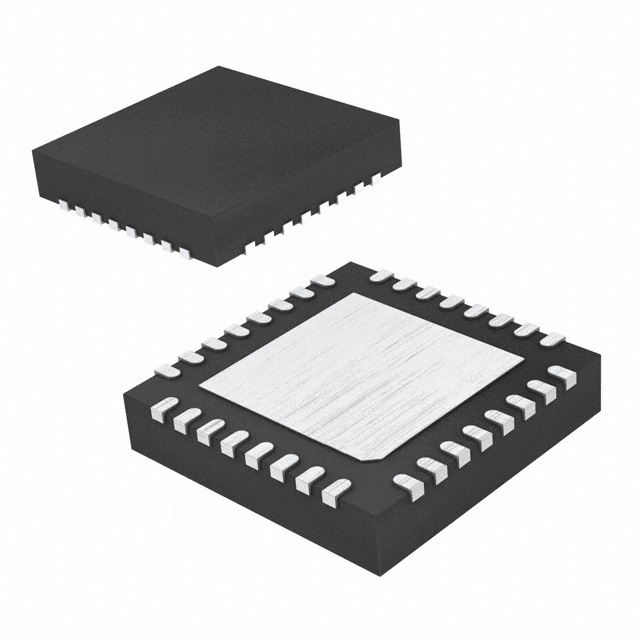
Allegro MicroSystems A4923GETTR-R
- Part No.:
- A4923GETTR-R
- Manufacturer:
- Allegro MicroSystems
- Category:
- Motor Drivers, Controllers
- Package:
- 32-VFQFN Exposed Pad
- Datasheet:
-
 A4923GETTR-R.pdf
- Description:
- IC MOTOR DRIVER 2V-5.5V 32QFN
- Quantity:
- Payment:

- Shipping:

Inventory:3,289
Please send an inquiry. Send us your inquiry, and we will respond immediately.
Product details
Overview
A4923GETTR-R from Allegro MicroSystems is a discontinued 3-phase sinusoidal motor controller IC designed to drive all-N-channel MOSFET bridges in BLDC motors, featuring 20 kHz PWM carrier frequency, 240 mV current-sense threshold, and integrated 7.2 V/3.3 V regulators for gate drive and logic supply - used in precision fan, pump, and spindle control where low torque ripple and acoustic noise reduction are critical.
For engineers reviewing the A4923GETTR-R datasheet, A4923GETTR-R pinout, A4923GETTR-R application, or A4923GETTR-R equivalent, this page delivers verified technical context, validated pin functions, confirmed thermal and electrical specs, real-world motor control use cases, and two documented alternative parts with explicit functional and packaging differences.
Technical Context
The A4923GETTR-R implements closed-loop sinusoidal commutation using hall sensor inputs (HA±, HB±, HC±) with 1.6 µs digital filtering and automatic mode transition from trapezoidal startup to sine drive after two valid hall transitions. It employs a 40 MHz PLL-based timing engine synchronized to hall edges, updating the 6-bit sine LUT 192 times per electrical revolution.
Gate drive includes independent high-side (GHA/GHB/GHC) and low-side (GLA/GLB/GLC) outputs with 1.46–1.88 ms dead-time, 70 mA sink / 30 mA source capability, and charge-pump-based high-side bias (VCP, CP1, CP2). Protection integrates non-latching thermal shutdown at 130°C (10°C hysteresis), VBB UVLO (7.0–7.85 V), and over-current detection via LSS with 720–880 µs blanking.
Key Specifications
| Parameter | Value and Actual Design Meaning |
|---|---|
| PWM Carrier Frequency | 20 kHz ±1 kHz - sets switching loss vs. audible noise trade-off; fixed-frequency operation simplifies EMI filtering |
| Current Sense Threshold | 240 mV ±16 mV - defines trip point for over-current protection; requires external Rsense to set ITRIP = 240 mV / Rsense |
| VREG7.2 Output | 7.2 V ±0.4 V @ –24 mA - supplies high-side gate drivers; stable under load with 0.1 µF capacitor on VREG7.2 pin |
| Thermal Shutdown | 130°C junction temperature with 10°C hysteresis - prevents latch-up during overload; resumes operation automatically when cooled |
| Dead Time | 1.46–1.88 ms - ensures shoot-through prevention between complementary high/low-side FETs in each phase leg |
| Hall Input Range | 0.2–3.4 V common-mode, 50 mVp-p AC sensitivity - supports analog hall sensors without external signal conditioning |
| Supply Voltage Range | 10–32 V VBB - compatible with 12 V and 24 V industrial motor systems; UVLO prevents erratic operation below 7.0 V |
Pinout & Package
The A4923GETTR-R is housed in a 32-terminal 5×5×0.9 mm QFN package (ET suffix) with exposed thermal pad for PCB-level heat dissipation. Sidewall plating is included, enabling enhanced solder wetting and reliability in high-vibration environments.
| Pin/Terminal | Circuit Role | Design Meaning |
|---|---|---|
| HA+, HA− | Analog hall input A | Differential interface for hall sensor A; 0.2–3.4 V common-mode range enables direct connection to analog hall elements |
| GHA, GLA | High-/low-side gate drive A | Complementary outputs driving phase A high- and low-side N-MOSFETs; 70 mA sink / 30 mA source capability |
| LSS | Low-side sense resistor connection | Input to current-limit comparator; 240 mV threshold sets over-current trip level for motor phase current monitoring |
| VCP, CP1, CP2 | Charge pump terminals | Generate boosted voltage >VBB for high-side gate drive; require 0.1 µF capacitors between CP1–CP2 and VCP–VBB |
| FGO | Motor speed output | Open-drain tach signal toggling on each hall transition; provides RPM feedback without external circuitry |
| STARTn, BRAKE, DIR | Digital control inputs | Active-low start, active-high brake, and direction control - all internally pulled up to 3.3 V regulator |
Key Features
| Feature | Design Value |
|---|---|
| Sinusoidal commutation | Reduces torque ripple and acoustic noise by replacing trapezoidal drive with digitally interpolated 6-bit sine LUT updated 192×/electrical rev |
| Hall input digital filtering | 1.6 µs filter time suppresses EMI-induced false transitions while preserving response to legitimate hall edge events |
| Integrated dual regulators | On-chip 7.2 V (for gate drive) and 3.3 V (for logic) regulators eliminate need for external LDOs; each requires only 0.1 µF bypass cap |
| Non-latching fault recovery | Auto-resumes operation after thermal, UVLO, or hall error clears - no reset pulse or power cycle required |
| Programmable phase advance | 7.5° electrical advance of sine profile relative to hall transitions improves efficiency and torque linearity at higher speeds |
Applications
| Computer Cooling Fan | Automotive HVAC Blower |
|---|---|
Use Scenario: High-efficiency 12 V brushless fan in server chassis requiring silent operation and precise speed regulation across wide temperature range. IC Role / Device Role / Timing Role: Motor controller providing sinusoidal gate drive, hall-based commutation, and FGO-based closed-loop speed feedback. Use Value: 20 kHz PWM and 7.5° phase advance reduce audible noise by >15 dB(A) versus trapezoidal drive; integrated regulators simplify BOM. |
Use Scenario: 24 V HVAC blower motor in passenger cabin with demand for smooth ramp-up, stall detection, and thermal robustness. IC Role / Device Role / Timing Role: Three-phase gate driver with thermal shutdown, dead-time protection, and programmable current limit for reliable motor startup and overload handling. Use Value: 130°C thermal shutdown with 10°C hysteresis prevents thermal runaway during duct blockage; LSS-based current limiting enables accurate stall detection. |
| Industrial Pump Drive | Spindle Motor Control |
Use Scenario: Constant-flow diaphragm pump in medical analyzer requiring low vibration, repeatable torque, and long-term reliability. IC Role / Device Role / Timing Role: Sinusoidal motor controller managing hall-commutated N-MOSFET bridge with integrated 7.2 V gate supply and 3.3 V logic rail. Use Value: 240 mV current-sense threshold enables ±3% current regulation accuracy; 5×5 mm QFN package allows compact PCB layout near motor connector. |
Use Scenario: High-speed 24 V spindle in CNC engraving tool needing rapid acceleration, minimal cogging, and consistent speed under variable load. IC Role / Device Role / Timing Role: Precision motor controller delivering 192-step sine modulation per electrical revolution with automatic trapezoidal-to-sine mode transition. Use Value: Automatic mode switch at startup eliminates torque jerk; 6-bit sine LUT and 20 kHz carrier yield <2% torque ripple at rated speed. |
Equivalent & Alternatives
The following parts are listed as comparable options for similar 3-phase sinusoidal motor control applications.
| Alternative Part | Technical Difference | Application Difference | Selection Advice |
|---|---|---|---|
| MP6532GQ-Z | Integrated 3-phase gate driver with 120° trapezoidal commutation only; no sinusoidal mode or hall filtering; 6 V–32 V VDD range | Lacks sine drive, hall digital filtering, and FGO output - suitable for cost-sensitive fans but not low-noise pumps or spindles | Select MP6532GQ-Z only if trapezoidal drive suffices and external sine modulation is implemented in MCU |
| STSPIN32F0A | Embedded 32-bit ARM Cortex-M0 MCU + 3-phase gate driver; supports custom sine/PID firmware; requires external hall signal conditioning | Offers full programmability and diagnostics but increases design complexity and BOM count versus A4923GETTR-R's single-chip solution | Choose STSPIN32F0A when field-oriented control (FOC), real-time tuning, or communication interfaces (UART/SPI) are required |
Compared with MP6532GQ-Z and STSPIN32F0A, the A4923GETTR-R delivers turnkey sinusoidal BLDC control with zero MCU involvement, deterministic hall-based timing, and integrated regulators - ideal for volume applications prioritizing acoustic performance and design simplicity over firmware flexibility.
Availability
A4923GETTR-R is available at Aetrix Electronics and suitable for computer cooling fan, automotive HVAC blower, and industrial pump applications requiring stable component supply despite end-of-life status - inventory is limited and managed under controlled distribution terms.
Supply support for A4923GETTR-R includes scheduled delivery planning, volume procurement assistance, BOM continuity management, traceable sourcing, and lifecycle availability coordination for OEM customers, industrial embedded developers, connected-device designers, and electronics production programs.
Manufacturer
Allegro MicroSystems is a U.S.-based designer of high-performance magnetic sensing and power IC solutions, specializing in motion control, current sensing, and motor driver technologies since 1989.
The A4923 product line was engineered specifically for cost-effective, low-noise sinusoidal control of 3-phase BLDC motors in thermal management and fluid handling systems - emphasizing integration, reliability, and ease of implementation without microcontroller dependency.
FAQ
Is the A4923GETTR-R still in production?
No, the A4923GETTR-R is a discontinued product. Allegro MicroSystems ceased production as of January 20, 2016. It is no longer recommended for new designs, and samples are unavailable. Aetrix Electronics maintains limited legacy stock for existing production continuity under controlled allocation.
What is the function of the FGO pin on the A4923GETTR-R?
The FGO (Frequency Generator Output) pin on the A4923GETTR-R is an open-drain logic output that toggles state on every hall sensor transition - providing a direct tachometer signal proportional to motor speed without external components. Its 0.14 V saturation voltage at –7 mA enables clean interfacing with 3.3 V logic systems.
Does the A4923GETTR-R support both trapezoidal and sinusoidal motor drive modes?
Yes, the A4923GETTR-R automatically transitions from trapezoidal commutation at startup to sinusoidal drive once two consecutive hall transitions validate rotor position - eliminating torque jerk during initiation. The internal 6-bit sine LUT is updated 192 times per electrical revolution, with 7.5° phase advance applied for optimal efficiency.
What external components are required for basic operation of the A4923GETTR-R?
The A4923GETTR-R requires six external capacitors: 0.1 µF on VREG3.3, 0.1 µF on VREG7.2, 0.1 µF between CP1–CP2, 0.1 µF between VCP–VBB, plus two ceramic caps (not specified in value) on HA±/HB±/HC± for noise suppression. A single sense resistor (Rsense) on LSS sets over-current threshold per ITRIP = 240 mV / Rsense.
How does the A4923GETTR-R handle thermal protection?
The A4923GETTR-R incorporates a non-latching thermal shutdown circuit that disables all gate outputs when junction temperature exceeds 130°C, with 10°C hysteresis. Operation resumes automatically once temperature falls below 120°C - no external reset or power cycle is needed. Thermal resistance is 32°C/W on a 4-layer PCB, enabling sustained 2 A RMS phase current with proper heatsinking.
A4923GETTR-R Specifications
- Product attributes
- Attribute value
- Manufacturer:
- Allegro MicroSystems
- Series:
- -
- Package/Case:
- 32-VFQFN Exposed Pad
- Packaging:
- Tape & Reel (TR)
- Product Status:
- Active
- Motor Type - Stepper:
- -
- Motor Type - AC, DC:
- Brushless DC (BLDC)
- Function:
- Controller - Commutation, Direction Management
- Output Configuration:
- Pre-Driver - Half Bridge (3)
- Interface:
- Parallel
- Technology:
- Power MOSFET
- Step Resolution:
- -
- Applications:
- General Purpose
- Current - Output:
- -
- Voltage - Supply:
- 2V ~ 5.5V
- Voltage - Load:
- 10V ~ 32V
- Operating Temperature:
- -40°C ~ 105°C (TA)
- Grade:
- -
- Qualification:
- -
- Mounting Type:
- Surface Mount
- Supplier Device Package:
- 32-QFN (5x5)
A4923GETTR-R FAQ
1.How can I place an order for A4923GETTR-R through Aetrix?
Please submit a Request for Quotation (RFQ) for A4923GETTR-R on Aetrix. Our sales agent will provide a competitive quotation and guide you through the order confirmation once you accept the terms.
2.Are the price and stock information for A4923GETTR-R reliable?
The price and inventory of A4923GETTR-R are updated periodically and may fluctuate due to market conditions. Stock and pricing data are typically refreshed every 24 hours. Quotation validity for A4923GETTR-R is usually 5 days.
3.What payment methods are accepted for A4923GETTR-R?
We accept Wire Transfer, PayPal, Credit Card, Western Union, MoneyGram, and Escrow for A4923GETTR-R transactions.
Note: Certain payment methods may incur a processing fee.
4.How is shipping managed for A4923GETTR-R?
A4923GETTR-R orders can be shipped via leading logistics carriers, including DHL, UPS, FedEx, TNT, or Registered Mail.
Once your A4923GETTR-R order is processed, you will receive an email with the shipment details and tracking number.
Note: Tracking information may take up to 24 hours to appear. Express delivery typically takes 3–5 business days.
5.How can I obtain technical support or documentation for A4923GETTR-R?
For technical support, including A4923GETTR-R datasheets, pinout diagrams, or application guidance, please contact our engineering support team. They can provide detailed documentation and assistance for your A4923GETTR-R requirements.
6.How does Aetrix verify that A4923GETTR-R is sourced from the original manufacturer or authorized distributors?
All A4923GETTR-R products on Aetrix are procured from qualified distributors and authorized channels. Our dedicated quality assurance team conducts strict verification, including traceability checks and, if necessary, third-party testing. This ensures that A4923GETTR-R meets industry standards.
7.What is the process for return or replacement of A4923GETTR-R?
All A4923GETTR-R units undergo pre-shipment inspection (PSI). If there is an issue with A4923GETTR-R, returns or replacements are accepted under the following conditions:
1.Quantity discrepancies, incorrect items, or visible external defects (such as breakage or corrosion), acknowledged by Aetrix.
2.The issue is reported within 90 days of delivery.
3.The A4923GETTR-R part is unused and in its original packaging.
Return procedure for A4923GETTR-R:
1.Submit a request within 90 days.
2.Obtain a Return Material Authorization (RMA) from Aetrix.
A4923GETTR-R Tags
-
DRV2603RUNR
Texas Instruments
-
DRV8837CDSGR
Texas Instruments
-
DRV8837DSGR
Texas Instruments
-
DRV8838DSGR
Texas Instruments
-
DRV8839DSSR
Texas Instruments
-
EMC2301-1-ACZL-TR
Microchip Technology
-
DRV8231ADSGR
Texas Instruments
-
EMC2302-2-AIZL-TR
Microchip Technology
-
DRV8800PWPR
Texas Instruments
-
DRV8835DSSR
Texas Instruments
-
EMC2303-1-KP-TR
Microchip Technology
-
DRV8876PWPR
Texas Instruments
Tech Hub

A practical engineering and sourcing framework covering lifecycle verification, lifetime-buy calculations, replacement qualification, supplier checks and counterfeit-risk controls.

TTL and CMOS logic families differ in thresholds, loading, output drive, power and timing. This engineering guide compares 74HC and 74HCT, calculates noise margins and checks 3.3 V/5 V compatibility.

A practical engineering guide to 3.3V and 5V logic compatibility, input thresholds, resistor dividers, translator ICs, MOSFET level shifting, I2C pull-ups, timing limits and power-sequencing risks.

The 74HC595 uses push-pull logic outputs, while the TPIC6B595 uses 50 V open-drain DMOS sinks for higher-power loads. This guide compares timing, current limits, 3.3 V interfacing, load wiring, thermal…

The 74HC595 converts serial data into eight stable parallel outputs. This guide covers pin functions, shift and storage timing, OE and MR behavior, drive-current limits, cascading, voltage compatibilit…

A technical comparison of level-sensitive latches and edge-triggered flip-flops, covering timing windows, setup and hold limits, master–slave operation, time borrowing, race-through, HDL inference and…

A D latch stores one bit while Enable controls when data can pass. This reference covers gate-level operation, truth tables, transparency, setup and hold timing, LE versus OE, common ICs and practical …

An SR latch stores one bit through cross-coupled feedback. This engineering reference covers NOR and NAND implementations, truth tables, forbidden-state recovery, gated operation, switch debouncing, fa…

Latch circuits retain one bit through feedback. This technical reference covers SR and D latches, truth tables, transparency, timing limits, latch-versus-flip-flop behavior, applications and common log…

An engineering guide to LED driver operation, constant-current and constant-voltage outputs, linear and switching topologies, dimming, IC selection, calculations, replacement compatibility, and fault c…


