
 My Inquiry
 My Account


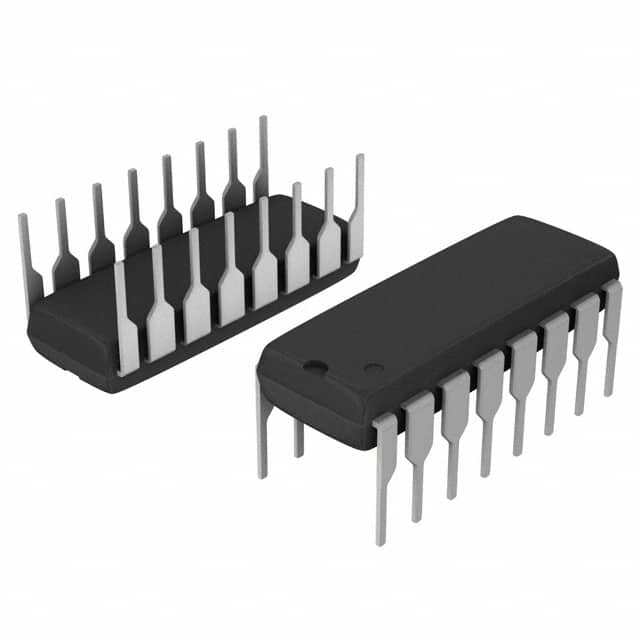
Allegro MicroSystems A5350CA-T
- Part No.:
- A5350CA-T
- Manufacturer:
- Allegro MicroSystems
- Category:
- Sensor and Detector Interfaces
- Package:
- 16-DIP (0.300", 7.62mm)
- Datasheet:
-
 A5350CA-T.pdf
- Description:
- IC SMOKE DETECTOR ION 16DIP
- Quantity:
- Payment:

- Shipping:

Inventory:1,181
Please send an inquiry. Send us your inquiry, and we will respond immediately.
Product details
Overview
A5350CA-T from Allegro MicroSystems is a discontinued BiCMOS ionization smoke detector ASIC with integrated oscillator, active guard amplifiers, piezoelectric horn drivers, and interconnect capability for up to 125 units. It delivers ultra-low standby current (5.0 μA typ. at 9 V), operates from –10°C to 60°C, and uses a 16-pin DIP package with matte tin leadframe plating. It enables battery-powered residential/commercial smoke alarms with synchronized alarm propagation.
For engineers reviewing the A5350CA-T datasheet, A5350CA-T pinout, A5350CA-T application, or A5350CA-T equivalent, key selection considerations include its discontinued status, low-battery threshold adjustability via LOW-V SET, inverted alarm polarity on DETECT IN, and precise timing control via TIMING RES and OSC CAP pins for chamber-specific sensitivity calibration.
Technical Context
The A5350CA-T integrates a 1.67 s standby oscillator that powers the circuit for only 10 ms per cycle, enabling 5.0 μA typical supply current. Its dual active guard amplifiers (GUARD1/GUARD2) maintain ≤±100 mV offset versus DETECT IN to suppress surface leakage in ion chambers.
Alarm triggering requires VDETECTIN > VSENSITIVITYSET, with inverted polarity versus conventional ion detectors. Interconnect logic enforces a 93.9 ms minimum I/O high duration to prevent false alarms from noise, while local smoke detection initiates a 41.67 ms oscillator period and 160 ms horn on-time.
Key Specifications
| Parameter | Value and Actual Design Meaning |
|---|---|
| Supply Current | 5.0 μA typical at 9 V - enables >5-year battery life in 9 V-powered smoke detectors |
| Oscillator Period (standby) | 1.67 s - defines 10 ms sensing window per cycle to minimize power draw |
| Detector Input Offset | ±50 mV - ensures accurate smoke threshold detection despite process variation |
| Active Guard Impedance | ZAG1 = 10 kΩ, ZAG2 = 500 kΩ - provides stable biasing for ion chamber guard rings |
| Horn Output Drive | VOH = 8.8 V, VOL = 0.1 V at 16 mA - directly drives common piezoelectric transducers without external buffers |
| Low-Battery Threshold | 7.2–7.8 V (adjustable via LOW-V SET) - configurable trip point for end-of-life battery detection |
| Operating Temperature | –10°C to 60°C - validated for indoor residential and commercial alarm enclosures |
Pinout & Package
Package: 16-pin plastic dual in-line package (DIP), Pb-free with 100% matte tin leadframe plating, rated for –10°C to 60°C continuous operation.
| Pin/Terminal | Circuit Role | Design Meaning |
|---|---|---|
| 1, 4 | No connection | Unbonded pins; must remain unconnected to avoid parasitic coupling |
| 2 | I/O | Open-drain interconnect bus - drives high during local/remote alarm after 3 s delay; requires external pull-up for multi-unit networking |
| 3 | LOW-V SET | Analog input for resistor-based low-battery threshold adjustment - connects to VSS to raise threshold or VDD to lower it |
| 5 | LED | Current-sinking output - pulses LED every 40 s during standby; disabled during remote alarm |
| 6 | VDD | Positive supply input - accepts 6–12 V; includes internal reverse-battery protection |
| 7 | TIMING RES | Bias resistor input - sets oscillator frequency and internal timing constants via 8.2 MΩ external resistor |
| 8 | FEEDBACK | Horn driver feedback node - connects to piezo transducer terminal for closed-loop drive stability |
| 9 | VSS | Negative supply reference - common ground for all analog and digital blocks |
| 10, 11 | HORN1 / HORN2 | Complementary push-pull outputs - deliver 160 ms on-time pulses to drive piezoelectric horns with 120–208 ms ton |
| 12 | OSC CAP | Oscillator capacitor node - requires low-leakage dielectric (e.g., PTFE, polystyrene) for stable 1.67 s timing |
| 13 | SENSITIVITY SET | Reference voltage input - forms resistor divider with VDD/VSS to set chamber-specific smoke detection threshold |
| 14, 16 | GUARD1 / GUARD2 | Active guard outputs - track DETECT IN within ±100 mV to eliminate surface leakage errors in ion chambers |
| 15 | DETECT IN | Inverted smoke input - alarm triggers when voltage exceeds SENSITIVITY SET; includes ESD diode protection |
Key Features
| Feature | Design Value |
|---|---|
| Ultra-low standby current | 5.0 μA typical enables >5-year operation on standard 9 V alkaline batteries |
| 125-unit interconnect architecture | Daisy-chainable I/O with 93.9 ms noise-immune latch prevents spurious remote alarms |
| Dual active guard amplifiers | GUARD1/GUARD2 reduce ion chamber surface leakage by maintaining <100 mV potential difference |
| Inverted alarm polarity | DETECT IN rising above SENSITIVITY SET triggers alarm - simplifies chamber interface design |
| Adjustable low-battery threshold | LOW-V SET pin supports resistor-based threshold tuning from 6.0–9.0 V range |
| Integrated power-on reset | POR ensures deterministic initialization and eliminates need for external reset circuitry |
Applications
| Residential Smoke Alarms | Commercial Building Safety Systems |
|---|---|
Use Scenario: Standalone or interconnected ceiling-mounted smoke detectors in homes and apartments. IC Role / Device Role / Timing Role: Primary ASIC managing ion chamber sensing, low-power timing, horn actuation, and inter-unit signaling. Use Value: 5.0 μA standby current extends battery life beyond 5 years; 125-unit interconnect enables whole-home alarm synchronization without central panel. | Use Scenario: Multi-story office buildings requiring coordinated evacuation alerts across zones. IC Role / Device Role / Timing Role: Distributed alarm node providing local smoke detection and wired I/O-based alarm propagation. Use Value: 93.9 ms I/O high-duration requirement eliminates false alarms from wiring noise; –10°C to 60°C rating supports attic and basement installations. |
| Hotel/Motel Life Safety Networks | RV & Mobile Home Fire Detection |
Use Scenario: Hotel room alarms linked to hallway strobes and front-desk notification systems. IC Role / Device Role / Timing Role: Interconnect-capable node driving both audible horn and external relay/strobe outputs via I/O pin. Use Value: Inverted DETECT IN polarity simplifies integration with legacy ion chambers; adjustable LOW-V SET accommodates varying battery aging profiles across fleets. | Use Scenario: Compact fire alarms in recreational vehicles where space and battery capacity are constrained. IC Role / Device Role / Timing Role: Low-power smoke sensing engine with integrated horn drive and battery monitoring. Use Value: 16-pin DIP footprint allows compact PCB layout; 7.2–7.8 V low-battery threshold prevents nuisance alarms during vehicle cranking voltage drops. |
Equivalent & Alternatives
The following parts are listed as comparable options for similar ionization smoke detector applications.
| Alternative Part | Technical Difference | Application Difference | Selection Advice |
|---|---|---|---|
| A5351CA-T | Successor device with enhanced ESD immunity (4 kV HBM), identical pinout and functional block diagram | Same interconnect topology and chamber interface; supports same 125-unit networks | Select A5351CA-T for new designs requiring extended lifecycle support and improved robustness |
| SL18-125 | Discrete solution using LM393 comparator + CD4060 timer; no integrated guards or horn drive | Requires external MOSFETs for horn drive and additional op-amps for guard circuits | Choose SL18-125 only for cost-sensitive legacy repairs where A5350CA-T footprint compatibility is not required |
Compared with A5350CA-T, A5351CA-T offers direct replacement with higher ESD tolerance and ongoing production status, while SL18-125 demands significant board-level redesign but avoids obsolescence risk through discrete component sourcing.
Availability
A5350CA-T is available at Aetrix Electronics and suitable for residential smoke alarms, commercial building safety systems, and RV fire detection requiring stable component supply despite its discontinued status.
Supply support for A5350CA-T includes scheduled delivery planning, volume procurement assistance, BOM continuity management, traceable sourcing, and lifecycle availability coordination for OEM customers, industrial embedded developers, connected-device designers, and electronics production programs.
Manufacturer
Allegro MicroSystems is a U.S.-based semiconductor company specializing in magnetic sensing, power ICs, and safety-critical analog solutions for automotive, industrial, and consumer markets.
The A5350 product line was designed specifically for ultra-low-power ionization smoke detection, integrating precision analog front-ends, timing control, and interconnect logic into a single BiCMOS ASIC.
FAQ
Is A5350CA-T still in production?
No, A5350CA-T is a discontinued product. Allegro MicroSystems classified it as "NOT FOR NEW DESIGN" effective May 4, 2009, and ceased sample distribution. It remains available through authorized distributors like Aetrix Electronics for legacy repair and continuity supply, but no new manufacturing runs are planned.
What is the function of the inverted alarm polarity on DETECT IN in A5350CA-T?
The inverted alarm polarity means A5350CA-T triggers an alarm when the voltage on DETECT IN rises *above* the voltage on SENSITIVITY SET - opposite to most ion detectors. This simplifies interface with chambers where smoke increases chamber current, raising the DETECT IN voltage relative to the reference.
How does A5350CA-T achieve ultra-low standby current?
A5350CA-T achieves 5.0 μA typical standby current by powering down all circuitry except the oscillator for 1.66 seconds, then activating only for a precise 10 ms smoke sampling window. The internal BiCMOS design minimizes leakage, and the TIMING RES/OSC CAP combination ensures stable low-frequency operation without external clock sources.
Can A5350CA-T be used with photoelectric smoke chambers?
No, A5350CA-T is optimized for ionization-type chambers. Its detector input stage, active guard architecture, and sensitivity thresholds are calibrated for the small currents (picoampere range) and impedance characteristics of ion chambers. Photoelectric chambers require different gain, filtering, and signal conditioning not provided by A5350CA-T.
What is the purpose of GUARD1 and GUARD2 pins on A5350CA-T?
GUARD1 and GUARD2 are active guard outputs that track the voltage on DETECT IN within ±100 mV. They surround the detector input trace on the PCB to eliminate surface leakage currents - a critical requirement for reliable ion chamber operation where input currents are as low as ±1.0 pA. Both guards operate continuously, not just during sampling.
A5350CA-T Specifications
- Product attributes
- Attribute value
- Manufacturer:
- Allegro MicroSystems
- Package/Case:
- 16-DIP (0.300", 7.62mm)
- Series:
- -
- Packaging:
- Tube
- Product Status:
- Obsolete
- Programmable:
- Not Verified
- Type:
- Smoke Detector
- Input Type:
- Ionization
- Output Type:
- Voltage
- Current - Supply:
- 12 µA
- Operating Temperature:
- -10°C ~ 60°C
- Grade:
- -
- Qualification:
- -
- Mounting Type:
- Through Hole
- Supplier Device Package:
- 16-DIP
A5350CA-T FAQ
1.How can I place an order for A5350CA-T through Aetrix?
Please submit a Request for Quotation (RFQ) for A5350CA-T on Aetrix. Our sales agent will provide a competitive quotation and guide you through the order confirmation once you accept the terms.
2.Are the price and stock information for A5350CA-T reliable?
The price and inventory of A5350CA-T are updated periodically and may fluctuate due to market conditions. Stock and pricing data are typically refreshed every 24 hours. Quotation validity for A5350CA-T is usually 5 days.
3.What payment methods are accepted for A5350CA-T?
We accept Wire Transfer, PayPal, Credit Card, Western Union, MoneyGram, and Escrow for A5350CA-T transactions.
Note: Certain payment methods may incur a processing fee.
4.How is shipping managed for A5350CA-T?
A5350CA-T orders can be shipped via leading logistics carriers, including DHL, UPS, FedEx, TNT, or Registered Mail.
Once your A5350CA-T order is processed, you will receive an email with the shipment details and tracking number.
Note: Tracking information may take up to 24 hours to appear. Express delivery typically takes 3–5 business days.
5.How can I obtain technical support or documentation for A5350CA-T?
For technical support, including A5350CA-T datasheets, pinout diagrams, or application guidance, please contact our engineering support team. They can provide detailed documentation and assistance for your A5350CA-T requirements.
6.How does Aetrix verify that A5350CA-T is sourced from the original manufacturer or authorized distributors?
All A5350CA-T products on Aetrix are procured from qualified distributors and authorized channels. Our dedicated quality assurance team conducts strict verification, including traceability checks and, if necessary, third-party testing. This ensures that A5350CA-T meets industry standards.
7.What is the process for return or replacement of A5350CA-T?
All A5350CA-T units undergo pre-shipment inspection (PSI). If there is an issue with A5350CA-T, returns or replacements are accepted under the following conditions:
1.Quantity discrepancies, incorrect items, or visible external defects (such as breakage or corrosion), acknowledged by Aetrix.
2.The issue is reported within 90 days of delivery.
3.The A5350CA-T part is unused and in its original packaging.
Return procedure for A5350CA-T:
1.Submit a request within 90 days.
2.Obtain a Return Material Authorization (RMA) from Aetrix.
A5350CA-T Tags

-
RE46C100S8TF
Microchip Technology
-
XTR111AIDRCR
Texas Instruments
-
XTR111AIDGQR
Texas Instruments
-
XTR117AIDGKR
Texas Instruments
-
XTR111AIDGQT
Texas Instruments

-
XTR115UA/2K5
Texas Instruments
-
MAX14626ETT+T
Analog Devices Inc./Maxim Integrated
-
XTR116UA/2K5
Texas Instruments
-
XTR115U/2K5
Texas Instruments
-
XTR116U/2K5
Texas Instruments
-
PGA308AIDGSR
Texas Instruments
-
XTR300AIRGWR
Texas Instruments
Tech Hub

A practical engineering and sourcing framework covering lifecycle verification, lifetime-buy calculations, replacement qualification, supplier checks and counterfeit-risk controls.

TTL and CMOS logic families differ in thresholds, loading, output drive, power and timing. This engineering guide compares 74HC and 74HCT, calculates noise margins and checks 3.3 V/5 V compatibility.

A practical engineering guide to 3.3V and 5V logic compatibility, input thresholds, resistor dividers, translator ICs, MOSFET level shifting, I2C pull-ups, timing limits and power-sequencing risks.

The 74HC595 uses push-pull logic outputs, while the TPIC6B595 uses 50 V open-drain DMOS sinks for higher-power loads. This guide compares timing, current limits, 3.3 V interfacing, load wiring, thermal…

The 74HC595 converts serial data into eight stable parallel outputs. This guide covers pin functions, shift and storage timing, OE and MR behavior, drive-current limits, cascading, voltage compatibilit…

A technical comparison of level-sensitive latches and edge-triggered flip-flops, covering timing windows, setup and hold limits, master–slave operation, time borrowing, race-through, HDL inference and…

A D latch stores one bit while Enable controls when data can pass. This reference covers gate-level operation, truth tables, transparency, setup and hold timing, LE versus OE, common ICs and practical …

An SR latch stores one bit through cross-coupled feedback. This engineering reference covers NOR and NAND implementations, truth tables, forbidden-state recovery, gated operation, switch debouncing, fa…

Latch circuits retain one bit through feedback. This technical reference covers SR and D latches, truth tables, transparency, timing limits, latch-versus-flip-flop behavior, applications and common log…

An engineering guide to LED driver operation, constant-current and constant-voltage outputs, linear and switching topologies, dimming, IC selection, calculations, replacement compatibility, and fault c…


