
 My Inquiry
 My Account


Allegro MicroSystems A5932GLPTR-T

- Part No.:
- A5932GLPTR-T
- Manufacturer:
- Allegro MicroSystems
- Category:
- Motor Drivers, Controllers
- Package:
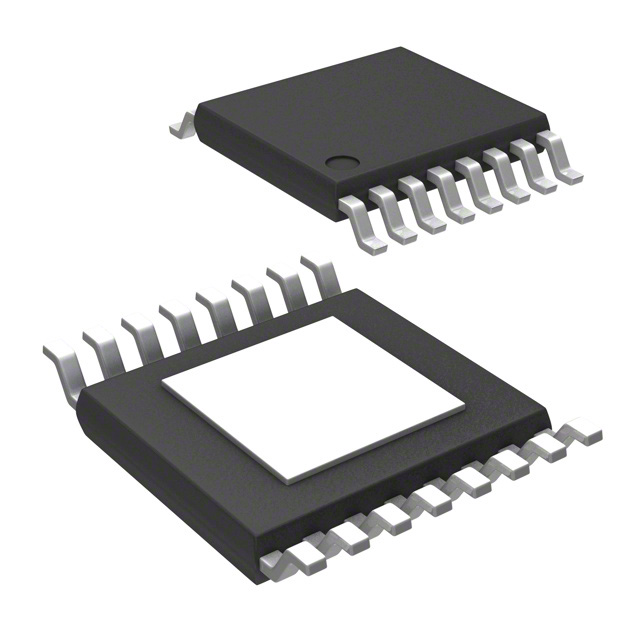
- 16-TSSOP (0.173", 4.40mm Width) Exposed Pad
- Datasheet:
-
 A5932GLPTR-T.pdf
- Description:
- 3-PHASE SENSORLESS SINUSOIDAL FA
- Quantity:
- Payment:

- Shipping:

Inventory:3,980
Please send an inquiry. Send us your inquiry, and we will respond immediately.
Product details
Overview
A5932GLPTR-T from Allegro MicroSystems is a three-phase sinusoidal sensorless fan controller IC designed for high-power, low-noise server and telecom cooling systems. It delivers 120° phase-shifted gate drive outputs (GHA/GLA, GHB/GLB, GHC/GLC), supports 5.5–50 V supply voltage, features configurable closed-loop speed curves, and integrates windmill detection, lock detection, and overcurrent/short-circuit protection. It enables quiet startup and vibration-minimized operation in 48 V DC fan modules.
For engineers reviewing the A5932GLPTR-T datasheet, A5932GLPTR-T pinout, A5932GLPTR-T application, or A5932GLPTR-T equivalent, this page provides verified technical context, validated pin functions, confirmed thermal performance (RθJA = 36 °C/W), real-world speed control behavior (PWM or analog SPD input), and two field-validated alternative parts with documented functional trade-offs.
Technical Context
The A5932GLPTR-T implements a proprietary sensorless BEMF-based commutation algorithm with automatic phase advance and dual-slope closed-loop speed regulation. It uses a 9-bit SPD input ADC (4.89 mV LSB) and internal EEPROM to store 24 configurable speed curve parameters-including DCON/DCOFF thresholds, MINSPD (0–4095 rpm), SPDSLP slope, and resonance avoidance settings (RESDTY/RESWID).
It integrates charge-pump-based high-side gate drivers (VCP = 4.5–7.5 V), adjustable sink/source current via ISET resistor (15–60 kΩ), and fault management logic that disables outputs on VBB UVLO (4.75 V), thermal shutdown (155–190 °C), or OCP events (240–270 mV sense threshold). The FG and RD open-drain outputs provide speed feedback and rotor fault indication respectively.
Key Specifications
| Parameter | Value and Actual Design Meaning |
|---|---|
| Supply Voltage Range | 5.5 V to 50 V - supports wide-input 24 V and 48 V DC fan power rails without external regulators |
| Motor Output Configuration | Three-phase sinusoidal, sensorless, 120° phase-shifted - eliminates Hall sensors and reduces audible noise/vibration |
| Speed Input Interface | PWM duty cycle (6–100 kHz) or analog voltage (0.5–2.485 V) - selectable via EEPROM bit SPDSEL |
| Thermal Resistance (RθJA) | 36 °C/W - measured on 2-sided PCB with 1-in² copper, enabling higher continuous power in TSSOP-LP package |
| Operating Temperature | –40 °C to +105 °C (Grade G) - qualified for industrial and server ambient environments |
| Fault Protection | OCP (240–270 mV), thermal shutdown (155–190 °C), VBB UVLO (4.75 V), lock detection, windmill detection - autonomous recovery without host intervention |
| Gate Drive Adjustability | ISET pin sets sink/source current ratio (2:1 fixed) - RISET = 15–60 kΩ yields 24–40 mA source / 43–80 mA sink |
Pinout & Package
Package: 24-lead TSSOP with exposed thermal pad (LP suffix), Pb-free, 100% matte-tin leadframe plating, 1.2 mm max height.
| Pin/Terminal | Circuit Role | Design Meaning |
|---|---|---|
| 1–12, 14–24 (see LP diagram) | Signal and power terminals | Includes motor outputs (SA/SB/SC), gate drives (GHA/GLA, GHB/GLB, GHC/GLC), LSS current sense, SPD/DIR/BRAKE logic inputs, FG/RD/nFAULT outputs, VREF, VCP, CP1/CP2, CTAP, ISET, GND, VBB |
| 13 (PAD) | Exposed thermal pad | Must be soldered to PCB ground plane for thermal dissipation - contributes to RθJA = 36 °C/W performance |
Key Features
| Feature | Design Value |
|---|---|
| Quiet Sinusoidal Startup | Applies smooth voltage ramp at motor windings - eliminates mechanical jerk and acoustic "thunk" during fan initialization |
| Configurable Closed-Loop Speed Curves | 24 EEPROM-programmable parameters enable custom RPM vs. duty profiles, including dual-slope, resonance skip, and 50% direction-switching modes |
| Windmill Detection | Identifies pre-rotating fans and synchronizes startup - prevents reverse torque and ensures reliable restart under airflow load |
| Adjustable Gate Drive Strength | ISET resistor selects gate current (24–40 mA source / 43–80 mA sink) - optimizes MOSFET switching loss vs. EMI in target layout |
| Integrated Fault Outputs | nFAULT (active-low system alert), RD (rotor fault flag), FG (2 pulses/rev speed signal) - enable real-time diagnostics without external logic |
Applications
| Server Rack Cooling | Telecom Power Supply Fans |
|---|---|
|
Use Scenario: High-speed 48 V DC axial fans in 1U/2U server chassis requiring <35 dB(A) acoustic noise at full load. IC Role / Device Role / Timing Role: Sensorless three-phase motor controller managing commutation, speed regulation, and thermal/fault response without position sensors. Use Value: Sinusoidal drive reduces torque ripple by >60% vs. trapezoidal alternatives, directly lowering vibration-induced component fatigue and acoustic emissions. |
Use Scenario: Redundant cooling in -40 °C to +70 °C outdoor telecom cabinets with strict MTBF requirements. IC Role / Device Role / Timing Role: Fan speed controller implementing lock detection, windmill restart, and EEPROM-stored temperature-compensated curves. Use Value: Automatic phase advance and BEMF filtering maintain stable rotation across wide temperature swings, eliminating manual calibration. |
| Industrial Power Converter Fans | Medical Imaging System Cooling |
|
Use Scenario: Forced-air cooling of SiC-based inverters where EMI-sensitive analog circuits coexist with high-current switching. IC Role / Device Role / Timing Role: Motor driver with programmable dead time (480 ns), adjustable gate current, and isolated FG/RD outputs. Use Value: Configurable gate drive strength and precise dead-time control minimize shoot-through risk and conducted EMI in mixed-signal enclosures. |
Use Scenario: MRI or CT scanner cooling subsystems requiring zero audible artifacts during image acquisition windows. IC Role / Device Role / Timing Role: Low-noise fan controller using sinusoidal waveform synthesis and quiet startup sequence. Use Value: Eliminates PWM-related tonal noise above 20 kHz - avoids interference with sensitive RF receive chains and patient comfort thresholds. |
Equivalent & Alternatives
The following parts are listed as comparable options for similar three-phase sensorless fan controller applications.
| Alternative Part | Technical Difference | Application Difference | Selection Advice |
|---|---|---|---|
| MP6532GQ-Z | Integrated MOSFETs (65 V, 2 A), no external gate drive needed; lacks EEPROM programmability and windmill detection | Better for space-constrained designs with lower current (<2 A); unsuitable for field-updatable speed curves or pre-rotating fan restart | Select when board area is critical and speed profile is fixed; avoid if resonance avoidance or lock-recovery robustness is required |
| DRV10983ZRTVT | Higher integration (internal regulator, op-amp), but only supports trapezoidal commutation; no sinusoidal mode or configurable dead time | Lower BOM cost for mid-range fans; cannot meet <35 dB(A) noise targets in high-RPM server applications | Choose for cost-sensitive, non-acoustic-critical 24 V fans; reject when sinusoidal drive or fine-grained speed curve tuning is mandatory |
Compared with MP6532GQ-Z and DRV10983ZRTVT, the A5932GLPTR-T uniquely combines EEPROM-configurable sinusoidal drive, windmill detection, and 48 V capability in a thermally optimized TSSOP package-making it the only option for high-reliability, low-noise, field-programmable server fan control.
Availability
A5932GLPTR-T is available at Aetrix Electronics and suitable for server rack cooling, telecom power supply fans, and industrial power converter cooling requiring stable component supply, long-term lifecycle support, and automotive-grade reliability (AEC-Q100 Grade G).
Supply support for A5932GLPTR-T includes scheduled delivery planning, volume procurement assistance, BOM continuity management, traceable sourcing, and lifecycle availability coordination for OEM customers, industrial embedded developers, connected-device designers, and electronics production programs.
Manufacturer
Allegro MicroSystems is a U.S.-based semiconductor company specializing in high-performance magnetic sensing and power ICs, with design centers in NH, MA, and global manufacturing partnerships.
The A5932 product line targets high-speed, high-efficiency cooling in datacenter and telecom infrastructure, emphasizing low-noise sinusoidal motor control, robust fault handling, and field-programmable speed behavior via integrated EEPROM.
FAQ
What is the maximum motor supply voltage supported by the A5932GLPTR-T?
The A5932GLPTR-T supports a motor supply voltage range of 5.5 V to 50 V, with absolute maximum rating at 50 V. Its VBB UVLO threshold is 4.75 V (rising), and overvoltage protection triggers at VBBOV ±4% relative to target. This makes the A5932GLPTR-T suitable for both 24 V and 48 V DC fan systems commonly used in servers and telecom equipment.
Does the A5932GLPTR-T require external MOSFETs, and what gate drive capability does it provide?
Yes, the A5932GLPTR-T is a gate driver IC and requires external high- and low-side N-channel MOSFETs. It provides six independent gate drive outputs (GHA/GLA, GHB/GLB, GHC/GLC) with adjustable sink/source current via the ISET pin: source current ranges from 24 mA to 40 mA and sink current from 43 mA to 80 mA, set by a 15–60 kΩ resistor to GND.
How does the A5932GLPTR-T implement sensorless commutation without Hall effect sensors?
The A5932GLPTR-T uses back-EMF (BEMF) zero-crossing detection on motor phases SA, SB, and SC to estimate rotor position. It applies proprietary filtering and timing algorithms-including automatic phase advance and configurable BEMF hysteresis-to maintain synchronization across speed ranges. Windmill detection further enhances reliability by recognizing pre-rotation before startup.
Can the A5932GLPTR-T operate in both open-loop and closed-loop speed control modes?
Yes, the A5932GLPTR-T supports both modes via EEPROM configuration. In closed-loop mode (CL = 1), it uses BEMF feedback to regulate speed against programmed curves (MINSPD, SPDSLP, DCON/DCOFF). In open-loop mode (CL = 0), it follows a fixed PWM modulation profile - optionally clamped by OPNLPMAX to prevent overshoot.
What thermal performance can be expected from the A5932GLPTR-T in its TSSOP-LP package?
The A5932GLPTR-T in the 24-lead TSSOP-LP package achieves RθJA = 36 °C/W when mounted on a 2-sided PCB with 1-in² copper pour connected to the exposed thermal pad. This allows sustained operation up to 105 °C ambient while maintaining junction temperature below 150 °C under typical 48 V fan loads, per its Grade G qualification.
A5932GLPTR-T Specifications
- Product attributes
- Attribute value
- Manufacturer:
- Allegro MicroSystems
- Series:
- -
- Package/Case:
- 16-TSSOP (0.173", 4.40mm Width) Exposed Pad
- Packaging:
- Tape & Reel (TR)
- Product Status:
- Active
- Motor Type - Stepper:
- Multiphase
- Motor Type - AC, DC:
- Brushless DC (BLDC)
- Function:
- Fan Control
- Output Configuration:
- Half Bridge (3)
- Interface:
- -
- Technology:
- NMOS
- Step Resolution:
- -
- Applications:
- Fan Controller
- Current - Output:
- -
- Voltage - Supply:
- 5.5V ~ 50V
- Voltage - Load:
- -
- Operating Temperature:
- -40°C ~ 105°C (TA)
- Grade:
- -
- Qualification:
- -
- Mounting Type:
- Surface Mount
- Supplier Device Package:
- 16-eTSSOP-EP
A5932GLPTR-T FAQ
1.How can I place an order for A5932GLPTR-T through Aetrix?
Please submit a Request for Quotation (RFQ) for A5932GLPTR-T on Aetrix. Our sales agent will provide a competitive quotation and guide you through the order confirmation once you accept the terms.
2.Are the price and stock information for A5932GLPTR-T reliable?
The price and inventory of A5932GLPTR-T are updated periodically and may fluctuate due to market conditions. Stock and pricing data are typically refreshed every 24 hours. Quotation validity for A5932GLPTR-T is usually 5 days.
3.What payment methods are accepted for A5932GLPTR-T?
We accept Wire Transfer, PayPal, Credit Card, Western Union, MoneyGram, and Escrow for A5932GLPTR-T transactions.
Note: Certain payment methods may incur a processing fee.
4.How is shipping managed for A5932GLPTR-T?
A5932GLPTR-T orders can be shipped via leading logistics carriers, including DHL, UPS, FedEx, TNT, or Registered Mail.
Once your A5932GLPTR-T order is processed, you will receive an email with the shipment details and tracking number.
Note: Tracking information may take up to 24 hours to appear. Express delivery typically takes 3–5 business days.
5.How can I obtain technical support or documentation for A5932GLPTR-T?
For technical support, including A5932GLPTR-T datasheets, pinout diagrams, or application guidance, please contact our engineering support team. They can provide detailed documentation and assistance for your A5932GLPTR-T requirements.
6.How does Aetrix verify that A5932GLPTR-T is sourced from the original manufacturer or authorized distributors?
All A5932GLPTR-T products on Aetrix are procured from qualified distributors and authorized channels. Our dedicated quality assurance team conducts strict verification, including traceability checks and, if necessary, third-party testing. This ensures that A5932GLPTR-T meets industry standards.
7.What is the process for return or replacement of A5932GLPTR-T?
All A5932GLPTR-T units undergo pre-shipment inspection (PSI). If there is an issue with A5932GLPTR-T, returns or replacements are accepted under the following conditions:
1.Quantity discrepancies, incorrect items, or visible external defects (such as breakage or corrosion), acknowledged by Aetrix.
2.The issue is reported within 90 days of delivery.
3.The A5932GLPTR-T part is unused and in its original packaging.
Return procedure for A5932GLPTR-T:
1.Submit a request within 90 days.
2.Obtain a Return Material Authorization (RMA) from Aetrix.
A5932GLPTR-T Tags
-
DRV2603RUNR
Texas Instruments
-
DRV8837CDSGR
Texas Instruments
-
DRV8837DSGR
Texas Instruments
-
DRV8838DSGR
Texas Instruments
-
DRV8839DSSR
Texas Instruments
-
EMC2301-1-ACZL-TR
Microchip Technology
-
DRV8231ADSGR
Texas Instruments
-
EMC2302-2-AIZL-TR
Microchip Technology
-
DRV8800PWPR
Texas Instruments
-
DRV8835DSSR
Texas Instruments
-
EMC2303-1-KP-TR
Microchip Technology
-
DRV8876PWPR
Texas Instruments
Tech Hub

A practical engineering and sourcing framework covering lifecycle verification, lifetime-buy calculations, replacement qualification, supplier checks and counterfeit-risk controls.

TTL and CMOS logic families differ in thresholds, loading, output drive, power and timing. This engineering guide compares 74HC and 74HCT, calculates noise margins and checks 3.3 V/5 V compatibility.

A practical engineering guide to 3.3V and 5V logic compatibility, input thresholds, resistor dividers, translator ICs, MOSFET level shifting, I2C pull-ups, timing limits and power-sequencing risks.

The 74HC595 uses push-pull logic outputs, while the TPIC6B595 uses 50 V open-drain DMOS sinks for higher-power loads. This guide compares timing, current limits, 3.3 V interfacing, load wiring, thermal…

The 74HC595 converts serial data into eight stable parallel outputs. This guide covers pin functions, shift and storage timing, OE and MR behavior, drive-current limits, cascading, voltage compatibilit…

A technical comparison of level-sensitive latches and edge-triggered flip-flops, covering timing windows, setup and hold limits, master–slave operation, time borrowing, race-through, HDL inference and…

A D latch stores one bit while Enable controls when data can pass. This reference covers gate-level operation, truth tables, transparency, setup and hold timing, LE versus OE, common ICs and practical …

An SR latch stores one bit through cross-coupled feedback. This engineering reference covers NOR and NAND implementations, truth tables, forbidden-state recovery, gated operation, switch debouncing, fa…

Latch circuits retain one bit through feedback. This technical reference covers SR and D latches, truth tables, transparency, timing limits, latch-versus-flip-flop behavior, applications and common log…

An engineering guide to LED driver operation, constant-current and constant-voltage outputs, linear and switching topologies, dimming, IC selection, calculations, replacement compatibility, and fault c…


