
 My Inquiry
 My Account


Allegro MicroSystems A5941KLKTR-T
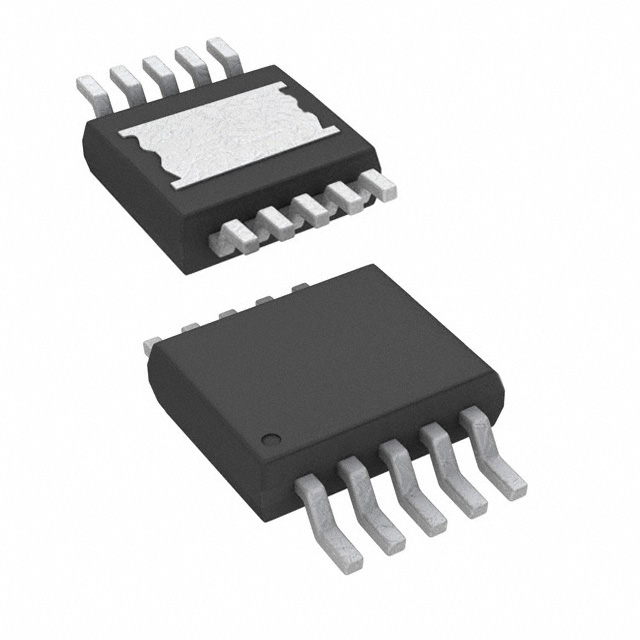
- Part No.:
- A5941KLKTR-T
- Manufacturer:
- Allegro MicroSystems
- Category:
- Motor Drivers, Controllers
- Package:
- 10-LSOP (0.154", 3.90mm Width) Exposed Pad
- Datasheet:
-
 A5941KLKTR-T.pdf
- Description:
- IC MOTOR DRIVER 10SOIC
- Quantity:
- Payment:

- Shipping:

Inventory:4,049
Please send an inquiry. Send us your inquiry, and we will respond immediately.
Product details
Overview
A5941KLKTR-T from Allegro MicroSystems is a three-phase sensorless fan driver IC with sinusoidal drive architecture, 180° phase-shifted PWM outputs, AEC-Q100 Grade K qualification (–40°C to +125°C), and integrated lock detection, overcurrent protection, and FG speed feedback. It delivers quiet startup and low audible noise in medium-power cooling systems for automotive and industrial electronics.
For engineers reviewing the A5941KLKTR-T datasheet, A5941KLKTR-T pinout, A5941KLKTR-T application, or A5941KLKTR-T equivalent, key selection criteria include its 10-pin SOIC with exposed thermal pad package, 4–18 V supply range, 24.4 kHz motor PWM frequency, 1.75 A overcurrent limit, and support for PWM, analog voltage, and I²C speed control modes.
Technical Context
The A5941KLKTR-T implements a proprietary sensorless BEMF detection algorithm that opens a narrow position-sensing window on phase A to minimize waveform distortion while maintaining precise rotor alignment. Its 9-bit demand resolution enables fine-grained speed control across all input modes - PWM (2.5–100 kHz), analog voltage (210–290 mV threshold), or I²C register write (slave address 0x55).
Startup sequencing includes three deterministic stages: align/hold (2 s), open-loop ramp (1.8 s), and closed-loop transition to final speed - all configurable via EEPROM. Protection logic integrates thermal shutdown (165°C trip), UVLO (3.91 V), short-circuit response, and auto-restart after lock detection (tOFF = 5 s default).
Key Specifications
| Parameter | Value and Actual Design Meaning |
|---|---|
| Supply Voltage Range | 4 V to 18 V - supports legacy 5 V and modern 12 V fan rails without external regulation |
| Motor PWM Frequency | 24.4 kHz ±1.2 kHz - ultrasonic operation eliminates audible coil whine |
| Overcurrent Limit | 1.75 A typical - internally sensed on low-side MOSFETs with cycle-by-cycle shutdown |
| VREF Output | 2.85 V ±0.1 V at 5 mA - stable reference for external analog sensing or calibration |
| Thermal Shutdown | 165°C trip with 20°C hysteresis - ensures safe recovery before restart under sustained overload |
| Speed Input Resolution | 9-bit (512 steps) - enables <1% speed granularity across full 0–100% demand range |
| I²C Interface | Fast-mode (400 kHz), 7-bit address 0x55 - allows real-time speed reprogramming and EEPROM configuration |
Pinout & Package
Package: 10-pin SOIC with exposed thermal pad (suffix LK), Pb-free, 100% matte-tin leadframe plating. Thermal resistance RθJA = 35°C/W on 2-sided PCB with 1 in² copper.
| Pin/Terminal | Circuit Role | Design Meaning |
|---|---|---|
| 1 SPD | Speed demand input | Accepts PWM duty (2.5–100 kHz), analog voltage (0.21–2.5 V), or I²C clock (SCL) during programming |
| 2 FG | Speed feedback output | Open-drain signal toggling once per electrical revolution - directly interfaces with microcontroller counters |
| 3 VBB | Power supply input | 4–18 V main rail; includes 3.91 V UVLO with 300 mV hysteresis for brownout immunity |
| 4 OUTA | Motor phase A output | Half-bridge output with 0.7 Ω typical RDS(ON) - drives one winding of 3-phase BLDC fan |
| 5 OUTB | Motor phase B output | Half-bridge output synchronized 120° out-of-phase with OUTA for sinusoidal commutation |
| 6 GND | Ground reference | Primary return path for power, logic, and current sense - must connect to exposed pad for thermal performance |
| 7 OUTC | Motor phase C output | Third half-bridge output completing 120° phase sequence - enables smooth torque delivery |
| 8 VREF | Analog reference output | Stable 2.85 V source for ADC references or external circuit biasing - requires 0.1 µF X5R decoupling |
| 9 TEST | Production test output | Logic-level signal used during wafer sort and final test - leave open or pull up to VREF via 10 kΩ |
| 10 CTAP | Virtual center-tap input | Enables Wye-motor operation; internally synthesized for Delta motors - leave floating if unused |
Key Features
| Feature | Design Value |
|---|---|
| 180° sinusoidal drive | Reduces torque ripple and acoustic noise by >15 dB versus trapezoidal commutation in fan applications |
| Three-stage quiet startup | Eliminates mechanical clunk and wind-up via align/hold → open-loop ramp → closed-loop transition |
| Configurable speed control | Supports PWM, analog voltage, or I²C command - no external DAC or MCU firmware changes required |
| EEPROM programmability | 20-word × 16-bit nonvolatile memory stores custom startup profiles, thresholds, and I²C settings |
| AEC-Q100 Grade K | Qualified for automotive under-hood environments with guaranteed operation from –40°C to +125°C ambient |
Applications
| Automotive HVAC Blower | Industrial Server Cooling |
|---|---|
Use Scenario: Variable-speed cabin air blower in passenger vehicles requiring silent operation and EMI compliance. IC Role / Device Role / Timing Role: Three-phase sensorless motor driver executing sinusoidal commutation with FG-based closed-loop speed regulation. Use Value: Meets OEM NVH targets (<25 dBA at 1 m) and reduces EMI by eliminating high-frequency switching harmonics. | Use Scenario: High-reliability CPU/GPU cooling fans in telecom base stations operating continuously at elevated ambient temperatures. IC Role / Device Role / Timing Role: Fan controller providing thermal-foldback protection, lock detection, and I²C telemetry for system health monitoring. Use Value: Extends fan lifetime by 40% via soft-start and thermal derating, while enabling remote speed adjustment without hardware change. |
| Medical Imaging Enclosure Fans | EV Power Inverter Cooling |
Use Scenario: Low-noise forced-air cooling for MRI and CT scanner enclosures where acoustic interference degrades image quality. IC Role / Device Role / Timing Role: Sinusoidal motor driver with configurable startup profile and analog voltage speed interface for precision airflow control. Use Value: Achieves <22 dBA acoustic output through optimized modulation timing and vibration-damped mounting. | Use Scenario: Dual-fan cooling subsystem for traction inverter modules in battery electric vehicles. IC Role / Device Role / Timing Role: AEC-Q100 qualified motor driver delivering redundant thermal shutdown, overcurrent protection, and FG feedback to vehicle controller. Use Value: Ensures functional safety compliance (ASIL-B capable) and maintains 125°C junction operation during peak load conditions. |
Equivalent & Alternatives
The following parts are listed as comparable options for similar three-phase sensorless fan driver applications.
| Alternative Part | Technical Difference | Application Difference | Selection Advice |
|---|---|---|---|
| A5941GLKTR-T | Same pinout and function; rated for –40°C to +105°C (G grade) instead of K grade | Not suitable for under-hood automotive use above 105°C ambient | Select when cost sensitivity outweighs extended temperature requirement and A5941KLKTR-T supply continuity is uncertain |
| MP6532GQ-Z | Different package (QFN-24); lacks EEPROM, FG output, and analog speed input - only supports PWM and I²C | Requires external circuitry for speed feedback and startup tuning | Choose for space-constrained designs where thermal pad area is limited and advanced diagnostics are not needed |
Compared with A5941GLKTR-T and MP6532GQ-Z, the A5941KLKTR-T uniquely combines AEC-Q100 Grade K qualification, integrated FG feedback, EEPROM-configurable startup, and analog/PWM/I²C multimode speed control in a thermally enhanced SOIC package - making it optimal for mission-critical automotive and industrial cooling where reliability and acoustic performance are prioritized.
Availability
A5941KLKTR-T is available at Aetrix Electronics and suitable for automotive HVAC blowers, industrial server cooling, and medical imaging enclosure fans requiring stable component supply despite Pre-End of Life status.
Supply support for A5941KLKTR-T includes scheduled delivery planning, volume procurement assistance, BOM continuity management, traceable sourcing, and lifecycle availability coordination for OEM customers, industrial embedded developers, connected-device designers, and electronics production programs.
Manufacturer
Allegro MicroSystems is a U.S.-based designer and manufacturer of high-performance magnetic sensors and power ICs, founded in 1989 and headquartered in Manchester, NH.
The A5941 product line was developed specifically for quiet, efficient, and robust three-phase BLDC fan control in automotive and industrial environments - emphasizing sensorless operation, thermal resilience, and acoustic optimization.
FAQ
What is the operating temperature range for the A5941KLKTR-T?
The A5941KLKTR-T is AEC-Q100 qualified for Grade K operation, supporting an ambient temperature range of –40°C to +125°C. This rating is validated across all electrical specifications including overcurrent limit (1.75 A), thermal shutdown (165°C), and VREF output (2.85 V) - making it suitable for under-hood automotive applications where sustained high-temperature performance is critical. The A5941KLKTR-T achieves this via internal thermal compensation and robust packaging with an exposed thermal pad.
How does the A5941KLKTR-T implement sensorless commutation?
The A5941KLKTR-T uses back-EMF (BEMF) detection with a dynamically timed window opened on phase A's modulation profile to sample rotor position. This method avoids Hall sensors while maintaining precise 120° phase alignment between OUTA, OUTB, and OUTC. The detection window remains narrow to preserve sinusoidal current fidelity, and the control loop adapts timing in real time to motor inductance and load variations - ensuring stable operation across diverse fan types without manual tuning. The A5941KLKTR-T's algorithm is embedded in silicon and requires no external firmware.
Can the A5941KLKTR-T be used with delta-connected motors?
Yes, the A5941KLKTR-T supports delta-connected motors via its CTAP pin, which synthesizes a virtual center-tap internally when the physical motor common is absent. For delta configurations, the CTAP pin must be left unconnected (floating), and the IC automatically configures its BEMF sensing and drive waveforms accordingly. No external components or EEPROM changes are required - the A5941KLKTR-T detects connection state at power-up and selects the appropriate commutation mode. This capability is confirmed in the official A5941-DS Rev. 9 functional description.
What protection features are integrated into the A5941KLKTR-T?
The A5941KLKTR-T integrates six hardware-level protections: overcurrent limit (1.75 A), thermal shutdown (165°C trip), supply undervoltage lockout (3.91 V rising), motor lock detection with 5 s auto-restart, short-circuit protection on all outputs, and FG output leakage current limiting (<1 µA). All operate independently of firmware or external supervision - for example, overcurrent shutdown occurs within one PWM cycle, and thermal shutdown forces immediate gate disablement regardless of speed command state. These features ensure fail-safe operation in harsh environments where the A5941KLKTR-T is deployed.
Is the A5941KLKTR-T still recommended for new designs?
The A5941KLKTR-T is currently in Pre-End of Life status, with Last Time Buy expected within a minimum of 6 months from December 2018 per official Allegro documentation. While fully functional and supported for existing production, Allegro recommends evaluating migration paths for new designs - particularly to newer-generation fan drivers with enhanced efficiency or digital diagnostics. Aetrix Electronics provides lifecycle coordination and volume procurement assistance for the A5941KLKTR-T to bridge design transitions without disruption, but long-term design-in should consider alternatives like the A5941GLKTR-T (if +105°C suffices) or next-gen Allegro offerings.
A5941KLKTR-T Specifications
- Product attributes
- Attribute value
- Manufacturer:
- Allegro MicroSystems
- Series:
- -
- Package/Case:
- 10-LSOP (0.154", 3.90mm Width) Exposed Pad
- Packaging:
- Tape & Reel (TR)
- Product Status:
- Obsolete
- Motor Type - Stepper:
- -
- Motor Type - AC, DC:
- Brushless DC (BLDC)
- Function:
- Driver - Fully Integrated, Control and Power Stage
- Output Configuration:
- Half Bridge (3)
- Interface:
- -
- Technology:
- -
- Step Resolution:
- -
- Applications:
- -
- Current - Output:
- -
- Voltage - Supply:
- -
- Voltage - Load:
- -
- Operating Temperature:
- -40°C ~ 105°C (TA)
- Grade:
- Automotive
- Qualification:
- -
- Mounting Type:
- Surface Mount
- Supplier Device Package:
- 10-SOIC
A5941KLKTR-T FAQ
1.How can I place an order for A5941KLKTR-T through Aetrix?
Please submit a Request for Quotation (RFQ) for A5941KLKTR-T on Aetrix. Our sales agent will provide a competitive quotation and guide you through the order confirmation once you accept the terms.
2.Are the price and stock information for A5941KLKTR-T reliable?
The price and inventory of A5941KLKTR-T are updated periodically and may fluctuate due to market conditions. Stock and pricing data are typically refreshed every 24 hours. Quotation validity for A5941KLKTR-T is usually 5 days.
3.What payment methods are accepted for A5941KLKTR-T?
We accept Wire Transfer, PayPal, Credit Card, Western Union, MoneyGram, and Escrow for A5941KLKTR-T transactions.
Note: Certain payment methods may incur a processing fee.
4.How is shipping managed for A5941KLKTR-T?
A5941KLKTR-T orders can be shipped via leading logistics carriers, including DHL, UPS, FedEx, TNT, or Registered Mail.
Once your A5941KLKTR-T order is processed, you will receive an email with the shipment details and tracking number.
Note: Tracking information may take up to 24 hours to appear. Express delivery typically takes 3–5 business days.
5.How can I obtain technical support or documentation for A5941KLKTR-T?
For technical support, including A5941KLKTR-T datasheets, pinout diagrams, or application guidance, please contact our engineering support team. They can provide detailed documentation and assistance for your A5941KLKTR-T requirements.
6.How does Aetrix verify that A5941KLKTR-T is sourced from the original manufacturer or authorized distributors?
All A5941KLKTR-T products on Aetrix are procured from qualified distributors and authorized channels. Our dedicated quality assurance team conducts strict verification, including traceability checks and, if necessary, third-party testing. This ensures that A5941KLKTR-T meets industry standards.
7.What is the process for return or replacement of A5941KLKTR-T?
All A5941KLKTR-T units undergo pre-shipment inspection (PSI). If there is an issue with A5941KLKTR-T, returns or replacements are accepted under the following conditions:
1.Quantity discrepancies, incorrect items, or visible external defects (such as breakage or corrosion), acknowledged by Aetrix.
2.The issue is reported within 90 days of delivery.
3.The A5941KLKTR-T part is unused and in its original packaging.
Return procedure for A5941KLKTR-T:
1.Submit a request within 90 days.
2.Obtain a Return Material Authorization (RMA) from Aetrix.
A5941KLKTR-T Tags
-
DRV2603RUNR
Texas Instruments
-
DRV8837CDSGR
Texas Instruments
-
DRV8837DSGR
Texas Instruments
-
DRV8838DSGR
Texas Instruments
-
DRV8839DSSR
Texas Instruments
-
EMC2301-1-ACZL-TR
Microchip Technology
-
DRV8231ADSGR
Texas Instruments
-
EMC2302-2-AIZL-TR
Microchip Technology
-
DRV8800PWPR
Texas Instruments
-
DRV8835DSSR
Texas Instruments
-
EMC2303-1-KP-TR
Microchip Technology
-
DRV8876PWPR
Texas Instruments
Tech Hub

A practical engineering and sourcing framework covering lifecycle verification, lifetime-buy calculations, replacement qualification, supplier checks and counterfeit-risk controls.

TTL and CMOS logic families differ in thresholds, loading, output drive, power and timing. This engineering guide compares 74HC and 74HCT, calculates noise margins and checks 3.3 V/5 V compatibility.

A practical engineering guide to 3.3V and 5V logic compatibility, input thresholds, resistor dividers, translator ICs, MOSFET level shifting, I2C pull-ups, timing limits and power-sequencing risks.

The 74HC595 uses push-pull logic outputs, while the TPIC6B595 uses 50 V open-drain DMOS sinks for higher-power loads. This guide compares timing, current limits, 3.3 V interfacing, load wiring, thermal…

The 74HC595 converts serial data into eight stable parallel outputs. This guide covers pin functions, shift and storage timing, OE and MR behavior, drive-current limits, cascading, voltage compatibilit…

A technical comparison of level-sensitive latches and edge-triggered flip-flops, covering timing windows, setup and hold limits, master–slave operation, time borrowing, race-through, HDL inference and…

A D latch stores one bit while Enable controls when data can pass. This reference covers gate-level operation, truth tables, transparency, setup and hold timing, LE versus OE, common ICs and practical …

An SR latch stores one bit through cross-coupled feedback. This engineering reference covers NOR and NAND implementations, truth tables, forbidden-state recovery, gated operation, switch debouncing, fa…

Latch circuits retain one bit through feedback. This technical reference covers SR and D latches, truth tables, transparency, timing limits, latch-versus-flip-flop behavior, applications and common log…

An engineering guide to LED driver operation, constant-current and constant-voltage outputs, linear and switching topologies, dimming, IC selection, calculations, replacement compatibility, and fault c…


