
 My Inquiry
 My Account


Allegro MicroSystems A6260KLJ-T
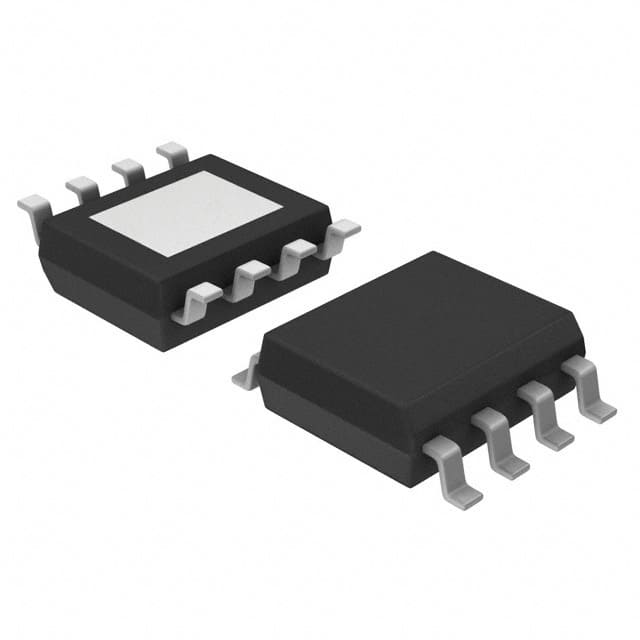
- Part No.:
- A6260KLJ-T
- Manufacturer:
- Allegro MicroSystems
- Category:
- LED Drivers
- Package:
- 8-SOIC (0.154", 3.90mm Width) Exposed Pad
- Datasheet:
-
 A6260KLJ-T.pdf
- Description:
- IC LED DRVR LIN PWM 350MA 8SOIC
- Quantity:
- Payment:

- Shipping:

Inventory:3,721
Please send an inquiry. Send us your inquiry, and we will respond immediately.
Product details
Overview
A6260KLJ-T from Allegro MicroSystems is a linear programmable current regulator IC designed to drive high-brightness LEDs in automotive lighting systems. It delivers up to 350 mA with ±4% accuracy, operates from 6–40 V supply, features reverse battery protection, and supports PWM dimming via the EN pin. It is used in headlamp, DRL, and fog lamp modules where precise LED current control and thermal safety are critical.
For engineers reviewing the A6260KLJ-T datasheet, A6260KLJ-T pinout, A6260KLJ-T application, or A6260KLJ-T equivalent, this page provides verified technical context, real-world design meaning for key specs, validated pin functions, automotive-grade protection behavior, and confirmed alternative options for LED current regulation in 12 V net systems.
Technical Context
The A6260KLJ-T integrates a high-side switch (LA) and low-side current sink (LC/LSS) to regulate LED current through an external sense resistor connected between LSS and GND. Its internal 102 mV reference voltage enables accurate current setting (ILC = 102 mV / RS), with dropout as low as 1.35 V at 150 mA.
It implements dual-stage thermal management: current reduction begins at TJM = 90–120°C (adjustable via THTH pin), and full overtemperature shutdown occurs at TJF = 165°C. Short-circuit detection responds within 3 µs for LA/LC shorts to supply or ground, with automatic recovery after VSCCR > 1.2 V is sensed at LC.
Key Specifications
| Parameter | Value and Actual Design Meaning |
|---|---|
| LED Current | 350 mA max; set by external sense resistor (e.g., 286 mΩ for 350 mA); ±4% accuracy ensures consistent brightness across units. |
| Supply Range | 6–40 V; supports full operation down to 6 V - enables single white LED drive even during cold-crank automotive transients. |
| Dropout Voltage | 1.35 V at 150 mA; 2.25 V at 350 mA - minimizes power loss and heat generation in low-VIN conditions. |
| Shutdown Current | ≤10 µA when EN < 400 mV - allows always-connected LED circuits without battery drain. |
| Thermal Threshold | TJM = 90–120°C (adjustable); reduces current at 4%/°C rate - prevents thermal runaway while maintaining partial illumination. |
| Short-Circuit Response | Detects LA/LC shorts in ≤3 µs; releases when VLC > 1.2 V - enables robust fault recovery without manual reset. |
| EMI Control | Current slew limiting: tr = 50–120 µs, tf = 60–150 µs - suppresses high-frequency noise during PWM dimming. |
Pinout & Package
Package: 8-pin SOICN with exposed thermal pad (LJ suffix); RoHS-compliant, 100% matte-tin leadframe; RθJA = 35°C/W on 4-layer JEDEC board.
| Pin/Terminal | Circuit Role | Design Meaning |
|---|---|---|
| 1 SENSE | High-impedance current sense input | Connects directly to top of sense resistor; references 102 mV internal reference for precision regulation. |
| 2 GND | Ground reference | Must tie to bottom of sense resistor and system ground near IC - critical for current accuracy and noise immunity. |
| 3 THTH | Thermal threshold programming input | Open = default TJM ≈ 98°C; pull-up/down resistors adjust activation temperature per Equation (2). |
| 4 EN | Enable/PWM control input | Logic-high enables output; PWM applied here controls brightness; logic-low forces <10 µA sleep mode. |
| 5 VIN | Main supply input | Accepts –14 V to 40 V; includes reverse battery protection - survives jump-start polarity reversal. |
| 6 LA | High-side switched anode output | Drives LED anode; integrates overcurrent detection and current limiting (ILAOC = –500 mA typical). |
| 7 LC | Low-side cathode current sink | Sinks regulated current from LED cathode; monitors short-to-ground via VLC voltage sensing. |
| 8 LSS | Low-side sense return | Connects sense resistor to power ground; forms current-sensing loop with SENSE and GND pins. |
| Pad | Exposed thermal pad | Must be soldered to PCB copper pour with ≥6 thermal vias - essential for achieving RθJP = 2°C/W. |
Key Features
| Feature | Design Value |
|---|---|
| AEC-Q100 qualified | Rated for automotive ambient range (–40°C to +125°C) and stress-tested per Grade 1 requirements - suitable for under-hood lighting. |
| Reverse battery protection | Withstands –14 V on VIN - eliminates need for external blocking diode in 12 V automotive systems. |
| Adjustable thermal foldback | TJM programmable from ~70°C to >130°C using external resistor on THTH - enables custom thermal derating for specific heatsink designs. |
| Integrated short-circuit recovery | Auto-restarts after LA/LC short removal by sourcing ISCU = –1.1 mA from LA to lift VLC above VSCCR = 1.2 V - no external watchdog needed. |
| PWM-compatible slew control | Fixed tr/tf limits (80/100 µs typ) reduce EMI without requiring external RC networks - simplifies EMC-compliant layout. |
Applications
| Automotive Headlamps | Daytime Running Lights (DRL) |
|---|---|
|
Use Scenario: Constant-current drive for multi-LED arrays in projector-based headlamp modules operating across –40°C to +125°C ambient. IC Role / Device Role / Timing Role: High-side switch + low-side current sink regulating 350 mA per channel; enables independent thermal foldback per LED string. Use Value: Maintains luminous flux stability despite battery voltage sag (down to 6 V) and prevents thermal runaway during prolonged high-beam use. |
Use Scenario: Always-on LED illumination in front fascia assemblies, powered from vehicle ignition-switched 12 V rail. IC Role / Device Role / Timing Role: Linear current regulator with EN-controlled PWM dimming; supports 100–1000 Hz modulation without external gate drivers. Use Value: Delivers flicker-free, color-stable brightness control while consuming <10 µA in off-state - meets EU ECE R87 standby power limits. |
| Fog Lamps & Position Lights | Interior Ambient Lighting |
|
Use Scenario: Compact, thermally robust LED driver for sealed-beam fog lamps exposed to moisture, vibration, and thermal shock. IC Role / Device Role / Timing Role: Fault-tolerant current controller with LA short-to-supply tolerance and LC short-to-ground detection - survives connector backfeeding. Use Value: Eliminates need for external fusing or current-limiting resistors; sustains operation during load-dump transients up to 40 V. |
Use Scenario: Low-power, space-constrained LED backlighting for instrument clusters and center consoles with variable ambient light adaptation. IC Role / Device Role / Timing Role: Precision current source enabling 1% brightness matching across multiple A6260KLJ-T channels in parallel configuration. Use Value: Supports synchronized PWM dimming across all channels using shared EN signal - avoids visible beat frequencies in multi-zone lighting. |
Equivalent & Alternatives
The following parts are listed as comparable options for similar LED current regulation applications.
| Alternative Part | Technical Difference | Application Difference | Selection Advice |
|---|---|---|---|
| AL8862T-7 | Switch-mode buck regulator (not linear); 40 V max input; 1.5 A max output; requires external inductor. | Better efficiency (>90%) at high VIN–VLED differentials; unsuitable for ultra-low-noise analog lighting due to switching ripple. | Select for high-power LED arrays (>500 mA) where thermal budget is constrained and EMI filtering is acceptable. |
| TPS92692QPWPRQ1 | Linear+switch hybrid; integrated MOSFET; 65 V abs max; 2.3 A max; I²C programmable current and thermal thresholds. | Supports digital diagnostics and multi-channel synchronization; higher BOM cost and layout complexity than A6260KLJ-T. | Select when system-level fault logging, remote thermal adjustment, or channel-to-channel current matching <±1% is required. |
Compared with AL8862T-7 and TPS92692QPWPRQ1, the A6260KLJ-T offers simpler layout, zero inductor cost, and inherent EMI-free operation - making it optimal for cost-sensitive, space-limited automotive LED modules where 350 mA and 40 V compliance are sufficient.
Availability
A6260KLJ-T is available at Aetrix Electronics and suitable for automotive headlamps, daytime running lights, and fog lamp modules requiring stable component supply across extended temperature ranges and long production lifecycles.
Supply support for A6260KLJ-T includes scheduled delivery planning, volume procurement assistance, BOM continuity management, traceable sourcing, and lifecycle availability coordination for OEM customers, industrial embedded developers, connected-device designers, and electronics production programs.
Manufacturer
Allegro MicroSystems is a U.S.-based semiconductor company specializing in magnetic sensing, power ICs, and motor driver solutions for automotive and industrial markets.
The A6260 product line delivers linear LED current regulators optimized for AEC-Q100-compliant automotive exterior lighting - prioritizing fault resilience, thermal safety, and supply-voltage robustness in harsh environments.
FAQ
What is the maximum LED string voltage the A6260KLJ-T can drive?
The A6260KLJ-T does not regulate string voltage - it regulates current. The maximum allowable voltage drop across the device is VIN – VLED. With 40 V absolute max VIN and minimum dropout of 1.35 V at 150 mA, it can drive LED strings up to ~38.65 V when supplied at 40 V. However, practical operation is limited by power dissipation: at 350 mA and 30 V drop, PD ≈ 10.5 W requires aggressive thermal design. For reliable operation, keep VIN – VLED ≤ 15 V at full current.
Can the A6260KLJ-T drive more than one LED in series?
Yes - the A6260KLJ-T is designed to drive 1 to 3 high-brightness LEDs in series. Its 2.25 V dropout at 350 mA allows safe operation with a single white LED (VF ≈ 3.2 V) down to 6 V supply, and supports three LEDs (VF ≈ 9.6 V total) up to 40 V supply. The key constraint is thermal: total power loss (VIN – VLED – 0.102 V) × ILED must stay within RθJA-limited junction temperature rise.
How does the THTH pin affect thermal protection behavior in the A6260KLJ-T?
The THTH pin sets the thermal monitor activation temperature (TJM). When open, TJM defaults to ~98°C; connecting a resistor from THTH to GND raises TJM, while connecting to VIN lowers it. Equation (2) quantifies this: TJM ≈ 1.35 − 0.00363 × VTHTH (°C). At TJM, current begins reducing at 4%/°C until reaching 25% at TJL (~130°C). This enables custom thermal response without changing hardware.
Is the A6260KLJ-T compatible with PWM dimming frequencies above 1 kHz?
Yes - the A6260KLJ-T supports PWM dimming from 100 Hz to >5 kHz. Its internal slew-rate limiting (tr/tf ≈ 80/100 µs typ) ensures controlled current transitions that minimize EMI even at high frequencies. However, duty-cycle resolution degrades above 2 kHz due to finite turn-on/turn-off times; for >99% dimming fidelity, use 200–1000 Hz with clean logic-edge drive on the EN pin.
Does the A6260KLJ-T require external components beyond the sense resistor and bypass capacitor?
Only two mandatory external components: a sense resistor (240 mΩ–3 Ω) between LSS and GND, and a 100 nF ceramic bypass capacitor from VIN to GND placed near the IC. Optional components include a resistor on THTH for thermal threshold tuning, and a pull-up/pull-down on EN for default state control. No inductors, diodes, or feedback compensation networks are needed - unlike switch-mode alternatives.
A6260KLJ-T Specifications
- Product attributes
- Attribute value
- Manufacturer:
- Allegro MicroSystems
- Series:
- -
- Package/Case:
- 8-SOIC (0.154", 3.90mm Width) Exposed Pad
- Packaging:
- Tube
- Product Status:
- Obsolete
- Type:
- Linear
- Topology:
- -
- Internal Switch(s):
- Yes
- Number of Outputs:
- 1
- Voltage - Supply (Min):
- 6V
- Voltage - Supply (Max):
- 40V
- Voltage - Output:
- -
- Current - Output / Channel:
- 350mA
- Frequency:
- -
- Dimming:
- PWM
- Applications:
- -
- Operating Temperature:
- -40°C ~ 125°C (TA)
- Grade:
- Automotive
- Qualification:
- AEC-Q100
- Mounting Type:
- Surface Mount
- Supplier Device Package:
- 8-SOIC-EP
A6260KLJ-T FAQ
1.How can I place an order for A6260KLJ-T through Aetrix?
Please submit a Request for Quotation (RFQ) for A6260KLJ-T on Aetrix. Our sales agent will provide a competitive quotation and guide you through the order confirmation once you accept the terms.
2.Are the price and stock information for A6260KLJ-T reliable?
The price and inventory of A6260KLJ-T are updated periodically and may fluctuate due to market conditions. Stock and pricing data are typically refreshed every 24 hours. Quotation validity for A6260KLJ-T is usually 5 days.
3.What payment methods are accepted for A6260KLJ-T?
We accept Wire Transfer, PayPal, Credit Card, Western Union, MoneyGram, and Escrow for A6260KLJ-T transactions.
Note: Certain payment methods may incur a processing fee.
4.How is shipping managed for A6260KLJ-T?
A6260KLJ-T orders can be shipped via leading logistics carriers, including DHL, UPS, FedEx, TNT, or Registered Mail.
Once your A6260KLJ-T order is processed, you will receive an email with the shipment details and tracking number.
Note: Tracking information may take up to 24 hours to appear. Express delivery typically takes 3–5 business days.
5.How can I obtain technical support or documentation for A6260KLJ-T?
For technical support, including A6260KLJ-T datasheets, pinout diagrams, or application guidance, please contact our engineering support team. They can provide detailed documentation and assistance for your A6260KLJ-T requirements.
6.How does Aetrix verify that A6260KLJ-T is sourced from the original manufacturer or authorized distributors?
All A6260KLJ-T products on Aetrix are procured from qualified distributors and authorized channels. Our dedicated quality assurance team conducts strict verification, including traceability checks and, if necessary, third-party testing. This ensures that A6260KLJ-T meets industry standards.
7.What is the process for return or replacement of A6260KLJ-T?
All A6260KLJ-T units undergo pre-shipment inspection (PSI). If there is an issue with A6260KLJ-T, returns or replacements are accepted under the following conditions:
1.Quantity discrepancies, incorrect items, or visible external defects (such as breakage or corrosion), acknowledged by Aetrix.
2.The issue is reported within 90 days of delivery.
3.The A6260KLJ-T part is unused and in its original packaging.
Return procedure for A6260KLJ-T:
1.Submit a request within 90 days.
2.Obtain a Return Material Authorization (RMA) from Aetrix.
A6260KLJ-T Tags
-
BCR402RE6327HTSA1
Infineon Technologies

-
BCR430UXTSA2
Infineon Technologies
-
BCR420UE6433HTMA1
Infineon Technologies
-
BCR420UE6327HTSA1
Infineon Technologies
-
BCR421UE6327HTSA1
Infineon Technologies
-
LYT1604D-TL
Power Integrations

-
HV9910CLG-G
Microchip Technology

-
CL2N8-G
Microchip Technology
-
BCR420UW6-7
Diodes Incorporated
-
BCR421UW6-7
Diodes Incorporated
-
BCR420UFD-7
Diodes Incorporated
-
BCR421UFD-7
Diodes Incorporated
Tech Hub

A practical engineering and sourcing framework covering lifecycle verification, lifetime-buy calculations, replacement qualification, supplier checks and counterfeit-risk controls.

TTL and CMOS logic families differ in thresholds, loading, output drive, power and timing. This engineering guide compares 74HC and 74HCT, calculates noise margins and checks 3.3 V/5 V compatibility.

A practical engineering guide to 3.3V and 5V logic compatibility, input thresholds, resistor dividers, translator ICs, MOSFET level shifting, I2C pull-ups, timing limits and power-sequencing risks.

The 74HC595 uses push-pull logic outputs, while the TPIC6B595 uses 50 V open-drain DMOS sinks for higher-power loads. This guide compares timing, current limits, 3.3 V interfacing, load wiring, thermal…

The 74HC595 converts serial data into eight stable parallel outputs. This guide covers pin functions, shift and storage timing, OE and MR behavior, drive-current limits, cascading, voltage compatibilit…

A technical comparison of level-sensitive latches and edge-triggered flip-flops, covering timing windows, setup and hold limits, master–slave operation, time borrowing, race-through, HDL inference and…

A D latch stores one bit while Enable controls when data can pass. This reference covers gate-level operation, truth tables, transparency, setup and hold timing, LE versus OE, common ICs and practical …

An SR latch stores one bit through cross-coupled feedback. This engineering reference covers NOR and NAND implementations, truth tables, forbidden-state recovery, gated operation, switch debouncing, fa…

Latch circuits retain one bit through feedback. This technical reference covers SR and D latches, truth tables, transparency, timing limits, latch-versus-flip-flop behavior, applications and common log…

An engineering guide to LED driver operation, constant-current and constant-voltage outputs, linear and switching topologies, dimming, IC selection, calculations, replacement compatibility, and fault c…


