
 My Inquiry
 My Account


Allegro MicroSystems A6268KLPTR-T
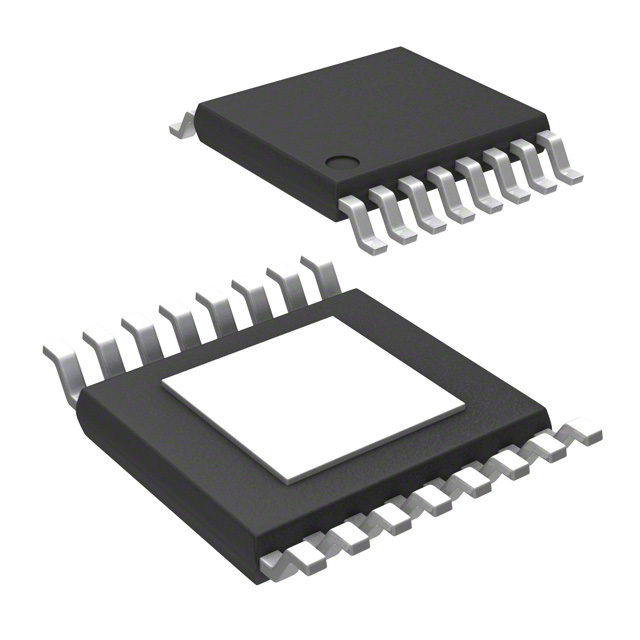
- Part No.:
- A6268KLPTR-T
- Manufacturer:
- Allegro MicroSystems
- Category:
- LED Drivers
- Package:
- 16-TSSOP (0.173", 4.40mm Width) Exposed Pad
- Datasheet:
-
 A6268KLPTR-T.pdf
- Description:
- IC LED DRIVER CTRLR PWM 16ETSSOP
- Quantity:
- Payment:

- Shipping:

Inventory:12,300
Please send an inquiry. Send us your inquiry, and we will respond immediately.
Product details
Overview
A6268KLPTR-T from Allegro MicroSystems is an AEC-Q100 Grade 0 automotive LED controller IC that implements a programmable constant-current DC-DC converter for driving up to 15 high-power LEDs in series at currents up to 1 A. It supports both boost and buck-boost topologies, features dual fault flags (FF1/FF2), integrated LED short/open diagnostics, and operates from 5–50 V input. It is used in automotive headlights, fog lights, and daytime running lights.
For engineers reviewing the A6268KLPTR-T datasheet, A6268KLPTR-T pinout, A6268KLPTR-T application, or A6268KLPTR-T equivalent, key selection considerations include its 16-pin TSSOP-LP package with exposed thermal pad, programmable 100–700 kHz switching frequency, ±5% LED current regulation accuracy, single/multiple LED short detection capability, and support for PWM dimming via the EN pin.
Technical Context
The A6268KLPTR-T uses current-mode control with dual-loop regulation: an inner switch-current loop (via SP/SN) and an outer LED-current loop (via LP/LN). Slope compensation ensures stability across duty cycles up to 85%, and the oscillator supports resistor-set (ROSC) or external clock synchronization via OSC/CKOUT.
It implements supply-referenced buck-boost operation to eliminate LED leakage paths during shutdown and prevent inrush current at power-up. Diagnostics include VIN/VREG undervoltage detection, overtemperature shutdown at 170°C, open-LED protection (5.5 V threshold), and configurable short-to-supply/ground detection on LED connections using LA/LF voltage ratio comparison.
Key Specifications
| Parameter | Value and Actual Design Meaning |
|---|---|
| Supply Range | 5–50 V - supports full automotive battery range including cold-crank and load-dump transients |
| Max LED Current | 1 A - set by external RSL sense resistor; enables high-brightness automotive lighting |
| Switching Frequency | 100–700 kHz - programmable via ROSC; allows EMI optimization and inductor size reduction |
| LED String Count | Up to 15 LEDs - validated at 3.5 V VF per LED in both boost and buck-boost modes |
| Current Regulation Accuracy | ±5% - specified as current error EISL; ensures uniform brightness across LED strings |
| Fault Response Time | 94 ms disable time (tDIS) - derived from oscillator period; provides deterministic shutdown timing |
| Thermal Resistance | RθJA = 34 °C/W (4-layer PCB) - enables stable operation at TJ ≤ 150°C under continuous 1 A load |
Pinout & Package
Package: 16-pin TSSOP with exposed thermal pad (suffix LP); Pb-free, 100% matte tin leadframe plating.
| Pin/Terminal | Circuit Role | Design Meaning |
|---|---|---|
| EN | Enable / PWM input | Logic-level input enabling chip operation or direct PWM dimming; low >94 ms triggers sleep mode |
| FF1, FF2 | Fault flag outputs | Open-drain indicators for critical faults (e.g., output short, open LED); FF1 can control external isolation FET |
| SG | Gate driver output | Drives external logic-level MOSFET low-side switch; RDS(on)UP = 1.7 Ω (25°C), supports fast 30 ns transitions |
| LP, LN | LED current sense inputs | Differential pair measuring voltage across RSL; sets ILED = VIDL / RSL (VIDL = 100 mV typical) |
| LA, LF | LED string voltage reference | LA senses total LED string voltage; LF references first LED forward voltage - enables single/multiple short detection |
| VIN, GND, VREG | Power rails | VIN powers control circuitry (5–50 V); VREG supplies internal 5 V regulator (4.85–5.15 V); GND is system ground reference |
| OSC, CKOUT | Oscillator interface | OSC sets fOSC via ROSC or accepts external clock; CKOUT provides phase-shifted sync signal for interleaving multiple controllers |
Key Features
| Feature | Design Value |
|---|---|
| AEC-Q100 Grade 0 qualification | Validated for −40°C to +150°C ambient operation - meets automotive under-hood reliability requirements |
| Buck-boost topology support | Eliminates LED leakage path in shutdown and prevents inrush current - improves system safety and longevity |
| Single/multiple LED short detection | Uses LA/LF voltage ratio comparison - distinguishes between one shorted LED and full-string short without external circuitry |
| Programmable analog dimming | IREF pin accepts 0–1 V to scale LED current linearly - enables soft-start, intensity matching, and cold-crank current derating |
| Integrated diagnostics | Monitors VIN/VREG UV, chip overtemperature, LED open/short/undercurrent, and switch overcurrent - reduces BOM count and design complexity |
Applications
| Automotive Headlights | Daytime Running Lights (DRL) |
|---|---|
|
Use Scenario: High-intensity white LED arrays requiring precise constant current and robust fault handling in front-end lighting modules. IC Role / Device Role / Timing Role: Primary LED current controller implementing buck-boost regulation to maintain 1 A drive across 12–16 V battery variation and 50 V transients. Use Value: Enables seamless operation over full automotive voltage range while detecting single LED shorts - avoids complete headlight failure during field use. |
Use Scenario: Low-power, always-on LED strings mounted on vehicle fascia, requiring stable brightness and thermal resilience. IC Role / Device Role / Timing Role: Constant-current controller with integrated thermal monitoring and PWM dimming via EN pin for adaptive brightness control. Use Value: Delivers ±5% current accuracy and 170°C overtemperature shutdown - ensures consistent DRL output and prevents thermal runaway. |
| Fog Lights | Reversing Lights |
|
Use Scenario: High-output amber or white LED clusters exposed to moisture, vibration, and wide temperature swings. IC Role / Device Role / Timing Role: Fault-tolerant LED driver with open-LED detection (5.5 V threshold) and short-to-ground/supply protection on LED connections. Use Value: Detects open circuits before LED string failure escalates - maintains partial illumination and alerts ECU via FF1/FF2 flags. |
Use Scenario: Rear-mounted LED arrays subject to mechanical shock, condensation, and reverse-polarity risk during service. IC Role / Device Role / Timing Role: Robust current controller supporting 15-LED strings at 1 A with shutdown current <4 µA and latchable fault reporting. Use Value: Provides <10 µA shutdown current including LED leakage - minimizes parasitic drain on vehicle battery during extended parking. |
Equivalent & Alternatives
The following parts are listed as comparable options for similar LED controller applications.
| Alternative Part | Technical Difference | Application Difference | Selection Advice |
|---|---|---|---|
| LM3409QMH/NOPB | Boost-only topology; no buck-boost capability; lacks LA/LF-based short detection; max 1.25 A output | Requires separate open/short diagnostic circuitry; limited to ground-referenced LED strings | Choose when cost sensitivity outweighs need for supply-referenced operation and advanced diagnostics |
| MAX16832ATP+ | Supports boost/buck-boost but no single/multiple LED short discrimination; only open/short detection; 125°C max junction temp | Lacks AEC-Q100 Grade 0 qualification; not validated for under-hood automotive environments | Prefer for industrial or commercial lighting where Grade 0 qualification is unnecessary |
Compared with LM3409QMH/NOPB and MAX16832ATP+, the A6268KLPTR-T uniquely combines AEC-Q100 Grade 0 compliance, supply-referenced buck-boost operation, and LA/LF-based single/multiple LED short detection - enabling higher functional safety integrity and reduced system-level diagnostic overhead in automotive lighting.
Availability
A6268KLPTR-T is available at Aetrix Electronics and suitable for automotive headlights, fog lights, and daytime running lights requiring stable component supply, long-term lifecycle support, and AEC-Q100-compliant sourcing.
Supply support for A6268KLPTR-T includes scheduled delivery planning, volume procurement assistance, BOM continuity management, traceable sourcing, and lifecycle availability coordination for OEM customers, industrial embedded developers, connected-device designers, and electronics production programs.
Manufacturer
Allegro MicroSystems is a U.S.-based semiconductor company specializing in high-performance power ICs, magnetic sensors, and motor driver solutions for automotive and industrial markets.
The A6268 product line is designed specifically for high-current, safety-critical automotive LED lighting systems - emphasizing diagnostic completeness, thermal robustness, and topology flexibility across 12 V and 24 V platforms.
FAQ
What is the maximum number of LEDs the A6268KLPTR-T can drive, and under what conditions?
The A6268KLPTR-T can drive up to 15 high-power LEDs in series, validated at 3.5 V forward voltage per LED in both boost and buck-boost configurations. This assumes a minimum input voltage of 9 V and maximum duty cycle of 85%. At lower input voltages (e.g., 5 V), the supported LED count decreases per the datasheet's buck-boost mode table. The A6268KLPTR-T achieves this using external MOSFET and inductor selection aligned with its 1 A current capability and 50 V absolute maximum VIN rating.
How does the A6268KLPTR-T detect a single shorted LED versus a fully shorted LED string?
The A6268KLPTR-T detects single versus multiple shorted LEDs by comparing voltages at LA (anode reference) and LF (first LED reference) pins. In buck-boost mode, LA measures total string voltage while LF measures the forward voltage of the first LED. A mismatch between expected and measured ratios indicates partial shorting. This LA/LF differential method is unique to the A6268KLPTR-T and is explicitly documented in its functional description and fault table - distinguishing it from basic open/short detection found in most LED drivers.
Can the A6268KLPTR-T operate in buck-boost mode with a 12 V automotive supply and 48 V LED string?
Yes - the A6268KLPTR-T supports supply-referenced buck-boost operation, meaning the LED string voltage is the difference between the boost output and VIN. With VIN = 12 V and required LED string voltage = 48 V, the boost stage generates ~60 V, resulting in 60 V – 12 V = 48 V across the LEDs. This configuration eliminates ground-referenced leakage paths and is explicitly validated in the datasheet's buck-boost mode tables and functional block diagram. The A6268KLPTR-T's 50 V absolute maximum VIN rating accommodates transient spikes during operation.
What is the role of the IREF pin on the A6268KLPTR-T, and how does it affect LED current?
The IREF pin on the A6268KLPTR-T enables analog dimming by scaling the internal LED current reference. When IREF = VREG (5 V), full-scale current is ILED(max) = 100 mV / RSL. When IREF < 1 V, current scales linearly: ILED(max) = VIREF / (10 × RSL). This allows soft-start, intensity matching across modules, or cold-crank derating. The A6268KLPTR-T's IREF interface is distinct from simple enable/disable - it provides continuous 0–100% current control without PWM artifacts or color shift, as confirmed in the Functional Description section.
Does the A6268KLPTR-T provide protection against LED string open-circuit faults, and how is it implemented?
Yes - the A6268KLPTR-T provides open-LED protection with a 5.5 V threshold (VOCL) and latched shutdown behavior. When the voltage at LA exceeds VOCL relative to LP, the device disables SG output and asserts FF1/FF2. This fault remains latched until power cycle or EN is held low >94 ms. The protection is implemented via internal comparators monitoring LA–LP differential voltage, independent of external components. This behavior is documented in Table 1 (Fault Table) and Electrical Characteristics on page 7 of the A6268KLPTR-T datasheet.
A6268KLPTR-T Specifications
- Product attributes
- Attribute value
- Manufacturer:
- Allegro MicroSystems
- Series:
- -
- Package/Case:
- 16-TSSOP (0.173", 4.40mm Width) Exposed Pad
- Packaging:
- Tape & Reel (TR)
- Product Status:
- Active
- Type:
- DC DC Controller
- Topology:
- Step-Down (Buck), Step-Up (Boost)
- Internal Switch(s):
- No
- Number of Outputs:
- 1
- Voltage - Supply (Min):
- 5V
- Voltage - Supply (Max):
- 50V
- Voltage - Output:
- -
- Current - Output / Channel:
- -
- Frequency:
- 100kHz ~ 700kHz
- Dimming:
- PWM
- Applications:
- Backlight
- Operating Temperature:
- -40°C ~ 150°C (TA)
- Grade:
- Automotive
- Qualification:
- AEC-Q100
- Mounting Type:
- Surface Mount
- Supplier Device Package:
- 16-eTSSOP-EP
A6268KLPTR-T FAQ
1.How can I place an order for A6268KLPTR-T through Aetrix?
Please submit a Request for Quotation (RFQ) for A6268KLPTR-T on Aetrix. Our sales agent will provide a competitive quotation and guide you through the order confirmation once you accept the terms.
2.Are the price and stock information for A6268KLPTR-T reliable?
The price and inventory of A6268KLPTR-T are updated periodically and may fluctuate due to market conditions. Stock and pricing data are typically refreshed every 24 hours. Quotation validity for A6268KLPTR-T is usually 5 days.
3.What payment methods are accepted for A6268KLPTR-T?
We accept Wire Transfer, PayPal, Credit Card, Western Union, MoneyGram, and Escrow for A6268KLPTR-T transactions.
Note: Certain payment methods may incur a processing fee.
4.How is shipping managed for A6268KLPTR-T?
A6268KLPTR-T orders can be shipped via leading logistics carriers, including DHL, UPS, FedEx, TNT, or Registered Mail.
Once your A6268KLPTR-T order is processed, you will receive an email with the shipment details and tracking number.
Note: Tracking information may take up to 24 hours to appear. Express delivery typically takes 3–5 business days.
5.How can I obtain technical support or documentation for A6268KLPTR-T?
For technical support, including A6268KLPTR-T datasheets, pinout diagrams, or application guidance, please contact our engineering support team. They can provide detailed documentation and assistance for your A6268KLPTR-T requirements.
6.How does Aetrix verify that A6268KLPTR-T is sourced from the original manufacturer or authorized distributors?
All A6268KLPTR-T products on Aetrix are procured from qualified distributors and authorized channels. Our dedicated quality assurance team conducts strict verification, including traceability checks and, if necessary, third-party testing. This ensures that A6268KLPTR-T meets industry standards.
7.What is the process for return or replacement of A6268KLPTR-T?
All A6268KLPTR-T units undergo pre-shipment inspection (PSI). If there is an issue with A6268KLPTR-T, returns or replacements are accepted under the following conditions:
1.Quantity discrepancies, incorrect items, or visible external defects (such as breakage or corrosion), acknowledged by Aetrix.
2.The issue is reported within 90 days of delivery.
3.The A6268KLPTR-T part is unused and in its original packaging.
Return procedure for A6268KLPTR-T:
1.Submit a request within 90 days.
2.Obtain a Return Material Authorization (RMA) from Aetrix.
A6268KLPTR-T Tags
-
BCR402RE6327HTSA1
Infineon Technologies

-
BCR430UXTSA2
Infineon Technologies
-
BCR420UE6433HTMA1
Infineon Technologies
-
BCR420UE6327HTSA1
Infineon Technologies
-
BCR421UE6327HTSA1
Infineon Technologies
-
LYT1604D-TL
Power Integrations

-
HV9910CLG-G
Microchip Technology
-
CL2N8-G
Microchip Technology
-
BCR420UW6-7
Diodes Incorporated
-
BCR421UW6-7
Diodes Incorporated
-
BCR420UFD-7
Diodes Incorporated
-
BCR421UFD-7
Diodes Incorporated
Tech Hub

A practical engineering and sourcing framework covering lifecycle verification, lifetime-buy calculations, replacement qualification, supplier checks and counterfeit-risk controls.

TTL and CMOS logic families differ in thresholds, loading, output drive, power and timing. This engineering guide compares 74HC and 74HCT, calculates noise margins and checks 3.3 V/5 V compatibility.

A practical engineering guide to 3.3V and 5V logic compatibility, input thresholds, resistor dividers, translator ICs, MOSFET level shifting, I2C pull-ups, timing limits and power-sequencing risks.

The 74HC595 uses push-pull logic outputs, while the TPIC6B595 uses 50 V open-drain DMOS sinks for higher-power loads. This guide compares timing, current limits, 3.3 V interfacing, load wiring, thermal…

The 74HC595 converts serial data into eight stable parallel outputs. This guide covers pin functions, shift and storage timing, OE and MR behavior, drive-current limits, cascading, voltage compatibilit…

A technical comparison of level-sensitive latches and edge-triggered flip-flops, covering timing windows, setup and hold limits, master–slave operation, time borrowing, race-through, HDL inference and…

A D latch stores one bit while Enable controls when data can pass. This reference covers gate-level operation, truth tables, transparency, setup and hold timing, LE versus OE, common ICs and practical …

An SR latch stores one bit through cross-coupled feedback. This engineering reference covers NOR and NAND implementations, truth tables, forbidden-state recovery, gated operation, switch debouncing, fa…

Latch circuits retain one bit through feedback. This technical reference covers SR and D latches, truth tables, transparency, timing limits, latch-versus-flip-flop behavior, applications and common log…

An engineering guide to LED driver operation, constant-current and constant-voltage outputs, linear and switching topologies, dimming, IC selection, calculations, replacement compatibility, and fault c…


