
 My Inquiry
 My Account


Allegro MicroSystems A6274KLPTR-T
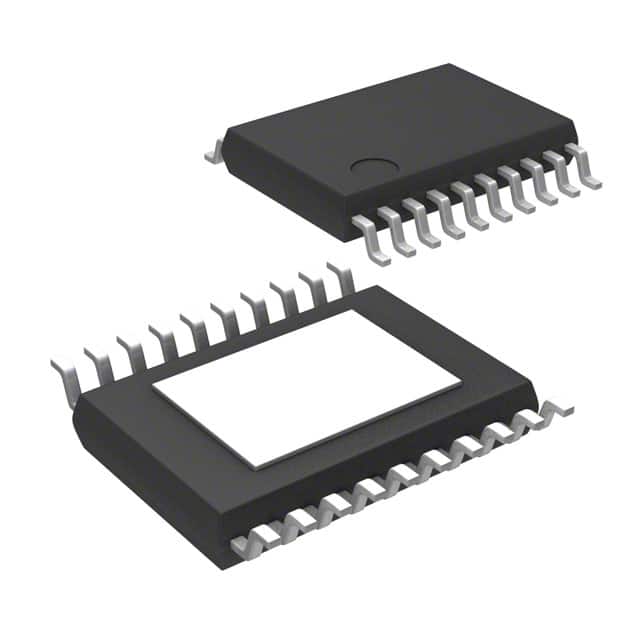
- Part No.:
- A6274KLPTR-T
- Manufacturer:
- Allegro MicroSystems
- Category:
- LED Drivers
- Package:
- 20-TSSOP (0.173", 4.40mm Width) Exposed Pad
- Datasheet:
-
 A6274KLPTR-T.pdf
- Description:
- IC LED DRVR LIN PWM 60MA 20TSSOP
- Quantity:
- Payment:

- Shipping:

Inventory:2,208
Please send an inquiry. Send us your inquiry, and we will respond immediately.
Product details
Overview
A6274KLPTR-T from Allegro MicroSystems is a six-channel automotive-grade linear LED current regulator IC, sinking up to 60 mA per channel (360 mA total), with programmable current via external ISET resistors, internal/external PWM dimming control, and integrated fault protection for rear combination lights and DRL systems.
For engineers reviewing the A6274KLPTR-T datasheet, A6274KLPTR-T pinout, A6274KLPTR-T application, or A6274KLPTR-T equivalent, this device delivers precise current matching (±0.8% typical), wide 5–42 V input operation, thermal and VIN derating, AEC-Q100 qualification, and fault detection including open-LED, short-to-ground, and overtemperature shutdown.
Technical Context
The A6274KLPTR-T implements six independent, matched current sinks with dual ISET inputs (ISET1 for LED1–3, ISET2 for LED4–6), enabling group-level current programming and optional mirroring. It integrates a gate driver for an external P-MOSFET ballast to reduce on-die power dissipation and supports both internal PWM (resistor-programmed frequency: 195–2050 Hz) and external logic-level PWM input.
Fault management includes latched or unlatched MODE0 response (A6274KLPTR-T uses unlatched), real-time LED string monitoring (VLEDx voltage thresholds), VIN-based current foldback (set via VTH resistor divider), and thermal derating down to 35% current at TJ = TJF – 7°C before full TSD shutdown at 175°C.
Key Specifications
| Parameter | Value and Actual Design Meaning |
|---|---|
| Max LED current per channel | 60 mA - sets absolute sink limit for each of six channels; enables driving high-brightness LED strings without external current-setting components. |
| Input voltage range | 5–42 V - supports automotive cold-crank (5 V), normal operation (14 V), and load-dump (42 V) transients without external protection circuitry. |
| Current accuracy | ±2% typical - ensures consistent luminance across LED strings under varying temperature and supply conditions. |
| Current matching | ±0.8% typical - minimizes visible brightness variation between parallel LED channels in multi-string lighting modules. |
| Thermal operating range | –40°C to +150°C (junction) - qualified for under-hood and exterior automotive locations per AEC-Q100 Grade 0. |
| PWM dimming modes | Internal (resistor-set 195–2050 Hz) or external (logic-level signal) - provides flexible brightness control without MCU intervention or added timing components. |
| Fault detection coverage | Open-LED, LED short-to-ground, single LED short, OUT short-to-ground, VIN overvoltage, thermal shutdown - reduces system-level diagnostic burden and improves functional safety compliance. |
Pinout & Package
20-pin eTSSOP (LP) package with exposed thermal pad, optimized for high-power density automotive PCB layouts and enhanced thermal dissipation via soldered thermal pad connection to ground plane.
| Pin/Terminal | Circuit Role | Design Meaning |
|---|---|---|
| ISET1 | Current reference input | Sets sink current for LED1–3 via resistor to GND; gain = 298 A/A (A6274); defines 60 mA max per channel. |
| ISET2 | Current reference input | Sets sink current for LED4–6; connect to BIAS to mirror ISET1 setting across all six channels for improved matching. |
| PWMIN | PWM mode select & frequency input | Resistor-to-GND sets internal PWM frequency; logic-high signal switches to external PWM control with <1 µs mode transition delay. |
| DR | Duty cycle control | Voltage (0–3.6 V) sets PWM duty cycle via VDR/VBIAS ratio; >3.6 V forces FULL mode (100% duty cycle). |
| EN1 / EN2 | Group enable inputs | Active-high enables LED1–3 (EN1) or LED4–6 (EN2); high-voltage tolerant, supports direct 12/24 V connection without level shift. |
| FFn | Fault flag output | Open-drain active-low flag indicating any asserted fault; in MODE0 (A6274KLPTR-T), fault clears automatically when condition resolves. |
| GATE / COMP / OUT | External PMOS controller interface | Drives series-pass P-MOSFET to reduce IC power dissipation; COMP stabilizes loop with 470 nF capacitor to MOSFET drain. |
| VTH | VIN derating threshold input | Resistor divider from BIAS sets VINth(L) (e.g., 20 V) where LED current begins folding back to protect against overvoltage stress. |
Key Features
| Feature | Design Value |
|---|---|
| Unlatched fault response (MODE0) | Enables automatic recovery after transient faults (e.g., momentary open-LED), avoiding system reset or manual intervention in DRL/rear light applications. |
| Programmable VIN derating | Prevents thermal runaway during 42 V load-dump events by reducing LED current as VIN rises above user-defined threshold (e.g., 20 V → 90% current, 26.4 V → 50%). |
| Controlled slew during PWM transitions | Reduces EMI emissions by limiting di/dt in LED current ramps (8 µs 10–90%), easing EMC compliance for automotive lighting modules. |
| LED pin open/short detection | Distinguishes unused pins (VLEDx = 0.26 V), short-to-ground (VLEDx < 0.16 V), and active strings (VLEDx > 0.4 V) during tLEDdet startup window (5 ms), eliminating false fault triggers. |
| Integrated bias regulator (BIAS pin) | Provides stable 5 V ±2.5% @ 7 mA for external circuitry (e.g., resistor dividers, comparators), reducing need for auxiliary LDOs in lighting control boards. |
Applications
| Automotive Rear Combination Light | Daytime Running Light (DRL) |
|---|---|
Use Scenario: Integrated tail lamp module combining brake, turn, reverse, and parking functions with dynamic brightness control. IC Role / Device Role / Timing Role: Six-channel current sink regulating individual LED strings; EN1/EN2 enable group sequencing; FULL/DIM mode manages intensity per function. Use Value: Enables single-chip control of multi-color, multi-function arrays with <0.8% channel-to-channel mismatch, meeting SAE J575 photometric uniformity requirements. |
Use Scenario: Front-end DRL system requiring constant luminance across battery voltage range (9–16 V) and ambient temperature (–40°C to +85°C). IC Role / Device Role / Timing Role: Linear current regulator with VIN derating (via VTH) and thermal foldback (via TJ sensing) maintains stable LED output despite engine-off voltage sag or under-hood heat. Use Value: Eliminates need for closed-loop optical feedback or microcontroller-based compensation, reducing BOM cost and firmware complexity. |
| Position/Marker Light | Automotive Interior Ambient Lighting |
Use Scenario: Low-power side-marker or license plate illumination using white or amber LEDs in compact housing. IC Role / Device Role / Timing Role: Current sink with ISET1/ISET2 programming sets precise 10–30 mA per string; PWMIN/DR enables smooth analog-like dimming via vehicle CAN bus PWM signal. Use Value: Achieves Class A photometric stability (±5% flux) over life without aging drift, satisfying FMVSS 108 marker light intensity tolerances. |
Use Scenario: RGB or tunable-white cabin lighting with independent channel control for mood lighting and driver alerts. IC Role / Device Role / Timing Role: Dual-group enable (EN1/EN2) allows sequential activation of warm/cool white strings; internal PWM avoids MCU GPIO resource contention. Use Value: Supports flicker-free dimming down to 5% duty cycle (via DR pin) with <1% current ripple, preventing perceptible strobing in human vision range. |
Equivalent & Alternatives
The following parts are listed as comparable options for similar LED current regulation applications.
| Alternative Part | Technical Difference | Application Difference | Selection Advice |
|---|---|---|---|
| AL8863-7DT-13 | Switching buck LED driver (not linear); 60 mA/channel, 4.5–40 V input; no integrated fault flag or VIN derating. | Higher efficiency (>90%) but requires inductor/filter; lacks AEC-Q100 qualification and thermal derating curve. | Select for thermally constrained spaces where efficiency >75% is critical; avoid where EMI-sensitive or qualification-mandated. |
| TPS92692QPWPRQ1 | Linear current regulator with 100 mA/channel, 4.5–42 V input; includes SPI interface, diagnostics register, and adjustable overtemp threshold. | Requires MCU communication for configuration; supports more granular fault reporting but adds software overhead. | Select when system-level diagnostics (e.g., ASIL-B) or programmable fault thresholds are required; A6274KLPTR-T preferred for simplicity and cost-sensitive DRLs. |
Compared with AL8863-7DT-13 and TPS92692QPWPRQ1, the A6274KLPTR-T offers plug-and-play analog control, guaranteed AEC-Q100 Grade 0 operation, and built-in VIN/thermal foldback-making it optimal for cost-sensitive, high-reliability automotive lighting where layout space and EMI are constraints.
Availability
A6274KLPTR-T is available at Aetrix Electronics and suitable for automotive rear combination lights, daytime running lights (DRL), and position/marker lighting requiring stable component supply, AEC-Q100 compliance, and long-term production continuity.
Supply support for A6274KLPTR-T includes scheduled delivery planning, volume procurement assistance, BOM continuity management, traceable sourcing, and lifecycle availability coordination for OEM customers, industrial embedded developers, connected-device designers, and electronics production programs.
Manufacturer
Allegro MicroSystems is a U.S.-based semiconductor company specializing in high-performance magnetic sensing, power ICs, and motor driver solutions for automotive and industrial markets.
The A6274 product line is designed specifically for robust, high-accuracy LED current regulation in automotive exterior lighting, emphasizing fault resilience, wide-input operation, and seamless integration with external PMOS ballast circuits.
FAQ
What is the maximum total current capability of the A6274KLPTR-T?
The A6274KLPTR-T provides six independent current sinks, each rated up to 60 mA, for a maximum total drive current of 360 mA. This is achieved with ≤2% current accuracy and ≤0.8% matching between channels under full-load conditions across the –40°C to +150°C junction temperature range.
Does the A6274KLPTR-T support both internal and external PWM dimming?
Yes, the A6274KLPTR-T supports dual PWM dimming modes. Internal PWM frequency (195–2050 Hz) is set by a resistor from PWMIN to GND; external PWM is enabled by applying a logic-level signal to PWMIN. Mode switching occurs automatically with <1 µs delay for internal→external and <20 ms for external→internal transitions.
How does the A6274KLPTR-T handle overvoltage conditions on VIN?
The A6274KLPTR-T implements programmable VIN derating via the VTH pin: a resistor divider from BIAS sets VINth(L), where LED current drops to 90% (e.g., 20 V), then to 50% at VINth(H) = VINth(L) + 6.4 V. At VIN > VINth(H), current holds at ~40%, protecting against 42 V load-dump stress without external clamping.
What fault protections are integrated into the A6274KLPTR-T?
The A6274KLPTR-T integrates six fault detection mechanisms: LED string open, LED pin short-to-ground, single LED short, OUT short-to-ground, VIN overvoltage (>43 V), and thermal shutdown (175°C). All faults assert the open-drain FFn pin low; A6274KLPTR-T uses unlatched MODE0, so faults clear automatically when resolved.
Can the A6274KLPTR-T drive LED strings without an external PMOS transistor?
Yes, the A6274KLPTR-T can operate without an external PMOS. In that case, connect GATE and COMP pins directly to VIN. However, doing so disables short-circuit fault detection (FAULT A, B, C) and increases on-die power dissipation-limiting usable LED forward voltage headroom and thermal margin compared to PMOS-assisted operation.
A6274KLPTR-T Specifications
- Product attributes
- Attribute value
- Manufacturer:
- Allegro MicroSystems
- Series:
- -
- Package/Case:
- 20-TSSOP (0.173", 4.40mm Width) Exposed Pad
- Packaging:
- Tape & Reel (TR)
- Product Status:
- Active
- Type:
- Linear
- Topology:
- -
- Internal Switch(s):
- No
- Number of Outputs:
- 6
- Voltage - Supply (Min):
- 5V
- Voltage - Supply (Max):
- 42V
- Voltage - Output:
- -
- Current - Output / Channel:
- 60mA
- Frequency:
- -
- Dimming:
- PWM
- Applications:
- -
- Operating Temperature:
- -40°C ~ 150°C (TJ)
- Grade:
- Automotive
- Qualification:
- AEC-Q100
- Mounting Type:
- Surface Mount
- Supplier Device Package:
- 20-TSSOP-EP
A6274KLPTR-T FAQ
1.How can I place an order for A6274KLPTR-T through Aetrix?
Please submit a Request for Quotation (RFQ) for A6274KLPTR-T on Aetrix. Our sales agent will provide a competitive quotation and guide you through the order confirmation once you accept the terms.
2.Are the price and stock information for A6274KLPTR-T reliable?
The price and inventory of A6274KLPTR-T are updated periodically and may fluctuate due to market conditions. Stock and pricing data are typically refreshed every 24 hours. Quotation validity for A6274KLPTR-T is usually 5 days.
3.What payment methods are accepted for A6274KLPTR-T?
We accept Wire Transfer, PayPal, Credit Card, Western Union, MoneyGram, and Escrow for A6274KLPTR-T transactions.
Note: Certain payment methods may incur a processing fee.
4.How is shipping managed for A6274KLPTR-T?
A6274KLPTR-T orders can be shipped via leading logistics carriers, including DHL, UPS, FedEx, TNT, or Registered Mail.
Once your A6274KLPTR-T order is processed, you will receive an email with the shipment details and tracking number.
Note: Tracking information may take up to 24 hours to appear. Express delivery typically takes 3–5 business days.
5.How can I obtain technical support or documentation for A6274KLPTR-T?
For technical support, including A6274KLPTR-T datasheets, pinout diagrams, or application guidance, please contact our engineering support team. They can provide detailed documentation and assistance for your A6274KLPTR-T requirements.
6.How does Aetrix verify that A6274KLPTR-T is sourced from the original manufacturer or authorized distributors?
All A6274KLPTR-T products on Aetrix are procured from qualified distributors and authorized channels. Our dedicated quality assurance team conducts strict verification, including traceability checks and, if necessary, third-party testing. This ensures that A6274KLPTR-T meets industry standards.
7.What is the process for return or replacement of A6274KLPTR-T?
All A6274KLPTR-T units undergo pre-shipment inspection (PSI). If there is an issue with A6274KLPTR-T, returns or replacements are accepted under the following conditions:
1.Quantity discrepancies, incorrect items, or visible external defects (such as breakage or corrosion), acknowledged by Aetrix.
2.The issue is reported within 90 days of delivery.
3.The A6274KLPTR-T part is unused and in its original packaging.
Return procedure for A6274KLPTR-T:
1.Submit a request within 90 days.
2.Obtain a Return Material Authorization (RMA) from Aetrix.
A6274KLPTR-T Tags
-
BCR402RE6327HTSA1
Infineon Technologies

-
BCR430UXTSA2
Infineon Technologies
-
BCR420UE6433HTMA1
Infineon Technologies
-
BCR420UE6327HTSA1
Infineon Technologies
-
BCR421UE6327HTSA1
Infineon Technologies
-
LYT1604D-TL
Power Integrations

-
HV9910CLG-G
Microchip Technology

-
CL2N8-G
Microchip Technology
-
BCR420UW6-7
Diodes Incorporated
-
BCR421UW6-7
Diodes Incorporated
-
BCR420UFD-7
Diodes Incorporated
-
BCR421UFD-7
Diodes Incorporated
Tech Hub

A practical engineering and sourcing framework covering lifecycle verification, lifetime-buy calculations, replacement qualification, supplier checks and counterfeit-risk controls.

TTL and CMOS logic families differ in thresholds, loading, output drive, power and timing. This engineering guide compares 74HC and 74HCT, calculates noise margins and checks 3.3 V/5 V compatibility.

A practical engineering guide to 3.3V and 5V logic compatibility, input thresholds, resistor dividers, translator ICs, MOSFET level shifting, I2C pull-ups, timing limits and power-sequencing risks.

The 74HC595 uses push-pull logic outputs, while the TPIC6B595 uses 50 V open-drain DMOS sinks for higher-power loads. This guide compares timing, current limits, 3.3 V interfacing, load wiring, thermal…

The 74HC595 converts serial data into eight stable parallel outputs. This guide covers pin functions, shift and storage timing, OE and MR behavior, drive-current limits, cascading, voltage compatibilit…

A technical comparison of level-sensitive latches and edge-triggered flip-flops, covering timing windows, setup and hold limits, master–slave operation, time borrowing, race-through, HDL inference and…

A D latch stores one bit while Enable controls when data can pass. This reference covers gate-level operation, truth tables, transparency, setup and hold timing, LE versus OE, common ICs and practical …

An SR latch stores one bit through cross-coupled feedback. This engineering reference covers NOR and NAND implementations, truth tables, forbidden-state recovery, gated operation, switch debouncing, fa…

Latch circuits retain one bit through feedback. This technical reference covers SR and D latches, truth tables, transparency, timing limits, latch-versus-flip-flop behavior, applications and common log…

An engineering guide to LED driver operation, constant-current and constant-voltage outputs, linear and switching topologies, dimming, IC selection, calculations, replacement compatibility, and fault c…


