
 My Inquiry
 My Account


Allegro MicroSystems A6276SLW-T
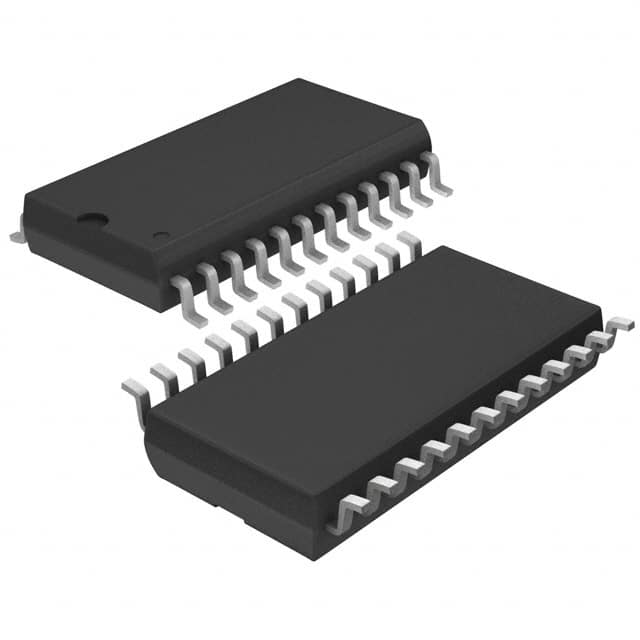
- Part No.:
- A6276SLW-T
- Manufacturer:
- Allegro MicroSystems
- Category:
- LED Drivers
- Package:
- 24-SOIC (0.295", 7.50mm Width)
- Datasheet:
-
 A6276SLW-T.pdf
- Description:
- IC LED DRVR LINEAR 75.5MA 24SOIC
- Quantity:
- Payment:

- Shipping:

Inventory:1,603
Please send an inquiry. Send us your inquiry, and we will respond immediately.
Product details
Overview
A6276SLW-T from Allegro MicroSystems is a 16-bit serial-input, constant-current latched LED driver in 24-pin SOICW package, featuring 16 NPN sink drivers with user-adjustable current (up to 90 mA per output), 20 MHz serial data input rate at 5 V logic supply, and inter-digit blanking via active-low OUTPUT ENABLE. It targets multiplexed LED displays requiring precise current control and microprocessor interface.
For engineers reviewing the A6276SLW-T datasheet, A6276SLW-T pinout, A6276SLW-T application, or A6276SLW-T equivalent, this page delivers verified electrical parameters, thermal derating guidance for SOICW packaging, latch/enable timing constraints, and functional alternatives for LED display system design.
Technical Context
The A6276SLW-T integrates a 16-bit CMOS shift register, parallel latches, and 16 matched NPN constant-current sink drivers - all operating from a single 4.5–5.5 V logic supply. Its undervoltage lockout activates below 3.4 V, preventing erratic operation during power ramp-up.
Serial data is shifted on rising clock edges; latching occurs on high-level LATCH ENABLE, enabling synchronous update of all 16 outputs. The OUTPUT ENABLE pin (active low) disables all sinks simultaneously for global blanking without affecting latch state.
Key Specifications
| Parameter | Value and Actual Design Meaning |
|---|---|
| Output Current | Up to 90 mA per channel (VCE = 0.7 V, REXT = 250 Ω); set by single external resistor. |
| Logic Supply Voltage | 4.5–5.5 V; supports standard 5 V microcontroller interfacing with VIH ≥ 3.5 V. |
| Max Serial Data Rate | 20 MHz at VDD = 5 V; enables fast refresh in high-resolution LED matrices. |
| Output Matching | ±1.5% typical current matching between any two outputs at same VCE, critical for uniform LED brightness. |
| Thermal Resistance | RθJA = 85 °C/W (SOICW, 1-layer JEDEC PCB); requires derating above 25°C ambient. |
| Operating Temperature | –20 to +85 °C ambient; narrower range than E-grade variants due to SOICW thermal limits. |
| Undervoltage Lockout | Activates below 3.4–4.0 V; prevents partial register updates during brownout conditions. |
Pinout & Package
Package: 24-pin SOICW (wide-body surface-mount), lead-free with 100% matte tin plating. Thermal performance optimized for single-layer PCBs; exposed pad not present (unlike LP variant).
| Pin/Terminal | Circuit Role | Design Meaning |
|---|---|---|
| 1 | GND | Common reference for logic and power grounds; must be low-impedance to avoid latch misfires. |
| 2 | SERIAL DATA IN | CMOS-compatible serial input; data sampled on rising clock edge. |
| 3 | CLOCK | Rising-edge-triggered shift register clock; min pulse width 50 ns. |
| 4 | LATCH ENABLE | Active-high strobe; transfers shift register contents to output latches. |
| 5–20 | OUT0–OUT15 | 16 NPN constant-current sink outputs; each drives one LED cathode. |
| 21 | OUTPUT ENABLE | Active-low global blanking control; high = all outputs disabled, latch state preserved. |
| 22 | SERIAL DATA OUT | CMOS-level daisy-chain output; connects to next A6276's SERIAL DATA IN. |
| 23 | REXT | Reference terminal for external current-setting resistor; sets all 16 outputs identically. |
| 24 | SUPPLY (VDD) | 5 V logic supply input; powers shift register, latches, and bias circuitry. |
Key Features
| Feature | Design Value |
|---|---|
| 16-channel constant-current sink | Enables uniform LED brightness across 16 segments without individual current-limiting resistors. |
| User-programmable output current | Single REXT resistor sets full-scale current (e.g., 40 mA @ 470 Ω), simplifying BOM and layout. |
| CMOS serial interface | Direct connection to MCU GPIOs; no level-shifting needed for 5 V systems. |
| Daisy-chain capability | SERIAL DATA OUT allows cascading multiple A6276SLW-T devices for >16-bit displays without extra control lines. |
| Inter-digit blanking | Active-low OUTPUT ENABLE provides synchronized blanking for multiplexed displays, eliminating ghosting. |
Applications
| LED Matrix Displays | Industrial Panel Meters |
|---|---|
|
Use Scenario: Driving 16×16 dot-matrix LED modules in industrial HMI panels with 1/16 multiplexing. IC Role / Device Role / Timing Role: Constant-current sink driver providing synchronized column current and blanking control during row scanning. Use Value: Eliminates brightness variation across rows via ±1.5% output matching and supports 20 MHz refresh for flicker-free operation. |
Use Scenario: Controlling segmented LED bar graphs in programmable logic controller (PLC) status indicators. IC Role / Device Role / Timing Role: Latched LED driver accepting serial commands from PLC CPU to update display states without bus contention. Use Value: Reduces MCU GPIO count by 16 pins while maintaining independent segment control via shift-and-latch protocol. |
| Point-of-Sale Terminals | Automotive Instrument Clusters |
|
Use Scenario: Backlighting alphanumeric LED displays in retail POS terminals with variable brightness control. IC Role / Device Role / Timing Role: Current-regulated sink for common-anode LED digits, with REXT adjusted for dimming via PWM on VLED supply. Use Value: Maintains color consistency across temperature (–20 to +85°C) using matched NPN outputs and thermal derating curves. |
Use Scenario: Driving red/green LED warning indicators in automotive dashboards with ESD-hardened interface. IC Role / Device Role / Timing Role: Robust LED driver with Class 2 ESD protection and undervoltage lockout for 12 V vehicle power systems with noisy transients. Use Value: Prevents false activation during cold-crank (low-VDD) events and withstands 15 V load-dump spikes on VO pins. |
Equivalent & Alternatives
The following parts are listed as comparable options for similar constant-current LED driver applications.
| Alternative Part | Technical Difference | Application Difference | Selection Advice |
|---|---|---|---|
| TB62706BN | Pin-compatible 16-bit sink driver; lacks undervoltage lockout and has lower max current (60 mA). | Requires external UVLO circuit for brownout immunity; limited to lower-brightness LED arrays. | Select when legacy footprint compatibility is mandatory and UVLO is implemented externally. |
| A6275ELWTR-T | 8-bit version in same SOICW package; identical logic interface and REXT current control. | Halves channel count; suited for smaller displays or dual-driver designs where space permits two ICs. | Choose for cost-sensitive 8-segment applications or when modular scalability (two A6275s = one A6276SLW-T) is preferred. |
Compared with TB62706BN, A6276SLW-T adds integrated undervoltage lockout and +50% peak current capacity; versus A6275ELWTR-T, it doubles channel density in identical SOICW footprint, reducing PCB area and interconnect complexity for 16-bit displays.
Availability
A6276SLW-T is available at Aetrix Electronics and suitable for LED matrix displays, industrial panel meters, point-of-sale terminals, and automotive instrument clusters requiring stable component supply across extended temperature ranges and long production lifecycles.
Supply support for A6276SLW-T includes scheduled delivery planning, volume procurement assistance, BOM continuity management, traceable sourcing, and lifecycle availability coordination for OEM customers, industrial embedded developers, connected-device designers, and electronics production programs.
Manufacturer
Allegro MicroSystems is a U.S.-based designer of high-performance magnetic sensors and power ICs, specializing in motion control, energy-efficient power management, and robust interface solutions.
The A6276 product line delivers integrated constant-current LED drivers for industrial and commercial displays, emphasizing thermal resilience, current accuracy, and microprocessor interoperability.
FAQ
What is the maximum continuous output current per channel for A6276SLW-T?
The A6276SLW-T supports up to 90 mA per output channel under specific thermal conditions: VCE = 0.7 V, REXT = 250 Ω, and ambient temperature ≤25°C on a 1-layer PCB. At higher temperatures or with reduced copper area, derating per the RθJA = 85 °C/W curve is required. The A6276SLW-T datasheet specifies 64.2–86.8 mA typical range at 25°C.
Does A6276SLW-T support daisy-chaining with other LED drivers?
Yes, the A6276SLW-T includes a CMOS SERIAL DATA OUT pin (Pin 22) that mirrors the internal shift register's MSB, enabling direct connection to the SERIAL DATA IN of a second A6276SLW-T or compatible device. This allows expansion beyond 16 outputs without additional control lines, preserving the same clock and latch timing for synchronized updates.
How does the OUTPUT ENABLE pin function on A6276SLW-T?
The OUTPUT ENABLE pin (Pin 21) is active low: when driven high, all 16 output drivers are disabled (blanked), regardless of latch state; when low, outputs reflect their latched values. This enables inter-digit blanking in multiplexed displays without disturbing stored data - a key feature for flicker-free LED matrix operation in the A6276SLW-T.
What is the operating temperature range for A6276SLW-T?
The A6276SLW-T is rated for –20°C to +85°C ambient temperature, distinct from the –40°C to +85°C range of E-grade variants (e.g., A6276ELWTR-T). This reflects thermal limitations of the SOICW package; operation outside this range may cause current drift or latch errors due to junction temperature exceeding 150°C.
Can A6276SLW-T replace TB62706BN in existing designs?
The A6276SLW-T is a functional replacement for TB62706BN with identical pinout and logic interface, but adds undervoltage lockout and supports higher output current (90 mA vs. 60 mA). No PCB changes are required, though REXT value may need adjustment to match target current, and system-level UVLO testing is unnecessary due to the A6276SLW-T's integrated protection.
A6276SLW-T Specifications
- Product attributes
- Attribute value
- Manufacturer:
- Allegro MicroSystems
- Series:
- -
- Package/Case:
- 24-SOIC (0.295", 7.50mm Width)
- Packaging:
- Tube
- Product Status:
- Obsolete
- Type:
- Linear
- Topology:
- Shift Register
- Internal Switch(s):
- Yes
- Number of Outputs:
- 16
- Voltage - Supply (Min):
- 4.5V
- Voltage - Supply (Max):
- 5.5V
- Voltage - Output:
- 4V
- Current - Output / Channel:
- 75.5mA
- Frequency:
- 20MHz
- Dimming:
- -
- Applications:
- -
- Operating Temperature:
- -20°C ~ 85°C (TA)
- Grade:
- -
- Qualification:
- -
- Mounting Type:
- Surface Mount
- Supplier Device Package:
- 24-SOIC
A6276SLW-T FAQ
1.How can I place an order for A6276SLW-T through Aetrix?
Please submit a Request for Quotation (RFQ) for A6276SLW-T on Aetrix. Our sales agent will provide a competitive quotation and guide you through the order confirmation once you accept the terms.
2.Are the price and stock information for A6276SLW-T reliable?
The price and inventory of A6276SLW-T are updated periodically and may fluctuate due to market conditions. Stock and pricing data are typically refreshed every 24 hours. Quotation validity for A6276SLW-T is usually 5 days.
3.What payment methods are accepted for A6276SLW-T?
We accept Wire Transfer, PayPal, Credit Card, Western Union, MoneyGram, and Escrow for A6276SLW-T transactions.
Note: Certain payment methods may incur a processing fee.
4.How is shipping managed for A6276SLW-T?
A6276SLW-T orders can be shipped via leading logistics carriers, including DHL, UPS, FedEx, TNT, or Registered Mail.
Once your A6276SLW-T order is processed, you will receive an email with the shipment details and tracking number.
Note: Tracking information may take up to 24 hours to appear. Express delivery typically takes 3–5 business days.
5.How can I obtain technical support or documentation for A6276SLW-T?
For technical support, including A6276SLW-T datasheets, pinout diagrams, or application guidance, please contact our engineering support team. They can provide detailed documentation and assistance for your A6276SLW-T requirements.
6.How does Aetrix verify that A6276SLW-T is sourced from the original manufacturer or authorized distributors?
All A6276SLW-T products on Aetrix are procured from qualified distributors and authorized channels. Our dedicated quality assurance team conducts strict verification, including traceability checks and, if necessary, third-party testing. This ensures that A6276SLW-T meets industry standards.
7.What is the process for return or replacement of A6276SLW-T?
All A6276SLW-T units undergo pre-shipment inspection (PSI). If there is an issue with A6276SLW-T, returns or replacements are accepted under the following conditions:
1.Quantity discrepancies, incorrect items, or visible external defects (such as breakage or corrosion), acknowledged by Aetrix.
2.The issue is reported within 90 days of delivery.
3.The A6276SLW-T part is unused and in its original packaging.
Return procedure for A6276SLW-T:
1.Submit a request within 90 days.
2.Obtain a Return Material Authorization (RMA) from Aetrix.
A6276SLW-T Tags
-
BCR402RE6327HTSA1
Infineon Technologies

-
BCR430UXTSA2
Infineon Technologies
-
BCR420UE6433HTMA1
Infineon Technologies
-
BCR420UE6327HTSA1
Infineon Technologies
-
BCR421UE6327HTSA1
Infineon Technologies
-
LYT1604D-TL
Power Integrations

-
HV9910CLG-G
Microchip Technology

-
CL2N8-G
Microchip Technology
-
BCR420UW6-7
Diodes Incorporated
-
BCR421UW6-7
Diodes Incorporated
-
BCR420UFD-7
Diodes Incorporated
-
BCR421UFD-7
Diodes Incorporated
Tech Hub

A practical engineering and sourcing framework covering lifecycle verification, lifetime-buy calculations, replacement qualification, supplier checks and counterfeit-risk controls.

TTL and CMOS logic families differ in thresholds, loading, output drive, power and timing. This engineering guide compares 74HC and 74HCT, calculates noise margins and checks 3.3 V/5 V compatibility.

A practical engineering guide to 3.3V and 5V logic compatibility, input thresholds, resistor dividers, translator ICs, MOSFET level shifting, I2C pull-ups, timing limits and power-sequencing risks.

The 74HC595 uses push-pull logic outputs, while the TPIC6B595 uses 50 V open-drain DMOS sinks for higher-power loads. This guide compares timing, current limits, 3.3 V interfacing, load wiring, thermal…

The 74HC595 converts serial data into eight stable parallel outputs. This guide covers pin functions, shift and storage timing, OE and MR behavior, drive-current limits, cascading, voltage compatibilit…

A technical comparison of level-sensitive latches and edge-triggered flip-flops, covering timing windows, setup and hold limits, master–slave operation, time borrowing, race-through, HDL inference and…

A D latch stores one bit while Enable controls when data can pass. This reference covers gate-level operation, truth tables, transparency, setup and hold timing, LE versus OE, common ICs and practical …

An SR latch stores one bit through cross-coupled feedback. This engineering reference covers NOR and NAND implementations, truth tables, forbidden-state recovery, gated operation, switch debouncing, fa…

Latch circuits retain one bit through feedback. This technical reference covers SR and D latches, truth tables, transparency, timing limits, latch-versus-flip-flop behavior, applications and common log…

An engineering guide to LED driver operation, constant-current and constant-voltage outputs, linear and switching topologies, dimming, IC selection, calculations, replacement compatibility, and fault c…


