
 My Inquiry
 My Account


Analog Devices Inc. AD1886AJSTZ
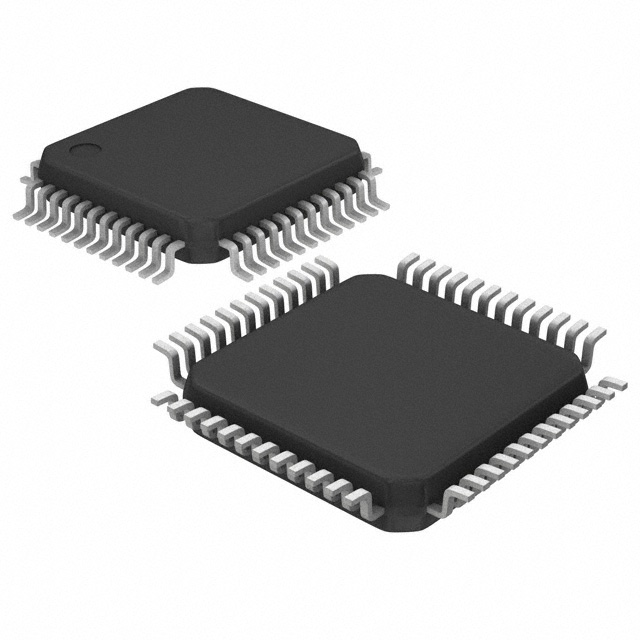
- Part No.:
- AD1886AJSTZ
- Manufacturer:
- Analog Devices Inc.
- Category:
- CODECS
- Package:
- 48-LQFP
- Datasheet:
-
 AD1886AJSTZ.pdf
- Description:
- IC CODEC STEREO 16BIT 48LQFP
- Quantity:
- Payment:

- Shipping:

Inventory:733
Please send an inquiry. Send us your inquiry, and we will respond immediately.
Product details
Overview
AD1886AJSTZ from Analog Devices is a 16-bit stereo full-duplex AC'97 2.2-compliant audio codec IC with integrated stereo headphone amplifier, 90 dB dynamic range, 24.576 MHz crystal oscillator interface, and 48-terminal LQFP package. It serves as the primary audio interface in PC motherboard audio subsystems, supporting simultaneous analog input capture and playback at variable sample rates from 7.04 kHz to 48 kHz.
For engineers reviewing the AD1886AJSTZ datasheet, AD1886AJSTZ pinout, AD1886AJSTZ application, or AD1886AJSTZ equivalent, key selection considerations include AC'97 link timing compliance, dual-supply operation (3.3 V digital / 5 V analog), jack sense GPIO capability, SPDIF output support, and Phat™ stereo enhancement integration.
Technical Context
The AD1886AJSTZ implements a dual-path sigma-delta architecture with separate 16-bit ADC and DAC converters, decimation/interpolation filters meeting AC'97 2.2 spectral requirements (pass-band ripple ±0.09 dB, stop-band rejection –74 dB), and on-chip sample rate generators enabling 1 Hz resolution across its 7.04–48 kHz operating range.
It features an AC'97 serial interface (BIT_CLK @ 12.288 MHz, SYNC @ 48 kHz, SDATA_IN/SDATA_OUT) with hardware reset (RESET active-low ≥1.0 µs), supports split power domains (DVDD = 3.0–3.6 V, AVDD = 4.75–5.25 V), and integrates programmable gain amplifiers (0–22.5 dB PGA), analog mixers, and digital volume controls with 1.5 dB step resolution.
Key Specifications
| Parameter | Value and Actual Design Meaning |
|---|---|
| Resolution | 16-bit ADC and DAC - ensures CD-quality audio fidelity with quantization noise floor below audible threshold |
| Dynamic Range | ≥90 dB (A-weighted) - meets AC'97 high-fidelity requirement for line-out and headphone outputs |
| Sample Rate Range | 7040 Hz to 48 kHz with 1 Hz resolution - supports legacy telephony, VoIP, and full-range multimedia playback |
| AC'97 Compliance | AC'97 2.2 compliant - guarantees interoperability with Intel AC'97 host controllers and system BIOS |
| Power Dissipation | 306 mW typical (5 V/3.3 V) - enables thermal management in space-constrained motherboard layouts |
| Package | 48-lead LQFP (ST-48) - surface-mount compatible with standard PCB assembly processes |
| Supply Voltages | Digital: 3.0–3.6 V; Analog: 4.75–5.25 V - enables independent noise isolation between digital and analog domains |
Pinout & Package
AD1886AJSTZ is housed in a 48-lead thin quad flatpack (LQFP) package with 0.5 mm pitch, exposed pad for thermal dissipation, and lead-free finish per RoHS. Pin 1 is marked by a corner notch.
| Pin/Terminal | Circuit Role | Design Meaning |
|---|---|---|
| XTL_IN (Pin 2) | Clock Input | Accepts 24.576 MHz fundamental-mode crystal or external clock for AC'97 timing reference |
| BIT_CLK (Pin 6) | AC'97 Bit Clock Output | Provides 12.288 MHz synchronized clock to host controller; daisy-chain capable |
| SDATA_IN (Pin 8) | AC'97 Serial Data Input | Receives 256-bit frame data from host (slots 0–11); sampled on falling BIT_CLK edge |
| SDATA_OUT (Pin 5) | AC'97 Serial Data Output | Transmits 256-bit frame data to host (slots 0–11); valid on rising BIT_CLK edge |
| JS (Pin 47) | Jack Sense / GPIO | Configurable input to detect plug insertion or drive external mute logic |
| VREFOUT (Pin 28) | Mic Bias Reference | 2.25 V output with 5 mA drive - powers electret microphones without external bias circuitry |
| SPDIF (Pin 48) | Digital Audio Output | 20-bit SPDIF stream at 32/44.1/48 kHz - enables direct connection to external S/PDIF receivers |
Key Features
| Feature | Design Value |
|---|---|
| Phat™ Stereo Enhancement | Hardware-accelerated 3D spatial processing using RX3D/CX3D external RC network - adds perceptual width without DSP overhead |
| Mobile Low-Power Mixer Mode | Reduces analog supply current to 22.4 mA while maintaining CD analog path - extends battery life in portable docking stations |
| Jack Sense Automation | GPIO-configurable JS pin triggers automatic LINE_OUT/HP_OUT switching and mono mute - eliminates OS-level driver dependency |
| Software-Enabled VREFOUT | VREFOUT can be disabled via register bit to reduce quiescent current when mic bias is unused - improves idle power efficiency |
| Extended Volume Control | 6-bit master/headphone volume registers (1.5 dB steps) spanning –94.5 dB attenuation - enables precise loudness matching across output types |
Applications
| Desktop PC Audio Subsystem | Industrial Thin Client Terminal |
|---|---|
Use Scenario: Integrated audio on ATX motherboard delivering line-out, headphone, and mic-in for office productivity and conferencing. IC Role / Device Role / Timing Role: Primary AC'97 codec interfacing with southbridge; provides synchronized full-duplex audio paths with BIT_CLK/SYNC timing alignment. Use Value: Eliminates need for discrete op-amps and bias circuits via integrated headphone amp, VREFOUT, and PGA - reduces BOM count by ≥7 components. | Use Scenario: Fanless industrial terminal requiring low-noise audio I/O for remote diagnostics and voice-guided HMI. IC Role / Device Role / Timing Role: Audio interface co-located with ARM-based SoM; uses mobile low-power mixer mode to maintain <25 mA analog current during idle. Use Value: Achieves 90 dB SNR at <300 mW total power - satisfies EN55032 Class B emissions while supporting headset-based operator feedback. |
| Legacy VoIP Gateway Adapter | Embedded Audio Recording Module |
Use Scenario: PCI add-in card converting analog phone lines to VoIP using G.711/G.729 codecs. IC Role / Device Role / Timing Role: Analog front-end for FXS/FXO interface; leverages variable sample rate (8/16 kHz) and PC_BEEP passthrough for DTMF tone generation. Use Value: Supports 7.04 kHz minimum sample rate - enables narrowband telephony compatibility without resampling artifacts. | Use Scenario: Standalone USB-audio recorder capturing stereo line/mic inputs with timestamped metadata. IC Role / Device Role / Timing Role: High-fidelity ADC front-end with 20 dB MIC preamp and CD-input ground sense - preserves signal integrity during field recording. Use Value: 90 dB SNR and –100 dB crosstalk between LINE_IN channels - ensures clean separation of multi-source analog inputs. |
Equivalent & Alternatives
The following parts are listed as comparable options for similar audio codec applications.
| Alternative Part | Technical Difference | Application Difference | Selection Advice |
|---|---|---|---|
| AD1885ASTZ | Lacks SPDIF output and Phat™ stereo; identical pinout and AC'97 interface | No digital audio export or 3D enhancement - suitable only for basic line/headphone I/O | Select when SPDIF and stereo enhancement are unnecessary and cost reduction is critical |
| WM9705GDS | Single-supply (3.3 V) design; no analog VDD rail; lower dynamic range (85 dB) | Targeted at portable systems with unified power domain - not drop-in compatible due to supply and pinout differences | Choose for battery-powered handhelds where single-rail simplicity outweighs SNR and feature trade-offs |
Compared with AD1886AJSTZ, AD1885ASTZ removes SPDIF and Phat™ but retains full AC'97 functionality and pin compatibility, while WM9705GDS sacrifices analog supply separation and SNR for monorail operation - making AD1886AJSTZ the only option supporting both high-fidelity desktop audio and flexible power-domain partitioning.
Availability
AD1886AJSTZ is available at Aetrix Electronics and suitable for desktop motherboard designs, industrial thin client terminals, and legacy VoIP gateway adapters requiring stable component supply, long-lifecycle support, and AC'97 2.2 compliance.
Supply support for AD1886AJSTZ includes scheduled delivery planning, volume procurement assistance, BOM continuity management, traceable sourcing, and lifecycle availability coordination for OEM customers, industrial embedded developers, connected-device designers, and electronics production programs.
Manufacturer
Analog Devices, Inc. is a global leader in high-performance analog, mixed-signal, and digital signal processing semiconductors, headquartered in Norwood, MA.
The AD1886A belongs to Analog Devices' SoundMAX® AC'97 codec family, engineered specifically for PC audio subsystems requiring AC'97 2.2 compliance, low-power operation, and integrated analog signal conditioning.
FAQ
What is the maximum supported sample rate for AD1886AJSTZ?
The AD1886AJSTZ supports a maximum sample rate of 48 kHz with 1 Hz resolution, as confirmed in the "ENHANCED FEATURES" section and validated by register SR1/SR0 programming (0xBB80h default). This enables full CD-quality playback and recording without external oversampling. The device maintains AC'97 2.2 timing compliance across the entire 7040 Hz–48 kHz range, and the AD1886AJSTZ datasheet specifies jitter ≤750 ps on BIT_CLK to ensure stable frame synchronization at 48 kHz.
Does AD1886AJSTZ support both 3.3 V and 5 V supplies simultaneously?
Yes, AD1886AJSTZ requires dual supplies: DVDD = 3.0–3.6 V for digital circuitry and AVDD = 4.75–5.25 V for analog sections. This split-supply architecture isolates noise-sensitive analog paths from digital switching transients. The AD1886AJSTZ datasheet specifies 306 mW typical power dissipation under 3.3 V/5 V operation, and absolute maximum ratings confirm AVDD must not exceed +6.0 V. Proper decoupling (0.1 µF ceramic + 10 µF tantalum per supply) is required per the evaluation board layout guidelines.
Can AD1886AJSTZ drive headphones directly without external amplification?
Yes, AD1886AJSTZ integrates a stereo headphone amplifier capable of driving 32 Ω loads with 1 Vrms full-scale output and THD ≤–75 dB. Its HP_OUT_L/HP_OUT_R pins deliver up to +6 dB gain (adjustable in 1.5 dB steps) and support mute control via HPM register bit. The AD1886AJSTZ datasheet confirms 90 dB dynamic range into 32 Ω and specifies 20 mA max analog supply current in headphone standby mode - confirming self-contained operation without external buffers.
Is the SPDIF output on AD1886AJSTZ hardware-managed or software-configured?
The SPDIF output on AD1886AJSTZ is hardware-managed with software configuration: SPDIF (Pin 48) delivers a 20-bit stream at 32/44.1/48 kHz, enabled via SPDIF control register (0x3Ah) bits SPSA1:SPSA0 and SPDIF. The AD1886AJSTZ datasheet states "20-Bit SPDIF Output w/32 kHz, 44.1 kHz, and 48 kHz Symbol Rates" as an enhanced feature, and register map confirms SPDIF enable/disable and sample rate selection are controlled through dedicated bits - no host CPU intervention is needed for format generation once configured.
How does the jack sense (JS) pin function on AD1886AJSTZ?
The JS pin (Pin 47) on AD1886AJSTZ operates as a configurable jack sense input or general-purpose digital output. As documented in the "PIN FUNCTION DESCRIPTIONS", it detects plug insertion to automatically mute LINE_OUT/ MONO_OUT and route audio to HP_OUT. Configuration is software-controlled via register 0x72 (Jack Sense/SPDIF), with bits JSC (jack sense control), JSOE (output enable), and JSLM (line mute). The AD1886AJSTZ datasheet confirms JS supports open-drain or push-pull modes and interfaces directly with 3.5 mm TRS jack switches - eliminating need for external comparators or GPIO expanders.
AD1886AJSTZ Specifications
- Product attributes
- Attribute value
- Manufacturer:
- Analog Devices Inc.
- Series:
- SoundMAX®
- Package/Case:
- 48-LQFP
- Packaging:
- Tray
- Product Status:
- Obsolete
- Type:
- Audio Codec '97
- Data Interface:
- Serial
- Resolution (Bits):
- 16 b
- Number of ADCs / DACs:
- 2 / 2
- Sigma Delta:
- Yes
- S/N Ratio, ADCs / DACs (db) Typ:
- -
- Dynamic Range, ADCs / DACs (db) Typ:
- 87 / 90
- Voltage - Supply, Analog:
- 4.75V ~ 5.25V
- Voltage - Supply, Digital:
- 3V ~ 3.6V
- Operating Temperature:
- 0°C ~ 70°C
- Grade:
- -
- Qualification:
- -
- Mounting Type:
- Surface Mount
- Supplier Device Package:
- 48-LQFP (7x7)
AD1886AJSTZ FAQ
1.How can I place an order for AD1886AJSTZ through Aetrix?
Please submit a Request for Quotation (RFQ) for AD1886AJSTZ on Aetrix. Our sales agent will provide a competitive quotation and guide you through the order confirmation once you accept the terms.
2.Are the price and stock information for AD1886AJSTZ reliable?
The price and inventory of AD1886AJSTZ are updated periodically and may fluctuate due to market conditions. Stock and pricing data are typically refreshed every 24 hours. Quotation validity for AD1886AJSTZ is usually 5 days.
3.What payment methods are accepted for AD1886AJSTZ?
We accept Wire Transfer, PayPal, Credit Card, Western Union, MoneyGram, and Escrow for AD1886AJSTZ transactions.
Note: Certain payment methods may incur a processing fee.
4.How is shipping managed for AD1886AJSTZ?
AD1886AJSTZ orders can be shipped via leading logistics carriers, including DHL, UPS, FedEx, TNT, or Registered Mail.
Once your AD1886AJSTZ order is processed, you will receive an email with the shipment details and tracking number.
Note: Tracking information may take up to 24 hours to appear. Express delivery typically takes 3–5 business days.
5.How can I obtain technical support or documentation for AD1886AJSTZ?
For technical support, including AD1886AJSTZ datasheets, pinout diagrams, or application guidance, please contact our engineering support team. They can provide detailed documentation and assistance for your AD1886AJSTZ requirements.
6.How does Aetrix verify that AD1886AJSTZ is sourced from the original manufacturer or authorized distributors?
All AD1886AJSTZ products on Aetrix are procured from qualified distributors and authorized channels. Our dedicated quality assurance team conducts strict verification, including traceability checks and, if necessary, third-party testing. This ensures that AD1886AJSTZ meets industry standards.
7.What is the process for return or replacement of AD1886AJSTZ?
All AD1886AJSTZ units undergo pre-shipment inspection (PSI). If there is an issue with AD1886AJSTZ, returns or replacements are accepted under the following conditions:
1.Quantity discrepancies, incorrect items, or visible external defects (such as breakage or corrosion), acknowledged by Aetrix.
2.The issue is reported within 90 days of delivery.
3.The AD1886AJSTZ part is unused and in its original packaging.
Return procedure for AD1886AJSTZ:
1.Submit a request within 90 days.
2.Obtain a Return Material Authorization (RMA) from Aetrix.
AD1886AJSTZ Tags
-
NAU88C22YG
Nuvoton Technology Corporation
-
TLV320AIC3100IRHBR
Texas Instruments
-
DA7212-01UM2
Renesas
-
NAU8810YG
Nuvoton Technology Corporation
-
DA7218-00U32
Renesas
-
CMX655DQ6-TR1K
CML Micro
-
SGTL5000XNLA3
NXP Semiconductors
-
TLV320AIC3104IRHBR
Texas Instruments
-
MAX9867EWV+T
Analog Devices Inc./Maxim Integrated
-
MAX9860ETG+T
Analog Devices Inc./Maxim Integrated
-
TLV320AIC3106IRGZR
Texas Instruments
-
SGTL5000XNLA3R2
NXP Semiconductors
Tech Hub

A practical engineering guide to 3.3V and 5V logic compatibility, input thresholds, resistor dividers, translator ICs, MOSFET level shifting, I2C pull-ups, timing limits and power-sequencing risks.

The 74HC595 uses push-pull logic outputs, while the TPIC6B595 uses 50 V open-drain DMOS sinks for higher-power loads. This guide compares timing, current limits, 3.3 V interfacing, load wiring, thermal…

The 74HC595 converts serial data into eight stable parallel outputs. This guide covers pin functions, shift and storage timing, OE and MR behavior, drive-current limits, cascading, voltage compatibilit…

A technical comparison of level-sensitive latches and edge-triggered flip-flops, covering timing windows, setup and hold limits, master–slave operation, time borrowing, race-through, HDL inference and…

A D latch stores one bit while Enable controls when data can pass. This reference covers gate-level operation, truth tables, transparency, setup and hold timing, LE versus OE, common ICs and practical …

An SR latch stores one bit through cross-coupled feedback. This engineering reference covers NOR and NAND implementations, truth tables, forbidden-state recovery, gated operation, switch debouncing, fa…

Latch circuits retain one bit through feedback. This technical reference covers SR and D latches, truth tables, transparency, timing limits, latch-versus-flip-flop behavior, applications and common log…

An engineering guide to LED driver operation, constant-current and constant-voltage outputs, linear and switching topologies, dimming, IC selection, calculations, replacement compatibility, and fault c…

Operational amplifier guide covering op amp basics, feedback, ideal vs real op amps, common configurations, buffer circuits, offset, bias current, gain-bandwidth, slew rate, rail-to-rail limits and sel…

Jumper cables guide covering safe connection order, red and black clamp placement, final ground connection, cable gauge, length, clamp quality, copper vs CCA cables, jump starter comparison and battery…


