
 My Inquiry
 My Account


Analog Devices Inc. AD1985JST
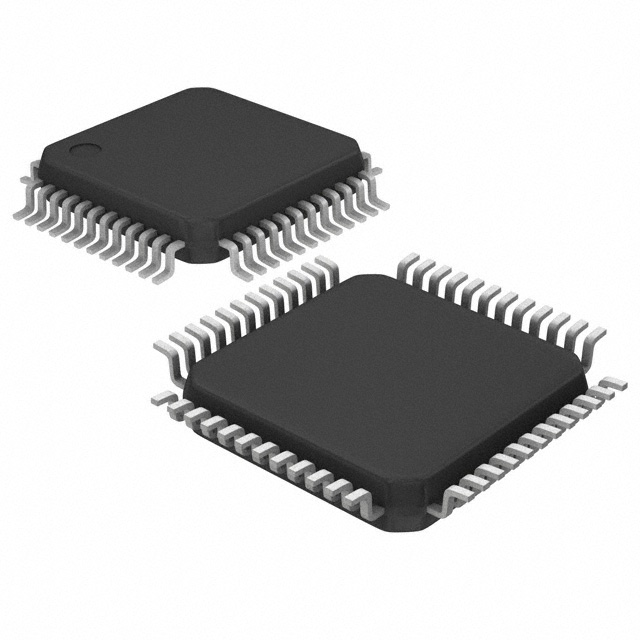
- Part No.:
- AD1985JST
- Manufacturer:
- Analog Devices Inc.
- Category:
- CODECS
- Package:
- 48-LQFP
- Datasheet:
-
 AD1985JST.pdf
- Description:
- IC CODEC STEREO 6-DAC 20B 48LQFP
- Quantity:
- Payment:

- Shipping:

Inventory:694
Please send an inquiry. Send us your inquiry, and we will respond immediately.
Product details
Overview
AD1985JST from Analog Devices is an AC '97 2.3-compliant stereo audio codec IC designed for PC motherboard and embedded audio subsystems. It integrates six 20-bit Σ-Δ DACs (supporting 5.1 surround), dual 16-bit Σ-Δ ADCs, S/PDIF output, integrated stereo headphone amplifiers, and a programmable parametric equalizer. It delivers >90 dB dynamic range and supports variable sample rates from 7 kHz to 96 kHz.
For engineers reviewing the AD1985JST datasheet, AD1985JST pinout, AD1985JST application, or AD1985JST equivalent, this page provides verified technical context, validated pin functions, confirmed AC '97 interface timing, real-world audio subsystem integration guidance, and direct alternative part comparisons with documented functional differences.
Technical Context
The AD1985JST implements a full AC '97 v2.3 digital interface with SYNC, BIT_CLK, SDATA_IN, and SDATA_OUT signals operating at 12.288 MHz. Its analog core includes independent 16-bit ADCs for stereo input and six 20-bit DACs-four for front/surround/center/LFE, plus two for headphone/mono outputs-with dedicated analog mixing, programmable gain amplifiers (0 dB to +22.5 dB), and A-weighted 90 dB DAC dynamic range.
It features an on-chip PLL for system clock generation from 24.576 MHz, 14.31818 MHz, or 48 MHz inputs; software-configurable jack sensing (JS0–JS3) with auto topology switching; EAPD control; and flexible power-down states enabling <0.12 mA standby current. All DACs support independent sample rate programming (7–48 kHz in 1 Hz steps; 96 kHz double-rate mode).
Key Specifications
| Parameter | Value and Actual Design Meaning |
|---|---|
| DAC Resolution | 20-bit Σ-Δ - enables high-fidelity 5.1 audio playback with >90 dB dynamic range |
| ADC Resolution | 16-bit Σ-Δ - supports CD-quality stereo recording with 84 dB A-weighted SNR |
| Sample Rate Range | 7 kHz to 96 kHz - covers voice telephony (7–8 kHz), CD (44.1 kHz), and DVD-Audio (96 kHz) |
| AC '97 Compliance | v2.3 - ensures interoperability with Intel chipset audio controllers and legacy BIOS drivers |
| Supply Voltages | AVDD = 4.5–5.5 V; DVDD = 2.97–3.63 V - separates analog/digital domains to minimize noise coupling |
| Power Dissipation | 465 mW typical at full operation - requires thermal design per θJA = 50.1°C/W (LQFP package) |
| S/PDIF Output | Dedicated SPDIF pin (Pin 48) - enables direct digital audio output to external receivers without additional transceivers |
Pinout & Package
AD1985JST is housed in a 48-lead LQFP package (7 mm × 7 mm, 0.5 mm pitch) with exposed thermal pad. Pin assignments follow AC '97 v2.3 slot logic and include dual analog/digital ground separation, dedicated voltage reference (VREF, VREFOUT), and four jack sense inputs (JS0–JS3) for automatic peripheral detection.
| Pin/Terminal | Circuit Role | Design Meaning |
|---|---|---|
| SDATA_IN (Pin 8) | AC Link Output Stream | Carries digitized audio data from codec to host controller; must be terminated per AC '97 spec |
| SDATA_OUT (Pin 5) | AC Link Input Stream | Receives PCM data from host; supports 20-bit slots for DAC channels and 16-bit slots for ADC paths |
| BIT_CLK (Pin 6) | Serial Bit Clock | 12.288 MHz clock synchronized to AC Link frame; jitter ≤2000 ps impacts DAC THD performance |
| SYNC (Pin 10) | Frame Sync | 48 kHz active-high signal marking start of AC Link frame; critical for slot alignment and channel mapping |
| EAPD (Pin 47) | External Amplifier Power Down | Open-drain output controlling Class-D or AB amplifier enable; reduces system power when headphones are unplugged |
| JS0–JS3 (Pins 12, 16, 17, 33) | Jack Sense Inputs | GPIOs detecting plug insertion; used with software to auto-switch between line-out, headphone, and mic-in topologies |
| VREFOUT (Pin 28) | Mic Bias Reference | Software-selectable 0 V / +2.25 V / +3.7 V output; powers electret microphones and reduces crosstalk in shared jacks |
| SPDIF (Pin 48) | S/PDIF Digital Audio Output | Direct CMOS-level S/PDIF stream compliant with IEC 60958; requires external 75 Ω termination |
Key Features
| Feature | Design Value |
|---|---|
| Integrated Parametric Equalizer | Configurable 5-band EQ with coefficient storage; enables real-time tonal correction without host CPU overhead |
| Advanced Jack Sensing | Four independent sense inputs with auto-topology switching; eliminates manual audio routing in docking stations and laptops |
| Variable Sample Rate DACs | Each DAC (front, surround, center/LFE, headphone) independently programmable from 7–48 kHz (1 Hz steps) or 96 kHz |
| Stereo Microphone Support | Dual MIC1/MIC2 inputs with selectable +10/+20/+30 dB preamp gain; enables noise-canceling headset integration |
| Software-Controlled Output Sharing | LOSEL/HPSEL bits dynamically reassign Line Out (Pins 35/36) and Headphone (Pins 39/41) pins for space-constrained layouts |
| Auto Down-Mix & Channel Spreading | Hardware-accelerated stereo-to-mono down-mix and mono-to-stereo spreading; reduces host processing load in VoIP applications |
Applications
| Desktop PC Audio Subsystem | Laptop Integrated Sound Card |
|---|---|
Use Scenario: Main audio codec on ATX motherboard, interfacing with Intel ICH southbridge via AC Link. IC Role / Device Role / Timing Role: Primary AC '97 v2.3 slave codec handling all analog I/O, sample rate conversion, and jack detection. Use Value: Eliminates need for discrete ADC/DAC pairs and analog switches; reduces BOM count by 7+ components versus discrete solution. |
Use Scenario: Embedded audio in space-constrained notebook platform with shared audio jack for headphones/microphone. IC Role / Device Role / Timing Role: Dual-role codec providing simultaneous headphone drive and stereo mic bias with auto-sensing. Use Value: VREFOUT software control (+2.25 V / 0 V) minimizes crosstalk during mic-in/headphone-out sharing, meeting HD Audio compatibility requirements. |
| Industrial Thin Client Terminal | Gaming Desktop Audio Enhancement |
Use Scenario: Fanless thin client requiring low-power audio for remote desktop and VoIP conferencing. IC Role / Device Role / Timing Role: Low-noise ADC path with +30 dB PGA gain captures clear speech; ADC+DAC power-down states cut idle power to 2.5 mA. Use Value: 80 dB SNR on MIC input and hardware mono down-mix enable intelligible telephony without DSP offload. |
Use Scenario: High-end gaming PC adding 5.1 surround and S/PDIF passthrough to AV receiver. IC Role / Device Role / Timing Role: Six independent DACs deliver discrete front/center/LFE/surround channels; SPDIF output feeds Dolby Digital encoder. Use Value: 90 dB DAC dynamic range and 100 dB interchannel crosstalk ensure precise spatial imaging for immersive gameplay audio. |
Equivalent & Alternatives
The following parts are listed as comparable options for similar audio codec applications.
| Alternative Part | Technical Difference | Application Difference | Selection Advice |
|---|---|---|---|
| Realtek ALC655 | 18-bit DACs, no integrated parametric EQ, fixed 48 kHz ADC/DAC rate, lacks S/PDIF output | Targeted at cost-sensitive mainstream desktops; no hardware down-mix or jack-sharing support | Choose for basic AC '97 compliance where EQ and flexible sample rates are unnecessary |
| Conexant CX20468 | 20-bit DACs, integrated jack sensing, but only 16-bit ADCs and no S/PDIF; supports HD Audio register map extension | Designed for HD Audio transition; requires updated driver stack and lacks double-rate 96 kHz mode | Prefer for platforms migrating toward HD Audio while retaining AC '97 physical layer compatibility |
Compared with ALC655 and CX20468, AD1985JST uniquely combines 20-bit DAC resolution, independent 7–96 kHz sample rate control per channel, integrated S/PDIF, and software-configurable VREFOUT-making it optimal for high-fidelity, multi-topology embedded audio where driver flexibility and analog integrity are critical.
Availability
AD1985JST is available at Aetrix Electronics and suitable for desktop motherboard designs, industrial thin clients, laptop audio subsystems, and gaming PC audio enhancement modules requiring stable component supply and long-term manufacturability.
Supply support for AD1985JST includes scheduled delivery planning, volume procurement assistance, BOM continuity management, traceable sourcing, and lifecycle availability coordination for OEM customers, industrial embedded developers, connected-device designers, and electronics production programs.
Manufacturer
Analog Devices is a global leader in high-performance analog, mixed-signal, and digital signal processing semiconductors, headquartered in Norwood, MA.
The AD1985JST belongs to Analog Devices' SoundMAX® AC '97 codec family, engineered specifically for PC and embedded audio systems demanding high SNR, flexible topology management, and seamless AC Link interoperability with Intel and VIA chipsets.
FAQ
What AC '97 revision does AD1985JST comply with, and why does it matter?
AD1985JST complies with AC '97 Revision 2.3, which mandates support for six-channel DACs, enhanced jack sensing, and extended power management states. This ensures full compatibility with Intel ICH4–ICH10 southbridges and guarantees correct slot allocation, reset timing, and EAPD behavior in production BIOS implementations-critical for avoiding audio initialization failures in mass-produced motherboards.
Does AD1985JST support true 5.1 surround output, and how is it implemented?
Yes, AD1985JST supports true 5.1 surround via six independent 20-bit DACs: two for front left/right, two for surround left/right, one for center, and one for LFE. These are mapped to dedicated analog outputs (Pins 35/36, 39/41, 31, 32) with individual volume control registers (0x36, 0x38) and independent sample rate programming-enabling simultaneous playback of discrete 5.1 content without down-mixing.
How does the AD1985JST handle microphone input sharing with headphone jacks?
AD1985JST uses VREFOUT (Pin 28) and jack sense inputs (JS0–JS3) to manage shared jacks. When stereo mic is detected, software sets VREFOUT to 0 V (via Register 0x76 D3–D2 = 11), reducing Center/LFE crosstalk to <−60 dB at 100 Hz. Combined with auto-topology switching, this enables single-jack headset support without external analog switches or layout compromises.
Can AD1985JST operate without an external crystal, and what clock options exist?
Yes, AD1985JST supports three clock modes: crystal oscillator (24.576 MHz on XTL_IN/XTL_OUT), reference clock (14.31818 MHz), or USB clock (48.000 MHz). The internal PLL locks to any of these, eliminating need for crystal in cost-sensitive or space-constrained designs-though crystal mode delivers lowest jitter (<750 ps) for highest THD performance.
What is the purpose of the LOSEL and HPSEL bits in Register 0x76?
LOSEL (Register 0x76 D5) and HPSEL (Register 0x76 D10) dynamically reassign analog output pins: LOSEL swaps Line Out (Pins 35/36) with Surround outputs; HPSEL routes headphone drive to Pins 39/41 instead of surround. This allows single PCB layout to support both desktop (line-out) and laptop (headphone-out) configurations without hardware changes-reducing NRE and inventory complexity.
AD1985JST Specifications
- Product attributes
- Attribute value
- Manufacturer:
- Analog Devices Inc.
- Series:
- SoundMAX®
- Package/Case:
- 48-LQFP
- Packaging:
- Bag
- Product Status:
- Obsolete
- Type:
- Audio Codec '97
- Data Interface:
- Serial
- Resolution (Bits):
- 16, 20 b
- Number of ADCs / DACs:
- 2 / 6
- Sigma Delta:
- No
- S/N Ratio, ADCs / DACs (db) Typ:
- -
- Dynamic Range, ADCs / DACs (db) Typ:
- 84 / 90
- Voltage - Supply, Analog:
- 4.5V ~ 5.5V
- Voltage - Supply, Digital:
- 2.97V ~ 3.63V
- Operating Temperature:
- 0°C ~ 70°C
- Grade:
- -
- Qualification:
- -
- Mounting Type:
- Surface Mount
- Supplier Device Package:
- 48-LQFP (7x7)
AD1985JST FAQ
1.How can I place an order for AD1985JST through Aetrix?
Please submit a Request for Quotation (RFQ) for AD1985JST on Aetrix. Our sales agent will provide a competitive quotation and guide you through the order confirmation once you accept the terms.
2.Are the price and stock information for AD1985JST reliable?
The price and inventory of AD1985JST are updated periodically and may fluctuate due to market conditions. Stock and pricing data are typically refreshed every 24 hours. Quotation validity for AD1985JST is usually 5 days.
3.What payment methods are accepted for AD1985JST?
We accept Wire Transfer, PayPal, Credit Card, Western Union, MoneyGram, and Escrow for AD1985JST transactions.
Note: Certain payment methods may incur a processing fee.
4.How is shipping managed for AD1985JST?
AD1985JST orders can be shipped via leading logistics carriers, including DHL, UPS, FedEx, TNT, or Registered Mail.
Once your AD1985JST order is processed, you will receive an email with the shipment details and tracking number.
Note: Tracking information may take up to 24 hours to appear. Express delivery typically takes 3–5 business days.
5.How can I obtain technical support or documentation for AD1985JST?
For technical support, including AD1985JST datasheets, pinout diagrams, or application guidance, please contact our engineering support team. They can provide detailed documentation and assistance for your AD1985JST requirements.
6.How does Aetrix verify that AD1985JST is sourced from the original manufacturer or authorized distributors?
All AD1985JST products on Aetrix are procured from qualified distributors and authorized channels. Our dedicated quality assurance team conducts strict verification, including traceability checks and, if necessary, third-party testing. This ensures that AD1985JST meets industry standards.
7.What is the process for return or replacement of AD1985JST?
All AD1985JST units undergo pre-shipment inspection (PSI). If there is an issue with AD1985JST, returns or replacements are accepted under the following conditions:
1.Quantity discrepancies, incorrect items, or visible external defects (such as breakage or corrosion), acknowledged by Aetrix.
2.The issue is reported within 90 days of delivery.
3.The AD1985JST part is unused and in its original packaging.
Return procedure for AD1985JST:
1.Submit a request within 90 days.
2.Obtain a Return Material Authorization (RMA) from Aetrix.
AD1985JST Tags
-
NAU88C22YG
Nuvoton Technology Corporation
-
TLV320AIC3100IRHBR
Texas Instruments
-
DA7212-01UM2
Renesas Electronics Corporation
-
NAU8810YG
Nuvoton Technology Corporation
-
DA7218-00U32
Renesas Electronics Corporation
-
CMX655DQ6-TR1K
CML Micro
-
SGTL5000XNLA3
NXP Semiconductors
-
TLV320AIC3104IRHBR
Texas Instruments
-
MAX9867EWV+T
Analog Devices Inc./Maxim Integrated
-
MAX9860ETG+T
Analog Devices Inc./Maxim Integrated
-
TLV320AIC3106IRGZR
Texas Instruments
-
SGTL5000XNLA3R2
NXP Semiconductors
Tech Hub

A practical engineering guide to 3.3V and 5V logic compatibility, input thresholds, resistor dividers, translator ICs, MOSFET level shifting, I2C pull-ups, timing limits and power-sequencing risks.

The 74HC595 uses push-pull logic outputs, while the TPIC6B595 uses 50 V open-drain DMOS sinks for higher-power loads. This guide compares timing, current limits, 3.3 V interfacing, load wiring, thermal…

The 74HC595 converts serial data into eight stable parallel outputs. This guide covers pin functions, shift and storage timing, OE and MR behavior, drive-current limits, cascading, voltage compatibilit…

A technical comparison of level-sensitive latches and edge-triggered flip-flops, covering timing windows, setup and hold limits, master–slave operation, time borrowing, race-through, HDL inference and…

A D latch stores one bit while Enable controls when data can pass. This reference covers gate-level operation, truth tables, transparency, setup and hold timing, LE versus OE, common ICs and practical …

An SR latch stores one bit through cross-coupled feedback. This engineering reference covers NOR and NAND implementations, truth tables, forbidden-state recovery, gated operation, switch debouncing, fa…

Latch circuits retain one bit through feedback. This technical reference covers SR and D latches, truth tables, transparency, timing limits, latch-versus-flip-flop behavior, applications and common log…

An engineering guide to LED driver operation, constant-current and constant-voltage outputs, linear and switching topologies, dimming, IC selection, calculations, replacement compatibility, and fault c…

Operational amplifier guide covering op amp basics, feedback, ideal vs real op amps, common configurations, buffer circuits, offset, bias current, gain-bandwidth, slew rate, rail-to-rail limits and sel…

Jumper cables guide covering safe connection order, red and black clamp placement, final ground connection, cable gauge, length, clamp quality, copper vs CCA cables, jump starter comparison and battery…


