
 My Inquiry
 My Account


Analog Devices Inc. AD5220BNZ10
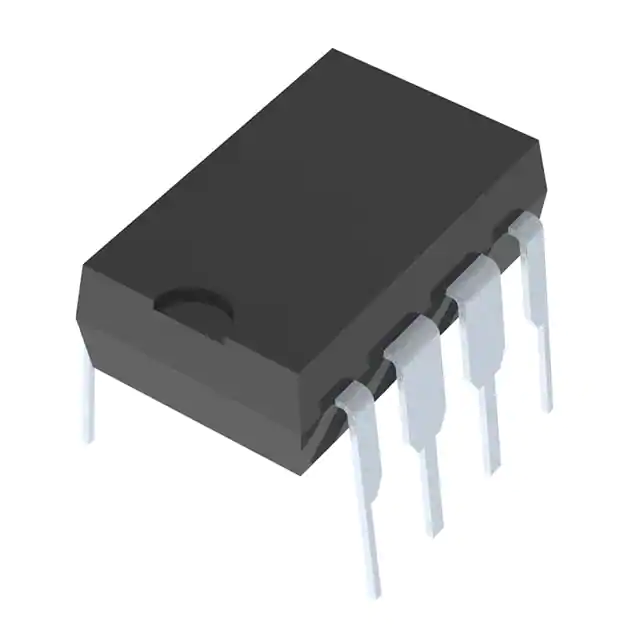
- Part No.:
- AD5220BNZ10
- Manufacturer:
- Analog Devices Inc.
- Category:
- Digital Potentiometers
- Package:
- 8-DIP (0.300", 7.62mm)
- Datasheet:
-
 AD5220BNZ10.pdf
- Description:
- IC DGTL POT 10KOHM 128TAP 8DIP
- Quantity:
- Payment:

- Shipping:

Inventory:486
Please send an inquiry. Send us your inquiry, and we will respond immediately.
Product details
Overview
AD5220BNZ10 from Analog Devices is a 128-position, single-channel digital potentiometer in PDIP-8 package with 10 kΩ end-to-end resistance, ±30% nominal tolerance, and 7-bit resolution. It operates from 2.7 V to 5.5 V, draws as low as 15 µA supply current, and supports rheostat or potentiometer divider modes for precision gain/offset adjustment in analog signal chains.
For engineers reviewing the AD5220BNZ10 datasheet, AD5220BNZ10 pinout, AD5220BNZ10 application, or AD5220BNZ10 equivalent, this page delivers verified electrical specs, true pin functionality, real-world use cases in sensor calibration and power supply trimming, and two validated alternative parts with documented technical and application differences.
Technical Context
The AD5220BNZ10 implements a resistor string architecture with wiper decode logic and a 7-bit up/down counter, initialized to code 40H (mid-scale) at power-on reset. Its three-wire serial interface (CLK, CS, U/D) uses negative-edge clocking and requires external debounce for mechanical inputs.
It supports both rheostat mode (A–W or B–W variable resistance) and potentiometer divider mode (A–B voltage division), with temperature coefficients of 800 ppm/°C (rheostat) and 20 ppm/°C (divider), enabling stable performance across –40°C to +85°C.
Key Specifications
| Parameter | Value and Actual Design Meaning |
|---|---|
| End-to-End Resistance | 10 kΩ ±30% - sets full-scale analog range and load capability in gain control circuits |
| Resolution | 7 bits (128 positions) - provides 0.78% step resolution for fine-tuning bias points or reference voltages |
| Supply Voltage Range | 2.7 V to 5.5 V - compatible with both 3.3 V and 5 V logic/system rails without level shifting |
| Supply Current | 15 µA typ. at +5 V - enables ultra-low-power operation in battery-backed or energy-constrained systems |
| Wiper Resistance | 40 Ω to 100 Ω - contributes directly to total output impedance in rheostat configurations |
| Temperature Coefficient | 20 ppm/°C (divider mode) - ensures <0.1% full-scale drift over –40°C to +85°C in voltage-ratio applications |
| Bandwidth (RAB = 10 kΩ) | 650 kHz - supports audio-frequency and fast-settling DC bias adjustments without phase lag |
Pinout & Package
AD5220BNZ10 is housed in an 8-lead plastic dual-in-line package (PDIP, N-8), compliant with JEDEC MS-001, with 0.300-inch body width and 0.100-inch lead pitch. Thermal resistance θJA is 103°C/W.
| Pin/Terminal | Circuit Role | Design Meaning |
|---|---|---|
| 1 CLK | Serial clock input | Negative-edge triggered; controls wiper position increment/decrement timing; requires external debounce for switch inputs |
| 2 U/D | Direction control | Logic high increments wiper toward Terminal A; logic low decrements toward Terminal B |
| 3 A1 | Resistor terminal A | Fixed end of resistor string; tied to VDD in divider mode or used as one end in rheostat mode |
| 4 GND | Analog/digital ground | Common reference for all analog terminals (A, B, W) and digital inputs; must be low-impedance |
| 5 W1 | Wiper terminal | Digitally controlled tap point; output node in divider mode; adjustable resistance node in rheostat mode |
| 6 B1 | Resistor terminal B | Fixed end of resistor string; tied to GND in divider mode or used as one end in rheostat mode |
| 7 CS | Chip select | Active-low enable; must be low to accept CLK pulses; holds wiper position when high |
| 8 VDD | Positive supply | Powers internal logic and resistor string; also serves as analog reference in divider mode when A = VDD, B = GND |
Key Features
| Feature | Design Value |
|---|---|
| Zero-power initialization | Power-on reset sets wiper to mid-scale (code 40H), ensuring known start-up resistance without host controller intervention |
| No volatile memory required | Wiper position retained only while powered; eliminates EEPROM wear-out, write-cycle delays, and data corruption risks |
| Low THD + noise | 0.002% THD at 1 kHz - preserves signal fidelity in audio and precision instrumentation paths |
| ESD-protected analog pins | Robust Zener-based protection on A, B, W terminals - withstands >4 kV HBM per JEDEC JS-001 without degradation |
| Monotonic operation | Guaranteed ±1 LSB DNL - ensures no code skipping or output reversal during stepping sequences |
Applications
| Instrumentation Calibration | Sensor Signal Conditioning |
|---|---|
Use Scenario: Adjusting zero and span offsets in 4–20 mA transmitter front-ends before final calibration. IC Role / Device Role / Timing Role: AD5220BNZ10 acts as a digitally programmable trimmer replacing mechanical pots, configured in potentiometer divider mode with A = +5 V, B = GND. Use Value: Enables factory or field recalibration via microcontroller commands, eliminating manual potentiometer adjustment and reducing test time by >60%. | Use Scenario: Scaling thermistor or RTD bridge outputs to match ADC input range in environmental monitoring nodes. IC Role / Device Role / Timing Role: AD5220BNZ10 functions as a programmable gain stage in noninverting op-amp configuration, using A and W terminals. Use Value: Compensates for sensor unit-to-unit variation and aging drift with 7-bit resolution, maintaining ±0.25% measurement accuracy over temperature. |
| DC Power Supply Trimming | Audio Volume Control |
Use Scenario: Fine-tuning output voltage of isolated DC-DC converters in telecom power modules. IC Role / Device Role / Timing Role: AD5220BNZ10 operates in rheostat mode between feedback node and error amplifier input, adjusting regulation setpoint. Use Value: Allows post-manufacturing voltage binning and dynamic margin testing without hardware changes or soldering. | Use Scenario: Implementing mute-capable, click-free volume control in portable audio DAC outputs. IC Role / Device Role / Timing Role: AD5220BNZ10 serves as a grounded-terminal potentiometer (B = GND), with A connected to DAC output and W driving headphone amp input. Use Value: Achieves <–70 dB channel separation and <0.002% THD across full volume range, meeting IEC 60268-3 requirements. |
Equivalent & Alternatives
The following parts are listed as comparable options for similar digital potentiometer applications.
| Alternative Part | Technical Difference | Application Difference | Selection Advice |
|---|---|---|---|
| AD5222BRZ10 | Dual-channel, same 10 kΩ, 7-bit, SOIC-14 package; higher IDD (50 µA typ.) | Supports stereo audio or dual-sensor channels; not pin-compatible with AD5220BNZ10 | Select when needing two independent pots on one board without increasing footprint count |
| MCP41010-I/P | Single-channel, 10 kΩ, 8-bit (256-step), PDIP-8; SPI interface; 2.7–5.5 V; 1 mA max IDD | Higher resolution but higher power; requires SPI master instead of simple up/down logic | Choose when finer adjustment granularity is critical and microcontroller has SPI resources available |
Compared with AD5220BNZ10, AD5222BRZ10 adds channel count at the cost of layout compatibility and power efficiency, while MCP41010-I/P trades simplicity and ultra-low current for resolution and interface complexity-making AD5220BNZ10 optimal for cost-sensitive, low-power, single-channel trimming where minimal firmware overhead is essential.
Availability
AD5220BNZ10 is available at Aetrix Electronics and suitable for instrumentation calibration, sensor signal conditioning, DC power supply trimming, and audio volume control requiring stable component supply across industrial, medical, and test equipment lifecycles.
Supply support for AD5220BNZ10 includes scheduled delivery planning, volume procurement assistance, BOM continuity management, traceable sourcing, and lifecycle availability coordination for OEM customers, industrial embedded developers, connected-device designers, and electronics production programs.
Manufacturer
Analog Devices, Inc. is a global leader in high-performance analog, mixed-signal, and digital signal processing semiconductors, founded in 1965 and headquartered in Wilmington, MA.
The AD5220 belongs to Analog Devices' precision digital potentiometer product line, designed specifically for replacing mechanical trimmers in industrial control, medical instrumentation, and communications infrastructure where reliability, temperature stability, and long-term calibration retention are critical.
FAQ
What is the power-on wiper position of the AD5220BNZ10?
The AD5220BNZ10 powers on with its wiper at mid-scale (code 40H), resulting in approximately equal resistances RWA and RWB. This behavior is guaranteed by internal POR circuitry and does not require external initialization. The AD5220BNZ10 maintains this state until the first valid CLK pulse is applied with CS low and U/D asserted.
Can the AD5220BNZ10 operate with a 3.3 V supply?
Yes, the AD5220BNZ10 fully supports 3.3 V operation: its supply voltage range is 2.7 V to 5.5 V, and all specifications-including logic thresholds (VIH = 2.1 V min, VIL = 0.6 V max), supply current (15–40 µA), and bandwidth-are guaranteed across this range. The AD5220BNZ10 delivers identical 7-bit resolution and monotonicity at 3.3 V as at 5 V.
Does the AD5220BNZ10 have nonvolatile memory?
No, the AD5220BNZ10 does not include EEPROM or flash memory. Wiper position is volatile and resets to code 40H at each power cycle. This design eliminates write endurance limits, data retention concerns, and programming latency-making the AD5220BNZ10 ideal for applications where settings are reloaded by host firmware on startup.
What is the maximum current rating for the wiper terminal of the AD5220BNZ10?
The AD5220BNZ10 wiper terminal is rated for a maximum continuous current of ±20 mA between any two terminals (A–W, B–W, or A–B), per absolute maximum ratings. However, Analog Devices recommends limiting wiper current to ≤5 mA in direct-contact rheostat mode to prevent contact degradation over time. The AD5220BNZ10's 40–100 Ω wiper resistance helps enforce this limit under typical bias conditions.
Is the AD5220BNZ10 RoHS compliant?
Yes, the AD5220BNZ10 is RoHS compliant, as indicated by the "Z" suffix in its part number per Analog Devices' ordering guide. It meets EU Directive 2011/65/EU and contains no lead, mercury, cadmium, hexavalent chromium, polybrominated biphenyls (PBB), or polybrominated diphenyl ethers (PBDE). The AD5220BNZ10 is also qualified to JEDEC J-STD-020 moisture sensitivity level 1.
AD5220BNZ10 Specifications
- Product attributes
- Attribute value
- Manufacturer:
- Analog Devices Inc.
- Series:
- -
- Package/Case:
- 8-DIP (0.300", 7.62mm)
- Packaging:
- Tube
- Product Status:
- Active
- Programmable:
- Not Verified
- Taper:
- Linear
- Configuration:
- Potentiometer
- Number of Circuits:
- 1
- Number of Taps:
- 128
- Resistance (Ohms):
- 10k
- Interface:
- Up/Down (U/D, CS)
- Memory Type:
- Volatile
- Voltage - Supply:
- 2.7V ~ 5.5V
- Features:
- -
- Tolerance:
- ±30%
- Temperature Coefficient (Typ):
- 800ppm/°C
- Mounting Type:
- Through Hole
- Grade:
- -
- Qualification:
- -
- Supplier Device Package:
- 8-PDIP
- Operating Temperature:
- -40°C ~ 85°C
- Resistance - Wiper (Ohms) (Typ):
- 40
AD5220BNZ10 FAQ
1.How can I place an order for AD5220BNZ10 through Aetrix?
Please submit a Request for Quotation (RFQ) for AD5220BNZ10 on Aetrix. Our sales agent will provide a competitive quotation and guide you through the order confirmation once you accept the terms.
2.Are the price and stock information for AD5220BNZ10 reliable?
The price and inventory of AD5220BNZ10 are updated periodically and may fluctuate due to market conditions. Stock and pricing data are typically refreshed every 24 hours. Quotation validity for AD5220BNZ10 is usually 5 days.
3.What payment methods are accepted for AD5220BNZ10?
We accept Wire Transfer, PayPal, Credit Card, Western Union, MoneyGram, and Escrow for AD5220BNZ10 transactions.
Note: Certain payment methods may incur a processing fee.
4.How is shipping managed for AD5220BNZ10?
AD5220BNZ10 orders can be shipped via leading logistics carriers, including DHL, UPS, FedEx, TNT, or Registered Mail.
Once your AD5220BNZ10 order is processed, you will receive an email with the shipment details and tracking number.
Note: Tracking information may take up to 24 hours to appear. Express delivery typically takes 3–5 business days.
5.How can I obtain technical support or documentation for AD5220BNZ10?
For technical support, including AD5220BNZ10 datasheets, pinout diagrams, or application guidance, please contact our engineering support team. They can provide detailed documentation and assistance for your AD5220BNZ10 requirements.
6.How does Aetrix verify that AD5220BNZ10 is sourced from the original manufacturer or authorized distributors?
All AD5220BNZ10 products on Aetrix are procured from qualified distributors and authorized channels. Our dedicated quality assurance team conducts strict verification, including traceability checks and, if necessary, third-party testing. This ensures that AD5220BNZ10 meets industry standards.
7.What is the process for return or replacement of AD5220BNZ10?
All AD5220BNZ10 units undergo pre-shipment inspection (PSI). If there is an issue with AD5220BNZ10, returns or replacements are accepted under the following conditions:
1.Quantity discrepancies, incorrect items, or visible external defects (such as breakage or corrosion), acknowledged by Aetrix.
2.The issue is reported within 90 days of delivery.
3.The AD5220BNZ10 part is unused and in its original packaging.
Return procedure for AD5220BNZ10:
1.Submit a request within 90 days.
2.Obtain a Return Material Authorization (RMA) from Aetrix.
AD5220BNZ10 Tags
-
MCP4018T-103E/LT
Microchip Technology
-
MCP4018T-503E/LT
Microchip Technology

-
MCP4011T-103E/SN
Microchip Technology
-
MCP4018T-104E/LT
Microchip Technology
-
MCP4017T-503E/LT
Microchip Technology
-
MCP4018T-502E/LT
Microchip Technology
-
MCP4017T-103E/LT
Microchip Technology

-
MCP4531T-103E/MF
Microchip Technology
-
MCP4021T-202E/SN
Microchip Technology

-
MCP4023T-103E/CH
Microchip Technology
-
MCP4022T-503E/CH
Microchip Technology
-
MCP4551T-502E/MS
Microchip Technology
Tech Hub

A practical engineering guide to 3.3V and 5V logic compatibility, input thresholds, resistor dividers, translator ICs, MOSFET level shifting, I2C pull-ups, timing limits and power-sequencing risks.

The 74HC595 uses push-pull logic outputs, while the TPIC6B595 uses 50 V open-drain DMOS sinks for higher-power loads. This guide compares timing, current limits, 3.3 V interfacing, load wiring, thermal…

The 74HC595 converts serial data into eight stable parallel outputs. This guide covers pin functions, shift and storage timing, OE and MR behavior, drive-current limits, cascading, voltage compatibilit…

A technical comparison of level-sensitive latches and edge-triggered flip-flops, covering timing windows, setup and hold limits, master–slave operation, time borrowing, race-through, HDL inference and…

A D latch stores one bit while Enable controls when data can pass. This reference covers gate-level operation, truth tables, transparency, setup and hold timing, LE versus OE, common ICs and practical …

An SR latch stores one bit through cross-coupled feedback. This engineering reference covers NOR and NAND implementations, truth tables, forbidden-state recovery, gated operation, switch debouncing, fa…

Latch circuits retain one bit through feedback. This technical reference covers SR and D latches, truth tables, transparency, timing limits, latch-versus-flip-flop behavior, applications and common log…

An engineering guide to LED driver operation, constant-current and constant-voltage outputs, linear and switching topologies, dimming, IC selection, calculations, replacement compatibility, and fault c…

Operational amplifier guide covering op amp basics, feedback, ideal vs real op amps, common configurations, buffer circuits, offset, bias current, gain-bandwidth, slew rate, rail-to-rail limits and sel…

Jumper cables guide covering safe connection order, red and black clamp placement, final ground connection, cable gauge, length, clamp quality, copper vs CCA cables, jump starter comparison and battery…


