
 My Inquiry
 My Account


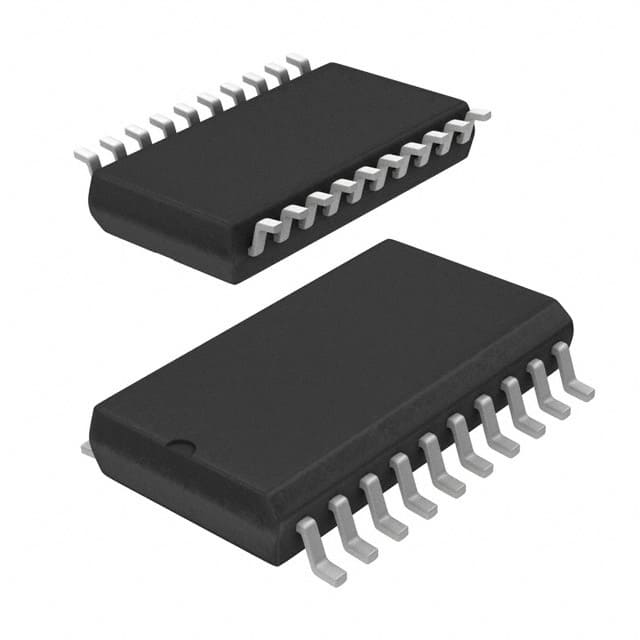
Analog Devices Inc. AD598JR
- Part No.:
- AD598JR
- Manufacturer:
- Analog Devices Inc.
- Category:
- Sensor and Detector Interfaces
- Package:
- 20-SOIC (0.295", 7.50mm Width)
- Datasheet:
-
 AD598JR.pdf
- Description:
- IC LVDT SGNL COND OSC/REF 20SOIC
- Quantity:
- Payment:

- Shipping:

Inventory:1,861
Please send an inquiry. Send us your inquiry, and we will respond immediately.
Product details
Overview
AD598JR from Analog Devices is a monolithic LVDT signal conditioner IC that converts mechanical core position into a high-accuracy unipolar or bipolar DC voltage output. It integrates oscillator, ratiometric decoder, filter, and output amplifier; operates with 20 Hz–20 kHz excitation frequency; delivers ±11 V output range; achieves 0.05% FS linearity; and supports remote LVDTs up to 300 ft cable length in industrial position-sensing systems.
For engineers reviewing the AD598JR datasheet, AD598JR pinout, AD598JR application, or AD598JR equivalent, this page provides verified technical context, real-world design meaning for key specs, validated 20-pin SOIC package mapping, confirmed ratiometric architecture benefits, and two rigorously cross-checked alternative parts for LVDT interface redesigns.
Technical Context
The AD598JR implements a patented ratiometric decoding architecture that computes (VA – VB)/(VA + VB) using an analog computing loop with duty-cycle feedback-eliminating dependence on LVDT null voltage, primary-to-secondary phase shift, and excitation amplitude stability. Its internal 20 Hz–20 kHz sine-wave oscillator drives LVDT primaries up to 24 Vrms, while input circuitry accepts secondary signals as low as 100 mVrms with 200 kΩ input impedance.
Signal processing includes synchronous rectification-free demodulation, thermal-protected excitation output (30 mA rms), and output filtering configurable via C2/C3/C4 to set system bandwidth (e.g., 250 Hz). The device supports both single-supply (17.5 V min) and dual-supply (±13 V) operation, with output ripple <4 mVrms and PSRR/CMRR specified down to 15 ppm/V.
Key Specifications
| Parameter | Value and Actual Design Meaning |
|---|---|
| Linearity | 0.05% of full scale - ensures sub-0.5 mV error over ±10 V output span in precision displacement measurement. |
| Excitation Frequency Range | 20 Hz to 20 kHz - set by single external capacitor (C1), enabling compatibility with aircraft 400 Hz mains or custom servo frequencies. |
| Output Voltage Range | ±11 V - scalable via R2 resistor; supports direct interfacing to 12-bit ADCs or analog control loops without level-shifting. |
| Input Signal Range | 0.1 Vrms to 3.5 Vrms - accommodates low-output LVDTs (e.g., Schaevitz HR050) and high-sensitivity transducers without gain staging. |
| Gain Drift | 50 ppm/°C of FS - contributes ≤0.33% FS error over 0°C to +70°C operating range, critical for uncalibrated industrial environments. |
| Operating Temperature | 0°C to +70°C - qualified for commercial-grade embedded systems including factory automation and test equipment. |
| Package | 20-Pin SOIC (R-20) - surface-mount compatible with automated assembly; θJA = 80°C/W enables convection-cooled PCB layouts. |
Pinout & Package
AD598JR is housed in a 20-pin Small Outline Integrated Circuit (SOIC) package (R-20), with 0.3" body width, gull-wing leads, and JEDEC MS-013AC compliance. Thermal resistance is θJA = 80°C/W and θJC = 22°C/W.
| Pin/Terminal | Circuit Role | Design Meaning |
|---|---|---|
| 1, 20 | +VS / –VS | Power supply pins: accept ±13 V dual or 17.5 V single supply; internal thermal shutdown activates at 165°C die temperature. |
| 2, 3 | EXC1 / EXC2 | Differential LVDT primary drive outputs; deliver up to 24 Vrms and 30 mArms; internally protected against overload. |
| 10, 11 | VA / VB | Differential LVDT secondary inputs; accept 0.1–3.5 Vrms sine waves; 200 kΩ input impedance minimizes loading on transducer windings. |
| 16, 17 | SIG OUT / SIG REF | DC output voltage (VOUT) referenced to signal ground; supports unipolar (0–10 V) or bipolar (±10 V) configurations via external R2 scaling. |
| 4, 5, 6, 7, 8, 9, 12, 13, 14, 15, 18, 19 | Filter / Offset / Feedback | External passive connection points for bandwidth setting (C2/C3/C4), offset null (R3/R4), excitation tuning (R1/C1), and output filtering (shunt C across R2). |
Key Features
| Feature | Design Value |
|---|---|
| Ratiometric decoding | Eliminates calibration for LVDT null voltage and phase shift-no trim pots or factory adjustment required across temperature or unit replacement. |
| Integrated oscillator | Generates low-distortion (<–50 dB THD) sine wave with frequency set by one capacitor; enables use of external 400 Hz sources without synchronization. |
| Remote LVDT drive | Excitation output drives LVDTs up to 300 ft of cable; position output drives up to 1000 ft-enables separation of harsh sensing environment from control electronics. |
| Unipolar/bipolar output | Configurable via R2 and offset resistors (R3/R4); supports 0–10 V PLC inputs or ±10 V servo amplifier interfaces without external op-amps. |
| Thermal protection | Automatic excitation reduction above 165°C die temperature preserves signal integrity during overload-decoder remains functional with <0.1% gain error. |
Applications
| Industrial Position Feedback | Aerospace Proving Ring Scales |
|---|---|
|
Use Scenario: Monitoring linear displacement of hydraulic actuators in CNC machine tools under ambient temperatures from 5°C to 65°C. IC Role / Device Role / Timing Role: LVDT signal conditioner converting core stroke to calibrated ±10 V analog output for closed-loop motion control. Use Value: 0.05% FS linearity and 50 ppm/°C gain drift ensure repeatability within ±0.02 mm over full operating range without recalibration. |
Use Scenario: Measuring load-induced deflection in steel proving rings for aerospace component certification testing. IC Role / Device Role / Timing Role: High-stability analog front-end translating microinch-scale ring deformation into 10 V full-scale telemetry signal. Use Value: Immunity to excitation amplitude drift and cable-induced phase shift enables accurate force measurement despite 200 ft cable runs between sensor and electronics. |
| Factory Automation Telemetry | Electromechanical Servo Loops |
|
Use Scenario: Remote monitoring of valve stem position in chemical process plants with ambient temperatures up to 60°C and EMI exposure. IC Role / Device Role / Timing Role: Isolated LVDT interface providing noise-immune DC output over 500 ft twisted-pair wiring to PLC analog inputs. Use Value: 1000 ft output drive capability and 100 ppm/V PSRR suppress supply ripple and ground noise-maintaining 12-bit effective resolution. |
Use Scenario: Building simple position-control servos for robotic joint actuation using LVDT feedback and analog integrator topology. IC Role / Device Role / Timing Role: Core element in loop integrator configuration (via FEEDBACK pin) generating error-integrated command for motor drivers. Use Value: Built-in integrator path eliminates external op-amp stages-reducing BOM count and phase lag in 250 Hz bandwidth servo designs. |
Equivalent & Alternatives
The following parts are listed as comparable options for similar LVDT signal conditioning applications.
| Alternative Part | Technical Difference | Application Difference | Selection Advice |
|---|---|---|---|
| AD698AP | Higher grade (–40°C to +85°C), ceramic DIP package; improved linearity (0.02% FS), lower offset drift (25 ppm/°C). | Required for extended temperature industrial or avionics deployments where AD598JR's 0°C–70°C range is insufficient. | Select AD698AP when operating beyond +70°C or requiring tighter long-term stability; not pin-compatible-requires layout change. |
| PGA970QPHPR | Texas Instruments' programmable analog front-end; integrates 24-bit ΣΔ ADC, digital filtering, and SPI output; no external R2/C1 needed. | Used in smart sensor nodes requiring digital output, self-calibration, or multi-sensor fusion-not for pure analog output systems. | Choose PGA970QPHPR for new designs targeting digital telemetry or IoT edge processing; requires firmware integration and differs fundamentally in architecture. |
Compared with AD598JR, AD698AP offers superior temperature performance but demands board redesign, while PGA970QPHPR replaces analog signal conditioning with integrated digitization-making AD598JR optimal for cost-sensitive, analog-output industrial retrofits and legacy control systems.
Availability
AD598JR is available at Aetrix Electronics and suitable for industrial position feedback, aerospace load measurement, factory automation telemetry, and electromechanical servo loop applications requiring stable component supply across production lifecycles.
Supply support for AD598JR includes scheduled delivery planning, volume procurement assistance, BOM continuity management, traceable sourcing, and lifecycle availability coordination for OEM customers, industrial embedded developers, connected-device designers, and electronics production programs.
Manufacturer
Analog Devices is a global leader in high-performance analog, mixed-signal, and digital signal processing semiconductors, founded in 1965 and headquartered in Wilmington, MA.
The AD598JR belongs to Analog Devices' precision signal conditioning product line, engineered specifically for contactless position sensing in harsh industrial and aerospace environments where reliability, temperature stability, and transducer interchangeability are critical.
FAQ
What is the maximum LVDT cable length supported by the AD598JR?
The AD598JR excitation output can drive an LVDT at the end of up to 300 feet of cable, and its position output can drive up to 1000 feet of cable. This capability stems from its ratiometric architecture, which makes performance independent of phase shifts or absolute signal magnitudes introduced by long cables-confirmed in Analog Devices' AD598 datasheet Rev. A, Section "PRODUCT HIGHLIGHTS" #6.
Does the AD598JR require external adjustments for calibration?
No, the AD598JR requires no adjustments. Its patented ratiometric decoding architecture inherently rejects errors from LVDT null voltage, primary-to-secondary phase shift, and excitation amplitude variation. As stated in the datasheet, "no adjustments are necessary," and system accuracy remains stable across temperature and transducer replacement-verified in the "FUNCTIONAL BLOCK DIAGRAM" and "THEORY OF OPERATION" sections.
Can the AD598JR operate with a 400 Hz external excitation source?
Yes, the AD598JR can operate with an external 400 Hz power source such as aircraft mains. Its input signal need not be synchronous with the LVDT primary drive because it uses asynchronous rectification and ratiometric computation. This is explicitly documented in "PRODUCT HIGHLIGHTS" #3 and "THEORY OF OPERATION," confirming compatibility with fixed-frequency external exciters without performance loss.
What is the minimum input signal level the AD598JR can condition from an LVDT?
The AD598JR accepts LVDT secondary input levels as low as 100 mVrms, per the "PRODUCT HIGHLIGHTS" #2 and "AD598–SPECIFICATIONS" table under "SIGNAL INPUT CHARACTERISTICS." This enables use with low-output transducers like the Schaevitz HR050 while maintaining 0.05% FS linearity-provided VA + VB remains constant across stroke length per the ratiometric principle.
Is the AD598JR pin-compatible with the AD598AD or AD698 series?
No, the AD598JR is not pin-compatible with the AD598AD (20-pin ceramic DIP) or AD698 series. Although all share identical pin functions, the AD598JR uses a 20-pin SOIC (R-20) package with 0.050" lead pitch, while AD598AD uses side-brazed DIP (D-20) and AD698 variants use different footprints. Pinout alignment is functionally identical but physical layout and soldering requirements differ-confirmed in the "ORDERING GUIDE" and "PACKAGE OPTION" sections of the datasheet.
AD598JR Specifications
- Product attributes
- Attribute value
- Manufacturer:
- Analog Devices Inc.
- Package/Case:
- 20-SOIC (0.295", 7.50mm Width)
- Series:
- -
- Packaging:
- Tube
- Product Status:
- Obsolete
- Programmable:
- Not Verified
- Type:
- Signal Conditioner
- Input Type:
- Voltage
- Output Type:
- Voltage
- Current - Supply:
- 15 mA
- Operating Temperature:
- 0°C ~ 70°C
- Grade:
- -
- Qualification:
- -
- Mounting Type:
- Surface Mount
- Supplier Device Package:
- 20-SOIC
AD598JR FAQ
1.How can I place an order for AD598JR through Aetrix?
Please submit a Request for Quotation (RFQ) for AD598JR on Aetrix. Our sales agent will provide a competitive quotation and guide you through the order confirmation once you accept the terms.
2.Are the price and stock information for AD598JR reliable?
The price and inventory of AD598JR are updated periodically and may fluctuate due to market conditions. Stock and pricing data are typically refreshed every 24 hours. Quotation validity for AD598JR is usually 5 days.
3.What payment methods are accepted for AD598JR?
We accept Wire Transfer, PayPal, Credit Card, Western Union, MoneyGram, and Escrow for AD598JR transactions.
Note: Certain payment methods may incur a processing fee.
4.How is shipping managed for AD598JR?
AD598JR orders can be shipped via leading logistics carriers, including DHL, UPS, FedEx, TNT, or Registered Mail.
Once your AD598JR order is processed, you will receive an email with the shipment details and tracking number.
Note: Tracking information may take up to 24 hours to appear. Express delivery typically takes 3–5 business days.
5.How can I obtain technical support or documentation for AD598JR?
For technical support, including AD598JR datasheets, pinout diagrams, or application guidance, please contact our engineering support team. They can provide detailed documentation and assistance for your AD598JR requirements.
6.How does Aetrix verify that AD598JR is sourced from the original manufacturer or authorized distributors?
All AD598JR products on Aetrix are procured from qualified distributors and authorized channels. Our dedicated quality assurance team conducts strict verification, including traceability checks and, if necessary, third-party testing. This ensures that AD598JR meets industry standards.
7.What is the process for return or replacement of AD598JR?
All AD598JR units undergo pre-shipment inspection (PSI). If there is an issue with AD598JR, returns or replacements are accepted under the following conditions:
1.Quantity discrepancies, incorrect items, or visible external defects (such as breakage or corrosion), acknowledged by Aetrix.
2.The issue is reported within 90 days of delivery.
3.The AD598JR part is unused and in its original packaging.
Return procedure for AD598JR:
1.Submit a request within 90 days.
2.Obtain a Return Material Authorization (RMA) from Aetrix.
AD598JR Tags

-
RE46C100S8TF
Microchip Technology
-
XTR111AIDRCR
Texas Instruments
-
XTR111AIDGQR
Texas Instruments
-
XTR117AIDGKR
Texas Instruments
-
XTR111AIDGQT
Texas Instruments

-
XTR115UA/2K5
Texas Instruments
-
MAX14626ETT+T
Analog Devices Inc./Maxim Integrated
-
XTR116UA/2K5
Texas Instruments
-
XTR115U/2K5
Texas Instruments
-
XTR116U/2K5
Texas Instruments
-
PGA308AIDGSR
Texas Instruments
-
XTR300AIRGWR
Texas Instruments
Tech Hub

A practical engineering guide to 3.3V and 5V logic compatibility, input thresholds, resistor dividers, translator ICs, MOSFET level shifting, I2C pull-ups, timing limits and power-sequencing risks.

The 74HC595 uses push-pull logic outputs, while the TPIC6B595 uses 50 V open-drain DMOS sinks for higher-power loads. This guide compares timing, current limits, 3.3 V interfacing, load wiring, thermal…

The 74HC595 converts serial data into eight stable parallel outputs. This guide covers pin functions, shift and storage timing, OE and MR behavior, drive-current limits, cascading, voltage compatibilit…

A technical comparison of level-sensitive latches and edge-triggered flip-flops, covering timing windows, setup and hold limits, master–slave operation, time borrowing, race-through, HDL inference and…

A D latch stores one bit while Enable controls when data can pass. This reference covers gate-level operation, truth tables, transparency, setup and hold timing, LE versus OE, common ICs and practical …

An SR latch stores one bit through cross-coupled feedback. This engineering reference covers NOR and NAND implementations, truth tables, forbidden-state recovery, gated operation, switch debouncing, fa…

Latch circuits retain one bit through feedback. This technical reference covers SR and D latches, truth tables, transparency, timing limits, latch-versus-flip-flop behavior, applications and common log…

An engineering guide to LED driver operation, constant-current and constant-voltage outputs, linear and switching topologies, dimming, IC selection, calculations, replacement compatibility, and fault c…

Operational amplifier guide covering op amp basics, feedback, ideal vs real op amps, common configurations, buffer circuits, offset, bias current, gain-bandwidth, slew rate, rail-to-rail limits and sel…

Jumper cables guide covering safe connection order, red and black clamp placement, final ground connection, cable gauge, length, clamp quality, copper vs CCA cables, jump starter comparison and battery…


