
 My Inquiry
 My Account


Analog Devices Inc. AD723ARUZ-REEL7
- Part No.:
- AD723ARUZ-REEL7
- Manufacturer:
- Analog Devices Inc.
- Category:
- Encoders, Decoders, Converters
- Package:
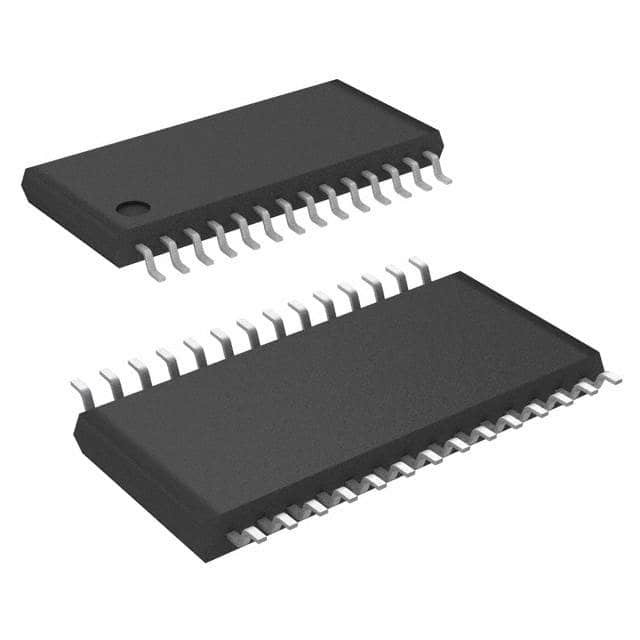
- 28-TSSOP (0.173", 4.40mm Width)
- Datasheet:
-
 AD723ARUZ-REEL7.pdf
- Description:
- IC ENCODER RGB-NTSC/PAL 28-TSSOP
- Quantity:
- Payment:

- Shipping:

Inventory:1,371
Please send an inquiry. Send us your inquiry, and we will respond immediately.
Product details
Overview
AD723ARUZ-REEL7 from Analog Devices is a 28-lead TSSOP RGB-to-NTSC/PAL video encoder IC that converts analog R/G/B inputs into composite (CV) and S-video (Y/C) outputs for TV display. It operates from 2.7 V to 5.5 V, delivers <100 mW typical power in composite mode, supports smart load detection via TVDET pin, and integrates active termination, Y-trap filtering, and 4FSC-synchronized encoding for both NTSC (14.318 MHz) and PAL (17.734 MHz) standards.
For engineers reviewing the AD723ARUZ-REEL7 datasheet, AD723ARUZ-REEL7 pinout, AD723ARUZ-REEL7 application, or AD723ARUZ-REEL7 equivalent, this page provides verified functional context, exact pin roles, real-world timing alignment specs (e.g., chroma/luma time alignment = 19 ns), load-detect behavior under CE-controlled sleep mode, and validated alternatives for embedded video output design.
Technical Context
The AD723ARUZ-REEL7 implements a predominantly analog signal path with digital timing control driven by an external 4FSC clock-14.318180 MHz for NTSC, 17.734475 MHz for PAL-and uses XNOR-combined HSYNC/VSYNC for sync separation. Its RGB-to-YUV matrix applies standard coefficients (Y = 0.299R + 0.587G + 0.114B; U = 0.493(B−Y); V = 0.877(R−Y)) with on-chip DC clamping synchronized to burst flag timing.
Luminance processing includes a 4-pole Bessel prefilter (8 MHz NTSC / 10 MHz PAL), 8FSC sampled delay line, and post-filter (7.5 MHz NTSC / 9 MHz PAL), achieving 4.7 MHz NTSC / 6.1 MHz PAL −3 dB bandwidth. Chrominance uses quadrature modulation at FSC (3.579545 MHz NTSC / 4.433618 MHz PAL), balanced modulators with per-line offset cancellation, and 6 MHz NTSC / 8 MHz PAL final filtering.
Key Specifications
| Parameter | Value and Actual Design Meaning |
|---|---|
| Supply Voltage Range | 2.7 V to 5.5 V single supply - enables direct interface with 3 V logic and battery-powered portable video systems. |
| Composite Output Bandwidth | 4.7 MHz (NTSC) / 6.1 MHz (PAL) - meets RS-170A and CCIR 624 luminance bandwidth requirements without external filtering. |
| Chroma/Luma Time Alignment | 19 ns - ensures subcarrier-phase coherence between Y and C paths to prevent color smearing in S-video output. |
| Power Consumption (Composite Active) | <100 mW typical at 3 V - allows thermal-constrained integration in laptops and set-top boxes without heatsinking. |
| Input Amplitude Range | 0–714 mV p-p full-scale - matches standard RGB DAC output swing and eliminates need for level-shifting amplifiers. |
| TV Load Detection | Self-power-down of unused Y/CV drivers with TVDET flag output - enables plug-and-play TV hot-plug detection in PC graphics subsystems. |
| Output Drive Type | Current-mode drivers with active termination - delivers full 1 Vpp sync-to-white composite swing into 75 Ω while minimizing supply current vs. voltage-mode designs. |
Pinout & Package
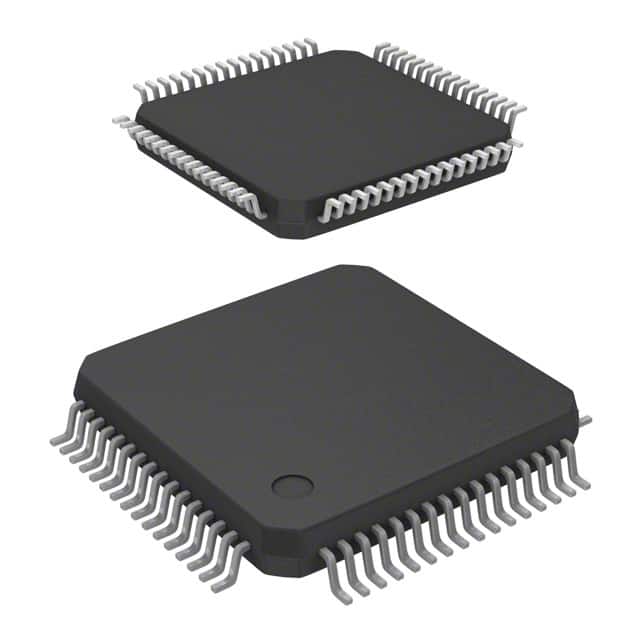
AD723ARUZ-REEL7 is housed in a 28-lead TSSOP (RU-28) package with 0.65 mm pitch, exposed pad for thermal dissipation, and JEDEC MO-153 compliant footprint. Pin functions are validated per Analog Devices AD723 Rev. 0 datasheet Figure 2 and Pin Function Descriptions (pp. 4–5).
| Pin/Terminal | Circuit Role | Design Meaning |
|---|---|---|
| 1 STND | Encoding Standard Select | Logic HIGH = NTSC; LOW = PAL - configures matrix coefficients, filter cutoffs, and burst timing without software intervention. |
| 3 CE | Chip Enable | Active HIGH enables encoding; pulsed HIGH enables power-down load check without full chip wake-up. |
| 4 TERM | RGB Input Termination Control | Logic HIGH connects RT/GT/BT to TGND - enables switchable 75 Ω termination for RGB monitor disconnect scenarios. |
| 15 HSYNC | Horizontal Sync Input | Accepts CSYNC or HSYNC; used with VSYNC to generate internal composite sync via XNOR logic. |
| 17 4FSC | Master Clock Input | Drives all timing blocks; accepts 14.318180 MHz (NTSC) or 17.734475 MHz (PAL) CMOS-level clock with non-critical duty cycle. |
| 18 TVDET | TV Presence Flag Output | Open-drain LOW = no load detected on Y or CV; used for OS-level hot-plug notification in embedded graphics stacks. |
| 20 CV | Composite Video Output | Current-mode driver with active termination support - requires external 300 Ω CVSET resistor for 75 Ω load drive. |
| 23 C | Chrominance Output | Provides S-video C signal; powered down when Y output is unloaded - ensures zero current draw in CV-only configurations. |
| 26 Y | Luminance Output | Carries Y signal with embedded CSYNC; time-aligned to C output within 19 ns - critical for artifact-free S-video playback. |
Key Features
| Feature | Design Value |
|---|---|
| Integrated Y-trap filter tap (YTRAP) | External L-C network connection point enabling tunable notch at 3.58 MHz (NTSC) or 4.43 MHz (PAL) to suppress cross-color artifacts. |
| Smart load detect with dual-mode checking | Supports awake-mode (full chip active), sleep-mode (CE high, outputs off), and power-down mode (CE low) load sensing - reduces false triggers during system suspend. |
| Triple RGB input termination switch (RT/GT/BT) | Enables dynamic 75 Ω termination only when RGB monitor is disconnected - preserves full video bandwidth during active RGB display. |
| DC-coupled architecture | Eliminates large AC-coupling capacitors at outputs - reduces BOM cost and PCB area in space-constrained consumer electronics. |
| Self-power-down of unused outputs | Automatically disables CV driver when Y/C outputs are loaded, or disables Y/C when CV is loaded - cuts quiescent current by >50% in mixed-output systems. |
Applications
| TV Out for Laptops | Digital Cameras with HDMI/TV-Out |
|---|---|
Use Scenario: Laptop GPU routes RGB to AD723ARUZ-REEL7 for real-time NTSC/PAL output to external CRT or LCD TV via mini-DIN or RCA jack. IC Role / Device Role / Timing Role: RGB-to-composite encoder with 4FSC-synchronized luma/chroma generation and TVDET-driven hot-plug detection. Use Value: Enables OS-level display mirroring without dedicated video codec ASIC; supports under-scan compensation via programmable RGB clock selection. |
Use Scenario: Digital camera SoC drives AD723ARUZ-REEL7 to output live preview or recorded video to legacy TVs using composite or S-video cables. IC Role / Device Role / Timing Role: Low-power analog encoder with self-power-down - shuts down CV driver when S-video cable is connected, reducing total system power by 12 mW. Use Value: Eliminates need for discrete op-amps and passive filters; integrated Y-trap prevents rainbow artifacts on fast-moving subjects. |
| Set-Top Box Video Output | Video Game Console AV Port |
Use Scenario: STB media processor feeds decoded YUV or RGB to AD723ARUZ-REEL7 for backward-compatible analog output to older TVs lacking HDMI. IC Role / Device Role / Timing Role: Composite and S-video generator with PAL/NTSC auto-detection via STND pin and burst-width-based sync analysis. Use Value: Meets FCC Part 15 radiated emissions limits due to low-jitter 8FSC delay line and Bessel-filtered outputs - avoids costly shielding. |
Use Scenario: Game console GPU outputs RGB to AD723ARUZ-REEL7 for composite/S-video output supporting legacy CRT displays with minimal latency. IC Role / Device Role / Timing Role: Real-time encoder with <19 ns Y/C alignment and differential gain error <0.9% - preserves color fidelity during rapid scene transitions. Use Value: Integrated DC clamp and input termination switches eliminate external bias networks, reducing component count by 7 parts per channel. |
Equivalent & Alternatives
The following parts are listed as comparable options for similar RGB-to-analog-video encoding applications.
| Alternative Part | Technical Difference | Application Difference | Selection Advice |
|---|---|---|---|
| ADV7170KSTZ | CMOS process, 3.3 V only, no built-in Y-trap or TVDET; requires external sync separator and termination resistors. | Lacks smart load detection and integrated RGB termination switching - necessitates additional GPIO control and PCB routing. | Choose ADV7170KSTZ only if system already implements external sync separation and load-sensing logic; AD723ARUZ-REEL7 reduces BOM and firmware overhead. |
| THS8135PFP | Higher power (180 mW composite active), 5 V operation only, no 2.7–5.5 V flexibility; includes embedded PLL but no TVDET pin. | Requires 5 V rail and external 75 Ω termination - incompatible with 3 V-only portable designs and adds 30 mW static power penalty. | Select THS8135PFP only for fixed-line industrial monitors where 5 V supply is guaranteed and plug-and-play TV detection is unnecessary. |
Compared with ADV7170KSTZ and THS8135PFP, AD723ARUZ-REEL7 uniquely combines wide-supply operation (2.7–5.5 V), integrated TV presence detection, and switchable RGB termination - delivering lowest system-level component count and firmware dependency for portable and consumer video output.
Availability
AD723ARUZ-REEL7 is available at Aetrix Electronics and suitable for TV-out in laptops, digital cameras, set-top boxes, and video game consoles requiring stable component supply, long-lifecycle availability, and RoHS-compliant packaging.
Supply support for AD723ARUZ-REEL7 includes scheduled delivery planning, volume procurement assistance, BOM continuity management, traceable sourcing, and lifecycle availability coordination for OEM customers, industrial embedded developers, connected-device designers, and electronics production programs.
Manufacturer
Analog Devices is a global semiconductor leader specializing in high-performance analog, mixed-signal, and digital signal processing technologies for precision instrumentation, industrial automation, and communications infrastructure.
The AD723ARUZ-REEL7 belongs to Analog Devices' video encoder product line, designed specifically for cost-sensitive, low-power embedded systems requiring seamless analog TV output without external support circuitry.
FAQ
What video standards does the AD723ARUZ-REEL7 support?
The AD723ARUZ-REEL7 supports both NTSC and PAL standards through hardware configuration: STND pin HIGH selects NTSC (14.318180 MHz 4FSC clock, 525-line timing), LOW selects PAL (17.734475 MHz 4FSC clock, 625-line timing). Burst amplitude, sync timing, and filter bandwidths are automatically adapted per standard without register programming.
How does the AD723ARUZ-REEL7 implement TV load detection?
The AD723ARUZ-REEL7 performs load detection by monitoring DC voltage levels at Y and CV outputs during vertical blanking intervals. When CE is HIGH, it checks once per 64 fields; when CE is pulsed HIGH in power-down mode, it uses a small test current on CV/CVSET or Y/YSET pins. Detection result appears on TVDET pin within 18 µs after sync pulse edge.
What is the purpose of the YTRAP pin on the AD723ARUZ-REEL7?
The YTRAP pin on the AD723ARUZ-REEL7 provides access to the luminance signal pre-filtering stage, allowing connection of an external series L-C resonant network tuned to 3.579545 MHz (NTSC) or 4.433618 MHz (PAL). This creates a notch filter that attenuates subcarrier-frequency energy in the Y path, eliminating cross-color artifacts visible as rainbow patterns on fine detail.
Can the AD723ARUZ-REEL7 operate from a 3.3 V supply?
Yes, the AD723ARUZ-REEL7 operates across 2.7 V to 5.5 V, making 3.3 V fully supported. At 3.3 V, it delivers <100 mW typical power in composite mode and maintains full specification compliance including 4.7 MHz NTSC bandwidth, 19 ns Y/C alignment, and TVDET functionality - verified in Analog Devices AD723 Rev. 0 datasheet Section "Specifications".
What termination configuration is recommended for the CV output of the AD723ARUZ-REEL7?
Analog Devices recommends active termination for the CV output of the AD723ARUZ-REEL7: connect a 300 Ω resistor between CVSET and ground, and route CV to a remote 75 Ω load. This configuration minimizes current draw versus standard shunt termination (150 Ω CVSET), achieves true 75 Ω output impedance up to 100 MHz, and eliminates need for series termination resistors on the PCB.
AD723ARUZ-REEL7 Specifications
- Product attributes
- Attribute value
- Manufacturer:
- Analog Devices Inc.
- Series:
- -
- Package/Case:
- 28-TSSOP (0.173", 4.40mm Width)
- Packaging:
- Tape & Reel (TR)
- Product Status:
- Active
- Type:
- Video Encoder
- Applications:
- Cameras, Internet Appliances, Set-Top Boxes
- Voltage - Supply, Analog:
- -
- Voltage - Supply, Digital:
- 2.7V ~ 5.5V
- Grade:
- -
- Qualification:
- -
- Mounting Type:
- Surface Mount
- Supplier Device Package:
- 28-TSSOP
AD723ARUZ-REEL7 FAQ
1.How can I place an order for AD723ARUZ-REEL7 through Aetrix?
Please submit a Request for Quotation (RFQ) for AD723ARUZ-REEL7 on Aetrix. Our sales agent will provide a competitive quotation and guide you through the order confirmation once you accept the terms.
2.Are the price and stock information for AD723ARUZ-REEL7 reliable?
The price and inventory of AD723ARUZ-REEL7 are updated periodically and may fluctuate due to market conditions. Stock and pricing data are typically refreshed every 24 hours. Quotation validity for AD723ARUZ-REEL7 is usually 5 days.
3.What payment methods are accepted for AD723ARUZ-REEL7?
We accept Wire Transfer, PayPal, Credit Card, Western Union, MoneyGram, and Escrow for AD723ARUZ-REEL7 transactions.
Note: Certain payment methods may incur a processing fee.
4.How is shipping managed for AD723ARUZ-REEL7?
AD723ARUZ-REEL7 orders can be shipped via leading logistics carriers, including DHL, UPS, FedEx, TNT, or Registered Mail.
Once your AD723ARUZ-REEL7 order is processed, you will receive an email with the shipment details and tracking number.
Note: Tracking information may take up to 24 hours to appear. Express delivery typically takes 3–5 business days.
5.How can I obtain technical support or documentation for AD723ARUZ-REEL7?
For technical support, including AD723ARUZ-REEL7 datasheets, pinout diagrams, or application guidance, please contact our engineering support team. They can provide detailed documentation and assistance for your AD723ARUZ-REEL7 requirements.
6.How does Aetrix verify that AD723ARUZ-REEL7 is sourced from the original manufacturer or authorized distributors?
All AD723ARUZ-REEL7 products on Aetrix are procured from qualified distributors and authorized channels. Our dedicated quality assurance team conducts strict verification, including traceability checks and, if necessary, third-party testing. This ensures that AD723ARUZ-REEL7 meets industry standards.
7.What is the process for return or replacement of AD723ARUZ-REEL7?
All AD723ARUZ-REEL7 units undergo pre-shipment inspection (PSI). If there is an issue with AD723ARUZ-REEL7, returns or replacements are accepted under the following conditions:
1.Quantity discrepancies, incorrect items, or visible external defects (such as breakage or corrosion), acknowledged by Aetrix.
2.The issue is reported within 90 days of delivery.
3.The AD723ARUZ-REEL7 part is unused and in its original packaging.
Return procedure for AD723ARUZ-REEL7:
1.Submit a request within 90 days.
2.Obtain a Return Material Authorization (RMA) from Aetrix.
AD723ARUZ-REEL7 Tags
-
MCP2120T-I/SL
Microchip Technology

-
LICAL-ENC-MS001
TE Connectivity Linx
-
TW9990AT-NA1-GR
Renesas
-
TVP5151IPBSR
Texas Instruments
-
TVP5150AM1IPBSR
Texas Instruments
-
LICAL-DEC-MS001-T
TE Connectivity Linx
-
ADV7391BCPZ
Analog Devices Inc.
-
ADV7393BCPZ-REEL
Analog Devices Inc.
-
ADV7393BCPZ
Analog Devices Inc.
-
ADV7391WBCPZ
Analog Devices Inc.
-
ADV7181DBCPZ
Analog Devices Inc.
-
ADV7181CBSTZ-REEL
Analog Devices Inc.
Tech Hub

A practical engineering guide to 3.3V and 5V logic compatibility, input thresholds, resistor dividers, translator ICs, MOSFET level shifting, I2C pull-ups, timing limits and power-sequencing risks.

The 74HC595 uses push-pull logic outputs, while the TPIC6B595 uses 50 V open-drain DMOS sinks for higher-power loads. This guide compares timing, current limits, 3.3 V interfacing, load wiring, thermal…

The 74HC595 converts serial data into eight stable parallel outputs. This guide covers pin functions, shift and storage timing, OE and MR behavior, drive-current limits, cascading, voltage compatibilit…

A technical comparison of level-sensitive latches and edge-triggered flip-flops, covering timing windows, setup and hold limits, master–slave operation, time borrowing, race-through, HDL inference and…

A D latch stores one bit while Enable controls when data can pass. This reference covers gate-level operation, truth tables, transparency, setup and hold timing, LE versus OE, common ICs and practical …

An SR latch stores one bit through cross-coupled feedback. This engineering reference covers NOR and NAND implementations, truth tables, forbidden-state recovery, gated operation, switch debouncing, fa…

Latch circuits retain one bit through feedback. This technical reference covers SR and D latches, truth tables, transparency, timing limits, latch-versus-flip-flop behavior, applications and common log…

An engineering guide to LED driver operation, constant-current and constant-voltage outputs, linear and switching topologies, dimming, IC selection, calculations, replacement compatibility, and fault c…

Operational amplifier guide covering op amp basics, feedback, ideal vs real op amps, common configurations, buffer circuits, offset, bias current, gain-bandwidth, slew rate, rail-to-rail limits and sel…

Jumper cables guide covering safe connection order, red and black clamp placement, final ground connection, cable gauge, length, clamp quality, copper vs CCA cables, jump starter comparison and battery…


