
 My Inquiry
 My Account


Analog Devices Inc. AD7705BRUZ
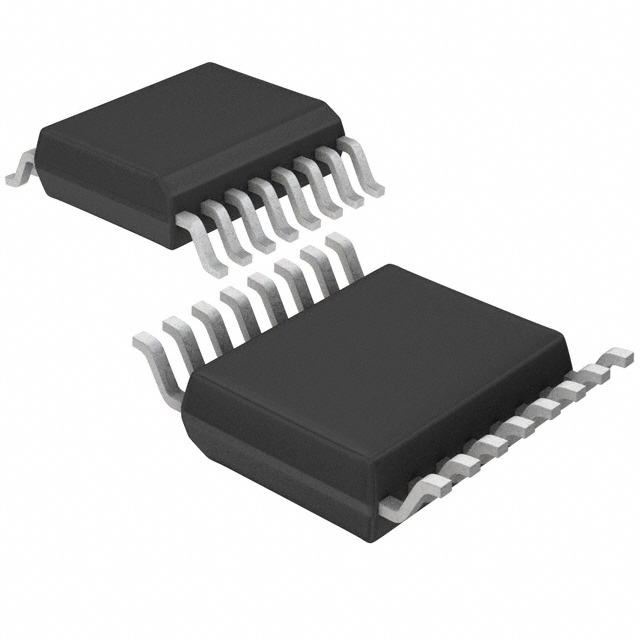
- Part No.:
- AD7705BRUZ
- Manufacturer:
- Analog Devices Inc.
- Category:
- Analog to Digital Converters (ADC)
- Package:
- 16-TSSOP (0.173", 4.40mm Width)
- Datasheet:
-
 AD7705BRUZ.pdf
- Description:
- IC ADC 16BIT SIGMA-DELTA 16TSSOP
- Quantity:
- Payment:

- Shipping:

Inventory:595
Please send an inquiry. Send us your inquiry, and we will respond immediately.
Product details
Overview
AD7705BRUZ from Analog Devices is a 16-bit sigma-delta analog-to-digital converter with two fully differential input channels, programmable gain (1–128), 3-wire SPI-compatible serial interface, and operation at 2.7–3.3 V or 4.75–5.25 V. It delivers 0.003% nonlinearity, <600 nV rms noise, and 1 mW max power dissipation at 3 V - ideal for precision transducer signal conditioning in industrial sensor nodes.
For engineers reviewing the AD7705BRUZ datasheet, AD7705BRUZ pinout, AD7705BRUZ application, or AD7705BRUZ equivalent, key selection criteria include its dual-channel fully differential architecture, on-chip calibration support, selectable filter notch frequencies (20–60 Hz), unipolar/bipolar input range flexibility, and compatibility with microcontroller-based data acquisition systems requiring low-power, high-accuracy ADCs.
Technical Context
The AD7705BRUZ employs a charge-balancing sigma-delta modulator followed by an on-chip digital filter with programmable first-notch frequency (20/25/50/60 Hz), enabling precise rejection of 50/60 Hz line interference. Its programmable-gain amplifier (PGA) front end accepts direct inputs from strain gauges and RTDs without external amplification.
It supports both buffered and unbuffered analog input modes, features Schmitt-triggered SCLK for noise immunity, and integrates self-calibration and system calibration registers to eliminate zero-scale and full-scale errors. The device operates with either an external clock or a crystal/resonator across MCLK IN/OUT pins.
Key Specifications
| Parameter | Value and Actual Design Meaning |
|---|---|
| Resolution | 16 bits, no missing codes - guarantees monotonicity and full code coverage over temperature. |
| Input Channels | 2 fully differential analog input channels - enables simultaneous measurement of two isolated sensor signals with common-mode rejection up to 130 dB. |
| Programmable Gain | 1 to 128 - allows direct interfacing with low-level transducers (e.g., ±20 mV strain gauge outputs) while maintaining 16-bit effective resolution. |
| Power Dissipation | 1 mW maximum at 3 V - supports battery-powered or thermally constrained embedded systems. |
| Integral Nonlinearity | ±0.003% of FSR - ensures high accuracy in closed-loop control and metrology applications without post-conversion linearization. |
| Reference Input Range | 1.225 V (3 V supply) or 2.5 V (5 V supply), ±1% - defines full-scale input range scaling and directly determines measurable voltage spans (e.g., 0–1.225 V unipolar). |
| Output Interface | 3-wire SPI/QSPI/MICROWIRE/DSP-compatible serial - reduces MCU GPIO count and simplifies isolation in noisy industrial environments. |
Pinout & Package
AD7705BRUZ is housed in a 16-lead TSSOP package (RU-16), measuring 5 mm × 4.4 mm × 1.2 mm, with 0.65 mm lead pitch and exposed pad for thermal enhancement.
| Pin/Terminal | Circuit Role | Design Meaning |
|---|---|---|
| SCLK | Serial clock input | Schmitt-triggered input accepting variable-duty-cycle clocks; controls timing of DIN/DOUT data transfers in 3-wire mode. |
| MCLK IN | Master clock input | Accepts external CMOS clock (400 kHz–2.5 MHz) or crystal/resonator connection; required for all conversions and calibration cycles. |
| MCLK OUT | Master clock output | Provides inverted clock for external circuitry when crystal is used; can be disabled via CLKDIS bit to reduce power. |
| CS | Chip select | Active-low enable for serial interface; when tied low, enables true 3-wire operation using only SCLK, DIN, DOUT. |
| RESET | Hardware reset | Active-low signal that resets digital logic, filter state, calibration coefficients, and modulator - essential for deterministic startup. |
| AIN1(+), AIN1(−) | Differential channel 1 input | High-impedance, fully differential pair supporting ±20 mV to ±2.5 V bipolar or 0–2.5 V unipolar ranges with PGA gain applied. |
| AIN2(+), AIN2(−) | Differential channel 2 input | Independent second differential input path with identical performance and range specifications as AIN1. |
| REF IN(+), REF IN(−) | Differential reference input | Defines full-scale conversion range; requires VREF = REFIN(+) − REFIN(−) = 1.225 V (3 V) or 2.5 V (5 V) for specified accuracy. |
| DIN | Serial data input | Loads configuration data into communication, setup, clock, and calibration registers; latched on SCLK rising edge. |
| DOUT | Serial data output | Shifts out conversion results or register contents; valid after DRDY goes low and synchronized to SCLK falling edge. |
| DRDY | Data ready indicator | Open-drain output signaling valid conversion result; must be sampled before initiating read to avoid corrupted data. |
| GND | Analog/digital ground | Single ground pin serving both analog and digital sections - requires star grounding and separation from noisy digital returns. |
| VDD | Supply voltage | Accepts 2.7–3.3 V or 4.75–5.25 V; powers internal modulator, filter, and interface logic; bypassing with 10 μF + 100 nF is mandatory. |
Key Features
| Feature | Design Value |
|---|---|
| On-chip self-calibration | Eliminates zero-scale and full-scale errors without external components, reducing BOM cost and board area in field-deployed sensors. |
| Configurable digital filter notch | Selectable 20/25/50/60 Hz first notch enables robust rejection of AC mains interference in industrial environments. |
| Buffered/unbuffered input mode | BUF bit in setup register selects between high-Z input (for low-source-impedance sensors) or buffered input (for high-impedance sources like thermocouples). |
| Bipolar/unipolar input support | Software-selectable B/U bit configures input coding (offset binary vs. twos-complement), enabling seamless integration with both signed and unsigned processing pipelines. |
| Low standby current | 8 μA max at 3 V - allows rapid wake-up from sleep mode in energy-harvesting or battery-operated IoT endpoints. |
Applications
| Pressure Measurement | Temperature Monitoring |
|---|---|
|
Use Scenario: Digital pressure transmitter measuring 0–100 psi industrial process lines using a Wheatstone bridge strain gauge. IC Role / Device Role / Timing Role: Front-end ADC acquiring differential bridge output, applying PGA gain of 128, rejecting 60 Hz noise via 60 Hz filter notch, and delivering calibrated 16-bit values to host MCU. Use Value: Enables direct digitization of mV-level bridge signals without op-amp signal conditioning, reducing component count and thermal drift errors. |
Use Scenario: Precision RTD-based temperature node in HVAC control panel with 0.1°C resolution requirement. IC Role / Device Role / Timing Role: Digitizing ratiometric RTD voltage across precision reference resistor; using bipolar mode and system calibration to cancel lead-wire resistance effects. Use Value: Achieves sub-0.01% gain error stability over −40°C to +85°C, eliminating need for external trimming or lookup-table compensation. |
| Smart Transmitter | Battery Voltage Monitoring |
|
Use Scenario: 4–20 mA HART-enabled field instrument with local display and diagnostics. IC Role / Device Role / Timing Role: Simultaneously digitizing sensor input and internal supply voltage for health monitoring; using DRDY-driven interrupt-driven reads to minimize MCU active time. Use Value: Integrates dual-channel acquisition and self-test capability in single RU-16 package, meeting IEC 61000-4-5 surge immunity requirements via low pin count. |
Use Scenario: Li-ion battery pack monitor in portable medical device requiring accurate 0–4.2 V cell voltage tracking. IC Role / Device Role / Timing Role: Measuring battery voltage via pseudo-differential input (using AIN1(+) and AIN1(−) as sense/return), applying gain=1 and 50 Hz filter notch for SMPS ripple rejection. Use Value: Delivers <600 nV rms noise floor and 16-bit monotonicity, enabling detection of <1 mV voltage changes critical for state-of-charge estimation. |
Equivalent & Alternatives
The following parts are listed as comparable options for similar sigma-delta ADC applications.
| Alternative Part | Technical Difference | Application Difference | Selection Advice |
|---|---|---|---|
| AD7706BRUZ | 3-channel pseudo-differential input (vs. AD7705BRUZ's 2-channel fully differential); shares identical core architecture, register map, and timing. | Supports three single-ended or pseudo-differential sensors referenced to COMMON pin - better suited for multi-sensor nodes where full differential pairs are not required. | Select AD7706BRUZ when third channel is needed and common-mode rejection >105 dB is acceptable; pinout differs (no AIN2(−), adds AIN3). |
| ADS1115IDGSR | 4-channel, 16-bit delta-sigma ADC with integrated PGA (1–16), I²C interface, and 860 SPS max rate - lacks programmable filter notch and self-calibration registers. | Targeted at space-constrained consumer electronics; requires external reference and offers no 50/60 Hz rejection tuning. | Choose ADS1115IDGSR for cost-sensitive, low-channel-count designs where I²C bus availability and smaller footprint (VSSOP-10) outweigh precision filtering needs. |
Compared with AD7705BRUZ, AD7706BRUZ adds a third input channel but sacrifices full differential topology, while ADS1115IDGSR trades programmable line-frequency rejection and on-chip calibration for I²C simplicity and lower price - making AD7705BRUZ optimal for high-accuracy industrial transducers demanding configurable noise rejection.
Availability
AD7705BRUZ is available at Aetrix Electronics and suitable for pressure measurement, temperature monitoring, and smart transmitter applications requiring stable component supply, long-term manufacturability, and guaranteed traceability.
Supply support for AD7705BRUZ includes scheduled delivery planning, volume procurement assistance, BOM continuity management, traceable sourcing, and lifecycle availability coordination for OEM customers, industrial embedded developers, connected-device designers, and electronics production programs.
Manufacturer
Analog Devices, Inc. is a global leader in high-performance analog, mixed-signal, and digital signal processing semiconductors, headquartered in Norwood, MA, with design centers worldwide and ISO 9001-certified manufacturing.
The AD7705/AD7706 product line was engineered specifically for low-frequency, high-accuracy sensor signal conditioning in industrial automation, instrumentation, and process control systems - emphasizing low power, integrated calibration, and robust noise immunity.
FAQ
What is the maximum sampling rate of the AD7705BRUZ at gain = 1 and MCLK = 2.4576 MHz?
The AD7705BRUZ achieves a maximum output data rate of 38.4 SPS at gain = 1 and MCLK = 2.4576 MHz, calculated as fCLKIN/64. This rate corresponds to the slowest filter setting (60 Hz notch) and provides optimal noise rejection for DC-coupled sensor signals such as load cells and RTDs. Higher rates are possible at increased gain settings but reduce effective resolution due to shorter integration times.
Does the AD7705BRUZ require an external reference voltage, or can it use an internal one?
The AD7705BRUZ does not include an internal reference and requires an external differential reference voltage applied to REF IN(+) and REF IN(−). For 3 V operation, a 1.225 V reference (±1%) is recommended; for 5 V operation, a 2.5 V reference (±1%) is specified. The reference must be low-noise and stable, as its accuracy and drift directly limit overall system gain error and temperature coefficient - the AD7705BRUZ itself provides no reference regulation or buffering.
Can the AD7705BRUZ interface directly with a microcontroller lacking SPI hardware?
Yes, the AD7705BRUZ supports bit-banged 3-wire serial communication using any three GPIO pins (SCLK, DIN, DOUT) and CS tied low, because its interface is synchronous and tolerant of variable clock duty cycle and pause intervals. The Schmitt-triggered SCLK input enhances noise immunity during software-controlled transfers, and DRDY provides hardware handshaking to prevent read collisions - making AD7705BRUZ compatible with resource-limited MCUs including 8-bit PIC and legacy 8051 derivatives.
How does the AD7705BRUZ handle input overvoltage conditions beyond its absolute maximum ratings?
The AD7705BRUZ specifies absolute maximum analog input voltage limits of GND − 100 mV to VDD + 30 mV for specified performance; operation outside this range increases leakage current and may cause temporary parametric shift or permanent damage if sustained. It includes no integrated overvoltage protection diodes - external series resistors and clamping diodes referenced to VDD/GND are required for field-reliable operation in harsh environments. The device tolerates GND − 200 mV transiently but with degraded CMR and increased offset drift.
Is the AD7705BRUZ RoHS compliant and suitable for lead-free reflow soldering?
Yes, the AD7705BRUZ (RU-16 package) is RoHS compliant and qualified for lead-free reflow soldering per JEDEC J-STD-020 Rev. E. Its maximum peak reflow temperature is 260°C for 10 seconds, matching standard Pb-free process profiles. The TSSOP package has a moisture sensitivity level (MSL) of 1, meaning it may be assembled without baking if stored under dry nitrogen or desiccant conditions per IPC/JEDEC J-STD-033 guidelines.
AD7705BRUZ Specifications
- Product attributes
- Attribute value
- Manufacturer:
- Analog Devices Inc.
- Series:
- -
- Package/Case:
- 16-TSSOP (0.173", 4.40mm Width)
- Packaging:
- Tube
- Product Status:
- Active
- Number of Bits:
- 16
- Sampling Rate (Per Second):
- 500
- Number of Inputs:
- 2
- Input Type:
- Differential
- Data Interface:
- SPI, DSP
- Configuration:
- MUX-PGA-ADC
- Ratio - S/H:ADC:
- -
- Number of A/D Converters:
- 1
- Architecture:
- Sigma-Delta
- Reference Type:
- External
- Voltage - Supply, Analog:
- 2.7V ~ 3.3V, 5V
- Voltage - Supply, Digital:
- 2.7V ~ 3.3V, 5V
- Features:
- PGA
- Operating Temperature:
- -40°C ~ 85°C
- Supplier Device Package:
- 16-TSSOP
- Mounting Type:
- Surface Mount
- Grade:
- -
- Qualification:
- -
AD7705BRUZ FAQ
1.How can I place an order for AD7705BRUZ through Aetrix?
Please submit a Request for Quotation (RFQ) for AD7705BRUZ on Aetrix. Our sales agent will provide a competitive quotation and guide you through the order confirmation once you accept the terms.
2.Are the price and stock information for AD7705BRUZ reliable?
The price and inventory of AD7705BRUZ are updated periodically and may fluctuate due to market conditions. Stock and pricing data are typically refreshed every 24 hours. Quotation validity for AD7705BRUZ is usually 5 days.
3.What payment methods are accepted for AD7705BRUZ?
We accept Wire Transfer, PayPal, Credit Card, Western Union, MoneyGram, and Escrow for AD7705BRUZ transactions.
Note: Certain payment methods may incur a processing fee.
4.How is shipping managed for AD7705BRUZ?
AD7705BRUZ orders can be shipped via leading logistics carriers, including DHL, UPS, FedEx, TNT, or Registered Mail.
Once your AD7705BRUZ order is processed, you will receive an email with the shipment details and tracking number.
Note: Tracking information may take up to 24 hours to appear. Express delivery typically takes 3–5 business days.
5.How can I obtain technical support or documentation for AD7705BRUZ?
For technical support, including AD7705BRUZ datasheets, pinout diagrams, or application guidance, please contact our engineering support team. They can provide detailed documentation and assistance for your AD7705BRUZ requirements.
6.How does Aetrix verify that AD7705BRUZ is sourced from the original manufacturer or authorized distributors?
All AD7705BRUZ products on Aetrix are procured from qualified distributors and authorized channels. Our dedicated quality assurance team conducts strict verification, including traceability checks and, if necessary, third-party testing. This ensures that AD7705BRUZ meets industry standards.
7.What is the process for return or replacement of AD7705BRUZ?
All AD7705BRUZ units undergo pre-shipment inspection (PSI). If there is an issue with AD7705BRUZ, returns or replacements are accepted under the following conditions:
1.Quantity discrepancies, incorrect items, or visible external defects (such as breakage or corrosion), acknowledged by Aetrix.
2.The issue is reported within 90 days of delivery.
3.The AD7705BRUZ part is unused and in its original packaging.
Return procedure for AD7705BRUZ:
1.Submit a request within 90 days.
2.Obtain a Return Material Authorization (RMA) from Aetrix.
AD7705BRUZ Tags
-
ADC081C021CIMKX/NOPB
Texas Instruments
-
MCP3021A5T-E/OT
Microchip Technology
-
TLA2024IRUGR
Texas Instruments
-
MCP3221A5T-E/OT
Microchip Technology
-
MCP3221A5T-I/OT
Microchip Technology
-
MCP3221A4T-E/OT
Microchip Technology
-
MCP3221A6T-E/OT
Microchip Technology
-
MCP3221A0T-E/OT
Microchip Technology
-
MCP3221A1T-E/OT
Microchip Technology

-
ADC121S021CIMFX/NOPB
Texas Instruments
-
MCP3001-I/MS
Microchip Technology

-
MCP3001-I/SN
Microchip Technology
Tech Hub

A practical engineering guide to 3.3V and 5V logic compatibility, input thresholds, resistor dividers, translator ICs, MOSFET level shifting, I2C pull-ups, timing limits and power-sequencing risks.

The 74HC595 uses push-pull logic outputs, while the TPIC6B595 uses 50 V open-drain DMOS sinks for higher-power loads. This guide compares timing, current limits, 3.3 V interfacing, load wiring, thermal…

The 74HC595 converts serial data into eight stable parallel outputs. This guide covers pin functions, shift and storage timing, OE and MR behavior, drive-current limits, cascading, voltage compatibilit…

A technical comparison of level-sensitive latches and edge-triggered flip-flops, covering timing windows, setup and hold limits, master–slave operation, time borrowing, race-through, HDL inference and…

A D latch stores one bit while Enable controls when data can pass. This reference covers gate-level operation, truth tables, transparency, setup and hold timing, LE versus OE, common ICs and practical …

An SR latch stores one bit through cross-coupled feedback. This engineering reference covers NOR and NAND implementations, truth tables, forbidden-state recovery, gated operation, switch debouncing, fa…

Latch circuits retain one bit through feedback. This technical reference covers SR and D latches, truth tables, transparency, timing limits, latch-versus-flip-flop behavior, applications and common log…

An engineering guide to LED driver operation, constant-current and constant-voltage outputs, linear and switching topologies, dimming, IC selection, calculations, replacement compatibility, and fault c…

Operational amplifier guide covering op amp basics, feedback, ideal vs real op amps, common configurations, buffer circuits, offset, bias current, gain-bandwidth, slew rate, rail-to-rail limits and sel…

Jumper cables guide covering safe connection order, red and black clamp placement, final ground connection, cable gauge, length, clamp quality, copper vs CCA cables, jump starter comparison and battery…


