
 My Inquiry
 My Account


Analog Devices Inc. AD7706BRU-REEL7
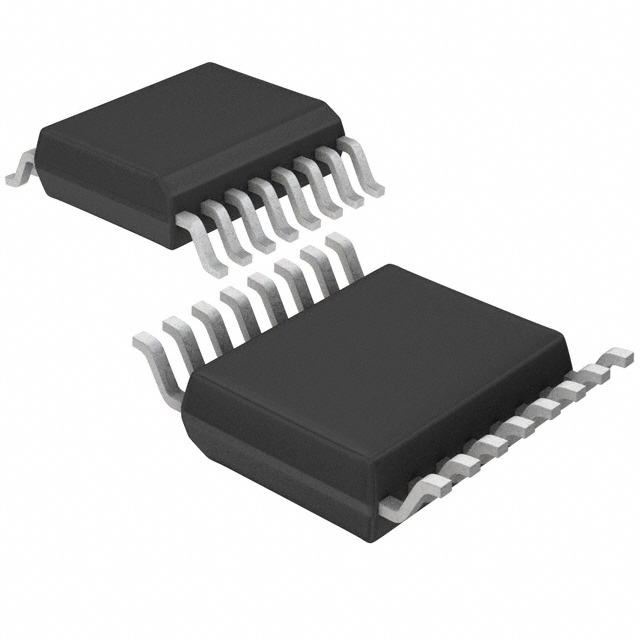
- Part No.:
- AD7706BRU-REEL7
- Manufacturer:
- Analog Devices Inc.
- Category:
- Analog to Digital Converters (ADC)
- Package:
- 16-TSSOP (0.173", 4.40mm Width)
- Datasheet:
-
 AD7706BRU-REEL7.pdf
- Description:
- IC ADC 16BIT SIGMA-DELTA 16TSSOP
- Quantity:
- Payment:

- Shipping:

Inventory:1,385
Please send an inquiry. Send us your inquiry, and we will respond immediately.
Product details
Overview
AD7706BRU-REEL7 from Analog Devices is a 16-bit sigma-delta analog-to-digital converter with three pseudo-differential input channels, programmable gain (1–128), 0.003% integral nonlinearity, and 1 mW max power dissipation at 3 V - designed for precision low-frequency sensor signal acquisition in industrial transmitters and battery-powered instrumentation.
For engineers reviewing the AD7706BRU-REEL7 datasheet, AD7706BRU-REEL7 pinout, AD7706BRU-REEL7 application, or AD7706BRU-REEL7 equivalent, key selection considerations include its 3-channel pseudo-differential architecture, on-chip digital filtering with programmable notch frequency, unipolar/bipolar input range support up to ±2.5 V, and SPI-/QSPI-/MICROWIRE-compatible 3-wire serial interface.
Technical Context
The AD7706BRU-REEL7 implements a charge-balancing sigma-delta modulator followed by an on-chip digital filter with programmable first-notch cutoff (e.g., 20 Hz, 25 Hz, 50 Hz, 60 Hz), enabling high-rejection of line-frequency interference. Its analog front end includes a fully differential reference input and a programmable-gain amplifier (PGA) with selectable gains from 1 to 128.
It supports both buffered and unbuffered analog input modes via the BUF bit in the setup register, and features self-calibration and system calibration registers to eliminate zero-scale and full-scale errors. Operation is specified across −40°C to +85°C with dual supply ranges: 2.7–3.3 V or 4.75–5.25 V.
Key Specifications
| Parameter | Value and Actual Design Meaning |
|---|---|
| Resolution | 16 bits with no missing codes - guarantees monotonicity and full code coverage for precision measurement systems. |
| Integral Nonlinearity | ±0.003% of FSR - ensures high accuracy in weight scales, pressure sensors, and calibrated instrumentation. |
| Input Channels | 3 pseudo-differential inputs - enables simultaneous monitoring of multiple transducer outputs referenced to COMMON. |
| Programmable Gain | 1 to 128 - allows direct connection of low-level sensors (e.g., strain gauges, RTDs) without external amplification. |
| Power Dissipation | 1 mW max at 3 V - supports extended battery life in portable and remote sensing applications. |
| Reference Input | Differential REF IN(+) and REF IN(−) - accepts 1.225 V (3 V supply) or 2.5 V (5 V supply) references for stable scaling. |
| Output Data Rate | Configurable via filter notch (e.g., 50 Hz notch → ~100 SPS) - balances noise performance and update rate for slow-varying signals. |
Pinout & Package
AD7706BRU-REEL7 is housed in a 16-lead TSSOP package (RU suffix), low-profile, thin shrink small outline format with 0.65 mm pitch and exposed pad for thermal management.
| Pin/Terminal | Circuit Role | Design Meaning |
|---|---|---|
| SCLK | Serial clock input | Schmitt-triggered input accepting 3-wire SPI-compatible clocks; enables synchronous data transfer with configurable timing. |
| MCLK IN | Master clock input | Accepts external CMOS clock (400 kHz–2.5 MHz) or crystal/resonator; drives internal sigma-delta modulator and digital filter. |
| MCLK OUT | Master clock output | Inverted copy of MCLK IN; can drive one CMOS load or be disabled via CLKDIS bit to reduce power. |
| CS | Chip select | Active-low enable for 3-wire interface mode; allows multi-device sharing of SCLK/DIN/DOUT lines. |
| RESET | Hardware reset | Active-low signal that resets control logic, calibration coefficients, digital filter, and modulator to power-on state. |
| AIN1 / AIN2 / AIN3 | Analog input channels | Pseudo-differential inputs referenced to COMMON pin; each channel supports unipolar (0–VREF/gain) or bipolar (±VREF/gain) ranges. |
| COMMON | Common-mode reference | Shared negative reference for all three analog inputs; defines common-mode voltage level for pseudo-differential operation. |
| REF IN(+), REF IN(−) | Differential reference inputs | Set full-scale range; require VREF = 1.225 V (3 V supply) or 2.5 V (5 V supply); tolerate common-mode voltages from GND to VDD. |
| DRDY | Data ready output | Active-low open-drain flag indicating valid conversion result in data register; used for interrupt-driven read synchronization. |
| DIN | Serial data input | Accepts configuration commands (setup, clock, calibration registers) and supports write-only register access. |
| DOUT | Serial data output | Provides read access to communication, setup, clock, data, and calibration registers via 3-wire interface. |
| GND | Analog/digital ground | Single ground pin serving both analog and digital sections; requires careful PCB layout separation for noise immunity. |
| VDD | Supply voltage | Supports 2.7–3.3 V or 4.75–5.25 V operation; powers analog modulator, digital filter, and interface logic. |
Key Features
| Feature | Design Value |
|---|---|
| On-chip self-calibration | Eliminates zero-scale and full-scale errors without external equipment; reduces system calibration overhead in field-deployed devices. |
| Programmable digital filter notch | Enables rejection of 50 Hz/60 Hz mains interference by setting first filter notch at 20 Hz, 25 Hz, 50 Hz, or 60 Hz - critical for EMI-prone industrial environments. |
| Bipolar/unipolar input mode | Configurable via B/U bit; supports ±10 mV to ±2.5 V (bipolar) or 0–10 mV to 0–2.5 V (unipolar) ranges - accommodates diverse sensor output polarities. |
| Low-power standby mode | 8 μA max current at 3 V - extends battery life during idle periods while retaining calibration data and register states. |
| High CMRR | Up to 130 dB at gains ≥8 - rejects common-mode noise from long sensor cables and noisy industrial grounds. |
Applications
| Pressure Measurement | Temperature Monitoring |
|---|---|
|
Use Scenario: High-accuracy pressure sensing in HVAC controllers using bridge-based piezoresistive sensors with mV-level outputs. IC Role / Device Role / Timing Role: ADC front end performing PGA amplification, sigma-delta conversion, and digital filtering to resolve sub-0.1% pressure changes. Use Value: Direct interface to low-output bridges eliminates external op-amps and reduces component count, while 50 Hz notch filtering suppresses AC-coupled interference in building environments. |
Use Scenario: Multi-point temperature logging in industrial ovens using 3-wire RTD arrays requiring precise ratiometric measurement. IC Role / Device Role / Timing Role: Simultaneous sampling of three RTD channels referenced to COMMON, with programmable gain and reference scaling for 4–20 mA loop compatibility. Use Value: On-chip calibration removes sensor lead resistance errors and drift, enabling <±0.1°C accuracy over −40°C to +125°C operating range. |
| Smart Transmitter | Battery-Powered Sensor Node |
|
Use Scenario: 4–20 mA HART-enabled field transmitter processing analog sensor inputs and digitizing them for digital communication. IC Role / Device Role / Timing Role: Precision ADC providing isolated analog input conditioning and conversion for microcontroller-based protocol handling. Use Value: 3-wire SPI interface minimizes isolation barrier pins; low 1 mW power enables operation from loop-powered supplies without derating. |
Use Scenario: Wireless environmental sensor node measuring humidity, ambient temperature, and CO₂ with ultra-low duty-cycle operation. IC Role / Device Role / Timing Role: Low-power ADC acquiring sensor data during brief wake-up windows, then entering 8 μA standby until next sample. Use Value: Standby current and fast wake-up (<1 ms) allow >5-year battery life on coin cells; integrated PGA avoids discrete amplifier bias current drain. |
Equivalent & Alternatives
The following parts are listed as comparable options for similar sigma-delta ADC applications.
| Alternative Part | Technical Difference | Application Difference | Selection Advice |
|---|---|---|---|
| AD7705BRU-REEL7 | 2 fully differential input channels; identical architecture, register map, and pinout except AIN2(−) replaces COMMON; lacks third channel. | Best suited for dual-sensor systems where full differential rejection is required per channel, not shared reference. | Select AD7705BRU-REEL7 when channel independence and true differential input rejection outweigh need for third input. |
| ADS114S08IPWR | 12-channel, 16-bit delta-sigma ADC with integrated PGA, reference, and burnout current sources; SPI interface; higher integration but larger footprint. | Targets high-channel-count systems like PLC I/O modules; includes diagnostics and sensor excitation not present in AD7706BRU-REEL7. | Choose ADS114S08IPWR when expanding beyond 3 channels or requiring built-in sensor diagnostics and excitation. |
Compared with AD7705BRU-REEL7, the AD7706BRU-REEL7 adds a third pseudo-differential channel at the cost of reduced per-channel differential rejection; versus ADS114S08IPWR, it offers lower system complexity and smaller TSSOP footprint but requires external reference and excitation circuitry.
Availability
AD7706BRU-REEL7 is available at Aetrix Electronics and suitable for pressure measurement, temperature monitoring, smart transmitter design, and battery-powered sensor nodes requiring stable component supply, long-lifecycle availability, and consistent parametric performance across production batches.
Supply support for AD7706BRU-REEL7 includes scheduled delivery planning, volume procurement assistance, BOM continuity management, traceable sourcing, and lifecycle availability coordination for OEM customers, industrial embedded developers, connected-device designers, and electronics production programs.
Manufacturer
Analog Devices, Inc. is a global leader in high-performance analog, mixed-signal, and digital signal processing semiconductors, headquartered in Norwood, MA, with design centers and manufacturing facilities worldwide.
The AD7705/AD7706 product line was engineered for low-frequency, high-accuracy sensor signal acquisition in industrial process control, instrumentation, and smart sensor applications - emphasizing low power, integrated calibration, and robust noise rejection.
FAQ
What is the maximum input voltage range supported by the AD7706BRU-REEL7?
The AD7706BRU-REEL7 supports unipolar input ranges from 0 mV to VREF/gain and bipolar ranges from ±VREF/gain. With a 2.5 V reference and gain = 1, this yields ±2.5 V; with gain = 128 and VREF = 1.225 V (3 V supply), it supports ±9.57 mV. Absolute input voltage must stay within GND − 100 mV to VDD + 30 mV for specified performance.
Does the AD7706BRU-REEL7 require an external reference voltage?
Yes, the AD7706BRU-REEL7 requires an external differential reference applied to REF IN(+) and REF IN(−). For 3 V operation, a 1.225 V reference is recommended; for 5 V operation, a 2.5 V reference is specified. The device does not include an internal reference, so external precision references (e.g., ADR3425, REF192) are typically used.
How many analog input channels does the AD7706BRU-REEL7 have, and what type are they?
The AD7706BRU-REEL7 has three pseudo-differential analog input channels (AIN1, AIN2, AIN3), all referenced to the COMMON pin. Unlike fully differential inputs, these share a common negative terminal, making them suitable for single-ended or ratiometric sensor interfaces where a shared reference simplifies layout and reduces component count.
Can the AD7706BRU-REEL7 perform self-calibration, and how is it initiated?
Yes, the AD7706BRU-REEL7 supports both self-calibration and system calibration. Self-calibration is initiated by writing to the zero-scale and full-scale calibration registers (addresses 0x16 and 0x17) while the device is idle. It corrects internal offset and gain errors without external input signals, and the resulting coefficients are stored in on-chip registers for automatic application during conversion.
What serial interface protocols is the AD7706BRU-REEL7 compatible with?
The AD7706BRU-REEL7 features a 3-wire serial interface compatible with SPI®, QSPI™, MICROWIRE™, and DSP serial protocols. It uses CS (chip select), SCLK (serial clock), and bidirectional DIN/DOUT lines. The Schmitt-triggered SCLK input ensures noise immunity, and timing meets standard SPI Mode 3 (CPOL = 1, CPHA = 0) requirements.
AD7706BRU-REEL7 Specifications
- Product attributes
- Attribute value
- Manufacturer:
- Analog Devices Inc.
- Series:
- -
- Package/Case:
- 16-TSSOP (0.173", 4.40mm Width)
- Packaging:
- Tape & Reel (TR)
- Product Status:
- Obsolete
- Number of Bits:
- 16
- Sampling Rate (Per Second):
- 500
- Number of Inputs:
- 3
- Input Type:
- Pseudo-Differential
- Data Interface:
- SPI, DSP
- Configuration:
- MUX-PGA-ADC
- Ratio - S/H:ADC:
- -
- Number of A/D Converters:
- 1
- Architecture:
- Sigma-Delta
- Reference Type:
- External
- Voltage - Supply, Analog:
- 2.7V ~ 3.3V, 5V
- Voltage - Supply, Digital:
- 2.7V ~ 3.3V, 5V
- Features:
- PGA
- Operating Temperature:
- -40°C ~ 85°C
- Supplier Device Package:
- 16-TSSOP
- Mounting Type:
- Surface Mount
- Grade:
- -
- Qualification:
- -
AD7706BRU-REEL7 FAQ
1.How can I place an order for AD7706BRU-REEL7 through Aetrix?
Please submit a Request for Quotation (RFQ) for AD7706BRU-REEL7 on Aetrix. Our sales agent will provide a competitive quotation and guide you through the order confirmation once you accept the terms.
2.Are the price and stock information for AD7706BRU-REEL7 reliable?
The price and inventory of AD7706BRU-REEL7 are updated periodically and may fluctuate due to market conditions. Stock and pricing data are typically refreshed every 24 hours. Quotation validity for AD7706BRU-REEL7 is usually 5 days.
3.What payment methods are accepted for AD7706BRU-REEL7?
We accept Wire Transfer, PayPal, Credit Card, Western Union, MoneyGram, and Escrow for AD7706BRU-REEL7 transactions.
Note: Certain payment methods may incur a processing fee.
4.How is shipping managed for AD7706BRU-REEL7?
AD7706BRU-REEL7 orders can be shipped via leading logistics carriers, including DHL, UPS, FedEx, TNT, or Registered Mail.
Once your AD7706BRU-REEL7 order is processed, you will receive an email with the shipment details and tracking number.
Note: Tracking information may take up to 24 hours to appear. Express delivery typically takes 3–5 business days.
5.How can I obtain technical support or documentation for AD7706BRU-REEL7?
For technical support, including AD7706BRU-REEL7 datasheets, pinout diagrams, or application guidance, please contact our engineering support team. They can provide detailed documentation and assistance for your AD7706BRU-REEL7 requirements.
6.How does Aetrix verify that AD7706BRU-REEL7 is sourced from the original manufacturer or authorized distributors?
All AD7706BRU-REEL7 products on Aetrix are procured from qualified distributors and authorized channels. Our dedicated quality assurance team conducts strict verification, including traceability checks and, if necessary, third-party testing. This ensures that AD7706BRU-REEL7 meets industry standards.
7.What is the process for return or replacement of AD7706BRU-REEL7?
All AD7706BRU-REEL7 units undergo pre-shipment inspection (PSI). If there is an issue with AD7706BRU-REEL7, returns or replacements are accepted under the following conditions:
1.Quantity discrepancies, incorrect items, or visible external defects (such as breakage or corrosion), acknowledged by Aetrix.
2.The issue is reported within 90 days of delivery.
3.The AD7706BRU-REEL7 part is unused and in its original packaging.
Return procedure for AD7706BRU-REEL7:
1.Submit a request within 90 days.
2.Obtain a Return Material Authorization (RMA) from Aetrix.
AD7706BRU-REEL7 Tags
-
ADC081C021CIMKX/NOPB
Texas Instruments

-
MCP3021A5T-E/OT
Microchip Technology
-
TLA2024IRUGR
Texas Instruments
-
MCP3221A5T-E/OT
Microchip Technology
-
MCP3221A5T-I/OT
Microchip Technology
-
MCP3221A4T-E/OT
Microchip Technology
-
MCP3221A6T-E/OT
Microchip Technology
-
MCP3221A0T-E/OT
Microchip Technology
-
MCP3221A1T-E/OT
Microchip Technology

-
ADC121S021CIMFX/NOPB
Texas Instruments
-
MCP3001-I/MS
Microchip Technology

-
MCP3001-I/SN
Microchip Technology
Tech Hub

A practical engineering guide to 3.3V and 5V logic compatibility, input thresholds, resistor dividers, translator ICs, MOSFET level shifting, I2C pull-ups, timing limits and power-sequencing risks.

The 74HC595 uses push-pull logic outputs, while the TPIC6B595 uses 50 V open-drain DMOS sinks for higher-power loads. This guide compares timing, current limits, 3.3 V interfacing, load wiring, thermal…

The 74HC595 converts serial data into eight stable parallel outputs. This guide covers pin functions, shift and storage timing, OE and MR behavior, drive-current limits, cascading, voltage compatibilit…

A technical comparison of level-sensitive latches and edge-triggered flip-flops, covering timing windows, setup and hold limits, master–slave operation, time borrowing, race-through, HDL inference and…

A D latch stores one bit while Enable controls when data can pass. This reference covers gate-level operation, truth tables, transparency, setup and hold timing, LE versus OE, common ICs and practical …

An SR latch stores one bit through cross-coupled feedback. This engineering reference covers NOR and NAND implementations, truth tables, forbidden-state recovery, gated operation, switch debouncing, fa…

Latch circuits retain one bit through feedback. This technical reference covers SR and D latches, truth tables, transparency, timing limits, latch-versus-flip-flop behavior, applications and common log…

An engineering guide to LED driver operation, constant-current and constant-voltage outputs, linear and switching topologies, dimming, IC selection, calculations, replacement compatibility, and fault c…

Operational amplifier guide covering op amp basics, feedback, ideal vs real op amps, common configurations, buffer circuits, offset, bias current, gain-bandwidth, slew rate, rail-to-rail limits and sel…

Jumper cables guide covering safe connection order, red and black clamp placement, final ground connection, cable gauge, length, clamp quality, copper vs CCA cables, jump starter comparison and battery…


