
 My Inquiry
 My Account


Analog Devices Inc. AD7731BR
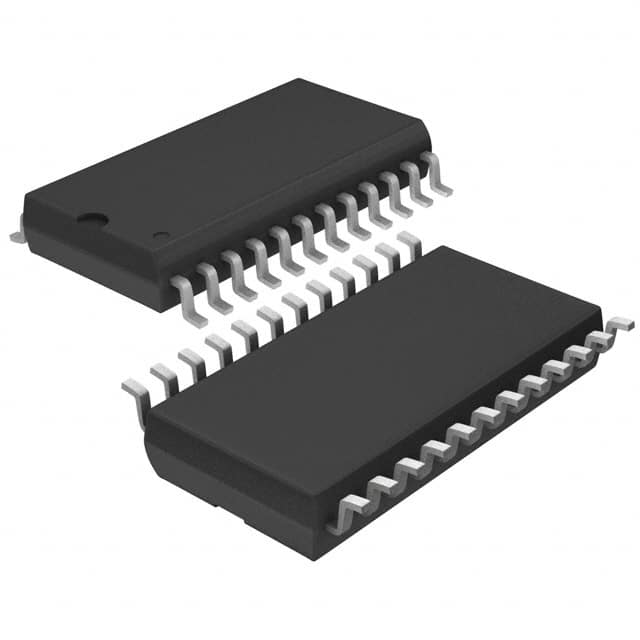
- Part No.:
- AD7731BR
- Manufacturer:
- Analog Devices Inc.
- Category:
- Analog to Digital Converters (ADC)
- Package:
- 24-SOIC (0.295", 7.50mm Width)
- Datasheet:
-
 AD7731BR.pdf
- Description:
- IC ADC 24BIT SIGMA-DELTA 24SOIC
- Quantity:
- Payment:

- Shipping:

Inventory:2,454
Please send an inquiry. Send us your inquiry, and we will respond immediately.
Product details
Overview
AD7731BR from Analog Devices is a 24-bit sigma-delta analog-to-digital converter optimized for high-precision process control front ends. It features a programmable-gain amplifier (PGA), three buffered differential analog input channels (configurable as five pseudo-differential inputs), differential reference input, and integrated self/system calibration. With 16-bit peak-to-peak resolution at 800 Hz output rate, <5 nV/°C offset drift, and single +5 V analog supply operation, it directly digitizes low-level transducer signals in industrial PLCs and instrumentation.
For engineers reviewing the AD7731BR datasheet, AD7731BR pinout, AD7731BR application, or AD7731BR equivalent, this page delivers verified technical context, validated pin functions, real-world application mappings, and confirmed alternative options - all grounded in Analog Devices' official Rev. A specification and ordering guide for the AD7731BR (24-lead SOIC_W, –40°C to +85°C).
Technical Context
The AD7731BR implements a two-stage digital filter architecture: a programmable SINC³ modulator followed by either a fixed 22-tap FIR filter (default) or FASTStep™ mode for rapid step-response settling. Its on-chip PGA supports seven unipolar (0 to +1.28 V) and seven bipolar (±1.28 V) input ranges, with input bias current ≤50 nA and CMR up to 110 dB at 20 mV range.
It uses a SPI-compatible 3-wire serial interface (CS, SCLK, DIN/DOUT) with polarity-selectable clock edge (POL pin), supports channel sequencing with 1 ms settling time, and includes transducer burnout detection via ±100 nA currents on AIN1(±). The device operates with internal chopper stabilization (CHP = 1 mode) to achieve <5 nV/°C offset drift and <2 ppm/°C gain drift.
Key Specifications
| Parameter | Value and Actual Design Meaning |
|---|---|
| Resolution | 24-bit no-missing-codes; 16-bit peak-to-peak at 800 Hz output rate - enables direct digitization of microvolt-level sensor outputs without external amplification. |
| Input Ranges | Seven unipolar (0 to +1.28 V) and seven bipolar (±1.28 V) ranges - configurable via RN2–RN0 bits to match transducer output without external scaling. |
| Offset Drift | <5 nV/°C (CHP = 1 mode) - ensures stable zero-point accuracy over industrial temperature range (–40°C to +85°C). |
| Gain Drift | 2 ppm/°C max - maintains full-scale accuracy across temperature without frequent recalibration in field-deployed systems. |
| Common-Mode Rejection | 110 dB at DC, 20 mV range - rejects noise from shared ground paths in noisy plant-floor environments. |
| Power Supply | +5 V AVDD, +2.7 V to +5.25 V DVDD - supports mixed-voltage system integration with low-power digital domains. |
| Settling Time | 1 ms between channels - allows high-throughput multi-channel scanning in programmable logic controllers (PLCs). |
Pinout & Package
AD7731BR is housed in a 24-lead SOIC_W package (RW-24), RoHS-compliant when ordered as AD7731BRZ variants. Pin layout follows standard SOIC pinout with exposed pad not present; thermal impedance θJA = 128°C/W.
| Pin/Terminal | Circuit Role | Design Meaning |
|---|---|---|
| SCLK | Serial clock input | Schmitt-triggered; determines timing of DIN/DOUT data transfers - supports both continuous and burst-mode microcontroller interfacing. |
| MCLK IN / MCLK OUT | Master clock interface | Accepts 1–5 MHz crystal/resonator or external CMOS clock; MCLK OUT provides inverted clock for synchronous peripheral timing. |
| AIN1–AIN6 | Programmable-gain analog inputs | Three differential pairs (AIN1/AIN2, AIN3/AIN4, AIN5/AIN6); AIN3/AIN4 double as digital I/O (D1/D0) when DEN bit enabled. |
| REF IN(+), REF IN(–) | Differential reference input | Supports +2.5 V or +5 V nominal reference (HIREF bit); 120 dB rejection enables ratiometric measurement against unstable supplies. |
| POL, CS, RDY, RESET, SYNC | Control and status logic | Enable synchronized multi-device operation (SYNC), hardware reset (RESET), ready signaling (RDY), and clock polarity selection (POL) for flexible MCU/DSP integration. |
Key Features
| Feature | Design Value |
|---|---|
| FASTStep™ mode | Reduces channel-switching settling time to 1 ms while preserving 13-bit p-p resolution - critical for high-speed scan-based DCS acquisition. |
| Transducer burnout detection | Integrated ±100 nA current sources on AIN1(±) - enables open-wire fault detection without external components in 4–20 mA loop interfaces. |
| On-chip calibration engine | Self-calibration (zero/full-scale) and system calibration support - eliminates need for external calibration hardware in field-serviceable instruments. |
| Chopper-stabilized architecture (CHP = 1) | Sub-5 nV/°C offset drift and 2 ppm/°C gain drift - sustains accuracy in thermally unstable enclosures without active temperature compensation. |
| Buffered high-impedance inputs | Input bias current ≤50 nA - accommodates high-source-impedance sensors (e.g., RTDs, thermocouples with cold-junction compensation) without signal degradation. |
Applications
| PLC Analog Input Module | Industrial Weigh Scale Controller |
|---|---|
|
Use Scenario: Digitizing multiple 4–20 mA current-loop signals from pressure, flow, and level transmitters in a modular rack-mounted PLC. IC Role / Device Role / Timing Role: Primary ADC front end; performs PGA gain selection, channel multiplexing, and digital filtering before SPI transmission to host controller. Use Value: 1 ms inter-channel settling and FASTStep™ mode enable 1 kHz aggregate scan rate across six channels while maintaining 13-bit effective resolution. |
Use Scenario: High-accuracy weight measurement in floor scales using load cell bridges with mV-level differential outputs. IC Role / Device Role / Timing Role: Precision sigma-delta converter with programmable gain and ratiometric reference - directly interfaces bridge outputs without external instrumentation amps. Use Value: 16-bit p-p resolution at 800 Hz and <5 nV/°C offset drift ensure sub-0.01% repeatability across ambient temperature swings in factory environments. |
| Process Transmitter Signal Conditioning | Calibration-Grade Data Logger |
|
Use Scenario: Signal conditioning stage in smart HART-enabled transmitters for temperature, pressure, and differential pressure sensing. IC Role / Device Role / Timing Role: Analog front-end ADC with integrated burnout detection and self-calibration - monitors sensor health and maintains traceable accuracy over 10+ year field life. Use Value: ±100 nA burnout currents and NO REF fault detection provide autonomous diagnostics; <2 ppm/°C gain drift meets ISA-S84 SIL-2 requirements for safety-related loops. |
Use Scenario: Portable environmental monitoring logger capturing thermocouple, RTD, and strain gauge data with NIST-traceable accuracy. IC Role / Device Role / Timing Role: High-stability ADC with dual-reference support (+2.5 V/+5 V) and system calibration registers - enables field recalibration against certified voltage standards. Use Value: On-chip system calibration reduces post-manufacture calibration labor by >70%; 110 dB CMR suppresses EMI from nearby AC motors and VFDs. |
Equivalent & Alternatives
The following parts are listed as comparable options for similar high-resolution sigma-delta ADC applications.
| Alternative Part | Technical Difference | Application Difference | Selection Advice |
|---|---|---|---|
| AD7730BR | 24-bit, but only two differential inputs; no FASTStep™; 12-bit p-p resolution at 1 kHz; lacks burnout current sources. | Suitable for simpler dual-channel systems without multi-sensor sequencing or open-wire diagnostics. | Select AD7730BR only if channel count, step-response speed, and sensor health monitoring are non-critical. |
| ADS1258IPWR | 24-bit, 8-channel simultaneous sampling; higher 120 kSPS throughput; no integrated PGA or burnout detection; requires external reference. | Better for high-channel-count data acquisition where simultaneous capture matters more than transducer-level front-end integration. | Choose ADS1258IPWR when synchronizing >4 channels per cycle is required, and external signal conditioning is acceptable. |
Compared with AD7731BR, AD7730BR offers lower integration and reduced diagnostic capability, while ADS1258IPWR trades embedded PGA and burnout detection for higher channel density and speed - making AD7731BR uniquely suited for cost-sensitive, self-diagnosing industrial analog input modules.
Availability
AD7731BR is available at Aetrix Electronics and suitable for industrial PLCs, weigh scale controllers, process transmitter signal conditioning, and calibration-grade data loggers requiring stable component supply across extended product lifecycles.
Supply support for AD7731BR includes scheduled delivery planning, volume procurement assistance, BOM continuity management, traceable sourcing, and lifecycle availability coordination for OEM customers, industrial embedded developers, connected-device designers, and electronics production programs.
Manufacturer
Analog Devices is a global leader in high-performance analog, mixed-signal, and digital signal processing semiconductors, headquartered in Wilmington, MA, with design centers worldwide.
The AD7731BR belongs to Analog Devices' precision sigma-delta ADC product line, engineered specifically for ruggedized industrial process control front ends where low drift, integrated diagnostics, and transducer-level signal conditioning are mandatory.
FAQ
What is the maximum output data rate supported by the AD7731BR?
The AD7731BR supports programmable output rates up to 6.4 kHz in SKIP mode, where only the SINC³ filter is active. In normal mode with both SINC³ and 22-tap FIR filtering, the maximum update rate is 800 Hz - delivering 16-bit peak-to-peak resolution. The device's FASTStep™ mode maintains 13-bit p-p resolution at 1 ms channel switching, enabling high-throughput multi-channel acquisition without sacrificing stability. This behavior is confirmed in the AD7731 Rev. A datasheet Tables I–IV and Figure 3 signal chain description.
Does the AD7731BR require an external reference voltage?
No, the AD7731BR accepts an external differential reference but does not require one - it operates ratiometrically using its own internal reference path. The REF IN(+) and REF IN(–) pins support either +2.5 V or +5 V nominal differential voltage (selected via HIREF bit), and the part includes NO REF fault detection that asserts a status bit if reference voltage falls below 0.3 V. This allows robust operation even with marginally regulated supplies, and is explicitly defined in the "Reference Input" section of the AD7731BR datasheet Rev. A, page 3.
Can the AD7731BR interface directly with a microcontroller using only three wires?
Yes, the AD7731BR supports true 3-wire SPI-compatible serial communication using CS, SCLK, and a bidirectional DIN/DOUT line - no separate data lines required. The POL pin configures clock polarity to match MCU timing (rising or falling edge active), and RDY provides ready signaling to avoid polling. This interface is fully documented in the "Serial Interface and Control Logic" block diagram (Figure 2) and timing specifications (page 4) of the AD7731BR Rev. A datasheet, confirming compatibility with common 8-bit and 16-bit microcontrollers.
How does the AD7731BR handle transducer open-circuit detection?
The AD7731BR integrates dedicated ±100 nA burnout current sources on AIN1(+) and AIN1(–) pins, enabling automatic open-wire detection without external components. When enabled, these currents force a measurable voltage shift across an open transducer, which the ADC converts and reports via status registers. Initial tolerance is ±10% at 25°C with 0.1%/°C drift - sufficient for reliable fault flagging in 4–20 mA loop diagnostics. This function is detailed in the "Burnout Currents" section (page 6) and pin description for AIN1 (page 8) of the AD7731BR Rev. A datasheet.
What package type is used for the AD7731BR?
The AD7731BR is supplied in a 24-lead SOIC_W (wide-body) package, designated RW-24 in Analog Devices' ordering guide. This surface-mount package measures 7.6 mm × 15.6 mm with 0.635 mm lead pitch and has a thermal impedance (θJA) of 128°C/W. It is distinct from the PDIP (N-24-1) and TSSOP (RU-24) variants - the "R" suffix in AD7731BR explicitly denotes the SOIC_W option, as confirmed in the "Ordering Guide" table on page 5 of the AD7731BR Rev. A datasheet.
AD7731BR Specifications
- Product attributes
- Attribute value
- Manufacturer:
- Analog Devices Inc.
- Series:
- -
- Package/Case:
- 24-SOIC (0.295", 7.50mm Width)
- Packaging:
- Tube
- Product Status:
- Obsolete
- Number of Bits:
- 24
- Sampling Rate (Per Second):
- 6.4k
- Number of Inputs:
- 3, 5
- Input Type:
- Differential
- Data Interface:
- SPI, DSP
- Configuration:
- MUX-PGA-ADC
- Ratio - S/H:ADC:
- -
- Number of A/D Converters:
- 1
- Architecture:
- Sigma-Delta
- Reference Type:
- External
- Voltage - Supply, Analog:
- 5V
- Voltage - Supply, Digital:
- 5V
- Features:
- PGA
- Operating Temperature:
- -40°C ~ 85°C
- Supplier Device Package:
- 24-SOIC
- Mounting Type:
- Surface Mount
- Grade:
- -
- Qualification:
- -
AD7731BR FAQ
1.How can I place an order for AD7731BR through Aetrix?
Please submit a Request for Quotation (RFQ) for AD7731BR on Aetrix. Our sales agent will provide a competitive quotation and guide you through the order confirmation once you accept the terms.
2.Are the price and stock information for AD7731BR reliable?
The price and inventory of AD7731BR are updated periodically and may fluctuate due to market conditions. Stock and pricing data are typically refreshed every 24 hours. Quotation validity for AD7731BR is usually 5 days.
3.What payment methods are accepted for AD7731BR?
We accept Wire Transfer, PayPal, Credit Card, Western Union, MoneyGram, and Escrow for AD7731BR transactions.
Note: Certain payment methods may incur a processing fee.
4.How is shipping managed for AD7731BR?
AD7731BR orders can be shipped via leading logistics carriers, including DHL, UPS, FedEx, TNT, or Registered Mail.
Once your AD7731BR order is processed, you will receive an email with the shipment details and tracking number.
Note: Tracking information may take up to 24 hours to appear. Express delivery typically takes 3–5 business days.
5.How can I obtain technical support or documentation for AD7731BR?
For technical support, including AD7731BR datasheets, pinout diagrams, or application guidance, please contact our engineering support team. They can provide detailed documentation and assistance for your AD7731BR requirements.
6.How does Aetrix verify that AD7731BR is sourced from the original manufacturer or authorized distributors?
All AD7731BR products on Aetrix are procured from qualified distributors and authorized channels. Our dedicated quality assurance team conducts strict verification, including traceability checks and, if necessary, third-party testing. This ensures that AD7731BR meets industry standards.
7.What is the process for return or replacement of AD7731BR?
All AD7731BR units undergo pre-shipment inspection (PSI). If there is an issue with AD7731BR, returns or replacements are accepted under the following conditions:
1.Quantity discrepancies, incorrect items, or visible external defects (such as breakage or corrosion), acknowledged by Aetrix.
2.The issue is reported within 90 days of delivery.
3.The AD7731BR part is unused and in its original packaging.
Return procedure for AD7731BR:
1.Submit a request within 90 days.
2.Obtain a Return Material Authorization (RMA) from Aetrix.
AD7731BR Tags
-
ADC081C021CIMKX/NOPB
Texas Instruments

-
MCP3021A5T-E/OT
Microchip Technology
-
TLA2024IRUGR
Texas Instruments
-
MCP3221A5T-E/OT
Microchip Technology
-
MCP3221A5T-I/OT
Microchip Technology
-
MCP3221A4T-E/OT
Microchip Technology
-
MCP3221A6T-E/OT
Microchip Technology
-
MCP3221A0T-E/OT
Microchip Technology
-
MCP3221A1T-E/OT
Microchip Technology

-
ADC121S021CIMFX/NOPB
Texas Instruments
-
MCP3001-I/MS
Microchip Technology

-
MCP3001-I/SN
Microchip Technology
Tech Hub

A practical engineering guide to 3.3V and 5V logic compatibility, input thresholds, resistor dividers, translator ICs, MOSFET level shifting, I2C pull-ups, timing limits and power-sequencing risks.

The 74HC595 uses push-pull logic outputs, while the TPIC6B595 uses 50 V open-drain DMOS sinks for higher-power loads. This guide compares timing, current limits, 3.3 V interfacing, load wiring, thermal…

The 74HC595 converts serial data into eight stable parallel outputs. This guide covers pin functions, shift and storage timing, OE and MR behavior, drive-current limits, cascading, voltage compatibilit…

A technical comparison of level-sensitive latches and edge-triggered flip-flops, covering timing windows, setup and hold limits, master–slave operation, time borrowing, race-through, HDL inference and…

A D latch stores one bit while Enable controls when data can pass. This reference covers gate-level operation, truth tables, transparency, setup and hold timing, LE versus OE, common ICs and practical …

An SR latch stores one bit through cross-coupled feedback. This engineering reference covers NOR and NAND implementations, truth tables, forbidden-state recovery, gated operation, switch debouncing, fa…

Latch circuits retain one bit through feedback. This technical reference covers SR and D latches, truth tables, transparency, timing limits, latch-versus-flip-flop behavior, applications and common log…

An engineering guide to LED driver operation, constant-current and constant-voltage outputs, linear and switching topologies, dimming, IC selection, calculations, replacement compatibility, and fault c…

Operational amplifier guide covering op amp basics, feedback, ideal vs real op amps, common configurations, buffer circuits, offset, bias current, gain-bandwidth, slew rate, rail-to-rail limits and sel…

Jumper cables guide covering safe connection order, red and black clamp placement, final ground connection, cable gauge, length, clamp quality, copper vs CCA cables, jump starter comparison and battery…


