
 My Inquiry
 My Account


Analog Devices Inc. AD7767BRUZ-1
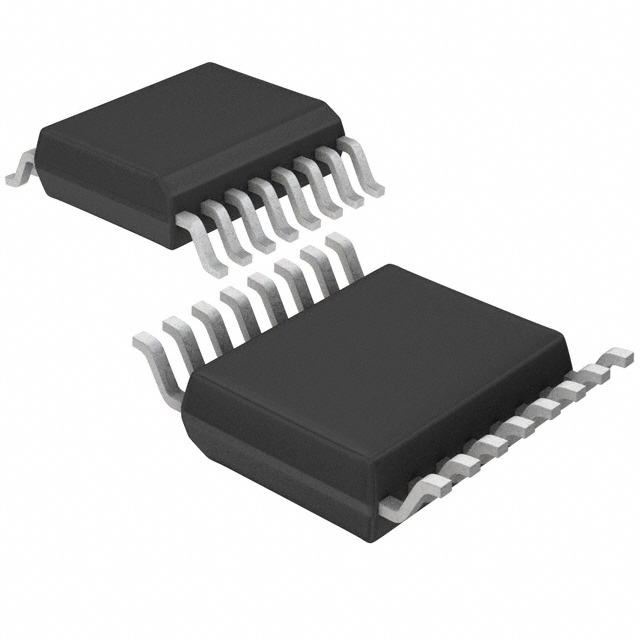
- Part No.:
- AD7767BRUZ-1
- Manufacturer:
- Analog Devices Inc.
- Category:
- Analog to Digital Converters (ADC)
- Package:
- 16-TSSOP (0.173", 4.40mm Width)
- Datasheet:
-
 AD7767BRUZ-1.pdf
- Description:
- IC ADC 24BIT SAR 16TSSOP
- Quantity:
- Payment:

- Shipping:

Inventory:2,291
Please send an inquiry. Send us your inquiry, and we will respond immediately.
Product details
Overview
AD7767BRUZ-1 from Analog Devices is a 24-bit, oversampled successive approximation register (SAR) analog-to-digital converter optimized for high-precision, low-power data acquisition. It delivers 109.5 dB dynamic range at 128 kSPS, −118 dB THD, ±3 ppm typical INL, and operates from a 2.5 V supply with 5 V reference - enabling high-fidelity measurement of small-signal changes atop large ac/dc backgrounds in portable instrumentation.
For engineers reviewing the AD7767BRUZ-1 datasheet, AD7767BRUZ-1 pinout, AD7767BRUZ-1 application, or AD7767BRUZ-1 equivalent, key selection considerations include its fixed 128 kSPS output data rate (decimate-by-8 mode), 15 mW power consumption, on-chip linear-phase FIR filter with 100 dB stop-band attenuation, and 16-lead TSSOP package with daisy-chain and multi-device synchronization support.
Technical Context
The AD7767BRUZ-1 implements an oversampled SAR architecture with a three-stage decimating FIR filter (decimation ratio = 8), yielding a group delay of 37/ODR and full filter settling time of 590 × tMCLK. Its fully differential analog input (VIN+, VIN−) accepts ±VREF p-p signals with 22 pF input capacitance and supports common-mode rejection up to −110 dB at 50 Hz.
Digital interface operates with 1.8 V–3.6 V logic (VDRIVE), serial 24-bit two's complement output (MSB-first), and includes dedicated SYNC/PD for multi-device synchronization or power-down, SDI for daisy-chaining, and DRDY for data-ready indication - all synchronized to a 1.024 MHz main clock (MCLK).
Key Specifications
| Parameter | Value and Actual Design Meaning |
|---|---|
| Resolution | 24 bits, no missing codes - guarantees monotonicity and full code coverage for precision metrology. |
| Dynamic Range | 109.5 dB at 128 kSPS (shorted inputs) - enables detection of microvolt-level signals within noisy industrial environments. |
| THD | −118 dB (typical, 1 kHz full-scale tone) - minimizes harmonic contamination in spectral analysis applications like vibration monitoring. |
| INL | ±3 ppm (typical), ±7.6 ppm (max) - ensures <0.001% linearity error over full scale, critical for calibration-grade systems. |
| Power Consumption | 15 mW at 128 kSPS - balances performance and battery life in USB/PCI-based portable DAQ systems. |
| Reference Input | 2.4 V to 5 V (VREF+) - supports high-accuracy external references (e.g., ADR445) for stable 24-bit conversion without internal reference drift. |
| Operating Temperature | −40°C to +105°C - qualified for industrial and automotive under-hood sensing where thermal stability is essential. |
Pinout & Package
AD7767BRUZ-1 is housed in a 4.4 mm × 5 mm, 16-lead TSSOP package (RU-16) with exposed pad for thermal enhancement. Pin functions are validated per Analog Devices Rev. D datasheet (pages 9–10).
| Pin/Terminal | Circuit Role | Design Meaning |
|---|---|---|
| 1 (AVDD) | Analog power supply | +2.5 V rail for analog core; requires local 10 µF + 0.1 µF decoupling to minimize noise coupling into conversion path. |
| 2 (VREF+) | Reference voltage input | Accepts 2.4–5 V external reference; directly scales full-scale range - accuracy depends entirely on reference stability and noise. |
| 3 (REFGND) | Reference ground | Separate ground return for VREF+; must be tied to AGND at single point to avoid ground loops degrading CMRR. |
| 4 (VIN+), 5 (VIN−) | Differential analog inputs | True differential pair with ±VREF p-p range; rejects common-mode noise and enables >110 dB CMRR at 50 Hz. |
| 7 (SYNC/PD) | Sync/power-down control | Active-low input: falling edge initiates synchronization across multiple AD7767BRUZ-1 devices or enters 0.1–6 µA power-down state. |
| 10 (SDO) | Serial data output | 24-bit two's complement MSB-first stream; tri-state controlled by CS - enables shared bus in multi-ADC systems. |
| 12 (DRDY) | Data ready indicator | Falling edge signals valid conversion result in output register; timing referenced to MCLK rising edge (t1 = 510 ns typ). |
| 14 (MCLK) | Main clock input | 1.024 MHz clock sets sampling frequency; ODR = MCLK/8 → 128 kSPS; jitter directly impacts SNR performance. |
| 15 (SDI) | Daisy-chain input | Accepts SDO output from upstream device - enables cascaded readout without additional GPIO or CS lines. |
| 16 (CS) | Chip select | Enables SDO and defines start of serial frame; MSB latched on CS falling edge - supports multi-drop SPI configurations. |
Key Features
| Feature | Design Value |
|---|---|
| Oversampled SAR architecture | Combines SAR speed and resolution with sigma-delta-like noise shaping - eliminates need for external anti-aliasing filters beyond basic RC. |
| On-chip linear-phase FIR filter | Provides 100 dB stop-band attenuation and ±0.005 dB pass-band ripple - preserves signal integrity in spectral analysis without post-processing correction. |
| Daisy-chain capability | Reduces host interface complexity: up to N devices share one SDO line and one SCLK/CS pair, cutting PCB routing and controller pin count. |
| Synchronization of multiple devices | SYNC/PD pin allows simultaneous sampling across distributed sensor nodes - essential for phase-coherent multi-channel acquisition. |
| Flexible logic interface | VDRIVE pin supports 1.8 V–3.6 V I/O voltage - enables direct connection to FPGA, MCU, or ASIC I/O banks without level shifters. |
Applications
| Vibration Analysis System | Portable Medical ECG Monitor |
|---|---|
Use Scenario: High-resolution capture of bearing fault frequencies (e.g., 2–10 kHz harmonics) from MEMS accelerometers in predictive maintenance edge nodes. IC Role / Device Role / Timing Role: Primary ADC digitizing conditioned differential accelerometer output; provides 128 kSPS sampling synchronized across multi-axis sensors via SYNC/PD. Use Value: 109.5 dB dynamic range resolves sub-millig acceleration changes amid mechanical noise floor; −118 dB THD prevents harmonic masking of incipient faults. |
Use Scenario: Battery-powered, 3-lead ECG acquisition with baseline wander suppression and R-wave detection in ambulatory monitors. IC Role / Device Role / Timing Role: Precision front-end ADC converting amplified differential biopotential signals; operates at 128 kSPS with on-chip FIR filtering to suppress 50/60 Hz mains interference. Use Value: ±3 ppm INL ensures accurate ST-segment amplitude measurement; 15 mW power enables >24-hour operation on coin-cell battery with low-noise analog front-end. |
| USB-Based Industrial DAQ Module | Low-Power Wireless Sensor Node |
Use Scenario: Compact, PC-connected data logger for thermocouple, strain gauge, and RTD measurements in lab and field environments. IC Role / Device Role / Timing Role: Core 24-bit ADC interfacing to USB microcontroller via SPI; leverages daisy-chain mode to support 4-channel simultaneous sampling with single CS line. Use Value: 24-bit NMC resolution captures µV-level thermocouple EMFs; 5 V reference support enables direct use of precision ADR445, eliminating gain calibration. |
Use Scenario: Solar-powered structural health monitoring node measuring microstrain in bridges using foil strain gauges. IC Role / Device Role / Timing Role: Low-power ADC operating in burst mode: wakes, samples at 128 kSPS for 10 ms, processes FIR-filtered data, then returns to 0.1 µA power-down via SYNC/PD. Use Value: 15 mW active power and 0.1 µA deep sleep current extend battery life to >5 years; on-chip filter reduces MCU processing load and RF transmission overhead. |
Equivalent & Alternatives
The following parts are listed as comparable options for similar high-resolution, low-power SAR ADC applications.
| Alternative Part | Technical Difference | Application Difference | Selection Advice |
|---|---|---|---|
| AD7767BRUZ | Same silicon, identical specs, but unspecified output data rate variant - may default to AD7767 (128 kSPS) or require configuration; no -1 suffix guarantee. | No guaranteed 128 kSPS fixed-rate operation; lacks explicit qualification for synchronized multi-device use cases. | Select AD7767BRUZ-1 when deterministic 128 kSPS timing, guaranteed decimate-by-8 behavior, and multi-unit sync reliability are required. |
| AD7766BRUZ | 16-bit resolution, 109.5 dB dynamic range at 128 kSPS, 15 mW - lower resolution but same ODR and power; no on-chip FIR filter. | Lacks integrated digital filtering - requires external DSP or host-side decimation, increasing system latency and firmware complexity. | Choose AD7766BRUZ only if 16-bit resolution suffices and external filtering infrastructure already exists; AD7767BRUZ-1 adds 8 extra bits with no added latency. |
Compared with AD7767BRUZ and AD7766BRUZ, the AD7767BRUZ-1 uniquely guarantees fixed 128 kSPS operation with embedded FIR filtering and multi-device synchronization - making it the only option among the three that delivers verified 24-bit precision, spectral purity, and deterministic timing in compact industrial DAQ designs.
Availability
AD7767BRUZ-1 is available at Aetrix Electronics and suitable for vibration analysis systems, portable medical ECG monitors, and USB-based industrial DAQ modules requiring stable component supply, long-term lifecycle support, and traceable sourcing from authorized channels.
Supply support for AD7767BRUZ-1 includes scheduled delivery planning, volume procurement assistance, BOM continuity management, traceable sourcing, and lifecycle availability coordination for OEM customers, industrial embedded developers, connected-device designers, and electronics production programs.
Manufacturer
Analog Devices, Inc. is a global leader in high-performance analog, mixed-signal, and digital signal processing semiconductors, serving industrial, communications, automotive, and healthcare markets since 1965.
The AD7767BRUZ-1 belongs to Analog Devices' precision data acquisition ADC family, designed specifically for ultralow-power, high-dynamic-range measurement systems where 24-bit resolution, low THD, and deterministic timing must coexist in space-constrained, thermally demanding environments.
FAQ
What is the guaranteed output data rate of the AD7767BRUZ-1?
The AD7767BRUZ-1 is factory-configured for a fixed 128 kSPS output data rate, achieved via decimation-by-8 of the 1.024 MHz main clock. This rate is guaranteed across −40°C to +105°C and does not require register programming - unlike generic AD7767 variants which may support multiple ODR modes.
Does the AD7767BRUZ-1 include an on-chip digital filter, and what are its characteristics?
Yes, the AD7767BRUZ-1 integrates a linear-phase FIR filter with 100 dB stop-band attenuation, ±0.005 dB pass-band ripple, and a −3 dB bandwidth of 0.49 × ODR (62.7 kHz). The filter provides complete settling in 590 × tMCLK (≈576 µs), eliminating need for external digital post-processing in spectral applications.
Can the AD7767BRUZ-1 synchronize multiple units for simultaneous sampling?
Yes, the AD7767BRUZ-1 features a dedicated SYNC/PD pin that, when driven low, forces all connected AD7767BRUZ-1 devices to reset their internal filters and begin sampling simultaneously on the next MCLK rising edge - enabling phase-coherent multi-channel acquisition without external timing controllers.
What reference voltage options are supported by the AD7767BRUZ-1?
The AD7767BRUZ-1 accepts an external reference voltage (VREF+) from 2.4 V to 5 V. A 5 V reference (e.g., ADR445) is recommended for maximum dynamic range; a 2.5 V reference (e.g., ADR441) is supported but reduces full-scale range proportionally while maintaining 24-bit resolution and linearity.
Is the AD7767BRUZ-1 pin-compatible with other members of the AD7767 family?
Yes, the AD7767BRUZ-1 shares identical 16-lead TSSOP (RU-16) packaging and pinout with AD7767BRUZ, AD7767-1BRUZ, and AD7767-2BRUZ - enabling drop-in replacement in existing layouts. However, functional behavior (ODR, power, filter response) differs per variant and must be verified in system-level timing and power budgeting.
AD7767BRUZ-1 Specifications
- Product attributes
- Attribute value
- Manufacturer:
- Analog Devices Inc.
- Series:
- -
- Package/Case:
- 16-TSSOP (0.173", 4.40mm Width)
- Packaging:
- Tube
- Product Status:
- Active
- Number of Bits:
- 24
- Sampling Rate (Per Second):
- 64k
- Number of Inputs:
- 1
- Input Type:
- Differential
- Data Interface:
- SPI
- Configuration:
- ADC
- Ratio - S/H:ADC:
- -
- Number of A/D Converters:
- 1
- Architecture:
- SAR
- Reference Type:
- External
- Voltage - Supply, Analog:
- 2.5V
- Voltage - Supply, Digital:
- 2.5V
- Features:
- -
- Operating Temperature:
- -40°C ~ 105°C
- Supplier Device Package:
- 16-TSSOP
- Mounting Type:
- Surface Mount
- Grade:
- -
- Qualification:
- -
AD7767BRUZ-1 FAQ
1.How can I place an order for AD7767BRUZ-1 through Aetrix?
Please submit a Request for Quotation (RFQ) for AD7767BRUZ-1 on Aetrix. Our sales agent will provide a competitive quotation and guide you through the order confirmation once you accept the terms.
2.Are the price and stock information for AD7767BRUZ-1 reliable?
The price and inventory of AD7767BRUZ-1 are updated periodically and may fluctuate due to market conditions. Stock and pricing data are typically refreshed every 24 hours. Quotation validity for AD7767BRUZ-1 is usually 5 days.
3.What payment methods are accepted for AD7767BRUZ-1?
We accept Wire Transfer, PayPal, Credit Card, Western Union, MoneyGram, and Escrow for AD7767BRUZ-1 transactions.
Note: Certain payment methods may incur a processing fee.
4.How is shipping managed for AD7767BRUZ-1?
AD7767BRUZ-1 orders can be shipped via leading logistics carriers, including DHL, UPS, FedEx, TNT, or Registered Mail.
Once your AD7767BRUZ-1 order is processed, you will receive an email with the shipment details and tracking number.
Note: Tracking information may take up to 24 hours to appear. Express delivery typically takes 3–5 business days.
5.How can I obtain technical support or documentation for AD7767BRUZ-1?
For technical support, including AD7767BRUZ-1 datasheets, pinout diagrams, or application guidance, please contact our engineering support team. They can provide detailed documentation and assistance for your AD7767BRUZ-1 requirements.
6.How does Aetrix verify that AD7767BRUZ-1 is sourced from the original manufacturer or authorized distributors?
All AD7767BRUZ-1 products on Aetrix are procured from qualified distributors and authorized channels. Our dedicated quality assurance team conducts strict verification, including traceability checks and, if necessary, third-party testing. This ensures that AD7767BRUZ-1 meets industry standards.
7.What is the process for return or replacement of AD7767BRUZ-1?
All AD7767BRUZ-1 units undergo pre-shipment inspection (PSI). If there is an issue with AD7767BRUZ-1, returns or replacements are accepted under the following conditions:
1.Quantity discrepancies, incorrect items, or visible external defects (such as breakage or corrosion), acknowledged by Aetrix.
2.The issue is reported within 90 days of delivery.
3.The AD7767BRUZ-1 part is unused and in its original packaging.
Return procedure for AD7767BRUZ-1:
1.Submit a request within 90 days.
2.Obtain a Return Material Authorization (RMA) from Aetrix.
AD7767BRUZ-1 Tags
-
ADC081C021CIMKX/NOPB
Texas Instruments
-
MCP3021A5T-E/OT
Microchip Technology
-
TLA2024IRUGR
Texas Instruments
-
MCP3221A5T-E/OT
Microchip Technology
-
MCP3221A5T-I/OT
Microchip Technology
-
MCP3221A4T-E/OT
Microchip Technology
-
MCP3221A6T-E/OT
Microchip Technology
-
MCP3221A0T-E/OT
Microchip Technology
-
MCP3221A1T-E/OT
Microchip Technology

-
ADC121S021CIMFX/NOPB
Texas Instruments
-
MCP3001-I/MS
Microchip Technology

-
MCP3001-I/SN
Microchip Technology
Tech Hub

A practical engineering guide to 3.3V and 5V logic compatibility, input thresholds, resistor dividers, translator ICs, MOSFET level shifting, I2C pull-ups, timing limits and power-sequencing risks.

The 74HC595 uses push-pull logic outputs, while the TPIC6B595 uses 50 V open-drain DMOS sinks for higher-power loads. This guide compares timing, current limits, 3.3 V interfacing, load wiring, thermal…

The 74HC595 converts serial data into eight stable parallel outputs. This guide covers pin functions, shift and storage timing, OE and MR behavior, drive-current limits, cascading, voltage compatibilit…

A technical comparison of level-sensitive latches and edge-triggered flip-flops, covering timing windows, setup and hold limits, master–slave operation, time borrowing, race-through, HDL inference and…

A D latch stores one bit while Enable controls when data can pass. This reference covers gate-level operation, truth tables, transparency, setup and hold timing, LE versus OE, common ICs and practical …

An SR latch stores one bit through cross-coupled feedback. This engineering reference covers NOR and NAND implementations, truth tables, forbidden-state recovery, gated operation, switch debouncing, fa…

Latch circuits retain one bit through feedback. This technical reference covers SR and D latches, truth tables, transparency, timing limits, latch-versus-flip-flop behavior, applications and common log…

An engineering guide to LED driver operation, constant-current and constant-voltage outputs, linear and switching topologies, dimming, IC selection, calculations, replacement compatibility, and fault c…

Operational amplifier guide covering op amp basics, feedback, ideal vs real op amps, common configurations, buffer circuits, offset, bias current, gain-bandwidth, slew rate, rail-to-rail limits and sel…

Jumper cables guide covering safe connection order, red and black clamp placement, final ground connection, cable gauge, length, clamp quality, copper vs CCA cables, jump starter comparison and battery…


