
 My Inquiry
 My Account


Analog Devices Inc. AD8014ARZ-REEL7
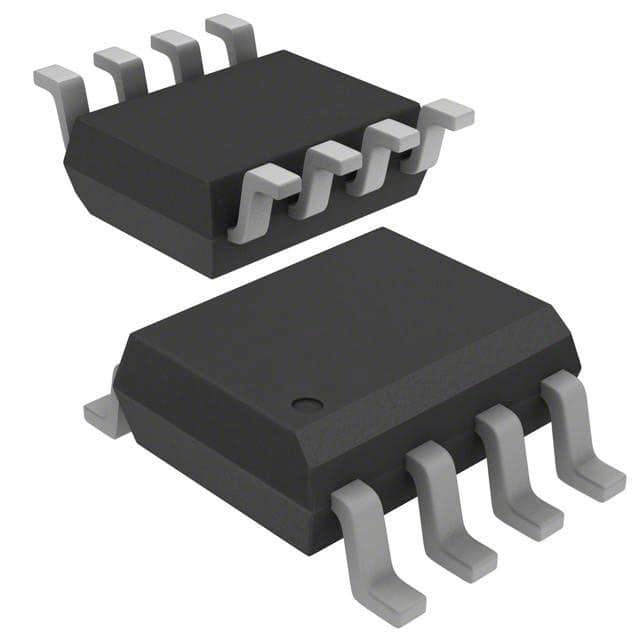
- Part No.:
- AD8014ARZ-REEL7
- Manufacturer:
- Analog Devices Inc.
- Category:
- Instrumentation, Op Amps, Buffer Amps
- Package:
- 8-SOIC (0.154", 3.90mm Width)
- Datasheet:
-
 AD8014ARZ-REEL7.pdf
- Description:
- IC OPAMP CFA 1 CIRCUIT 8SOIC
- Quantity:
- Payment:

- Shipping:

Inventory:1,595
Please send an inquiry. Send us your inquiry, and we will respond immediately.
Product details
Overview
AD8014ARZ-REEL7 from Analog Devices is a current-feedback operational amplifier optimized for high-speed, low-power signal conditioning in battery-powered and video systems. It delivers 400 MHz –3 dB bandwidth (G = +1), 4000 V/µs slew rate, 24 ns settling time to 0.1%, 3.5 nV/√Hz input voltage noise, and operates from +4.5 V to +12 V supplies - enabling precision photodiode preamplification and 50 Ω/75 Ω video line driving.
For engineers reviewing the AD8014ARZ-REEL7 datasheet, AD8014ARZ-REEL7 pinout, AD8014ARZ-REEL7 application, or AD8014ARZ-REEL7 equivalent, this page provides verified circuit role, SOIC-8 package mapping, real-world video and photodiode use cases, confirmed alternative parts with functional trade-offs, and supply-chain support for industrial and consumer design-in.
Technical Context
The AD8014ARZ-REEL7 uses a proprietary current-feedback architecture with low-impedance inverting input, enabling wide bandwidth independent of closed-loop gain when paired with appropriate feedback resistors (e.g., 500 Ω–1 kΩ). Its transimpedance open-loop gain exceeds 750 kΩ, supporting stable operation with capacitive loads up to 55 pF when series output resistance is applied.
It features rail-to-rail input common-mode range (±3.8 V on ±5 V supplies), low input bias current (<15 µA), and temperature-stable DC performance (5 mV max offset, <10 µV/°C drift), making it suitable for DC-coupled high-frequency amplification where both speed and baseline accuracy are required.
Key Specifications
| Parameter | Value and Actual Design Meaning |
|---|---|
| –3 dB Bandwidth (G = +1) | 400 MHz - supports >100 MSPS signal acquisition without attenuation at baseband |
| Slew Rate | 4000 V/µs - preserves fast edge integrity in pulse and video applications |
| Settling Time (0.1%) | 24 ns - enables accurate sampling in high-speed ADC driver stages |
| Input Voltage Noise | 3.5 nV/√Hz - critical for low-noise photodiode preamp front-ends |
| Quiescent Current | 1.15 mA - allows operation in power-constrained portable instrumentation |
| Supply Range | +4.5 V to +12 V - compatible with single-supply 5 V systems and dual ±5 V rails |
| Output Drive | ±3.8 V swing into 1 kΩ - sufficient headroom for 2 Vp-p video signals on terminated lines |
Pinout & Package
AD8014ARZ-REEL7 is packaged in an 8-lead SOIC_N (R-8) compliant with JEDEC MS-012-AA, with 1.27 mm lead pitch and exposed pad not present. Pin 1 is marked by a beveled corner or dot; pins are numbered counterclockwise.
| Pin | Circuit Role | Design Meaning |
|---|---|---|
| 1 | No Connect (NC) | Internally unconnected - must remain floating or grounded per layout best practice |
| 2 | No Connect (NC) | Internally unconnected - no routing or termination required |
| 3 | Inverting Input (–IN) | Low-impedance node for current-feedback configuration; sets gain with feedback resistor |
| 4 | Negative Supply (–VS) | Connect to ground in single-supply mode or negative rail in dual-supply operation |
| 5 | No Connect (NC) | Internally unconnected - leave unconnected |
| 6 | Noninverting Input (+IN) | High-impedance input; used for reference biasing or unity-gain buffer configurations |
| 7 | No Connect (NC) | Internally unconnected - no electrical function |
| 8 | Output (VOUT) | Capable of sourcing/sinking 50 mA; requires series resistor for >40 pF capacitive loads |
Key Features
| Feature | Design Value |
|---|---|
| Current-feedback architecture | Enables flat bandwidth vs. gain trade-off - 280 MHz at G = +2, 160 MHz at G = –1 |
| Low distortion | –70 dB THD @ 5 MHz ensures fidelity in video and communication signal chains |
| Fast overload recovery | 60 ns return to 100 mV window after ±4 V input step - prevents signal blanking in transient-rich environments |
| Video-optimized drive | Maintains <0.06% differential gain error driving one 75 Ω NTSC cable - meets broadcast-grade linearity |
| Robust capacitive load handling | Stable with up to 55 pF load when series output resistor is added - simplifies LCD or cable interface design |
Applications
| Photodiode Preamp | Video Signal Driver |
|---|---|
Use Scenario: Amplifying weak, high-bandwidth current pulses from DVD/CD optical pickup photodiodes in multi-speed drives. IC Role / Device Role / Timing Role: Current-to-voltage converter with low input impedance (–IN node) minimizing photodiode capacitance effects and preserving pulse rise time. Use Value: 24 ns settling and 400 MHz bandwidth enable accurate decoding of sub-nanosecond optical pulses without group delay distortion. |
Use Scenario: Driving multiple 50 Ω or 75 Ω coaxial video lines (e.g., RGB, YPbPr) from a single source in portable cameras or broadcast encoders. IC Role / Device Role / Timing Role: High-current-output buffer delivering 2 Vp-p signals while maintaining <0.3° differential phase error across NTSC spectrum. Use Value: Simultaneous drive of up to three 50 Ω cables with <0.5% differential gain error - eliminates need for multiple amplifiers or splitters. |
| A/D Converter Driver | Handheld Instrument Front-End |
Use Scenario: Buffering and level-shifting sensor outputs prior to sampling by 10–14-bit, 50+ MSPS ADCs in test equipment. IC Role / Device Role / Timing Role: Settling-optimized driver ensuring full-scale transitions settle within 24 ns to 0.1%, meeting ADC aperture uncertainty requirements. Use Value: 4000 V/µs slew rate and 24 ns settling prevent missing codes during fast input transients - critical for dynamic range preservation. |
Use Scenario: Signal conditioning stage in battery-powered oscilloscopes, spectrum analyzers, or portable logic analyzers requiring low power and high fidelity. IC Role / Device Role / Timing Role: Low-noise, low-quiescent-current amplifier enabling >10-hour operation on single Li-ion cell while maintaining 400 MHz analog bandwidth. Use Value: 1.15 mA supply current at +5 V and 3.5 nV/√Hz noise allow simultaneous low-power and high-SNR operation - unique among GHz-class op amps. |
Equivalent & Alternatives
The following parts are listed as comparable options for similar high-speed current-feedback amplifier applications.
| Alternative Part | Technical Difference | Application Difference | Selection Advice |
|---|---|---|---|
| LMH6702MF/NOPB | Higher 1.8 GHz bandwidth but 12.5 mA quiescent current - 11× higher power draw | Better for RF IF stages; unsuitable for battery-powered designs | Select when bandwidth >1 GHz is mandatory and power budget allows ≥12 mA |
| ADA4817-1ARMZ | Faster 1 GHz bandwidth and lower 4.3 nV/√Hz noise, but only 20 mA output drive and no 50 Ω video drive validation | Preferred for precision low-noise lab instruments; lacks documented NTSC compliance | Select for ultra-low-noise, high-DC-accuracy applications where video line driving is not required |
Compared with LMH6702MF/NOPB and ADA4817-1ARMZ, the AD8014ARZ-REEL7 uniquely balances 400 MHz bandwidth, 1.15 mA quiescent current, and validated 50/75 Ω video drive capability - making it the only option qualified for cost-sensitive, power-constrained, and broadcast-linearity-critical designs.
Availability
AD8014ARZ-REEL7 is available at Aetrix Electronics and suitable for photodiode preamplification, video signal distribution, and high-speed ADC driver applications requiring stable component supply across production lifecycles.
Supply support for AD8014ARZ-REEL7 includes scheduled delivery planning, volume procurement assistance, BOM continuity management, traceable sourcing, and lifecycle availability coordination for OEM customers, industrial embedded developers, connected-device designers, and electronics production programs.
Manufacturer
Analog Devices, Inc. is a global leader in high-performance analog, mixed-signal, and digital signal processing semiconductors, headquartered in Norwood, MA, with design centers worldwide and ISO 9001-certified manufacturing.
The AD8014 belongs to Analog Devices' high-speed current-feedback op amp product line, engineered specifically for applications demanding wide bandwidth, low power, and video-grade linearity in compact portable and professional electronics.
FAQ
What is the maximum capacitive load the AD8014ARZ-REEL7 can drive without instability?
The AD8014ARZ-REEL7 is characterized to drive up to 55 pF with 30% overshoot when configured with RL = 1 kΩ and RF = 500 Ω. For loads exceeding 40 pF, Analog Devices recommends adding a small series resistor (e.g., 5–20 Ω) between the output pin and the capacitive load to ensure stability and minimize peaking - a technique validated in Figure 26 of the official datasheet.
Does the AD8014ARZ-REEL7 support single-supply operation?
Yes, the AD8014ARZ-REEL7 operates from a single +4.5 V to +12 V supply. When used in single-supply mode, the –VS pin connects to ground, and the +IN pin is biased to mid-supply (e.g., +2.5 V for +5 V rail) to accommodate AC-coupled inputs. The input common-mode range extends to within 1.2 V of the negative rail, enabling true single-supply functionality.
Is the AD8014ARZ-REEL7 RoHS compliant?
Yes, the "Z" suffix in AD8014ARZ-REEL7 indicates full RoHS compliance per EU Directive 2011/65/EU, including exemption 7a for lead in high-melting-temperature solder. This part contains ≤1000 ppm lead by weight in the die attach and ≤100 ppm in finishes, verified through material declarations and third-party testing.
What is the thermal resistance (θJA) of the AD8014ARZ-REEL7 package?
The AD8014ARZ-REEL7 uses an 8-lead SOIC_N (R-8) package with a junction-to-ambient thermal resistance (θJA) of 155°C/W under standard JEDEC PCB conditions (2s2p copper layers). This value assumes no internal thermal vias or heatsinking - derating curves in the datasheet (Table I) must be applied for ambient temperatures above +25°C to maintain safe junction temperature ≤+150°C.
Can the AD8014ARZ-REEL7 replace the AD8011 in existing designs?
No - the AD8014ARZ-REEL7 is not a drop-in replacement for the AD8011. While both are current-feedback amplifiers, the AD8011 has lower bandwidth (270 MHz), higher quiescent current (2.5 mA), and different pinout (AD8011 SOIC-8 assigns Pin 1 to VOUT, whereas AD8014ARZ-REEL7 uses Pin 1 as NC). Layout changes and gain network recalculations would be required.
AD8014ARZ-REEL7 Specifications
- Product attributes
- Attribute value
- Manufacturer:
- Analog Devices Inc.
- Series:
- -
- Package/Case:
- 8-SOIC (0.154", 3.90mm Width)
- Packaging:
- Tape & Reel (TR)
- Product Status:
- Active
- Amplifier Type:
- Current Feedback
- Number of Circuits:
- 1
- Output Type:
- -
- Slew Rate:
- 4600V/µs
- Gain Bandwidth Product:
- -
- -3db Bandwidth:
- 480 MHz
- Current - Input Bias:
- 5 µA
- Voltage - Input Offset:
- 2 mV
- Current - Supply:
- 1.15mA
- Current - Output / Channel:
- 50 mA
- Voltage - Supply Span (Min):
- 4.5 V
- Voltage - Supply Span (Max):
- 12 V
- Operating Temperature:
- -40°C ~ 85°C
- Grade:
- -
- Qualification:
- -
- Mounting Type:
- Surface Mount
- Supplier Device Package:
- 8-SOIC
AD8014ARZ-REEL7 FAQ
1.How can I place an order for AD8014ARZ-REEL7 through Aetrix?
Please submit a Request for Quotation (RFQ) for AD8014ARZ-REEL7 on Aetrix. Our sales agent will provide a competitive quotation and guide you through the order confirmation once you accept the terms.
2.Are the price and stock information for AD8014ARZ-REEL7 reliable?
The price and inventory of AD8014ARZ-REEL7 are updated periodically and may fluctuate due to market conditions. Stock and pricing data are typically refreshed every 24 hours. Quotation validity for AD8014ARZ-REEL7 is usually 5 days.
3.What payment methods are accepted for AD8014ARZ-REEL7?
We accept Wire Transfer, PayPal, Credit Card, Western Union, MoneyGram, and Escrow for AD8014ARZ-REEL7 transactions.
Note: Certain payment methods may incur a processing fee.
4.How is shipping managed for AD8014ARZ-REEL7?
AD8014ARZ-REEL7 orders can be shipped via leading logistics carriers, including DHL, UPS, FedEx, TNT, or Registered Mail.
Once your AD8014ARZ-REEL7 order is processed, you will receive an email with the shipment details and tracking number.
Note: Tracking information may take up to 24 hours to appear. Express delivery typically takes 3–5 business days.
5.How can I obtain technical support or documentation for AD8014ARZ-REEL7?
For technical support, including AD8014ARZ-REEL7 datasheets, pinout diagrams, or application guidance, please contact our engineering support team. They can provide detailed documentation and assistance for your AD8014ARZ-REEL7 requirements.
6.How does Aetrix verify that AD8014ARZ-REEL7 is sourced from the original manufacturer or authorized distributors?
All AD8014ARZ-REEL7 products on Aetrix are procured from qualified distributors and authorized channels. Our dedicated quality assurance team conducts strict verification, including traceability checks and, if necessary, third-party testing. This ensures that AD8014ARZ-REEL7 meets industry standards.
7.What is the process for return or replacement of AD8014ARZ-REEL7?
All AD8014ARZ-REEL7 units undergo pre-shipment inspection (PSI). If there is an issue with AD8014ARZ-REEL7, returns or replacements are accepted under the following conditions:
1.Quantity discrepancies, incorrect items, or visible external defects (such as breakage or corrosion), acknowledged by Aetrix.
2.The issue is reported within 90 days of delivery.
3.The AD8014ARZ-REEL7 part is unused and in its original packaging.
Return procedure for AD8014ARZ-REEL7:
1.Submit a request within 90 days.
2.Obtain a Return Material Authorization (RMA) from Aetrix.
AD8014ARZ-REEL7 Tags
-
LM358DT
STMicroelectronics

-
LM358DR
Texas Instruments
-
LM2904DR
Texas Instruments
-
LM358ADR
Texas Instruments
-
LM2904DGKR
Texas Instruments
-
LM324DR
Texas Instruments
-
MCP6006T-E/OT
Microchip Technology
-
MCP6006UT-E/OT
Microchip Technology
-
LM324PWR
Texas Instruments
-
LM2902PWR
Texas Instruments
-
LM2902DR
Texas Instruments
-
LM358P
Texas Instruments
Tech Hub

A practical engineering guide to 3.3V and 5V logic compatibility, input thresholds, resistor dividers, translator ICs, MOSFET level shifting, I2C pull-ups, timing limits and power-sequencing risks.

The 74HC595 uses push-pull logic outputs, while the TPIC6B595 uses 50 V open-drain DMOS sinks for higher-power loads. This guide compares timing, current limits, 3.3 V interfacing, load wiring, thermal…

The 74HC595 converts serial data into eight stable parallel outputs. This guide covers pin functions, shift and storage timing, OE and MR behavior, drive-current limits, cascading, voltage compatibilit…

A technical comparison of level-sensitive latches and edge-triggered flip-flops, covering timing windows, setup and hold limits, master–slave operation, time borrowing, race-through, HDL inference and…

A D latch stores one bit while Enable controls when data can pass. This reference covers gate-level operation, truth tables, transparency, setup and hold timing, LE versus OE, common ICs and practical …

An SR latch stores one bit through cross-coupled feedback. This engineering reference covers NOR and NAND implementations, truth tables, forbidden-state recovery, gated operation, switch debouncing, fa…

Latch circuits retain one bit through feedback. This technical reference covers SR and D latches, truth tables, transparency, timing limits, latch-versus-flip-flop behavior, applications and common log…

An engineering guide to LED driver operation, constant-current and constant-voltage outputs, linear and switching topologies, dimming, IC selection, calculations, replacement compatibility, and fault c…

Operational amplifier guide covering op amp basics, feedback, ideal vs real op amps, common configurations, buffer circuits, offset, bias current, gain-bandwidth, slew rate, rail-to-rail limits and sel…

Jumper cables guide covering safe connection order, red and black clamp placement, final ground connection, cable gauge, length, clamp quality, copper vs CCA cables, jump starter comparison and battery…


