
 My Inquiry
 My Account


Analog Devices Inc. AD8191ASTZ
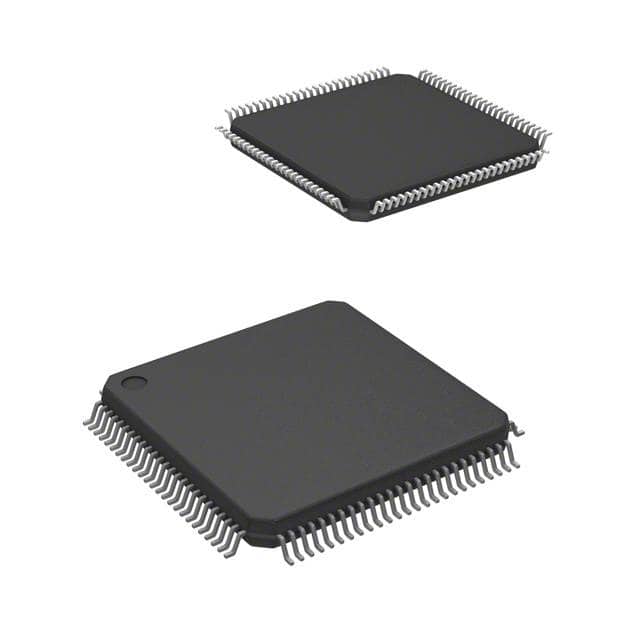
- Part No.:
- AD8191ASTZ
- Manufacturer:
- Analog Devices Inc.
- Category:
- Video Processing
- Package:
- 100-LQFP
- Datasheet:
-
 AD8191ASTZ.pdf
- Description:
- IC VIDEO SWITCH 100LQFP
- Quantity:
- Payment:

- Shipping:

Inventory:4,512
Please send an inquiry. Send us your inquiry, and we will respond immediately.
Product details
Overview
AD8191ASTZ from Analog Devices is a 4:1 HDMI/DVI switch IC with integrated TMDS input equalization and output pre-emphasis, designed for high-fidelity video routing in long-cable applications. It supports 1.65 Gbps data rates, 165 MHz pixel clocks, 20-meter 24 AWG cable operation at 1080p, and operates from a single 3.3 V supply. Its role is to select one of four HDMI/DVI sources while preserving signal integrity across TMDS and auxiliary channels.
For engineers reviewing the AD8191ASTZ datasheet, AD8191ASTZ pinout, AD8191ASTZ application, or AD8191ASTZ equivalent, key selection considerations include its 100-lead LQFP package, I²C/parallel control interface, 12 dB receiver equalization, 6 dB transmitter pre-emphasis, and support for quad/dual/single channel bundling modes in HDMI 1.2a-compliant systems.
Technical Context
The AD8191ASTZ implements a fully buffered, unidirectional high-speed switching core with four independent TMDS link inputs (A–D), each comprising four differential pairs (clock + three data), plus bidirectional low-speed auxiliary channels for DDC and control signals. Input termination is globally or per-channel programmable via on-chip 50 Ω resistors tied to VTTI.
Its equalization architecture provides two fixed boost levels (6 dB or 12 dB) at 825 MHz, while pre-emphasis offers four selectable output drive strengths. Switching logic supports three configurable bundling modes-4:1 (default), dual 8:1, or 16:1-controlled independently for TMDS and auxiliary paths via serial (I²C slave) or parallel interfaces.
Key Specifications
| Parameter | Value and Actual Design Meaning |
|---|---|
| Max Data Rate | 1.65 Gbps per TMDS channel - enables full 1080p@60Hz HDMI and UXGA DVI without bit errors. |
| Input Equalization | 12 dB boost at 825 MHz - compensates up to 20 m of 24 AWG HDMI cable at 1080p resolution. |
| Output Pre-emphasis | 6 dB boost at 825 MHz - improves eye opening at receiver end under trace loss conditions. |
| Added Jitter | 40 ps p-p deterministic jitter - meets HDMI/DVI eye mask requirements at 1.65 Gbps. |
| Supply Voltage | 3.3 V AVCC/DVCC - single-supply operation simplifies power design; AMUXVCC supports 5 V for auxiliary logic. |
| Operating Temp | −40°C to +85°C - qualified for industrial and consumer A/V equipment environments. |
| Package | 100-lead, 14 mm × 14 mm Pb-free LQFP - surface-mount compatible with standard reflow profiles. |
Pinout & Package
AD8191ASTZ is housed in a 100-lead, 14 mm × 14 mm Pb-free LQFP package with exposed thermal pad (not electrically connected). Pin 1 is marked by a dot; pins are numbered counterclockwise. Power supplies (AVCC, DVCC, VTTI, VTTO, AVEE, DVEE, AMUXVCC) are distributed across multiple pins for low-impedance decoupling. High-speed TMDS inputs (IN_x/TP_x) and outputs (OP_x/ON_x) are arranged in complementary pairs per channel; auxiliary signals (AUX_A–D[0:3], AUX_COM[0:3]) occupy dedicated low-speed I/O banks.
| Pin/Terminal | Circuit Role | Design Meaning |
|---|---|---|
| IN_A0 / IP_A0 | High-speed TMDS input complement/inverted pair | Differential input for Channel A, Pixel Clock or Data 0; terminated internally to VTTI via 50 Ω. |
| OP0 / ON0 | High-speed TMDS output complement/inverted pair | Differential output for selected source; pre-emphasized, terminable to VTTO via internal 50 Ω. |
| AUX_A0–AUX_A3 | Low-speed bidirectional auxiliary I/O | Routes DDC SDA/SCL and two additional control signals; 5 V tolerant, unbuffered. |
| I2C_SDA / I2C_SCL | I²C serial interface data/clock | 3.3 V I²C slave interface; supports eight configurable addresses via I2C_ADDR[2:0]. |
| PP_CH0 / PP_CH1 | Parallel channel select LSB/MSB | Selects active input source (00=A, 01=B, 10=C, 11=D) in quad mode only. |
| RESET | Asynchronous configuration reset | Pulled high to AVCC; resets all registers to default values including channel selection and EQ settings. |
Key Features
| Feature | Design Value |
|---|---|
| Four-input HDMI/DVI switching | Enables seamless source selection in multi-source displays without external mux logic or level shifters. |
| Programmable input equalization | Two fixed gain settings (6 dB/12 dB) per input channel allow optimization for varying cable lengths and quality. |
| Configurable output pre-emphasis | Four-level pre-emphasis (0–6 dB) compensates PCB trace loss, improving eye height at receiver input. |
| Flexible channel bundling | Supports 4:1, dual 8:1, or 16:1 configurations - adapts to system-level bandwidth and routing constraints. |
| HDCP 1.2a compliance | Enables secure content routing through DDC bus switching and auxiliary signal pass-through. |
| Output disable & wire-OR capability | Tristate outputs allow cascading multiple AD8191ASTZ devices into larger arrays without signal contention. |
Applications
| Multiple Input Displays | Projectors |
|---|---|
|
Use Scenario: A commercial display accepts HDMI inputs from PC, Blu-ray player, game console, and set-top box, requiring automatic source detection and switching. IC Role / Device Role / Timing Role: AD8191ASTZ acts as the primary high-speed video switch, selecting one TMDS link while routing DDC and HPD signals to maintain EDID handshake integrity. Use Value: Eliminates need for discrete buffer/repeater stages; preserves 1080p60 signal fidelity over internal board traces up to 15 cm. |
Use Scenario: Portable projector integrates multiple HDMI sources but must minimize EMI and power consumption during battery operation. IC Role / Device Role / Timing Role: AD8191ASTZ serves as the front-end switch with output disable enabled when idle, reducing quiescent current to 40 mA. Use Value: Low added jitter (40 ps p-p) ensures clean clock recovery at projector's internal scaler, avoiding frame tearing or color banding. |
| A/V Receivers | Set-Top Boxes |
|
Use Scenario: Home theater receiver routes HDMI from streaming stick, satellite box, and gaming console to TV or soundbar with ARC support. IC Role / Device Role / Timing Role: AD8191ASTZ switches both TMDS and auxiliary channels (DDC, CEC, HPD), enabling full HDCP 1.2a passthrough and hot-plug detection. Use Value: Integrated 50 Ω input termination and equalization eliminate external termination networks, saving PCB area and BOM cost. |
Use Scenario: Cable/satellite STB outputs HDMI to TV while accepting firmware updates and remote commands via bidirectional auxiliary lines. IC Role / Device Role / Timing Role: AD8191ASTZ routes low-speed AUX_COM[3:0] and AUX_A[3:0] to support DDC, CEC, and IR blaster signals alongside video. Use Value: Bidirectional 5 V-tolerant auxiliary I/O avoids level-shifter ICs, simplifying layout and ensuring robust communication across voltage domains. |
Equivalent & Alternatives
The following parts are listed as comparable options for similar HDMI/DVI switching applications.
| Alternative Part | Technical Difference | Application Difference | Selection Advice |
|---|---|---|---|
| TI TPD12S016 | Integrated HDMI level shifter and ESD protection; no equalization or pre-emphasis; 1.65 Gbps max rate. | Targeted at short-cable (<2 m), cost-sensitive consumer endpoints-not suitable for long-cable or signal integrity–critical routing. | Choose TPD12S016 only if ESD robustness and level translation are primary needs and cable length is ≤1 m. |
| Pericom PI3HDX1204A | 4:1 HDMI 1.4 switch with 3.4 Gbps support; no built-in equalization; requires external redrivers for >5 m cables. | Designed for higher-bandwidth 4K-capable systems; lacks integrated equalization, increasing BOM and layout complexity for 1080p long-cable use. | Choose PI3HDX1204A only when upgrading to HDMI 1.4/2.0 infrastructure; AD8191ASTZ remains optimal for 1080p+20 m deployments. |
Compared with TPD12S016 and PI3HDX1204A, the AD8191ASTZ uniquely combines input equalization, output pre-emphasis, and flexible bundling in a single 3.3 V device-enabling reliable 20-meter 1080p routing without external redrivers or level shifters.
Availability
AD8191ASTZ is available at Aetrix Electronics and suitable for HDMI switching, A/V receiver design, and projector signal routing requiring stable component supply, long-cable signal integrity, and industrial temperature operation.
Supply support for AD8191ASTZ includes scheduled delivery planning, volume procurement assistance, BOM continuity management, traceable sourcing, and lifecycle availability coordination for OEM customers, industrial embedded developers, connected-device designers, and electronics production programs.
Manufacturer
Analog Devices is a global leader in high-performance analog, mixed-signal, and digital signal processing semiconductors, serving precision instrumentation, communications, and industrial markets since 1965.
The AD8191ASTZ belongs to Analog Devices' high-speed video interface product line, engineered specifically for HDMI/DVI signal integrity preservation in consumer and professional A/V equipment with demanding cable-length and jitter requirements.
FAQ
What is the maximum HDMI cable length supported by the AD8191ASTZ at 1080p resolution?
The AD8191ASTZ supports up to 20 meters of 24 AWG HDMI cable at 1080p resolution when configured with 12 dB input equalization. This performance is verified per HDMI 1.2a receiver eye mask requirements and assumes nominal 1.65 Gbps data rate and proper termination. Actual reach may vary with cable quality and environmental noise.
Does the AD8191ASTZ require external termination resistors on its TMDS outputs?
The AD8191ASTZ includes programmable 50 Ω on-chip output termination resistors tied to VTTO, eliminating the need for external resistors when enabled. If external termination is used instead (e.g., at the HDMI receiver), internal termination must be disabled via PP_OTO or TX_PTO register, and output current level must be set to 10 mA using PP_OCL or TX_OCL register.
Can the AD8191ASTZ switch auxiliary signals like DDC and CEC independently from the TMDS video path?
Yes-the AD8191ASTZ supports independent switching modes for TMDS and auxiliary channels via its serial (I²C) interface. In dual or single bundling modes, auxiliary signals can be routed separately from high-speed data, enabling flexible DDC arbitration and CEC command forwarding without disrupting video flow.
What is the function of the PP_EQ pin on the AD8191ASTZ?
The PP_EQ pin on the AD8191ASTZ is a parallel control input that globally enables or disables the 12 dB input equalization setting for all eight high-speed input channels. When high, it activates maximum equalization; when low, it selects the 6 dB setting. This pin is ignored when serial (I²C) configuration is active.
Is the AD8191ASTZ compatible with HDMI 2.0 or higher standards?
No-the AD8191ASTZ is specified for HDMI 1.2a and DVI 1.0 compliance, supporting maximum data rates of 1.65 Gbps per channel. It does not meet HDMI 2.0's 6 Gbps minimum requirement or support features like HDR, YCbCr 4:4:4 at 60 Hz, or HDCP 2.2. For HDMI 2.0+, consider newer switch families such as Analog Devices' ADV7611 or TI's TUSB1002.
AD8191ASTZ Specifications
- Product attributes
- Attribute value
- Manufacturer:
- Analog Devices Inc.
- Series:
- -
- Package/Case:
- 100-LQFP
- Packaging:
- Tray
- Product Status:
- Active
- Function:
- Switch
- Applications:
- Video Display
- Standards:
- HDMI 1.2a
- Control Interface:
- I2C, Serial
- Voltage - Supply:
- 3.0V ~ 3.6V
- Mounting Type:
- Surface Mount
- Grade:
- -
- Qualification:
- -
- Supplier Device Package:
- 100-LQFP (14x14)
AD8191ASTZ FAQ
1.How can I place an order for AD8191ASTZ through Aetrix?
Please submit a Request for Quotation (RFQ) for AD8191ASTZ on Aetrix. Our sales agent will provide a competitive quotation and guide you through the order confirmation once you accept the terms.
2.Are the price and stock information for AD8191ASTZ reliable?
The price and inventory of AD8191ASTZ are updated periodically and may fluctuate due to market conditions. Stock and pricing data are typically refreshed every 24 hours. Quotation validity for AD8191ASTZ is usually 5 days.
3.What payment methods are accepted for AD8191ASTZ?
We accept Wire Transfer, PayPal, Credit Card, Western Union, MoneyGram, and Escrow for AD8191ASTZ transactions.
Note: Certain payment methods may incur a processing fee.
4.How is shipping managed for AD8191ASTZ?
AD8191ASTZ orders can be shipped via leading logistics carriers, including DHL, UPS, FedEx, TNT, or Registered Mail.
Once your AD8191ASTZ order is processed, you will receive an email with the shipment details and tracking number.
Note: Tracking information may take up to 24 hours to appear. Express delivery typically takes 3–5 business days.
5.How can I obtain technical support or documentation for AD8191ASTZ?
For technical support, including AD8191ASTZ datasheets, pinout diagrams, or application guidance, please contact our engineering support team. They can provide detailed documentation and assistance for your AD8191ASTZ requirements.
6.How does Aetrix verify that AD8191ASTZ is sourced from the original manufacturer or authorized distributors?
All AD8191ASTZ products on Aetrix are procured from qualified distributors and authorized channels. Our dedicated quality assurance team conducts strict verification, including traceability checks and, if necessary, third-party testing. This ensures that AD8191ASTZ meets industry standards.
7.What is the process for return or replacement of AD8191ASTZ?
All AD8191ASTZ units undergo pre-shipment inspection (PSI). If there is an issue with AD8191ASTZ, returns or replacements are accepted under the following conditions:
1.Quantity discrepancies, incorrect items, or visible external defects (such as breakage or corrosion), acknowledged by Aetrix.
2.The issue is reported within 90 days of delivery.
3.The AD8191ASTZ part is unused and in its original packaging.
Return procedure for AD8191ASTZ:
1.Submit a request within 90 days.
2.Obtain a Return Material Authorization (RMA) from Aetrix.
AD8191ASTZ Tags
-
HDMI2C1-6C1
STMicroelectronics
-
ADA4430-1YKSZ-R7
Analog Devices Inc.

-
LM1881MX/NOPB
Texas Instruments
-
SN75DP130SSRGZR
Texas Instruments
-
EQCO30T5.2
Microchip Technology
-
LMH1980MM/NOPB
Texas Instruments
-
EQCO30R5.D
Microchip Technology

-
SII9022ACNU
Lattice Semiconductor Corporation
-
SN65DP159RGZR
Texas Instruments
-
SN65DP159RSBR
Texas Instruments
-
SN65DP141RLJR
Texas Instruments
-
LMH0303SQ/NOPB
Texas Instruments
Tech Hub

A practical engineering guide to 3.3V and 5V logic compatibility, input thresholds, resistor dividers, translator ICs, MOSFET level shifting, I2C pull-ups, timing limits and power-sequencing risks.

The 74HC595 uses push-pull logic outputs, while the TPIC6B595 uses 50 V open-drain DMOS sinks for higher-power loads. This guide compares timing, current limits, 3.3 V interfacing, load wiring, thermal…

The 74HC595 converts serial data into eight stable parallel outputs. This guide covers pin functions, shift and storage timing, OE and MR behavior, drive-current limits, cascading, voltage compatibilit…

A technical comparison of level-sensitive latches and edge-triggered flip-flops, covering timing windows, setup and hold limits, master–slave operation, time borrowing, race-through, HDL inference and…

A D latch stores one bit while Enable controls when data can pass. This reference covers gate-level operation, truth tables, transparency, setup and hold timing, LE versus OE, common ICs and practical …

An SR latch stores one bit through cross-coupled feedback. This engineering reference covers NOR and NAND implementations, truth tables, forbidden-state recovery, gated operation, switch debouncing, fa…

Latch circuits retain one bit through feedback. This technical reference covers SR and D latches, truth tables, transparency, timing limits, latch-versus-flip-flop behavior, applications and common log…

An engineering guide to LED driver operation, constant-current and constant-voltage outputs, linear and switching topologies, dimming, IC selection, calculations, replacement compatibility, and fault c…

Operational amplifier guide covering op amp basics, feedback, ideal vs real op amps, common configurations, buffer circuits, offset, bias current, gain-bandwidth, slew rate, rail-to-rail limits and sel…

Jumper cables guide covering safe connection order, red and black clamp placement, final ground connection, cable gauge, length, clamp quality, copper vs CCA cables, jump starter comparison and battery…


