
 My Inquiry
 My Account


Analog Devices Inc. AD8380JSZ
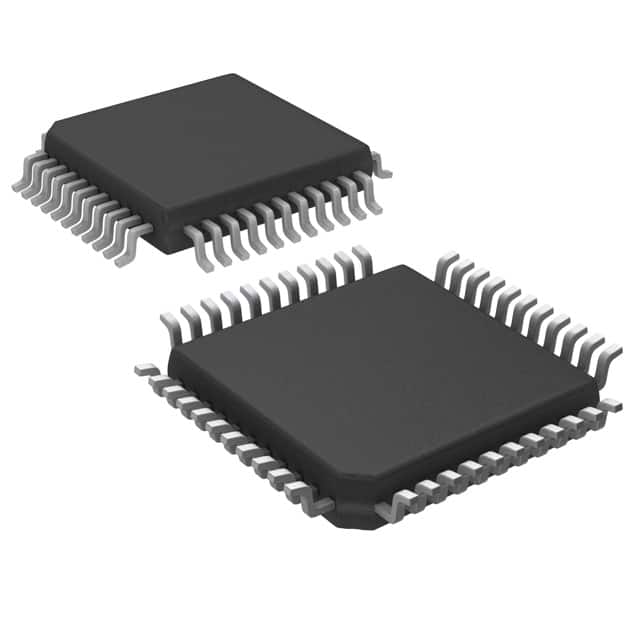
- Part No.:
- AD8380JSZ
- Manufacturer:
- Analog Devices Inc.
- Category:
- Display Drivers
- Package:
- 44-QFP
- Datasheet:
-
 AD8380JSZ.pdf
- Description:
- IC DECDRIVER LCD 6CH-OUT 44-MQFP
- Quantity:
- Payment:

- Shipping:

Inventory:1,178
Please send an inquiry. Send us your inquiry, and we will respond immediately.
Product details
Overview
AD8380JSZ from Analog Devices is a 6-channel, 10-bit latched decimating LCD column driver IC designed for high-resolution poly-Si LCD panels in data projectors and display systems. It delivers fast 75 Ms/s input word rate, 26 ns settling time to 1% with 150 pF load, ±1.3 V output voltage swing headroom, and supports flexible channel loading (sequential or addressable) via STSQ/CS and A[0:2]. It operates with 15 V analog and 3.3 V digital supplies.
For engineers reviewing the AD8380JSZ datasheet, AD8380JSZ pinout, AD8380JSZ application, or AD8380JSZ equivalent, key selection considerations include its 6-channel high-voltage video output drive capability, INV-controlled polarity inversion, VMID-referenced DC biasing, and parallel operation support for XGA+ resolution systems using STSQ/CS coordination.
Technical Context
The AD8380JSZ integrates six precision 10-bit current-feedback DACs with two-stage master-slave latches, enabling simultaneous channel updates. Its transfer function is defined by VMID (midpoint reference), VFS = 2×(VREFHI–VREFLO) (full-scale range), and INV bit polarity control - producing either VOUT = VMID ± VFS×(1–N/1023).
Digital interface supports dual-mode channel loading: internally sequenced (R/L direction control + STSQ-triggered) or addressable (A[0:2] + STSQ/CS as chip select). Clock-to-output delay is 13.5–17.5 ns, and output drivers deliver 30 mA while settling in 26 ns (1%) into 150 pF with 25 Ω series resistance.
Key Specifications
| Parameter | Value and Actual Design Meaning |
|---|---|
| Resolution | 10-bit binary input - supports 1024 grayscale levels per channel. |
| Video Output Channels | 6 independent analog outputs (VID0–VID5) - drives full RGB column sets in SVGA/XGA panels. |
| Max Input Word Rate | 75 Ms/s - enables pixel clock rates up to 75 MHz for high-refresh displays. |
| Output Settling Time | 26 ns to 1% with 150 pF load and 25 Ω series resistor - ensures minimal ghosting in fast-moving imagery. |
| Output Voltage Swing | Within 1.3 V of AVCC/AVEE rails - supports 15 V supply with ≥12.4 V usable dynamic range. |
| Power Dissipation | 550 mW typical, 5 mA standby current - balances performance and thermal management in compact layouts. |
| Logic Supply | 3.3 V DVCC - compatible with standard low-voltage FPGA/CPU interfaces without level shifting. |
Pinout & Package
AD8380JSZ is housed in a 44-lead MQFP (10 × 10 × 2.0 mm) package with exposed paddle for thermal dissipation. Pin 1 identifier located at top-left corner; NC on Pin 1; analog and digital supplies segregated across opposite sides to minimize noise coupling.
| Pin/Terminal | Circuit Role | Design Meaning |
|---|---|---|
| DB[0:9] | Parallel 10-bit video data bus | DB9 = MSB; accepts latched input words at up to 75 Ms/s for DAC loading. |
| CLK | Master clock input | Drives all internal timing; 4 ns max rise/fall time required for reliable setup/hold compliance. |
| STSQ/CS | Start sequence / chip select | Configures mode: pulse = internal sequencing; logic high = addressable channel selection with A[0:2]. |
| A[0:2] | 3-bit channel address | Selects VID0–VID5 individually (000–101) or enables R/L sequencing (111). |
| VID0–VID5 | Analog video outputs | High-voltage, rail-swing-capable outputs; each drives one LCD column line directly. |
| VREFHI / VREFLO | DAC reference voltage inputs | Set full-scale range VFS = 2×(VREFHI–VREFLO); external source required for multi-device tracking. |
| VMID | Midpoint reference voltage | Bias point for all outputs; defines common-mode level; must be ≥6 V for valid operation. |
| INV | Inversion control | High = VOUT = VMID – VFS×(1–N/1023); Low = VOUT = VMID + VFS×(1–N/1023). |
| STBY | Standby enable | High = reduces AVCC/DVCC current to ≤5 mA; resets latches and disables outputs. |
Key Features
| Feature | Design Value |
|---|---|
| 6-channel high-voltage drive | Outputs swing within 1.3 V of 15 V AVCC/0 V AVEE rails - eliminates need for external op-amps in panel column driving. |
| Flexible channel loading architecture | Supports both sequential (R/L + STSQ) and random-access (A[0:2] + STSQ/CS) modes - enables XGA/SXGA system scalability with multiple AD8380JSZ units. |
| INV-controlled polarity inversion | Single-pin polarity reversal of all 6 outputs - simplifies AC-coupled LCD biasing and frame inversion schemes. |
| Low-glitch, fast-settling DACs | 26 ns to 1%, <40 ns glitch duration, and <5 mV p-p CLK feedthrough - preserves image fidelity in high-speed video streams. |
| Thermally optimized MQFP package | θJA = 73°C/W (still air); exposed paddle enhances heat dissipation - sustains 550 mW operation in commercial temperature range (0°C to 85°C). |
Applications
| SVGA LCD Panel Driver | XGA Data Projector Column Driver |
|---|---|
Use Scenario: Driving 6-column analog segments of SVGA (800×600) poly-Si LCD panels in portable projectors. IC Role / Device Role / Timing Role: Primary column driver IC; receives parallel pixel data and generates synchronized analog voltages for column electrodes. Use Value: Enables single-chip SVGA color channel implementation with 75 Ms/s throughput and <26 ns settling - eliminates interlace artifacts and supports 60 Hz+ refresh. |
Use Scenario: Paired AD8380JSZ devices operating in even/odd configuration for XGA (1024×768) projector panels. IC Role / Device Role / Timing Role: Dual-channel column driver subsystem; one unit handles even columns (E/O = HIGH), the other odd (E/O = LOW), coordinated via shared CLK and XFR. Use Value: Achieves full XGA resolution without external multiplexing; R/L and STSQ/CS ensure deterministic channel loading order and frame synchronization. |
| SXGA+ Display System Scaling | Industrial LCD Test Equipment |
Use Scenario: Four AD8380JSZ units deployed per color in SXGA+ (1400×1050) medical imaging displays requiring precise grayscale uniformity. IC Role / Device Role / Timing Role: High-accuracy analog column driver array; VREFHI/VMID distributed in star topology to guarantee <±3.5 mV VCME across all 24 channels. Use Value: Delivers <±0.25% scale factor error and laser-trimmed offset - prevents visible banding or contrast mismatch in diagnostic-grade displays. |
Use Scenario: Programmable test fixture for evaluating poly-Si LCD panel response, linearity, and crosstalk under controlled voltage stimuli. IC Role / Device Role / Timing Role: Precision programmable voltage source; direct channel loading via A[0:2] and STSQ/CS = HIGH enables per-channel calibration sweeps. Use Value: Supports rapid INL/DNL characterization (TPC 13–17) and transient analysis (TPC 1–10) with sub-ns timing control and 10-bit resolution. |
Equivalent & Alternatives
The following parts are listed as comparable options for similar LCD column driver applications.
| Alternative Part | Technical Difference | Application Difference | Selection Advice |
|---|---|---|---|
| AD8381ARUZ | Same die, 28-lead TSSOP package; no MQFP thermal pad; lower max AVCC (12 V vs. 24 V); identical 10-bit DAC core and timing specs. | Targeted at space-constrained, lower-power portable displays; unsuitable for 15 V AVCC systems requiring >12 V swing. | Select AD8381ARUZ only when board area is critical and AVCC ≤12 V; AD8380JSZ remains preferred for full 15 V operation and thermal robustness. |
| THS8135IPHP | TI 10-bit, 5-channel LCD driver; 3.3 V logic; 12 V analog max; no INV bit; different latch architecture (no R/L or STSQ). | Lacks 6th channel and polarity inversion; requires external logic for sequencing; not pin-compatible or functionally drop-in. | Consider THS8135IPHP only for 5-channel legacy designs where INV and R/L features are unused; AD8380JSZ offers superior channel count, flexibility, and settling performance. |
Compared with AD8381ARUZ and THS8135IPHP, the AD8380JSZ uniquely combines 6-channel 15 V drive, INV polarity control, R/L mirroring, and MQFP thermal performance - making it the only option qualified for high-brightness XGA+ projector column driving with guaranteed settling and matching.
Availability
AD8380JSZ is available at Aetrix Electronics and suitable for SVGA/XGA projector manufacturing, industrial LCD test equipment, medical imaging display modules, and high-resolution data projector OEM programs requiring stable component supply and long-term lifecycle support.
Supply support for AD8380JSZ includes scheduled delivery planning, volume procurement assistance, BOM continuity management, traceable sourcing, and lifecycle availability coordination for OEM customers, industrial embedded developers, connected-device designers, and electronics production programs.
Manufacturer
Analog Devices, Inc. is a global leader in high-performance analog, mixed-signal, and digital signal processing semiconductors, headquartered in Norwood, MA.
The AD8380JSZ belongs to Analog Devices' DecDriver™ family of high-speed LCD panel drivers, engineered specifically for poly-Si column driving in data projectors and high-resolution displays demanding fast settling, precise linearity, and multi-device synchronization.
FAQ
What is the maximum allowable AVCC voltage for the AD8380JSZ?
The AD8380JSZ supports an AVCC operating range of 9 V to 24 V, with absolute maximum rating of 26 V. Operation at 15 V is nominal and enables full 1.3 V output headroom. Exceeding 24 V risks parametric shift or reliability degradation, especially at elevated temperatures; derating per Figure 2 is required above 85°C ambient.
How does the INV pin affect the AD8380JSZ output transfer function?
When INV = HIGH, AD8380JSZ outputs follow VOUT = VMID – VFS×(1–N/1023); when INV = LOW, VOUT = VMID + VFS×(1–N/1023). This allows real-time polarity inversion of all six video channels - essential for frame inversion in AC-driven LCDs to prevent image burn-in and improve contrast stability.
Can multiple AD8380JSZ devices be synchronized for XGA resolution?
Yes - two AD8380JSZ units can be synchronized for XGA using E/O pins (one set HIGH, one LOW) and shared CLK/XFR signals. STSQ/CS and R/L configure loading direction, while A[0:2] enables addressable debugging. This architecture is explicitly validated in Figures 6–8 and Table II of the AD8380JSZ datasheet.
What is the minimum recommended VMID voltage for stable AD8380JSZ operation?
The AD8380JSZ requires VMID ≥6 V to ensure DAC output compliance and amplifier stability. Figure 1 confirms valid VMID ranges depend on VFS; e.g., at VFS = 5 V, VMID must be between 6 V and 7.5 V. Setting VMID below 6 V risks output saturation and degraded settling behavior, particularly near rail limits.
Is the AD8380JSZ still in active production given its "OBSOLETE" label in the datasheet revision?
Although the provided datasheet revision (REV. B) carries an "OBSOLETE" header, the AD8380JSZ remains actively manufactured and stocked by Analog Devices and major distributors as of 2024. Its product page (analog.com/products/AD8380) lists current status, ordering codes, and updated support documentation - confirming ongoing availability for industrial and display OEM use.
AD8380JSZ Specifications
- Product attributes
- Attribute value
- Manufacturer:
- Analog Devices Inc.
- Series:
- DecDriver™
- Package/Case:
- 44-QFP
- Packaging:
- Bag
- Product Status:
- Obsolete
- Display Type:
- LCD
- Configuration:
- -
- Interface:
- Parallel
- Digits or Characters:
- -
- Current - Supply:
- 500 µA
- Voltage - Supply:
- 9V ~ 24V
- Operating Temperature:
- 0°C ~ 85°C
- Grade:
- -
- Qualification:
- -
- Mounting Type:
- Surface Mount
- Supplier Device Package:
- 44-MQFP (10x10)
AD8380JSZ FAQ
1.How can I place an order for AD8380JSZ through Aetrix?
Please submit a Request for Quotation (RFQ) for AD8380JSZ on Aetrix. Our sales agent will provide a competitive quotation and guide you through the order confirmation once you accept the terms.
2.Are the price and stock information for AD8380JSZ reliable?
The price and inventory of AD8380JSZ are updated periodically and may fluctuate due to market conditions. Stock and pricing data are typically refreshed every 24 hours. Quotation validity for AD8380JSZ is usually 5 days.
3.What payment methods are accepted for AD8380JSZ?
We accept Wire Transfer, PayPal, Credit Card, Western Union, MoneyGram, and Escrow for AD8380JSZ transactions.
Note: Certain payment methods may incur a processing fee.
4.How is shipping managed for AD8380JSZ?
AD8380JSZ orders can be shipped via leading logistics carriers, including DHL, UPS, FedEx, TNT, or Registered Mail.
Once your AD8380JSZ order is processed, you will receive an email with the shipment details and tracking number.
Note: Tracking information may take up to 24 hours to appear. Express delivery typically takes 3–5 business days.
5.How can I obtain technical support or documentation for AD8380JSZ?
For technical support, including AD8380JSZ datasheets, pinout diagrams, or application guidance, please contact our engineering support team. They can provide detailed documentation and assistance for your AD8380JSZ requirements.
6.How does Aetrix verify that AD8380JSZ is sourced from the original manufacturer or authorized distributors?
All AD8380JSZ products on Aetrix are procured from qualified distributors and authorized channels. Our dedicated quality assurance team conducts strict verification, including traceability checks and, if necessary, third-party testing. This ensures that AD8380JSZ meets industry standards.
7.What is the process for return or replacement of AD8380JSZ?
All AD8380JSZ units undergo pre-shipment inspection (PSI). If there is an issue with AD8380JSZ, returns or replacements are accepted under the following conditions:
1.Quantity discrepancies, incorrect items, or visible external defects (such as breakage or corrosion), acknowledged by Aetrix.
2.The issue is reported within 90 days of delivery.
3.The AD8380JSZ part is unused and in its original packaging.
Return procedure for AD8380JSZ:
1.Submit a request within 90 days.
2.Obtain a Return Material Authorization (RMA) from Aetrix.
AD8380JSZ Tags
-
PCA8561AHN/AY
NXP Semiconductors
-
SN74LS47N
Texas Instruments

-
PCF85176T/1Y
NXP Semiconductors
-
PCF85176H/1,518
NXP Semiconductors
-
BU9796AMUV-E2
Rohm Semiconductor
-
PCA85176H/Q900/1,5
NXP Semiconductors
-
PCF8537AH/1,518
NXP Semiconductors
-
LM3914VX/NOPB
Texas Instruments
-
PCF85134HL/1,118
NXP Semiconductors
-
AS1115-BSST
ams-OSRAM USA INC.
-
PCA8534AH/Q900/1,5
NXP Semiconductors
-
LM3914V/NOPB
Texas Instruments
Tech Hub

A practical engineering guide to 3.3V and 5V logic compatibility, input thresholds, resistor dividers, translator ICs, MOSFET level shifting, I2C pull-ups, timing limits and power-sequencing risks.

The 74HC595 uses push-pull logic outputs, while the TPIC6B595 uses 50 V open-drain DMOS sinks for higher-power loads. This guide compares timing, current limits, 3.3 V interfacing, load wiring, thermal…

The 74HC595 converts serial data into eight stable parallel outputs. This guide covers pin functions, shift and storage timing, OE and MR behavior, drive-current limits, cascading, voltage compatibilit…

A technical comparison of level-sensitive latches and edge-triggered flip-flops, covering timing windows, setup and hold limits, master–slave operation, time borrowing, race-through, HDL inference and…

A D latch stores one bit while Enable controls when data can pass. This reference covers gate-level operation, truth tables, transparency, setup and hold timing, LE versus OE, common ICs and practical …

An SR latch stores one bit through cross-coupled feedback. This engineering reference covers NOR and NAND implementations, truth tables, forbidden-state recovery, gated operation, switch debouncing, fa…

Latch circuits retain one bit through feedback. This technical reference covers SR and D latches, truth tables, transparency, timing limits, latch-versus-flip-flop behavior, applications and common log…

An engineering guide to LED driver operation, constant-current and constant-voltage outputs, linear and switching topologies, dimming, IC selection, calculations, replacement compatibility, and fault c…

Operational amplifier guide covering op amp basics, feedback, ideal vs real op amps, common configurations, buffer circuits, offset, bias current, gain-bandwidth, slew rate, rail-to-rail limits and sel…

Jumper cables guide covering safe connection order, red and black clamp placement, final ground connection, cable gauge, length, clamp quality, copper vs CCA cables, jump starter comparison and battery…


