
 My Inquiry
 My Account


Analog Devices Inc. AD8402ARU100
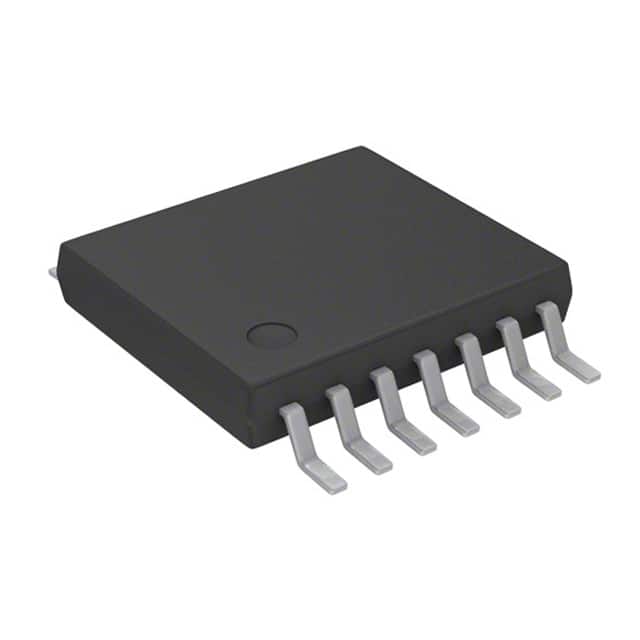
- Part No.:
- AD8402ARU100
- Manufacturer:
- Analog Devices Inc.
- Category:
- Digital Potentiometers
- Package:
- 14-TSSOP (0.173", 4.40mm Width)
- Datasheet:
-
 AD8402ARU100.pdf
- Description:
- IC DGT POT 100KOHM 256TP 14TSSOP
- Quantity:
- Payment:

- Shipping:

Inventory:1,674
Please send an inquiry. Send us your inquiry, and we will respond immediately.
Product details
Overview
AD8402ARU100 from Analog Devices is a dual-channel, 256-position digital potentiometer in TSSOP-14 package with 100 kΩ nominal end-to-end resistance, ±1% channel-to-channel matching, and 500 ppm/°C temperature coefficient. It operates from 2.7 V to 5.5 V, supports SPI-compatible 3-wire serial interface, and delivers 71 kHz −3 dB bandwidth for precision analog adjustment in programmable gain stages.
For engineers reviewing the AD8402ARU100 datasheet, AD8402ARU100 pinout, AD8402ARU100 application, or AD8402ARU100 equivalent, this device serves as a drop-in replacement for mechanical potentiometers in automotive-grade signal conditioning, power supply trimming, and impedance-matching circuits requiring stable resistance over −40°C to +125°C.
Technical Context
The AD8402ARU100 integrates two independent 8-bit digitally controlled variable resistors (RDACs), each with A, B, and W terminals and dedicated wiper control. Its serial interface uses 10-bit words: two address bits (A1/A0) select channel (00=RDAC1, 01=RDAC2), and eight data bits set wiper position (00H–FFH).
Each RDAC features a unique switching circuit that eliminates make-before-break and break-before-make glitches during wiper transitions. The SHDN pin forces terminal A open-circuit and shorts W to B, reducing supply current to ≤5 μA; RS pin resets both wipers to midscale (80H) regardless of prior state.
Key Specifications
| Parameter | Value and Actual Design Meaning |
|---|---|
| Channels | Dual independent RDACs - enables simultaneous but separate resistance control for stereo audio or differential signal paths. |
| Nominal RAB | 100 kΩ ±30% - matches high-impedance sensor biasing and voltage divider applications without external scaling. |
| Resolution | 8-bit (256 steps) - provides 0.39% step resolution for fine-grained gain or offset calibration. |
| Tempco | 500 ppm/°C - ensures <±1.2% resistance drift over −40°C to +125°C, critical for automotive under-hood use. |
| Bandwidth | 71 kHz (−3 dB, 100 kΩ version) - supports dynamic adjustment in low-frequency feedback loops and filter tuning. |
| Supply Range | 2.7 V to 5.5 V - interoperable with both 3.3 V and 5 V logic systems without level-shifting. |
| Shutdown Current | ≤5 μA - enables ultra-low-power sleep modes in battery-operated instrumentation. |
Pinout & Package
TSSOP-14 (RU-14) package: 4.4 mm × 5.0 mm × 1.1 mm profile, lead pitch 0.65 mm, suitable for space-constrained PCMCIA and automotive control modules.
| Pin/Terminal | Circuit Role | Design Meaning |
|---|---|---|
| 1 (AGND) | Analog Ground | Mandatory connection to DGND; separates analog return path from digital noise sources. |
| 2 (B2) | RDAC2 Terminal B | Fixed endpoint of second variable resistor; used with A2 and W2 to form rheostat or potentiometer. |
| 3 (A2) | RDAC2 Terminal A | Fixed endpoint opposite B2; defines full-scale resistance value with B2. |
| 4 (W2) | RDAC2 Wiper | Adjustable tap point; resistance between W2 and A2/B2 varies linearly with digital code (00H–FFH). |
| 5 (DGND) | Digital Ground | Reference for CS, SDI, CLK, RS, SHDN; must tie to AGND at single point. |
| 6 (SHDN) | Active-Low Shutdown | Pulls RDAC1 and RDAC2 into micropower state: A terminals open, W shorts to B, IDD ≤5 μA. |
| 7 (CS) | Chip Select | Active-low enable for serial register loading; rising edge latches decoded address/data into selected RDAC. |
| 8 (SDI) | Serial Data Input | MSB-first SPI-compatible input; accepts 10-bit word (A1,A0,D7–D0) on CLK rising edges. |
| 9 (CLK) | Serial Clock | Positive-edge-triggered; minimum pulse width 10 ns supports up to 10 MHz update rate. |
| 10 (RS) | Active-Low Reset | Forces both RDAC latches to 80H (midscale); no dependency on serial interface or power state. |
| 11 (VDD) | Power Supply | Single 2.7–5.5 V rail powers logic and RDAC core; no separate analog/digital supplies required. |
| 12 (W1) | RDAC1 Wiper | Adjustable tap for first variable resistor; identical electrical behavior to W2. |
| 13 (A1) | RDAC1 Terminal A | Fixed endpoint for RDAC1; paired with B1 and W1 to implement programmable resistance. |
| 14 (B1) | RDAC1 Terminal B | Fixed endpoint for RDAC1; completes dual-rheostat or dual-potentiometer configuration. |
Key Features
| Feature | Design Value |
|---|---|
| 256-step linear taper | Guaranteed monotonicity and ±1 LSB DNL ensures predictable, glitch-free resistance transitions across full range. |
| Channel-to-channel matching | ±1% RAB tolerance between RDAC1 and RDAC2 enables precise balanced configurations in differential amplifiers. |
| Automotive qualification | AEC-Q100 Grade 1 (−40°C to +125°C) operation with 150°C max junction temperature rating. |
| Glitch-free switching | Proprietary switch architecture avoids transient shorts/opens during wiper movement - critical for stable bias networks. |
| Zero-power shutdown | SHDN reduces total current to ≤5 μA while preserving latch state; wiper resumes exact prior position on wake-up. |
Applications
| Audio Volume Control | Power Supply Trim |
|---|---|
Use Scenario: Dual-channel analog volume control in automotive infotainment head units with manual or MCU-driven adjustment. IC Role / Device Role / Timing Role: Replaces dual-gang mechanical potentiometers; each RDAC sets attenuation for left/right audio paths independently. Use Value: Eliminates mechanical wear and position drift; 100 kΩ RAB matches standard line-input impedance while supporting 0.39% step resolution for smooth fade/pan. |
Use Scenario: Precision output voltage adjustment in isolated DC-DC converters for ADAS camera modules. IC Role / Device Role / Timing Role: Configures feedback divider ratio in secondary-side error amplifier loop to maintain ±0.5% output regulation. Use Value: Enables factory calibration and field firmware updates without hardware change; 500 ppm/°C tempco maintains accuracy across vehicle thermal zones. |
| Line Impedance Matching | Programmable Filter Tuning |
Use Scenario: Dynamic termination resistance setting for CAN FD bus nodes operating across multiple data rates (2–5 Mbps). IC Role / Device Role / Timing Role: Sets series termination value on CAN transceiver TX line to minimize reflections at varying cable lengths and stub configurations. Use Value: 100 kΩ range covers typical CAN stub compensation needs; dual-channel allows independent tuning for dominant/recessive edge shaping. |
Use Scenario: Real-time cutoff frequency adjustment in active anti-aliasing filters for engine knock sensors. IC Role / Device Role / Timing Role: Digitally reconfigures RC time constant in Sallen-Key topology via wiper-connected resistor network. Use Value: 71 kHz bandwidth supports filter updates at >10 kHz rate; monotonic DNL prevents transient passband distortion during reconfiguration. |
Equivalent & Alternatives
The following parts are listed as comparable options for similar dual-channel digital potentiometer applications.
| Alternative Part | Technical Difference | Application Difference | Selection Advice |
|---|---|---|---|
| AD5242BRU100 | 256-tap, I²C interface, 100 kΩ, TSSOP-14; higher THD (0.01%) and lower bandwidth (30 kHz @100 kΩ). | Requires I²C host; unsuitable for SPI-only systems; less suited for high-speed filter tuning. | Select when system already uses I²C infrastructure and lower update speed is acceptable. |
| MCP42100-E/ST | Dual 256-tap, SPI interface, 100 kΩ, TSSOP-14; wider temp range (−40°C to +150°C), but no automotive qualification or guaranteed 125°C operation. | Lacks AEC-Q100 certification; not approved for safety-critical automotive subsystems. | Prefer for industrial motor drives where extended temperature margin outweighs automotive compliance needs. |
Compared with AD5242BRU100 and MCP42100-E/ST, the AD8402ARU100 uniquely combines SPI compatibility, AEC-Q100 Grade 1 qualification, and guaranteed 71 kHz bandwidth at 100 kΩ - making it the only option qualified for real-time, automotive-grade analog trimming where interface, reliability, and dynamic response are jointly constrained.
Availability
AD8402ARU100 is available at Aetrix Electronics and suitable for automotive infotainment systems, ADAS power management, and industrial sensor signal conditioning requiring stable component supply across extended temperature ranges and long production lifecycles.
Supply support for AD8402ARU100 includes scheduled delivery planning, volume procurement assistance, BOM continuity management, traceable sourcing, and lifecycle availability coordination for OEM customers, industrial embedded developers, connected-device designers, and electronics production programs.
Manufacturer
Analog Devices, Inc. is a global leader in high-performance analog, mixed-signal, and digital signal processing semiconductors, headquartered in Wilmington, MA.
The AD8400/AD8402/AD8403 family was designed specifically for robust, automotive-qualified replacement of mechanical potentiometers in harsh-environment analog adjustment applications - emphasizing precision, reliability, and seamless digital integration.
FAQ
What is the maximum operating temperature for the AD8402ARU100?
The AD8402ARU100 is rated for continuous operation from −40°C to +125°C and qualified to AEC-Q100 Grade 1 standards. Its maximum junction temperature is 150°C, and thermal resistance θJA is 180°C/W in the TSSOP-14 (RU-14) package. Derating is required above 125°C ambient per the Absolute Maximum Ratings table.
Does the AD8402ARU100 support daisy-chaining multiple devices on one SPI bus?
No, the AD8402ARU100 does not support daisy-chaining. It lacks an SDO (serial data out) pin - unlike the quad-channel AD8403 - so it cannot forward serial data to subsequent devices. Each AD8402ARU100 requires its own dedicated CS line for independent addressing on a shared SPI bus.
Can the AD8402ARU100 be used in rheostat mode with only two terminals?
Yes, the AD8402ARU100 supports true rheostat configuration: connect either A or B terminal to signal path and leave the other open, using W as the adjustable endpoint. The datasheet guarantees monotonicity, ±1 LSB DNL, and 500 ppm/°C tempco in this mode - validated for RWB and RWA measurements with VA or VB floating.
What happens to the wiper position during SHDN assertion on the AD8402ARU100?
When SHDN is pulled low, the AD8402ARU100 opens the A-terminal connection and shorts W to B for both RDACs, entering micropower mode (<5 μA). Crucially, the internal 8-bit latch retains its last programmed value; upon returning SHDN high, the wiper immediately resumes the exact prior resistance setting without reinitialization.
Is the AD8402ARU100 pin-compatible with other variants in the AD8402 family?
Yes, all AD8402 variants (e.g., AD8402ARU10, AD8402ARU50, AD8402ARU100) share identical TSSOP-14 pinout and electrical interface. Only the nominal RAB differs (10 kΩ, 50 kΩ, or 100 kΩ); all timing, logic levels, register structure, and thermal specs remain unchanged - enabling direct substitution in layout-constrained designs.
AD8402ARU100 Specifications
- Product attributes
- Attribute value
- Manufacturer:
- Analog Devices Inc.
- Series:
- -
- Package/Case:
- 14-TSSOP (0.173", 4.40mm Width)
- Packaging:
- Tube
- Product Status:
- Obsolete
- Programmable:
- Not Verified
- Taper:
- Linear
- Configuration:
- Potentiometer
- Number of Circuits:
- 2
- Number of Taps:
- 256
- Resistance (Ohms):
- 100k
- Interface:
- SPI
- Memory Type:
- Volatile
- Voltage - Supply:
- 2.7V ~ 5.5V
- Features:
- -
- Tolerance:
- ±30%
- Temperature Coefficient (Typ):
- 500ppm/°C
- Mounting Type:
- Surface Mount
- Grade:
- -
- Qualification:
- -
- Supplier Device Package:
- 14-TSSOP
- Operating Temperature:
- -40°C ~ 125°C
- Resistance - Wiper (Ohms) (Typ):
- 200
AD8402ARU100 FAQ
1.How can I place an order for AD8402ARU100 through Aetrix?
Please submit a Request for Quotation (RFQ) for AD8402ARU100 on Aetrix. Our sales agent will provide a competitive quotation and guide you through the order confirmation once you accept the terms.
2.Are the price and stock information for AD8402ARU100 reliable?
The price and inventory of AD8402ARU100 are updated periodically and may fluctuate due to market conditions. Stock and pricing data are typically refreshed every 24 hours. Quotation validity for AD8402ARU100 is usually 5 days.
3.What payment methods are accepted for AD8402ARU100?
We accept Wire Transfer, PayPal, Credit Card, Western Union, MoneyGram, and Escrow for AD8402ARU100 transactions.
Note: Certain payment methods may incur a processing fee.
4.How is shipping managed for AD8402ARU100?
AD8402ARU100 orders can be shipped via leading logistics carriers, including DHL, UPS, FedEx, TNT, or Registered Mail.
Once your AD8402ARU100 order is processed, you will receive an email with the shipment details and tracking number.
Note: Tracking information may take up to 24 hours to appear. Express delivery typically takes 3–5 business days.
5.How can I obtain technical support or documentation for AD8402ARU100?
For technical support, including AD8402ARU100 datasheets, pinout diagrams, or application guidance, please contact our engineering support team. They can provide detailed documentation and assistance for your AD8402ARU100 requirements.
6.How does Aetrix verify that AD8402ARU100 is sourced from the original manufacturer or authorized distributors?
All AD8402ARU100 products on Aetrix are procured from qualified distributors and authorized channels. Our dedicated quality assurance team conducts strict verification, including traceability checks and, if necessary, third-party testing. This ensures that AD8402ARU100 meets industry standards.
7.What is the process for return or replacement of AD8402ARU100?
All AD8402ARU100 units undergo pre-shipment inspection (PSI). If there is an issue with AD8402ARU100, returns or replacements are accepted under the following conditions:
1.Quantity discrepancies, incorrect items, or visible external defects (such as breakage or corrosion), acknowledged by Aetrix.
2.The issue is reported within 90 days of delivery.
3.The AD8402ARU100 part is unused and in its original packaging.
Return procedure for AD8402ARU100:
1.Submit a request within 90 days.
2.Obtain a Return Material Authorization (RMA) from Aetrix.
AD8402ARU100 Tags
-
MCP4018T-103E/LT
Microchip Technology
-
MCP4018T-503E/LT
Microchip Technology

-
MCP4011T-103E/SN
Microchip Technology
-
MCP4018T-104E/LT
Microchip Technology
-
MCP4017T-503E/LT
Microchip Technology
-
MCP4018T-502E/LT
Microchip Technology
-
MCP4017T-103E/LT
Microchip Technology

-
MCP4531T-103E/MF
Microchip Technology
-
MCP4021T-202E/SN
Microchip Technology

-
MCP4023T-103E/CH
Microchip Technology
-
MCP4022T-503E/CH
Microchip Technology
-
MCP4551T-502E/MS
Microchip Technology
Tech Hub

A practical engineering guide to 3.3V and 5V logic compatibility, input thresholds, resistor dividers, translator ICs, MOSFET level shifting, I2C pull-ups, timing limits and power-sequencing risks.

The 74HC595 uses push-pull logic outputs, while the TPIC6B595 uses 50 V open-drain DMOS sinks for higher-power loads. This guide compares timing, current limits, 3.3 V interfacing, load wiring, thermal…

The 74HC595 converts serial data into eight stable parallel outputs. This guide covers pin functions, shift and storage timing, OE and MR behavior, drive-current limits, cascading, voltage compatibilit…

A technical comparison of level-sensitive latches and edge-triggered flip-flops, covering timing windows, setup and hold limits, master–slave operation, time borrowing, race-through, HDL inference and…

A D latch stores one bit while Enable controls when data can pass. This reference covers gate-level operation, truth tables, transparency, setup and hold timing, LE versus OE, common ICs and practical …

An SR latch stores one bit through cross-coupled feedback. This engineering reference covers NOR and NAND implementations, truth tables, forbidden-state recovery, gated operation, switch debouncing, fa…

Latch circuits retain one bit through feedback. This technical reference covers SR and D latches, truth tables, transparency, timing limits, latch-versus-flip-flop behavior, applications and common log…

An engineering guide to LED driver operation, constant-current and constant-voltage outputs, linear and switching topologies, dimming, IC selection, calculations, replacement compatibility, and fault c…

Operational amplifier guide covering op amp basics, feedback, ideal vs real op amps, common configurations, buffer circuits, offset, bias current, gain-bandwidth, slew rate, rail-to-rail limits and sel…

Jumper cables guide covering safe connection order, red and black clamp placement, final ground connection, cable gauge, length, clamp quality, copper vs CCA cables, jump starter comparison and battery…


