
 My Inquiry
 My Account


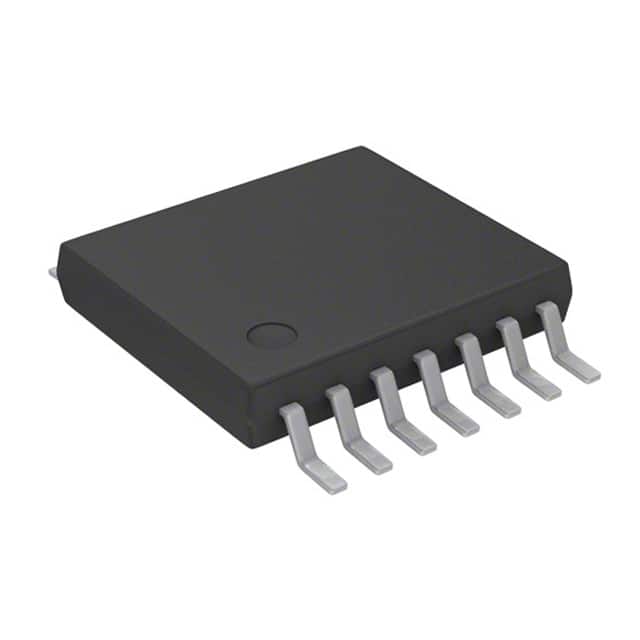
Analog Devices Inc. AD8648ARUZ
- Part No.:
- AD8648ARUZ
- Manufacturer:
- Analog Devices Inc.
- Category:
- Instrumentation, Op Amps, Buffer Amps
- Package:
- 14-TSSOP (0.173", 4.40mm Width)
- Datasheet:
-
 AD8648ARUZ.pdf
- Description:
- IC OPAMP GP 4 CIRCUIT 14TSSOP
- Quantity:
- Payment:

- Shipping:

Inventory:1,050
Please send an inquiry. Send us your inquiry, and we will respond immediately.
Product details
Overview
AD8648ARUZ from Analog Devices is a quad, rail-to-rail input/output operational amplifier optimized for precision, low-noise, single-supply operation across 2.7 V to 5.5 V. It delivers 24 MHz gain bandwidth, 11 V/μs slew rate, 2.5 mV max offset voltage, and 8 nV/√Hz voltage noise density-enabling high-fidelity signal conditioning in battery-powered sensor front ends and photodiode amplifiers.
For engineers reviewing the AD8648ARUZ datasheet, AD8648ARUZ pinout, AD8648ARUZ application, or AD8648ARUZ equivalent, this page provides verified technical context, package-specific pin mapping, real-world application constraints, and validated alternative options for automotive-grade, low-power precision amplification.
Technical Context
The AD8648ARUZ implements a complementary bipolar input stage with JFET-like input bias current (1 pA typical), enabling stable operation with high-impedance sources such as photodiodes and piezoelectric sensors. Its unity-gain-stable architecture supports direct connection to ADC inputs without external compensation.
It operates over −40°C to +125°C with guaranteed performance at both 2.7 V and 5 V supplies, delivering rail-to-rail output swing within 20 mV of each rail at 1 mA load and maintaining >104 dB open-loop gain at 2 kΩ load-critical for multipole filter stages and ASIC interface buffering.
Key Specifications
| Parameter | Value and Actual Design Meaning |
|---|---|
| Gain Bandwidth Product | 24 MHz - supports stable closed-loop operation up to 100 kHz with gain ≥100, suitable for anti-aliasing filters before 100 kSPS ADCs. |
| Slew Rate | 11 V/μs - enables clean 1 VPP output at 1 MHz without distortion in audio line driver or DAC buffer roles. |
| Input Offset Voltage | 2.5 mV maximum - ensures ≤0.5% error in 500 mV full-scale sensor signal paths without trimming. |
| Voltage Noise Density | 8 nV/√Hz at 1 kHz - preserves SNR in photodiode transimpedance amplifiers with ≥100 kΩ feedback resistors. |
| Supply Current per Amplifier | 2.0 mA maximum at +25°C - allows four-channel operation under 10 mA total, ideal for space-constrained portable instrumentation. |
| Common-Mode Rejection Ratio | 84 dB minimum - rejects power supply ripple and EMI coupling in single-supply systems with shared ground references. |
| Operating Temperature Range | −40°C to +125°C - qualified for under-hood automotive sensor modules and industrial PLC analog input cards. |
Pinout & Package
AD8648ARUZ is packaged in a 14-lead TSSOP (RU-14) with 0.65 mm pitch, 5.0 mm × 4.4 mm body, and exposed pad for thermal enhancement. Pin 1 is marked by a dot or beveled corner.
| Pin/Terminal | Circuit Role | Design Meaning |
|---|---|---|
| 1 | −INA | Inverting input of Amplifier A - connects to feedback network in inverting configurations or sensor return path in differential setups. |
| 2 | +INA | Non-inverting input of Amplifier A - accepts high-impedance sensor signals with <1 pA bias current, minimizing loading error. |
| 3 | V+ | Positive supply rail - must be decoupled with 100 nF ceramic capacitor near pin to suppress 24 MHz loop instability. |
| 4 | OUTB | Output of Amplifier B - drives low-impedance loads up to 120 mA short-circuit current; rail-to-rail swing supports 0–5 V DAC interfacing. |
| 5 | −INB | Inverting input of Amplifier B - shares same electrical characteristics as Pin 1; usable for matched dual-path filtering. |
| 6 | +INB | Non-inverting input of Amplifier B - electrically isolated from other inputs; enables independent channel configuration. |
| 7 | OUTA | Output of Amplifier A - complements Pin 4 for dual-output applications like stereo audio preamp or dual-sensor conditioning. |
| 8 | −IND | Inverting input of Amplifier D - identical specification to Pins 1 and 5; supports four independent channels without crosstalk degradation. |
| 9 | +IND | Non-inverting input of Amplifier D - maintains 1 pA bias current and 6.7 pF common-mode capacitance across all four channels. |
| 10 | V− | Negative supply rail - tied to GND in single-supply use; requires low-inductance connection to minimize PSRR degradation. |
| 11 | OUTC | Output of Amplifier C - delivers same 11 V/μs slew rate and 24 MHz bandwidth as other outputs; supports parallel drive for higher current. |
| 12 | −INC | Inverting input of Amplifier C - matches Pin 1 performance; enables cascaded filter topologies with consistent DC accuracy. |
| 13 | +INC | Non-inverting input of Amplifier C - referenced to same V− node as Pin 10; critical for common-mode rejection in multi-channel systems. |
| 14 | OUTD | Output of Amplifier D - completes quad functionality; each output independently capable of driving 2 kΩ loads with <0.1% THD+N at 25 kHz. |
Key Features
| Feature | Design Value |
|---|---|
| Rail-to-rail input and output | Accepts input signals from V− to V+ and swings output within 20 mV of either rail at 1 mA - eliminates level-shifting circuits in 3.3 V microcontroller interfaces. |
| Low input bias current (1 pA typ) | Minimizes voltage error across high-value feedback resistors (>1 MΩ) used in photodiode transimpedance amplifiers and pH probe buffers. |
| No phase reversal | Prevents catastrophic latch-up when input common-mode voltage exceeds supply rails - essential for unbuffered sensor inputs in transient-prone environments. |
| Automotive qualification | Qualified per AEC-Q100 Grade 1 (−40°C to +125°C) - meets reliability requirements for engine control unit (ECU) analog front ends and ADAS sensor signal chains. |
| Low 0.1 Hz to 10 Hz noise (2.3 μVPP) | Enables sub-microvolt DC stability in precision weigh scales and medical ECG front ends without chopper stabilization overhead. |
Applications
| Photodiode Signal Conditioning | CMOS ADC Front End |
|---|---|
|
Use Scenario: Amplifying weak current from silicon photodiodes in optical smoke detectors or pulse oximeters. IC Role / Device Role / Timing Role: Transimpedance amplifier converting photocurrent to voltage with 100 kΩ–10 MΩ feedback, leveraging 1 pA input bias and 8 nV/√Hz noise. Use Value: Enables detection of <100 nA photocurrents with <10 μV RMS noise floor, meeting IEC 62366 usability thresholds for medical devices. |
Use Scenario: Buffering and level-shifting sensor outputs prior to sampling by 12-bit SAR ADCs in portable data loggers. IC Role / Device Role / Timing Role: Rail-to-rail output driver ensuring full 0–3.3 V swing into 10 pF ADC sample capacitor, with 0.5 μs settling to 0.1%. Use Value: Eliminates missing codes in LSB due to incomplete settling, achieving effective resolution >11.5 bits across temperature range. |
| Multipole Active Filters | Automotive Sensor Interface |
|
Use Scenario: Implementing 4th-order low-pass filters for vibration monitoring in predictive maintenance edge nodes. IC Role / Device Role / Timing Role: Quad op-amp configured as two biquad sections (Sallen-Key topology), using matched AC performance across channels. Use Value: Achieves −80 dB stopband attenuation at 2× cutoff frequency while maintaining group delay flatness <50 ns across 0–10 kHz band. |
Use Scenario: Conditioning signals from exhaust gas oxygen (EGO) sensors and knock sensors in engine control modules. IC Role / Device Role / Timing Role: Precision amplifier with −40°C to +125°C operation, rejecting battery ripple via 80 dB PSRR and handling 12 V transients on supply lines. Use Value: Meets ISO 16750-2 pulse test requirements without external protection, reducing BOM count by two TVS diodes per channel. |
Equivalent & Alternatives
The following parts are listed as comparable options for similar quad precision op-amp applications.
| Alternative Part | Technical Difference | Application Difference | Selection Advice |
|---|---|---|---|
| OP484ESZ | Wider supply range (±1.5 V to ±18 V), higher quiescent current (1.2 mA per amp), no automotive qualification | Better suited for dual-supply industrial PLC analog outputs; lacks AEC-Q100 certification for automotive use | Select OP484ESZ only when bipolar supplies or >18 V headroom are required; AD8648ARUZ preferred for 3.3 V/5 V automotive sensor nodes. |
| LMV324IDR | Lower bandwidth (1 MHz), higher offset (7 mV max), 35 μA supply current per amp, no 125°C rating | Targeted at cost-sensitive consumer electronics; insufficient for precision 24 MHz filter or photodiode applications | Choose LMV324IDR for non-critical battery-powered remotes; AD8648ARUZ required where 2.5 mV offset and 24 MHz BW are design-critical. |
Compared with OP484ESZ and LMV324IDR, AD8648ARUZ uniquely balances automotive qualification, 24 MHz bandwidth, and 1 pA input bias-making it the only option among the three that satisfies simultaneous requirements for under-hood sensor signal integrity and high-frequency anti-aliasing.
Availability
AD8648ARUZ is available at Aetrix Electronics and suitable for automotive sensor modules, portable medical instruments, and industrial data acquisition systems requiring stable component supply across extended temperature ranges and long production lifecycles.
Supply support for AD8648ARUZ includes scheduled delivery planning, volume procurement assistance, BOM continuity management, traceable sourcing, and lifecycle availability coordination for OEM customers, industrial embedded developers, connected-device designers, and electronics production programs.
Manufacturer
Analog Devices, Inc. is a global leader in high-performance analog, mixed-signal, and digital signal processing semiconductors, headquartered in Norwood, MA.
The AD864x family was designed specifically for precision, low-noise, rail-to-rail signal conditioning in battery-powered and automotive applications-emphasizing DC accuracy, wide bandwidth, and robust operation across extreme temperatures.
FAQ
What is the maximum operating temperature for AD8648ARUZ?
The AD8648ARUZ is rated for continuous operation from −40°C to +125°C and is qualified per AEC-Q100 Grade 1. This rating is verified across all electrical parameters in Table 1 and Table 2 of the Rev. F datasheet, including offset voltage drift, CMRR, and supply current. The 125°C junction limit applies under worst-case PCB thermal resistance conditions specified in θJA = 180°C/W for the RU-14 package.
Does AD8648ARUZ include a shutdown function like AD8647?
No, AD8648ARUZ does not include a shutdown function. Unlike the AD8647 (dual with shutdown pins SDA/SDB), the AD8648ARUZ is a quad amplifier without enable/disable logic inputs. Its pinout-confirmed in Figure 3 of the datasheet-contains only four amplifier inputs/outputs and dual supply pins (V+, V−), with no dedicated shutdown terminals. Power management must be handled externally.
Can AD8648ARUZ drive a 600 Ω load at 25 kHz with low distortion?
Yes, AD8648ARUZ achieves 0.010% THD+N at 25 kHz with 0.1 VPP output into 600 Ω (Table 1, Dynamic Performance section). This performance is enabled by its 24 MHz GBP and 11 V/μs slew rate, which prevent slew-induced distortion. For full-scale 2 VPP signals, THD+N rises to 0.021% at AV = −10, remaining well below 0.05%-acceptable for professional audio line drivers.
Is AD8648ARUZ pin-compatible with AD8648ARZ?
No, AD8648ARUZ (14-lead TSSOP, RU-14) is not pin-compatible with AD8648ARZ (14-lead SOIC_N, R-14), despite identical functional pin numbering. The RU-14 package has 0.65 mm lead pitch and 5.0 mm × 4.4 mm body, while the R-14 uses 1.27 mm pitch and 8.75 mm × 4.0 mm body. PCB layout and reflow profiles differ significantly; migration requires board redesign.
What decoupling is recommended for AD8648ARUZ?
Analog Devices specifies a 100 nF X7R ceramic capacitor placed within 2 mm of each V+ pin (Pins 3 and 10) and connected directly to the local ground plane. For systems with noisy supplies, add a 10 μF tantalum or polymer capacitor at the board-level supply entry point. Avoid series ferrite beads unless validated for 24 MHz loop stability, as they may induce peaking in the 10–100 MHz range.
AD8648ARUZ Specifications
- Product attributes
- Attribute value
- Manufacturer:
- Analog Devices Inc.
- Series:
- -
- Package/Case:
- 14-TSSOP (0.173", 4.40mm Width)
- Packaging:
- Tube
- Product Status:
- Active
- Amplifier Type:
- General Purpose
- Number of Circuits:
- 4
- Output Type:
- Rail-to-Rail
- Slew Rate:
- 11V/µs
- Gain Bandwidth Product:
- 24 MHz
- -3db Bandwidth:
- -
- Current - Input Bias:
- 0.3 pA
- Voltage - Input Offset:
- 600 µV
- Current - Supply:
- 1.5mA (x4 Channels)
- Current - Output / Channel:
- 120 mA
- Voltage - Supply Span (Min):
- 2.7 V
- Voltage - Supply Span (Max):
- 5.5 V
- Operating Temperature:
- -40°C ~ 125°C
- Grade:
- -
- Qualification:
- -
- Mounting Type:
- Surface Mount
- Supplier Device Package:
- 14-TSSOP
AD8648ARUZ FAQ
1.How can I place an order for AD8648ARUZ through Aetrix?
Please submit a Request for Quotation (RFQ) for AD8648ARUZ on Aetrix. Our sales agent will provide a competitive quotation and guide you through the order confirmation once you accept the terms.
2.Are the price and stock information for AD8648ARUZ reliable?
The price and inventory of AD8648ARUZ are updated periodically and may fluctuate due to market conditions. Stock and pricing data are typically refreshed every 24 hours. Quotation validity for AD8648ARUZ is usually 5 days.
3.What payment methods are accepted for AD8648ARUZ?
We accept Wire Transfer, PayPal, Credit Card, Western Union, MoneyGram, and Escrow for AD8648ARUZ transactions.
Note: Certain payment methods may incur a processing fee.
4.How is shipping managed for AD8648ARUZ?
AD8648ARUZ orders can be shipped via leading logistics carriers, including DHL, UPS, FedEx, TNT, or Registered Mail.
Once your AD8648ARUZ order is processed, you will receive an email with the shipment details and tracking number.
Note: Tracking information may take up to 24 hours to appear. Express delivery typically takes 3–5 business days.
5.How can I obtain technical support or documentation for AD8648ARUZ?
For technical support, including AD8648ARUZ datasheets, pinout diagrams, or application guidance, please contact our engineering support team. They can provide detailed documentation and assistance for your AD8648ARUZ requirements.
6.How does Aetrix verify that AD8648ARUZ is sourced from the original manufacturer or authorized distributors?
All AD8648ARUZ products on Aetrix are procured from qualified distributors and authorized channels. Our dedicated quality assurance team conducts strict verification, including traceability checks and, if necessary, third-party testing. This ensures that AD8648ARUZ meets industry standards.
7.What is the process for return or replacement of AD8648ARUZ?
All AD8648ARUZ units undergo pre-shipment inspection (PSI). If there is an issue with AD8648ARUZ, returns or replacements are accepted under the following conditions:
1.Quantity discrepancies, incorrect items, or visible external defects (such as breakage or corrosion), acknowledged by Aetrix.
2.The issue is reported within 90 days of delivery.
3.The AD8648ARUZ part is unused and in its original packaging.
Return procedure for AD8648ARUZ:
1.Submit a request within 90 days.
2.Obtain a Return Material Authorization (RMA) from Aetrix.
AD8648ARUZ Tags

-
LM358DT
STMicroelectronics

-
LM358DR
Texas Instruments
-
LM2904DR
Texas Instruments
-
LM358ADR
Texas Instruments
-
LM2904DGKR
Texas Instruments
-
LM324DR
Texas Instruments

-
MCP6006T-E/OT
Microchip Technology
-
MCP6006UT-E/OT
Microchip Technology
-
LM324PWR
Texas Instruments
-
LM2902PWR
Texas Instruments
-
LM2902DR
Texas Instruments
-
LM358P
Texas Instruments
Tech Hub

A practical engineering guide to 3.3V and 5V logic compatibility, input thresholds, resistor dividers, translator ICs, MOSFET level shifting, I2C pull-ups, timing limits and power-sequencing risks.

The 74HC595 uses push-pull logic outputs, while the TPIC6B595 uses 50 V open-drain DMOS sinks for higher-power loads. This guide compares timing, current limits, 3.3 V interfacing, load wiring, thermal…

The 74HC595 converts serial data into eight stable parallel outputs. This guide covers pin functions, shift and storage timing, OE and MR behavior, drive-current limits, cascading, voltage compatibilit…

A technical comparison of level-sensitive latches and edge-triggered flip-flops, covering timing windows, setup and hold limits, master–slave operation, time borrowing, race-through, HDL inference and…

A D latch stores one bit while Enable controls when data can pass. This reference covers gate-level operation, truth tables, transparency, setup and hold timing, LE versus OE, common ICs and practical …

An SR latch stores one bit through cross-coupled feedback. This engineering reference covers NOR and NAND implementations, truth tables, forbidden-state recovery, gated operation, switch debouncing, fa…

Latch circuits retain one bit through feedback. This technical reference covers SR and D latches, truth tables, transparency, timing limits, latch-versus-flip-flop behavior, applications and common log…

An engineering guide to LED driver operation, constant-current and constant-voltage outputs, linear and switching topologies, dimming, IC selection, calculations, replacement compatibility, and fault c…

Operational amplifier guide covering op amp basics, feedback, ideal vs real op amps, common configurations, buffer circuits, offset, bias current, gain-bandwidth, slew rate, rail-to-rail limits and sel…

Jumper cables guide covering safe connection order, red and black clamp placement, final ground connection, cable gauge, length, clamp quality, copper vs CCA cables, jump starter comparison and battery…


