
 My Inquiry
 My Account


Analog Devices Inc. AD9888KS-140
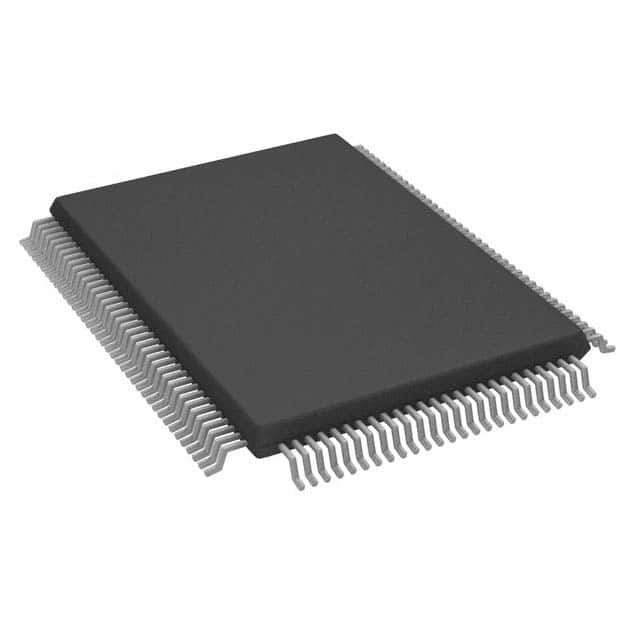
- Part No.:
- AD9888KS-140
- Manufacturer:
- Analog Devices Inc.
- Category:
- Specialized
- Package:
- 128-BFQFP
- Datasheet:
-
 AD9888KS-140.pdf
- Description:
- IC FLAT PANEL INTERFACE 128-MQFP
- Quantity:
- Payment:

- Shipping:

Inventory:14,587
Please send an inquiry. Send us your inquiry, and we will respond immediately.
Product details
Overview
AD9888KS-140 from Analog Devices is an 8-bit, 140 MSPS triple analog-to-digital converter optimized for RGB graphics capture in flat-panel display interfaces. It features a 500 MHz programmable analog bandwidth, <450 psp-p PLL jitter at full rate, 0.5–1.0 V analog input range, and integrated midscale clamping - enabling UXGA (1600×1200@75 Hz) support in LCD monitors and projectors.
For engineers reviewing the AD9888KS-140 datasheet, AD9888KS-140 pinout, AD9888KS-140 application, or AD9888KS-140 equivalent, key selection criteria include tested 140 MSPS conversion rate (not 100 or 170 MSPS), dual-channel RGB output mode, sync-on-green processing capability, and 128-lead MQFP package with 3.3 V single-supply operation.
Technical Context
The AD9888KS-140 implements a fully integrated analog interface with three independent 8-bit ADCs, each supporting 0.5–1.0 V p-p input signals and programmable gain/offset/clamp controls. Its on-chip PLL generates pixel clocks from HSYNC and COAST inputs, with frequency range 10–140 MHz and phase-adjustable sampling.
Sync processing includes composite sync detection, sync-on-green slicing with adjustable threshold, and hot-plug–capable sync detect logic. The device supports both single-port (Port A only) and dual-port (A/B interleaved or parallel) output modes via serial register configuration, with all outputs compliant to 3.3 V CMOS levels and configurable drive strength.
Key Specifications
| Parameter | Value and Actual Design Meaning |
|---|---|
| Max Conversion Rate | 140 MSPS - guaranteed test condition for AD9888KS-140; enables UXGA resolution at 75 Hz |
| Analog Bandwidth | 500 MHz - full-power bandwidth setting supports sharp edge fidelity in high-resolution graphics |
| PLL Jitter | <450 psp-p - ensures stable sampling timing critical for pixel integrity in digital displays |
| Analog Input Range | 0.5 V to 1.0 V p-p - matches standard RGB video signal swing; requires AC coupling for clamp operation |
| Power Supply | 3.3 V ±10% - single supply for analog (VD), digital (VDD), and PLL (PVD) domains |
| Resolution | 8 bits - provides 256-level grayscale/color depth suitable for consumer and industrial display applications |
| Operating Temp | 0°C to +70°C - commercial-grade temperature range aligned with monitor and projector environments |
Pinout & Package
AD9888KS-140 is housed in a 128-lead MQFP (Metric Quad Flat Package), surface-mount, plastic package with 0.4 mm lead pitch and exposed thermal pad. Pin layout supports dual-channel RGB signal routing, dedicated sync inputs/outputs, and full 2-wire serial control interface.
| Pin/Terminal | Circuit Role | Design Meaning |
|---|---|---|
| RAIN0–BAIN1 | Analog Video Inputs (6 channels) | High-impedance RGB inputs per channel; accept 0.5–1.0 V p-p ac-coupled signals for clamp-based DC restoration |
| HSYNC0/VSYNC0/SOGIN0 | Channel 0 Sync Inputs | Support composite sync, vertical/horizontal timing, and sync-on-green extraction with internal Schmitt trigger and variable threshold |
| DRA[7:0]–DBB[7:0] | Dual-Port RGB Data Outputs | Three 8-bit color channels × 2 ports = 48 total CMOS outputs; configurable for interleaved or parallel pixel delivery |
| DATACK / DATACK | Differential Data Clock Pair | Strobe pair for latching output data; maintains fixed phase relationship with HSOUT/VSOUT regardless of clock phase adjustment |
| SCL / SDA / A0 | 2-Wire Serial Interface | I²C-compatible control port for real-time gain, offset, clamp, PLL, and sync-mode configuration without external logic |
Key Features
| Feature | Design Value |
|---|---|
| Triple 8-bit ADC Architecture | Simultaneous RGB digitization at up to 140 MSPS with matched full-scale gain and offset across all channels |
| Programmable Analog Bandwidth | Selectable 75/150/300/500 MHz settings - preserves signal integrity while minimizing noise in bandwidth-limited systems |
| Full Sync Processing Engine | Hardware-accelerated sync detection, separation, and generation for composite, SOG, and discrete H/V sync sources |
| Midscale Clamping | Internal or external clamp control with programmable timing - restores black level reference for accurate RGB DC restoration |
| Hot-Plug Sync Detect | Automatic recognition of sync presence during live source insertion - eliminates display blanking or relock delay in plug-and-play scenarios |
Applications
| RGB Graphics Capture | LCD Monitor Interface |
|---|---|
Use Scenario: Digitizing VGA/UXGA analog RGB signals from PCs or workstations into digital display pipelines. IC Role / Device Role / Timing Role: Primary analog front-end ADC with embedded sync recovery and pixel clock synthesis. Use Value: Eliminates need for external sync slicers, clock generators, and discrete ADCs - reduces BOM count and PCB area by >40%. | Use Scenario: Driving high-resolution TFT-LCD panels in commercial desktop monitors requiring stable 140 MSPS pixel throughput. IC Role / Device Role / Timing Role: Real-time RGB digitizer with phase-aligned DATACK/HSOUT outputs for seamless FIFO or frame buffer interfacing. Use Value: Maintains sub-ns skew between data and clock outputs across temperature - prevents timing violations in 1600×1200@75 Hz operation. |
| Plasma Display Controller | Digital TV Signal Conditioning |
Use Scenario: Converting legacy analog broadcast or PC graphics signals for plasma panel display processing. IC Role / Device Role / Timing Role: High-bandwidth analog interface with SOG-in capability and programmable clamp timing for varied input formats. Use Value: Supports multiple sync standards (composite, SOG, discrete) in one IC - avoids redesign when sourcing different signal types. | Use Scenario: Front-end digitization in set-top boxes or digital TVs accepting analog RGB/YPbPr inputs. IC Role / Device Role / Timing Role: Low-jitter ADC with 3.3 V CMOS outputs compatible with downstream video processors and scalers. Use Value: Delivers SNR ≥42 dB at 40.7 MHz input - meets ITU-R BT.601 luminance fidelity requirements for broadcast-grade conversion. |
Equivalent & Alternatives
The following parts are listed as comparable options for similar analog flat-panel interface applications.
| Alternative Part | Technical Difference | Application Difference | Selection Advice |
|---|---|---|---|
| AD9888KS-170 | Rated for 170 MSPS max conversion; higher PLL VCO range and charge pump current; identical pinout and register map | Required for >140 MSPS resolutions (e.g., 1920×1200@60 Hz); same PCB layout but tighter power/thermal design needed | Select AD9888KS-170 only if system demands >140 MSPS sustained rate; AD9888KS-140 offers lower power and cost for UXGA-class designs |
| ADV7123KSTZ240 | Triple 10-bit DAC (not ADC); no PLL, sync processing, or clamping; 240 MSPS update rate; 48-pin LQFP | Used in reverse direction (digital→analog); targets video generator, not capture; requires external clock and sync logic | Not functionally interchangeable; ADV7123 serves output path, AD9888KS-140 serves input path - consider only for full-system architecture comparison |
Compared with AD9888KS-170, the AD9888KS-140 delivers identical feature set and pin compatibility at reduced jitter margin and power consumption, making it optimal for cost-sensitive UXGA displays. Unlike ADV7123KSTZ240 - a DAC - AD9888KS-140 performs full analog capture with integrated clock synthesis and sync handling, eliminating six to eight external components in typical flat-panel designs.
Availability
AD9888KS-140 is available at Aetrix Electronics and suitable for LCD monitor manufacturing, plasma display controller development, and digital TV signal conditioning requiring stable component supply, long-term lifecycle support, and traceable sourcing.
Supply support for AD9888KS-140 includes scheduled delivery planning, volume procurement assistance, BOM continuity management, traceable sourcing, and lifecycle availability coordination for OEM customers, industrial embedded developers, connected-device designers, and electronics production programs.
Manufacturer
Analog Devices, Inc. is a global leader in high-performance analog, mixed-signal, and digital signal processing semiconductors, headquartered in Norwood, MA.
The AD9888 product line was designed specifically for analog video capture in flat-panel display interfaces, integrating ADCs, PLLs, sync processors, and clamping circuitry into a single monolithic solution to replace multi-chip subsystems.
FAQ
What is the maximum guaranteed conversion rate for AD9888KS-140?
The AD9888KS-140 is specified and production-tested at a maximum conversion rate of 140 MSPS. This is explicitly stated in the datasheet's ordering guide and Table 1, where AD9888KS-140 parameters are tested at 140 MHz - distinct from the 100 MSPS (AD9888JS-100) and 170 MSPS (AD9888KS-170) variants. Operating beyond 140 MSPS is not guaranteed for this part number.
Does AD9888KS-140 support sync-on-green (SOG) input processing?
Yes, AD9888KS-140 supports SOG input processing via dedicated SOGIN0 and SOGIN1 pins. Each connects to a high-speed comparator with an internally generated, programmable threshold (default ~0.15 V above negative peak). When enabled, it produces a clean SOGOUT signal containing composite sync information - confirmed in the Functional Block Diagram, General Description, and Pin Function Descriptions sections of the Rev. C datasheet.
What package type and pin count does AD9888KS-140 use?
AD9888KS-140 uses a 128-lead MQFP (Metric Quad Flat Package), surface-mount plastic package with 0.4 mm lead pitch and exposed thermal pad. This is documented in the General Description (Page 1), Pin Configuration diagram (Figure 3), and Ordering Guide (Page 36) of the AD9888 Rev. C datasheet - and applies identically to all AD9888KS-x variants including AD9888KS-140.
Can AD9888KS-140 operate with an external pixel clock instead of its internal PLL?
Yes, AD9888KS-140 can bypass its internal PLL and accept an external pixel clock via the CKEXT pin. This is enabled by setting Register 0x15 Bit 0 (external clock select) to 1. The device retains full functionality - including sync processing, clamping, and output formatting - while using the external clock, as detailed in the "CKEXT" pin description (Page 9) and Clock Generation section (Page 14).
Is AD9888KS-140 pin-compatible with AD9888KS-170?
Yes, AD9888KS-140 is pin-compatible with AD9888KS-170. Both share identical 128-lead MQFP packaging, pin configuration (Figure 3), pin functions (Table 3), and register map. The datasheet confirms this in the Revision History (Page 3) and Ordering Guide (Page 36), where KS-140 and KS-170 appear in the same package column with no pinout differentiation.
AD9888KS-140 Specifications
- Product attributes
- Attribute value
- Manufacturer:
- Analog Devices Inc.
- Series:
- -
- Package/Case:
- 128-BFQFP
- Packaging:
- Bag
- Product Status:
- Obsolete
- Applications:
- Graphic Cards, VGA Interfaces
- Interface:
- 2-Wire Serial
- Voltage - Supply:
- 3V ~ 3.6V
- Supplier Device Package:
- 128-MQFP (14x20)
- Grade:
- -
- Qualification:
- -
- Mounting Type:
- Surface Mount
AD9888KS-140 FAQ
1.How can I place an order for AD9888KS-140 through Aetrix?
Please submit a Request for Quotation (RFQ) for AD9888KS-140 on Aetrix. Our sales agent will provide a competitive quotation and guide you through the order confirmation once you accept the terms.
2.Are the price and stock information for AD9888KS-140 reliable?
The price and inventory of AD9888KS-140 are updated periodically and may fluctuate due to market conditions. Stock and pricing data are typically refreshed every 24 hours. Quotation validity for AD9888KS-140 is usually 5 days.
3.What payment methods are accepted for AD9888KS-140?
We accept Wire Transfer, PayPal, Credit Card, Western Union, MoneyGram, and Escrow for AD9888KS-140 transactions.
Note: Certain payment methods may incur a processing fee.
4.How is shipping managed for AD9888KS-140?
AD9888KS-140 orders can be shipped via leading logistics carriers, including DHL, UPS, FedEx, TNT, or Registered Mail.
Once your AD9888KS-140 order is processed, you will receive an email with the shipment details and tracking number.
Note: Tracking information may take up to 24 hours to appear. Express delivery typically takes 3–5 business days.
5.How can I obtain technical support or documentation for AD9888KS-140?
For technical support, including AD9888KS-140 datasheets, pinout diagrams, or application guidance, please contact our engineering support team. They can provide detailed documentation and assistance for your AD9888KS-140 requirements.
6.How does Aetrix verify that AD9888KS-140 is sourced from the original manufacturer or authorized distributors?
All AD9888KS-140 products on Aetrix are procured from qualified distributors and authorized channels. Our dedicated quality assurance team conducts strict verification, including traceability checks and, if necessary, third-party testing. This ensures that AD9888KS-140 meets industry standards.
7.What is the process for return or replacement of AD9888KS-140?
All AD9888KS-140 units undergo pre-shipment inspection (PSI). If there is an issue with AD9888KS-140, returns or replacements are accepted under the following conditions:
1.Quantity discrepancies, incorrect items, or visible external defects (such as breakage or corrosion), acknowledged by Aetrix.
2.The issue is reported within 90 days of delivery.
3.The AD9888KS-140 part is unused and in its original packaging.
Return procedure for AD9888KS-140:
1.Submit a request within 90 days.
2.Obtain a Return Material Authorization (RMA) from Aetrix.
AD9888KS-140 Tags
-
NVT4857UKAZ
NXP Semiconductors
-
TCA8418RTWR
Texas Instruments

-
PCA9546APWR
Texas Instruments

-
MD0100N8-G
Microchip Technology
-
PCA9548APW,118
NXP Semiconductors
-
PCA9540BDP,118
NXP Semiconductors
-
PCA9548APWR
Texas Instruments
-
PCA9546APW,118
NXP Semiconductors
-
PTN3360DBS,518
NXP Semiconductors
-
PCA9546ABS,118
NXP Semiconductors
-
PCA9518PWR
Texas Instruments
-
PCA9545APW,118
NXP Semiconductors
Tech Hub

A practical engineering guide to 3.3V and 5V logic compatibility, input thresholds, resistor dividers, translator ICs, MOSFET level shifting, I2C pull-ups, timing limits and power-sequencing risks.

The 74HC595 uses push-pull logic outputs, while the TPIC6B595 uses 50 V open-drain DMOS sinks for higher-power loads. This guide compares timing, current limits, 3.3 V interfacing, load wiring, thermal…

The 74HC595 converts serial data into eight stable parallel outputs. This guide covers pin functions, shift and storage timing, OE and MR behavior, drive-current limits, cascading, voltage compatibilit…

A technical comparison of level-sensitive latches and edge-triggered flip-flops, covering timing windows, setup and hold limits, master–slave operation, time borrowing, race-through, HDL inference and…

A D latch stores one bit while Enable controls when data can pass. This reference covers gate-level operation, truth tables, transparency, setup and hold timing, LE versus OE, common ICs and practical …

An SR latch stores one bit through cross-coupled feedback. This engineering reference covers NOR and NAND implementations, truth tables, forbidden-state recovery, gated operation, switch debouncing, fa…

Latch circuits retain one bit through feedback. This technical reference covers SR and D latches, truth tables, transparency, timing limits, latch-versus-flip-flop behavior, applications and common log…

An engineering guide to LED driver operation, constant-current and constant-voltage outputs, linear and switching topologies, dimming, IC selection, calculations, replacement compatibility, and fault c…

Operational amplifier guide covering op amp basics, feedback, ideal vs real op amps, common configurations, buffer circuits, offset, bias current, gain-bandwidth, slew rate, rail-to-rail limits and sel…

Jumper cables guide covering safe connection order, red and black clamp placement, final ground connection, cable gauge, length, clamp quality, copper vs CCA cables, jump starter comparison and battery…


