
 My Inquiry
 My Account


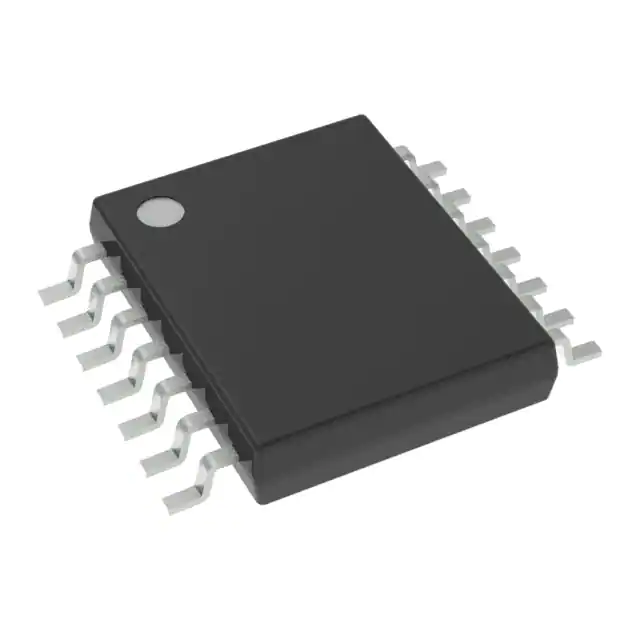
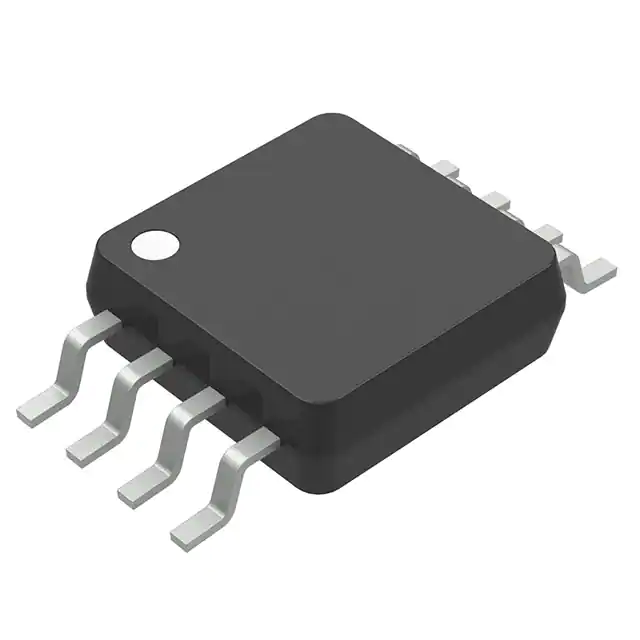
Texas Instruments ADC122S706CIMTX
- Part No.:
- ADC122S706CIMTX
- Manufacturer:
- Texas Instruments
- Category:
- Analog to Digital Converters (ADC)
- Package:
- 14-TSSOP (0.173", 4.40mm Width)
- Datasheet:
-
 ADC122S706CIMTX.pdf
- Description:
- IC ADC 12BIT SAR 14TSSOP
- Quantity:
- Payment:

- Shipping:

Inventory:4,336
Please send an inquiry. Send us your inquiry, and we will respond immediately.
Product details
Overview
ADC122S706 from Texas Instruments is a dual 12-bit, simultaneous-sampling SAR analog-to-digital converter with true differential inputs per channel, 500 kSPS to 1 MSPS throughput, ±1 LSB INL (max), 71 dBc SNR (min), and operation over −40°C to +105°C - used in motor control for synchronized current/voltage sensing.
For engineers reviewing the ADC122S706 datasheet, ADC122S706 pinout, ADC122S706 application, or ADC122S706 equivalent, this page delivers verified specifications, validated dual-channel timing behavior, real-world power consumption data at 1 MSPS, and confirmed SPI/QSPI/MICROWIRE serial interface compatibility - all specific to the ADC122S706CIMTX variant in 14-lead TSSOP.
Technical Context
The ADC122S706 employs a successive-approximation register (SAR) architecture with independent track-and-hold circuits on both channels, preserving phase coherence between CHA+/- and CHB+/- during simultaneous sampling. Its differential input structure extends through the entire signal path, enabling >90 dB common-mode rejection.
It supports dual serial outputs (DOUTA/DOUTB) in binary 2's complement format, configurable via the DUAL pin for either independent channel streaming or time-multiplexed output on DOUTA. Conversion requires exactly 16 SCLK cycles, with acquisition time of 3 SCLK cycles and aperture delay of 6 ns.
Key Specifications
| Parameter | Value and Actual Design Meaning |
|---|---|
| Resolution | 12-bit with no missing codes - guarantees monotonicity and full code coverage across full input range. |
| Sampling Rate | 500 kSPS to 1 MSPS - supports real-time closed-loop control in motor drives and multi-axis positioning systems. |
| INL / DNL | ±1 LSB max / ±0.95 LSB max - ensures accurate amplitude fidelity for precision instrumentation and power metering. |
| SNR / THD | 71 dBc min / −72 dBc max - enables clean digitization of low-distortion sensor signals up to 100 kHz input. |
| Power @ 1 MSPS | 20 mW typ (VA = 5V, VD = 3V) - allows integration into thermally constrained industrial modules without forced cooling. |
| Reference Range | 1.0 V to VA - permits flexible scaling from low-voltage sensors to full-scale 5 V differential inputs. |
| Operating Temp | −40°C to +105°C - qualified for under-hood automotive subsystems and industrial motor drive environments. |
Pinout & Package
ADC122S706CIMTX is housed in a 14-lead TSSOP package (4.4 mm × 5.0 mm, 0.65 mm pitch), optimized for high-density PCB layouts and thermal performance (θJA = 121°C/W).
| Pin/Terminal | Circuit Role | Design Meaning |
|---|---|---|
| VREF | Voltage reference input | Accepts 1.0 V–VA external reference; requires ≥0.1 µF ceramic decoupling to GND for stable conversion accuracy. |
| CHA+, CHA− | Differential analog input, Channel A | True differential pair with wide common-mode range; maintains phase integrity during simultaneous sampling with CHB. |
| CHB+, CHB− | Differential analog input, Channel B | Matched to CHA inputs for <0.02 LSB INL/DNL matching - critical for vector-controlled motor feedback. |
| VA, VD | Analog/digital supply inputs | Independent rails: VA = 4.5–5.5 V, VD = 2.7–VA - enables mixed-voltage system interfacing and noise isolation. |
| DUAL | Output mode select | Logic-high enables dual-output mode (DOUTA/B active); logic-low forces time-multiplexed output on DOUTA only. |
| DOUTA, DOUTB | Serial data outputs | Binary 2's complement, MSB-first; valid on rising edge of SCLK; support SPI/QSPI/MICROWIRE timing protocols. |
| SCLK, CS | Serial clock and chip select | Shared by both channels; conversion starts on falling edge of CS; SCLK frequency 8–16 MHz determines sample rate. |
Key Features
| Feature | Design Value |
|---|---|
| True simultaneous sampling | Preserves inter-channel phase relationship - essential for field-oriented control (FOC) algorithms in motor drives. |
| Dual independent serial outputs | Eliminates time skew between Channel A and B results; avoids software synchronization overhead in real-time systems. |
| External reference flexibility | VREF adjustable from 1.0 V to VA allows optimization for sensor output range without external gain stages. |
| Low-power power-down mode | 3 µW typical consumption (CS high) - enables rapid wake-up in duty-cycled monitoring applications. |
| High CMRR (>90 dB) | Maintains accuracy in noisy industrial environments where common-mode transients exceed 1 V peak. |
Applications
| Motor Control | Power Meters/Monitors |
|---|---|
Use Scenario: Real-time measurement of phase currents and DC bus voltage in 3-phase inverter systems. IC Role / Device Role / Timing Role: Dual-channel simultaneous sampling ADC capturing synchronized current and voltage waveforms for FOC computation. Use Value: Enables accurate torque estimation and ripple-free motor operation by eliminating inter-channel sampling skew. |
Use Scenario: High-accuracy energy metering in smart grid endpoints with harmonic analysis capability. IC Role / Device Role / Timing Role: Simultaneous digitization of voltage and current sensor outputs for true RMS and power factor calculation. Use Value: Delivers ENOB ≥11.25 bits and THD ≤−72 dBc - meeting IEC 62053-22 Class 0.5S accuracy requirements. |
| Multi-Axis Positioning Systems | Instrumentation and Control Systems |
Use Scenario: Coordinated feedback acquisition from multiple servo motor encoders and load cells in CNC machines. IC Role / Device Role / Timing Role: Dual-channel ADC providing time-aligned position and force data for closed-loop trajectory planning. Use Value: 6 ns aperture delay and <0.02 LSB channel matching ensure sub-micron positional repeatability. |
Use Scenario: Modular data acquisition in PLC analog I/O modules requiring high channel density and thermal stability. IC Role / Device Role / Timing Role: Precision ADC with industrial temperature rating (−40°C to +105°C) and low drift over time. Use Value: Guaranteed performance across full temp range eliminates recalibration needs in uncontrolled cabinet environments. |
Equivalent & Alternatives
The following parts are listed as comparable options for similar dual-channel simultaneous-sampling ADC applications.
| Alternative Part | Technical Difference | Application Difference | Selection Advice |
|---|---|---|---|
| ADS8325IDGSR | 16-bit resolution, 100 kSPS max, single-ended inputs only, no simultaneous sampling - higher precision but lower speed and no differential channel pairing. | Best suited for static sensor readout (e.g., strain gauges), not dynamic phase-coherent acquisition. | Select when absolute accuracy > speed or phase alignment; avoid for motor control or power quality analysis. |
| AD7321BRUZ | 12-bit, dual simultaneous sampling, ±10 V/±5 V/±2.5 V/0–10 V input ranges, SPI-compatible, but 500 kSPS max and larger 20-lead TSSOP package. | Supports wider input voltage ranges out-of-box; better for legacy industrial sensors with non-differential outputs. | Choose when needing programmable input ranges or legacy ±10 V compatibility; ADC122S706CIMTX offers smaller footprint and higher max rate. |
Compared with ADS8325IDGSR and AD7321BRUZ, the ADC122S706CIMTX uniquely balances 1 MSPS simultaneous sampling, true differential inputs, compact 14-TSSOP packaging, and industrial temperature operation - making it optimal for space-constrained, high-dynamics embedded control.
Availability
ADC122S706CIMTX is available at Aetrix Electronics and suitable for motor control, power monitoring, multi-axis positioning, and industrial instrumentation requiring stable component supply across extended temperature ranges and long production lifecycles.
Supply support for ADC122S706CIMTX includes scheduled delivery planning, volume procurement assistance, BOM continuity management, traceable sourcing, and lifecycle availability coordination for OEM customers, industrial embedded developers, connected-device designers, and electronics production programs.
Manufacturer
Texas Instruments is a global semiconductor leader specializing in analog, embedded processing, and connectivity technologies, with decades of expertise in precision data converters and industrial-grade IC design.
The ADC122S706 belongs to TI's high-performance SAR ADC product line, engineered specifically for real-time control systems demanding synchronized multi-channel acquisition, low latency, and robust operation in harsh electrical environments.
FAQ
What is the maximum guaranteed sample rate for ADC122S706CIMTX?
The ADC122S706CIMTX is guaranteed to operate at up to 1 MSPS across its full industrial temperature range (−40°C to +105°C) with VA = 4.5–5.5 V, VD = 2.7–VA, and fSCLK = 8–16 MHz. At 16 MHz SCLK, conversion completes in 16 clock cycles (1 MSPS), and timing margins remain compliant per Figure 1 in the SNAS408A datasheet. The ADC122S706CIMTX does not support oversampling modes beyond this rate.
Does ADC122S706CIMTX support true differential input on both channels?
Yes, ADC122S706CIMTX provides true differential analog inputs on both Channel A (CHA+/CHA−) and Channel B (CHB+/CHB−), with common-mode voltage range extending from −VREF to +VREF. The internal SAR architecture preserves differential signaling from track-and-hold through conversion, delivering >90 dB CMRR and <0.02 LSB inter-channel INL matching - confirmed in Electrical Characteristics Table 1 of SNAS408A.
How does the DUAL pin affect serial data output behavior in ADC122S706CIMTX?
When DUAL is logic high, ADC122S706CIMTX outputs Channel A's 12-bit result on DOUTA and Channel B's result on DOUTB simultaneously. When DUAL is grounded, both results are time-multiplexed on DOUTA (Channel A first), while DOUTB enters high-impedance state - enabling single-data-line systems without hardware redesign. This mode reduces PCB routing complexity but doubles serial transfer time per sample pair.
What power supply configurations are supported by ADC122S706CIMTX?
ADC122S706CIMTX supports independent analog (VA) and digital (VD) supplies: VA = 4.5–5.5 V, VD = 2.7–VA. At VA = 5 V and VD = 3 V, typical power consumption is 20 mW at 1 MSPS. Power-down mode (CS high) draws just 3 µW. Decoupling requires 0.1 µF ceramic + 1–10 µF bulk capacitor per supply, as specified in Pin Descriptions and Power Supply Characteristics sections of SNAS408A.
Is ADC122S706CIMTX compatible with standard SPI interfaces?
Yes, ADC122S706CIMTX is fully compatible with SPI™, QSPI™, and MICROWIRE serial protocols. It uses standard 4-wire SPI signaling (CS, SCLK, DOUTA/DOUTB) with MSB-first, binary 2's complement output. Timing parameters - including tCSSU, tDA, tDH, and tDIS - meet SPI Mode 0/3 requirements across 8–16 MHz SCLK, and are validated in Figures 1–2 and Timing Specifications Table of SNAS408A.
ADC122S706CIMTX Specifications
- Product attributes
- Attribute value
- Manufacturer:
- Texas Instruments
- Series:
- -
- Package/Case:
- 14-TSSOP (0.173", 4.40mm Width)
- Packaging:
- Tape & Reel (TR)
- Product Status:
- Obsolete
- Number of Bits:
- 12
- Sampling Rate (Per Second):
- 1M
- Number of Inputs:
- 2
- Input Type:
- Differential, Single Ended
- Data Interface:
- SPI, DSP
- Configuration:
- S/H-ADC
- Ratio - S/H:ADC:
- 1:1
- Number of A/D Converters:
- 2
- Architecture:
- SAR
- Reference Type:
- External
- Voltage - Supply, Analog:
- 5V
- Voltage - Supply, Digital:
- 2.7V ~ 5.5V
- Features:
- Simultaneous Sampling
- Operating Temperature:
- -40°C ~ 105°C
- Supplier Device Package:
- 14-TSSOP
- Mounting Type:
- Surface Mount
- Grade:
- -
- Qualification:
- -
ADC122S706CIMTX FAQ
1.How can I place an order for ADC122S706CIMTX through Aetrix?
Please submit a Request for Quotation (RFQ) for ADC122S706CIMTX on Aetrix. Our sales agent will provide a competitive quotation and guide you through the order confirmation once you accept the terms.
2.Are the price and stock information for ADC122S706CIMTX reliable?
The price and inventory of ADC122S706CIMTX are updated periodically and may fluctuate due to market conditions. Stock and pricing data are typically refreshed every 24 hours. Quotation validity for ADC122S706CIMTX is usually 5 days.
3.What payment methods are accepted for ADC122S706CIMTX?
We accept Wire Transfer, PayPal, Credit Card, Western Union, MoneyGram, and Escrow for ADC122S706CIMTX transactions.
Note: Certain payment methods may incur a processing fee.
4.How is shipping managed for ADC122S706CIMTX?
ADC122S706CIMTX orders can be shipped via leading logistics carriers, including DHL, UPS, FedEx, TNT, or Registered Mail.
Once your ADC122S706CIMTX order is processed, you will receive an email with the shipment details and tracking number.
Note: Tracking information may take up to 24 hours to appear. Express delivery typically takes 3–5 business days.
5.How can I obtain technical support or documentation for ADC122S706CIMTX?
For technical support, including ADC122S706CIMTX datasheets, pinout diagrams, or application guidance, please contact our engineering support team. They can provide detailed documentation and assistance for your ADC122S706CIMTX requirements.
6.How does Aetrix verify that ADC122S706CIMTX is sourced from the original manufacturer or authorized distributors?
All ADC122S706CIMTX products on Aetrix are procured from qualified distributors and authorized channels. Our dedicated quality assurance team conducts strict verification, including traceability checks and, if necessary, third-party testing. This ensures that ADC122S706CIMTX meets industry standards.
7.What is the process for return or replacement of ADC122S706CIMTX?
All ADC122S706CIMTX units undergo pre-shipment inspection (PSI). If there is an issue with ADC122S706CIMTX, returns or replacements are accepted under the following conditions:
1.Quantity discrepancies, incorrect items, or visible external defects (such as breakage or corrosion), acknowledged by Aetrix.
2.The issue is reported within 90 days of delivery.
3.The ADC122S706CIMTX part is unused and in its original packaging.
Return procedure for ADC122S706CIMTX:
1.Submit a request within 90 days.
2.Obtain a Return Material Authorization (RMA) from Aetrix.
ADC122S706CIMTX Tags
-
ADC081C021CIMKX/NOPB
Texas Instruments
-
MCP3021A5T-E/OT
Microchip Technology
-
TLA2024IRUGR
Texas Instruments
-
MCP3221A5T-E/OT
Microchip Technology
-
MCP3221A5T-I/OT
Microchip Technology
-
MCP3221A4T-E/OT
Microchip Technology
-
MCP3221A6T-E/OT
Microchip Technology
-
MCP3221A0T-E/OT
Microchip Technology
-
MCP3221A1T-E/OT
Microchip Technology

-
ADC121S021CIMFX/NOPB
Texas Instruments
-
MCP3001-I/MS
Microchip Technology

-
MCP3001-I/SN
Microchip Technology
Tech Hub

A practical engineering guide to 3.3V and 5V logic compatibility, input thresholds, resistor dividers, translator ICs, MOSFET level shifting, I2C pull-ups, timing limits and power-sequencing risks.

The 74HC595 uses push-pull logic outputs, while the TPIC6B595 uses 50 V open-drain DMOS sinks for higher-power loads. This guide compares timing, current limits, 3.3 V interfacing, load wiring, thermal…

The 74HC595 converts serial data into eight stable parallel outputs. This guide covers pin functions, shift and storage timing, OE and MR behavior, drive-current limits, cascading, voltage compatibilit…

A technical comparison of level-sensitive latches and edge-triggered flip-flops, covering timing windows, setup and hold limits, master–slave operation, time borrowing, race-through, HDL inference and…

A D latch stores one bit while Enable controls when data can pass. This reference covers gate-level operation, truth tables, transparency, setup and hold timing, LE versus OE, common ICs and practical …

An SR latch stores one bit through cross-coupled feedback. This engineering reference covers NOR and NAND implementations, truth tables, forbidden-state recovery, gated operation, switch debouncing, fa…

Latch circuits retain one bit through feedback. This technical reference covers SR and D latches, truth tables, transparency, timing limits, latch-versus-flip-flop behavior, applications and common log…

An engineering guide to LED driver operation, constant-current and constant-voltage outputs, linear and switching topologies, dimming, IC selection, calculations, replacement compatibility, and fault c…

Operational amplifier guide covering op amp basics, feedback, ideal vs real op amps, common configurations, buffer circuits, offset, bias current, gain-bandwidth, slew rate, rail-to-rail limits and sel…

Jumper cables guide covering safe connection order, red and black clamp placement, final ground connection, cable gauge, length, clamp quality, copper vs CCA cables, jump starter comparison and battery…


