
 My Inquiry
 My Account


Analog Devices Inc. ADF4157BRUZ-RL7
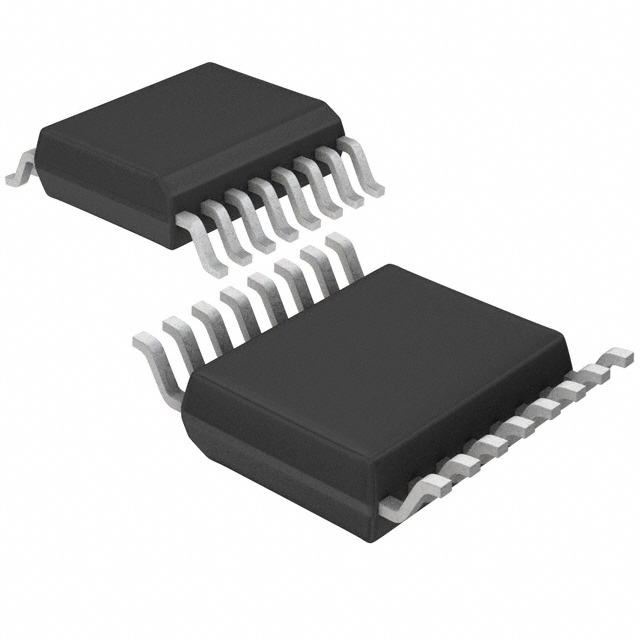
- Part No.:
- ADF4157BRUZ-RL7
- Manufacturer:
- Analog Devices Inc.
- Package:
- 16-TSSOP (0.173", 4.40mm Width)
- Datasheet:
-
 ADF4157BRUZ-RL7.pdf
- Description:
- IC FRACT N SYNTH 16TSSOP
- Quantity:
- Payment:

- Shipping:

Inventory:3,843
Please send an inquiry. Send us your inquiry, and we will respond immediately.
Product details
Overview
ADF4157BRUZ-RL7 from Analog Devices is a 6 GHz fractional-N frequency synthesizer with 25-bit fixed modulus, enabling subhertz frequency resolution at RF output frequencies up to 6 GHz. It integrates a low-noise phase frequency detector (PFD), precision charge pump, Σ-Δ fractional interpolator, and programmable reference divider. Designed for high-performance RF signal generation in instrumentation and wireless infrastructure.
For engineers reviewing the ADF4157BRUZ-RL7 datasheet, ADF4157BRUZ-RL7 pinout, ADF4157BRUZ-RL7 application, or ADF4157BRUZ-RL7 equivalent, this page delivers verified technical context, real-world lock time performance, charge pump current programming, VP supply flexibility, and cycle slip reduction functionality - all confirmed for the ADF4157BRUZ-RL7 TSSOP-16 package.
Technical Context
The ADF4157BRUZ-RL7 implements a third-order Σ-Δ fractional interpolator with 25-bit modulus (225) to achieve subhertz resolution at 6 GHz; its PFD operates up to 32 MHz, and the R counter supports division ratios from 1 to 32. The device uses a dual-path RF input stage (RFINA/RFINB) compatible with 0.5–6.0 GHz signals at −10 dBm to 0 dBm.
It features cycle slip reduction (CSR) circuitry that reduces lock time for large frequency jumps (e.g., 200 MHz) without loop filter redesign; CSR is controlled via register bit R2[18]. Charge pump current is programmable from 312.5 µA to 5 mA using an external RSET resistor (2.7–10 kΩ), with ±2% matching over 0.5 V < VCP < VP − 0.5 V.
Key Specifications
| Parameter | Value and Actual Design Meaning |
|---|---|
| RF Input Frequency | 0.5 GHz to 6.0 GHz - supports direct connection to VCO outputs across microwave bands |
| Fractional Resolution | Subhertz at 6 GHz - enabled by 25-bit fixed modulus (225) and Σ-Δ interpolation |
| Charge Pump Current | 312.5 µA to 5 mA - set via RSET (2.7–10 kΩ); enables optimization of loop filter bandwidth and phase noise |
| VP Supply Range | AVDD to 5.5 V - allows extended tuning voltage for wide-range VCOs without level-shifting |
| PFD Frequency Max | 32 MHz - determines maximum reference comparison rate and loop bandwidth ceiling |
| Digital Lock Detect | Integrated analog + digital lock detect - available on MUXOUT pin for system-level status monitoring |
| Supply Voltage | 2.7 V to 3.3 V - single-supply operation compatible with modern low-voltage digital logic |
Pinout & Package
ADF4157BRUZ-RL7 is packaged in a 16-lead TSSOP (4.4 mm × 5.0 mm, 0.65 mm pitch) with exposed thermal pad (EPAD) connected to AGND. Pin 1 is RSET; pin 16 is VP. The package supports standard reflow (260°C peak, 40 sec).
| Pin/Terminal | Circuit Role | Design Meaning |
|---|---|---|
| RSET (Pin 1) | Charge pump current setting | Resistor-to-ground sets ICP sink/source; 5.1 kΩ yields 5 mA typical |
| CP (Pin 2) | Charge pump output | Drives external loop filter; requires low-impedance path to VCO tuning line |
| CPGND (Pin 3) | Charge pump ground return | Must be isolated from digital ground to minimize noise coupling into VCO control path |
| RFINA/RFINB (Pins 5/6) | Differential RF prescaler input | Accepts 0.5–6 GHz small-signal inputs; AC-coupled with 100 pF bypass recommended |
| REFIN (Pin 8) | Reference clock input | CMOS/TTL-compatible; supports 10–300 MHz with internal biasing at AVDD/2 |
| CE (Pin 10) | Chip enable | Active-low power-down; places CP in three-state and disables internal clocks |
| MUXOUT (Pin 15) | Multiplexed diagnostic output | Selectable via register bits M4–M1: lock detect, N-divider, R-divider, or serial data output |
Key Features
| Feature | Design Value |
|---|---|
| Cycle slip reduction (CSR) | Reduces frequency settling time for large jumps (e.g., 200 MHz) without loop filter modification |
| Separate VP supply | Enables independent tuning voltage up to 5.5 V while core runs at 3.3 V - simplifies VCO interface |
| 3-wire serial interface | CLK/DATA/LE protocol with MSB-first 32-bit writes and double-buffered register updates |
| Digital lock detect | On-chip logic detects stable PLL lock condition; accessible via MUXOUT for real-time system monitoring |
| Programmable charge pump | ICP range spans 312.5 µA to 5 mA - balances phase noise, lock time, and loop stability across designs |
Applications
| Satellite Communications Terminals | Radar Equipment |
|---|---|
Use Scenario: Local oscillator synthesis in L-band and S-band satellite transceivers requiring ultra-fine frequency step resolution and fast channel switching. IC Role / Device Role / Timing Role: Fractional-N PLL synthesizer generating stable LO signals from 1–4 GHz with subhertz tuning granularity. Use Value: Enables precise Doppler compensation and agile beam steering via CSR-accelerated lock times (<900 µs for 200 MHz jumps). | Use Scenario: Coherent RF source in pulsed radar front-ends where phase noise floor directly impacts target detection sensitivity. IC Role / Device Role / Timing Role: Reference-controlled frequency generator driving VCOs in X-band (8–12 GHz) systems via doubler stages. Use Value: Delivers −133 dBc/Hz phase noise at 25 MHz PFD frequency and −87 dBc/Hz at 2 kHz offset (5.8 GHz output), meeting STANAG 4697 spectral purity requirements. |
| Instrumentation Equipment | Base Stations for Mobile Radio |
Use Scenario: Signal generation in vector network analyzers and spectrum analyzers needing wideband coverage and low spurious emissions. IC Role / Device Role / Timing Role: Core frequency synthesis engine providing programmable RF outputs from 500 MHz to 6 GHz with integer boundary spur suppression. Use Value: Achieves normalized phase noise floor of −211 dBc/Hz and flicker noise of −110 dBc/Hz, supporting <0.97° RMS integrated phase error. | Use Scenario: Frequency planning in multi-carrier GSM/UMTS base station transceivers requiring simultaneous synthesis of multiple local oscillator tones. IC Role / Device Role / Timing Role: Dual-loop capable synthesizer supporting independent R/N counters and MUXOUT-assisted lock verification per channel. Use Value: Pin compatibility with ADF4156/ADF4154 allows drop-in upgrade path while maintaining existing PCB layout and loop filter design. |
Equivalent & Alternatives
The following parts are listed as comparable options for similar fractional-N frequency synthesizer applications.
| Alternative Part | Technical Difference | Application Difference | Selection Advice |
|---|---|---|---|
| ADF4156BRUZ | Lacks cycle slip reduction (CSR); identical pinout, same 6 GHz RF bandwidth and 25-bit modulus | Lower lock speed for large frequency hops; suitable when CSR not required and cost is constrained | Select ADF4156BRUZ only if lock time <900 µs is unnecessary and legacy design reuse is prioritized |
| HMC703LP4E | Higher max PFD frequency (100 MHz vs. 32 MHz); integrated VCO; different 24-lead QFN package | Self-contained solution for compact designs; not pin-compatible; requires full layout revision | Choose HMC703LP4E when board space is limited and integrated VCO simplifies BOM, accepting non-drop-in replacement |
Compared with ADF4157BRUZ-RL7, ADF4156BRUZ offers identical RF performance but no CSR acceleration, while HMC703LP4E trades pin compatibility for higher integration and faster PFD rates - making ADF4157BRUZ-RL7 optimal for upgrade paths requiring proven lock-time improvement without hardware changes.
Availability
ADF4157BRUZ-RL7 is available at Aetrix Electronics and suitable for satellite communications terminals, radar equipment, and instrumentation equipment requiring stable component supply, long-term lifecycle support, and guaranteed traceability.
Supply support for ADF4157BRUZ-RL7 includes scheduled delivery planning, volume procurement assistance, BOM continuity management, traceable sourcing, and lifecycle availability coordination for OEM customers, industrial embedded developers, connected-device designers, and electronics production programs.
Manufacturer
Analog Devices is a global leader in high-performance analog, mixed-signal, and digital signal processing semiconductors, headquartered in Norwood, MA, with design centers worldwide and ISO 9001-certified manufacturing.
The ADF4157BRUZ-RL7 belongs to Analog Devices' ADF4xxx fractional-N PLL synthesizer product line, engineered specifically for demanding RF signal generation in test & measurement, defense, and wireless infrastructure where subhertz resolution and fast lock time are critical.
FAQ
What is the maximum RF input frequency supported by the ADF4157BRUZ-RL7?
The ADF4157BRUZ-RL7 supports RF input frequencies from 0.5 GHz to 6.0 GHz, as specified in Table 1 of the Rev. D datasheet. This range covers L-, S-, C-, and lower X-band applications. Operation below 0.5 GHz requires verifying slew rate >400 V/µs at the RFIN pins to ensure proper prescaler triggering.
Does the ADF4157BRUZ-RL7 include cycle slip reduction, and how does it affect lock time?
Yes, the ADF4157BRUZ-RL7 includes dedicated cycle slip reduction (CSR) circuitry. As shown in Figure 8 and Figure 9 of the datasheet, CSR reduces lock time for 200 MHz frequency jumps from ~800 µs (CSR OFF) to <900 µs (CSR ON), eliminating need for loop filter retuning. CSR is enabled via bit R2[18] in the R divider register.
How is charge pump current programmed on the ADF4157BRUZ-RL7?
Charge pump current on the ADF4157BRUZ-RL7 is set by connecting an external resistor (RSET) between Pin 1 (RSET) and AGND. The relationship is ICP = 25 / RSET (kΩ) mA; e.g., 5.1 kΩ yields 4.9 mA typical. RSET must be between 2.7 kΩ and 10 kΩ to maintain accuracy within ±2% over temperature and voltage.
What package type is used for the ADF4157BRUZ-RL7, and what are its thermal characteristics?
The ADF4157BRUZ-RL7 uses a 16-lead TSSOP package (4.4 mm × 5.0 mm) with exposed thermal pad (EPAD). Its junction-to-ambient thermal resistance (θJA) is 112°C/W, per Table 4. The EPAD must be soldered to a copper plane tied to AGND to meet thermal limits - maximum junction temperature is 150°C.
Is the ADF4157BRUZ-RL7 pin-compatible with other Analog Devices synthesizers?
Yes, the ADF4157BRUZ-RL7 is explicitly stated as pin-compatible with ADF4110/ADF4111/ADF4112/ADF4113/ADF4106/ADF4153/ADF4154/ADF4156. This allows direct replacement in existing layouts without PCB modification, provided VP supply and CSR register usage are validated per application requirements.
ADF4157BRUZ-RL7 Specifications
- Product attributes
- Attribute value
- Manufacturer:
- Analog Devices Inc.
- Series:
- -
- Package/Case:
- 16-TSSOP (0.173", 4.40mm Width)
- Packaging:
- Tape & Reel (TR)
- Product Status:
- Active
- Programmable:
- Not Verified
- Type:
- Fractional N Synthesizer (RF)
- PLL:
- Yes
- Input:
- CMOS, TTL
- Output:
- Clock
- Number of Circuits:
- 1
- Ratio - Input:Output:
- 2:1
- Differential - Input:Output:
- Yes/No
- Frequency - Max:
- 6GHz
- Divider/Multiplier:
- Yes/Yes
- Voltage - Supply:
- 2.7V ~ 3.3V
- Operating Temperature:
- -40°C ~ 85°C
- Mounting Type:
- Surface Mount
- Grade:
- -
- Qualification:
- -
- Supplier Device Package:
- 16-TSSOP
ADF4157BRUZ-RL7 FAQ
1.How can I place an order for ADF4157BRUZ-RL7 through Aetrix?
Please submit a Request for Quotation (RFQ) for ADF4157BRUZ-RL7 on Aetrix. Our sales agent will provide a competitive quotation and guide you through the order confirmation once you accept the terms.
2.Are the price and stock information for ADF4157BRUZ-RL7 reliable?
The price and inventory of ADF4157BRUZ-RL7 are updated periodically and may fluctuate due to market conditions. Stock and pricing data are typically refreshed every 24 hours. Quotation validity for ADF4157BRUZ-RL7 is usually 5 days.
3.What payment methods are accepted for ADF4157BRUZ-RL7?
We accept Wire Transfer, PayPal, Credit Card, Western Union, MoneyGram, and Escrow for ADF4157BRUZ-RL7 transactions.
Note: Certain payment methods may incur a processing fee.
4.How is shipping managed for ADF4157BRUZ-RL7?
ADF4157BRUZ-RL7 orders can be shipped via leading logistics carriers, including DHL, UPS, FedEx, TNT, or Registered Mail.
Once your ADF4157BRUZ-RL7 order is processed, you will receive an email with the shipment details and tracking number.
Note: Tracking information may take up to 24 hours to appear. Express delivery typically takes 3–5 business days.
5.How can I obtain technical support or documentation for ADF4157BRUZ-RL7?
For technical support, including ADF4157BRUZ-RL7 datasheets, pinout diagrams, or application guidance, please contact our engineering support team. They can provide detailed documentation and assistance for your ADF4157BRUZ-RL7 requirements.
6.How does Aetrix verify that ADF4157BRUZ-RL7 is sourced from the original manufacturer or authorized distributors?
All ADF4157BRUZ-RL7 products on Aetrix are procured from qualified distributors and authorized channels. Our dedicated quality assurance team conducts strict verification, including traceability checks and, if necessary, third-party testing. This ensures that ADF4157BRUZ-RL7 meets industry standards.
7.What is the process for return or replacement of ADF4157BRUZ-RL7?
All ADF4157BRUZ-RL7 units undergo pre-shipment inspection (PSI). If there is an issue with ADF4157BRUZ-RL7, returns or replacements are accepted under the following conditions:
1.Quantity discrepancies, incorrect items, or visible external defects (such as breakage or corrosion), acknowledged by Aetrix.
2.The issue is reported within 90 days of delivery.
3.The ADF4157BRUZ-RL7 part is unused and in its original packaging.
Return procedure for ADF4157BRUZ-RL7:
1.Submit a request within 90 days.
2.Obtain a Return Material Authorization (RMA) from Aetrix.
ADF4157BRUZ-RL7 Tags
-
CD74HCT4046AM96
Texas Instruments
-
MC14046BDWR2G
onsemi

-
501MILFT
Renesas
-
CD74HC7046AM
Texas Instruments
-
CDCVF2505PWR
Texas Instruments

-
RC19004A100GNL#KB0
Renesas
-
SI5351A-B-GTR
Skyworks Solutions Inc.
-
CY2305SXI-1T
Infineon Technologies
-
570BILFT
Renesas
-
CDCE913PWR
Texas Instruments
-
CY2305SXI-1HT
Infineon Technologies
-
DS1086LU+T
Analog Devices Inc./Maxim Integrated
Tech Hub

A practical engineering guide to 3.3V and 5V logic compatibility, input thresholds, resistor dividers, translator ICs, MOSFET level shifting, I2C pull-ups, timing limits and power-sequencing risks.

The 74HC595 uses push-pull logic outputs, while the TPIC6B595 uses 50 V open-drain DMOS sinks for higher-power loads. This guide compares timing, current limits, 3.3 V interfacing, load wiring, thermal…

The 74HC595 converts serial data into eight stable parallel outputs. This guide covers pin functions, shift and storage timing, OE and MR behavior, drive-current limits, cascading, voltage compatibilit…

A technical comparison of level-sensitive latches and edge-triggered flip-flops, covering timing windows, setup and hold limits, master–slave operation, time borrowing, race-through, HDL inference and…

A D latch stores one bit while Enable controls when data can pass. This reference covers gate-level operation, truth tables, transparency, setup and hold timing, LE versus OE, common ICs and practical …

An SR latch stores one bit through cross-coupled feedback. This engineering reference covers NOR and NAND implementations, truth tables, forbidden-state recovery, gated operation, switch debouncing, fa…

Latch circuits retain one bit through feedback. This technical reference covers SR and D latches, truth tables, transparency, timing limits, latch-versus-flip-flop behavior, applications and common log…

An engineering guide to LED driver operation, constant-current and constant-voltage outputs, linear and switching topologies, dimming, IC selection, calculations, replacement compatibility, and fault c…

Operational amplifier guide covering op amp basics, feedback, ideal vs real op amps, common configurations, buffer circuits, offset, bias current, gain-bandwidth, slew rate, rail-to-rail limits and sel…

Jumper cables guide covering safe connection order, red and black clamp placement, final ground connection, cable gauge, length, clamp quality, copper vs CCA cables, jump starter comparison and battery…


