
 My Inquiry
 My Account


Analog Devices Inc. ADF7012BRUZ-RL
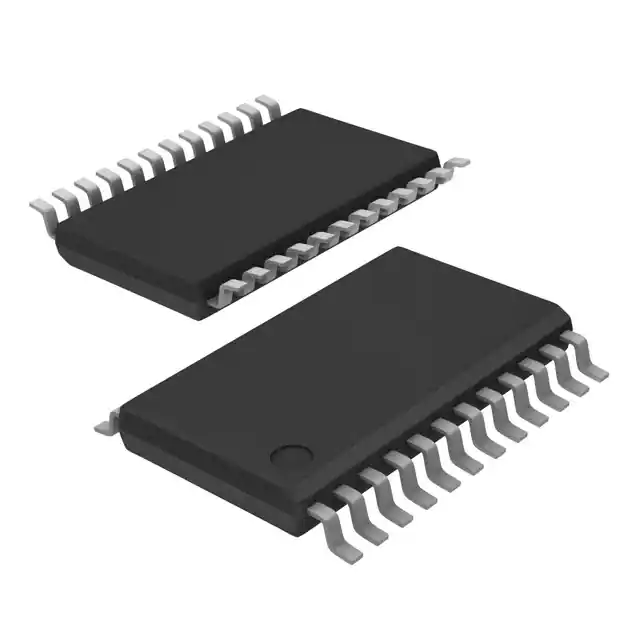
- Part No.:
- ADF7012BRUZ-RL
- Manufacturer:
- Analog Devices Inc.
- Category:
- RF Transmitters
- Package:
- 24-TSSOP (0.173", 4.40mm Width)
- Datasheet:
-
 ADF7012BRUZ-RL.pdf
- Description:
- RF TX IC ASK 75MHZ-1GHZ 24TSSOP
- Quantity:
- Payment:

- Shipping:

Inventory:1,724
Please send an inquiry. Send us your inquiry, and we will respond immediately.
Product details
Overview
ADF7012BRUZ-RL from Analog Devices is a single-chip, low-power UHF FSK/GFSK/OOK/GOOK/ASK transmitter operating from 75 MHz to 1 GHz. It integrates a fractional-N PLL, VCO with external inductor tuning, programmable PA (−16 dBm to +14 dBm), and 3-wire serial interface. Designed for SRD applications, it delivers 12.5 dBm at 868 MHz with 21 mA current draw and supports fast frequency hopping via sub-100 μs PLL lock.
For engineers reviewing the ADF7012BRUZ-RL datasheet, ADF7012BRUZ-RL pinout, ADF7012BRUZ-RL application, or ADF7012BRUZ-RL equivalent, this page provides verified technical context, real-world modulation performance data (FSK up to 179.2 kbps, GFSK BT = 0.5), RF output specs across 315/433/868/915 MHz bands, and validated alternative transmitters for ISM-band wireless metering and secure keyless entry designs.
Technical Context
The ADF7012BRUZ-RL implements a fractional-N PLL architecture with Σ-Δ modulator enabling fine frequency resolution (<1 ppm steps via crystal compensation register) and fast lock times suitable for frequency-hopping systems. Its VCO uses an external printed inductor (L1/L2) and supports divide-by-2/4/8 outputs to cover full 75–1000 MHz range.
Modulation is fully programmable via four 32-bit registers: five schemes (FSK, GFSK, OOK, GOOK, ASK) are selectable, with independent deviation control (e.g., ±610 Hz to ±311.7 kHz), ASK depth up to 25 dB, and OOK feedthrough as low as −40 dBm. The on-board LDO regulator supplies internal circuitry from 2.3–3.6 V, while PA bias and VCO current are digitally adjustable.
Key Specifications
| Parameter | Value and Actual Design Meaning |
|---|---|
| Frequency Range | 75 MHz to 1000 MHz; enabled by fractional-N PLL + external inductor tuning and output dividers (÷2/÷4/÷8) |
| Modulation Schemes | FSK, GFSK (BT = 0.5 typ), OOK, GOOK, ASK; all programmable via register configuration |
| Output Power Range | −16 dBm to +14 dBm in 0.4 dB steps; supports 12.5 dBm at 868 MHz with 21 mA supply current |
| Data Rate Support | DC to 179.2 kbps (FSK/GFSK); up to 64 kbps (ASK/OOK) compliant with FCC 15.247 spectral mask |
| Phase Noise | −80 dBc/Hz @ 5 kHz offset (868/915 MHz); −115 dBc/Hz @ 1 MHz offset (868 MHz) enables narrow-band operation |
| Supply Voltage | 2.3 V to 3.6 V; dual DVDD pins (digital and PA/VCO sections) with on-chip LDO regulator |
| Power-Down Current | <0.1 μA typical; achieved by asserting CE low, preserving design simplicity in battery-powered nodes |
Pinout & Package
ADF7012BRUZ-RL is housed in a 24-lead TSSOP package (4.4 mm × 7.8 mm, 0.65 mm pitch) with exposed thermal pad. Pin functions are optimized for RF layout: separate AGND/DGND/RFGND planes, dedicated RFOUT and VCOIN paths, and decoupling-critical DVDD/CREG pins.
| Pin/Terminal | Circuit Role | Design Meaning |
|---|---|---|
| DVDD (Pins 1, 21) | Digital & PA/VCO power supply | Dual-supply inputs require local 100 nF + 1 μF decoupling; Pin 1 powers digital logic, Pin 21 powers RF output stage |
| TxDATA (Pin 4) | Baseband data input | Accepts CMOS-level digital stream; timing-critical-requires setup/hold per t1–t3 (≥10 ns) relative to CLK |
| CE (Pin 14) | Chip enable | Active-low global shutdown; pulls quiescent current to <1 μA and resets register state-requires full reinitialization on wake-up |
| RFOUT (Pin 20) | Modulated RF output | Delivers −16 to +14 dBm into 50 Ω; requires external matching network (e.g., π-filter) per PA Matching section of datasheet |
| L1/L2 (Pins 15/16) | VCO inductor connection | Interface to external printed or discrete inductor; value selected per target frequency (e.g., 10 nH for 868 MHz) |
| MUXOUT (Pin 6) | Multiplexed status output | Configurable to report PLL lock detect, regulator ready, or battery monitor-enables system-level synchronization without extra GPIO |
Key Features
| Feature | Design Value |
|---|---|
| Fractional-N PLL with Σ-Δ modulator | Enables <1 ppm frequency step resolution and sub-100 μs lock time for robust frequency-hopping spread spectrum (FHSS) protocols |
| Five programmable modulation schemes | FSK/GFSK/OOK/GOOK/ASK selection via register bits allows single-hardware reuse across regulatory domains (FCC/ETSI) and data integrity requirements |
| Integrated LDO regulator | Stabilizes internal analog blocks from noisy 2.3–3.6 V supply; CREG1/CREG2 capacitor network reduces spurs and improves phase noise by >10 dB |
| Programmable charge pump current | Four settings (0.3/0.9/1.5/2.1 mA) let designers trade loop bandwidth vs. reference spur suppression-critical for meeting spectral mask limits |
| Crystal compensation register | 15-bit twos-complement adjustment corrects initial crystal tolerance and temperature drift without external TCXO, reducing BOM cost |
Applications
| Wireless Metering | Secure Keyless Entry |
|---|---|
|
Use Scenario: Battery-powered gas/water meters transmitting consumption data hourly over 868 MHz ISM band in EU urban environments. IC Role / Device Role / Timing Role: Primary RF transmitter generating GFSK-modulated packets with 38.4 kbps data rate and ±19.2 kHz deviation per ETSI EN 300 220. Use Value: 12.5 dBm output power ensures >1 km line-of-sight range; −115 dBc/Hz out-of-band phase noise meets strict adjacent-channel rejection requirements. |
Use Scenario: Automotive remote key fob sending encrypted challenge-response frames at 315 MHz or 433 MHz with ultra-low average current. IC Role / Device Role / Timing Role: Low-latency OOK transmitter with programmable 0–10 dBm output and fast CE-controlled wake-up (<100 μs). Use Value: −40 dBm OOK feedthrough prevents false triggers; 0.1 μA power-down current extends coin-cell life to >5 years. |
| RF Remote Controls | Security Systems |
|
Use Scenario: Consumer IR-to-RF bridge remotes operating at 433.92 MHz with 10 kbps ASK modulation for legacy appliance control. IC Role / Device Role / Timing Role: ASK transmitter with 25 dB modulation depth and integrated crystal oscillator eliminating external timing components. Use Value: Single 4.9152 MHz crystal supports both reference clock and CLKOUT for MCU sync-reducing component count by 2–3 parts. |
Use Scenario: Wireless door/window sensors using 315 MHz FSK to transmit tamper alerts with high immunity to ambient RF noise. IC Role / Device Role / Timing Role: FSK transmitter with programmable deviation (±50 kHz) and 1 kbps data rate optimized for noise resilience. Use Value: −85 dBc/Hz in-band phase noise minimizes bit error rate; harmonic content <−20 dBc (2nd) ensures compliance with FCC Part 15 Class B emissions. |
Equivalent & Alternatives
The following parts are listed as comparable options for similar UHF transmitter applications.
| Alternative Part | Technical Difference | Application Difference | Selection Advice |
|---|---|---|---|
| Si4010-DT | Single-pin OOK/FSK transmitter; no external inductor required; fixed 433/868/915 MHz bands; lower max output (+10 dBm) | Better suited for cost-sensitive, fixed-frequency remotes; lacks fractional-N PLL flexibility and multi-band coverage | Select when board space is constrained and frequency agility is unnecessary-eliminates L1/L2 layout complexity. |
| CC1101RGPR | Sub-1 GHz SoC with integrated MCU core, SPI interface, and packet handler; higher current (14 mA @ 0 dBm, 433 MHz) | Targets systems needing embedded protocol stack (e.g., TI's SimpliciTI); not a pure transmitter-adds software overhead | Choose when firmware-defined packet framing, CRC, or automatic whitening is required-avoids external microcontroller. |
Compared with Si4010-DT and CC1101RGPR, the ADF7012BRUZ-RL offers superior frequency agility (75–1000 MHz), finer modulation control (five schemes, 0.4 dB PA steps), and lower power-down current, making it optimal for multi-region, battery-critical ISM devices where hardware configurability outweighs integration convenience.
Availability
ADF7012BRUZ-RL is available at Aetrix Electronics and suitable for wireless metering, secure keyless entry, RF remote controls, security systems, and industrial sensor networks requiring stable component supply and long-term obsolescence management.
Supply support for ADF7012BRUZ-RL includes scheduled delivery planning, volume procurement assistance, BOM continuity management, traceable sourcing, and lifecycle availability coordination for OEM customers, industrial embedded developers, connected-device designers, and electronics production programs.
Manufacturer
Analog Devices, Inc. is a global leader in high-performance analog, mixed-signal, and RF ICs, serving industrial, communications, automotive, and consumer markets since 1965.
The ADF7012BRUZ-RL belongs to Analog Devices' short-range device (SRD) RFIC portfolio, engineered specifically for low-power, license-free ISM band wireless links in harsh electromagnetic environments.
FAQ
What modulation schemes does the ADF7012BRUZ-RL support, and how are they configured?
The ADF7012BRUZ-RL supports five modulation schemes: FSK, GFSK (with BT = 0.5 typical), OOK, GOOK, and ASK. Configuration is performed entirely through four 32-bit registers accessed via its 3-wire serial interface (CLK, DATA, LE). Modulation type, deviation, data rate, and output power are all software-defined-no external components are needed to switch between schemes. This flexibility allows a single ADF7012BRUZ-RL design to comply with multiple regional standards (e.g., FCC 433 MHz OOK and ETSI 868 MHz GFSK) without hardware changes.
How does the fractional-N PLL in the ADF7012BRUZ-RL enable frequency agility across 75–1000 MHz?
The ADF7012BRUZ-RL uses a fractional-N PLL with Σ-Δ modulation to generate precise output frequencies from a single crystal reference (3.4–26 MHz). By programming integer (N) and fractional (NFRAC) values in its N-counter latch register, the PLL synthesizes any frequency in the 75–1000 MHz band-supported by VCO tuning voltage (VCOIN) and external inductor (L1/L2) selection. Output dividers (÷2/÷4/÷8) extend low-end coverage, while fine frequency steps (<1 ppm) via the crystal compensation register correct for reference drift-making the ADF7012BRUZ-RL ideal for frequency-hopping systems.
What is the role of the MUXOUT pin on the ADF7012BRUZ-RL, and how is it used in system design?
The MUXOUT pin on the ADF7012BRUZ-RL is a configurable status output that can be programmed to report PLL lock detect, regulator ready signal, or low-battery indicator-selected via bits in the Function Register. In system design, this eliminates the need for external monitoring circuitry: for example, a microcontroller can wait for MUXOUT = high before initiating transmission, ensuring the PLL is locked and stable. This simplifies timing-critical startup sequences and improves reliability in battery-operated devices where power sequencing must be tightly controlled.
Can the ADF7012BRUZ-RL operate with a single supply voltage, and how are its power domains managed?
Yes, the ADF7012BRUZ-RL operates from a single 2.3–3.6 V supply, but internally separates digital, analog, and RF power domains. Pins 1 (DVDD) and 21 (DVDD) accept the same supply voltage but serve distinct sections: Pin 1 powers digital logic and serial interface, while Pin 21 powers the PA and VCO. Both require local decoupling (100 nF ceramic + 1 μF tantalum). An integrated LDO regulator stabilizes internal analog blocks, and the CREG1/CREG2 pins host filtering capacitors (1 μF and 470 nF) to suppress switching noise-ensuring clean VCO tuning voltage and low phase noise performance.
What are the key RF layout considerations for the ADF7012BRUZ-RL's TSSOP package?
Successful RF layout for the ADF7012BRUZ-RL requires strict adherence to ground partitioning: AGND (Pin 22), DGND (Pin 7), and RFGND (Pin 19) must connect to separate copper pours tied together only at a single point near the device. RFOUT (Pin 20) and VCOIN (Pin 18) traces demand 50 Ω controlled impedance and minimal length; L1/L2 (Pins 15/16) must route directly to the external inductor with no vias. The exposed thermal pad (Pin 24) must be soldered to a large internal ground plane for thermal dissipation and RF shielding-failure to do so degrades PA efficiency and increases spurious emissions.
ADF7012BRUZ-RL Specifications
- Product attributes
- Attribute value
- Manufacturer:
- Analog Devices Inc.
- Series:
- -
- Package/Case:
- 24-TSSOP (0.173", 4.40mm Width)
- Packaging:
- Tape & Reel (TR)
- Product Status:
- Active
- Programmable:
- Not Verified
- Frequency:
- 75MHz ~ 1GHz
- Applications:
- Data Transfer, RKE, Remote Control/Security Systems
- Modulation or Protocol:
- ASK, FSK, GFSK, OOK
- Data Rate (Max):
- 179.2kbps
- Power - Output:
- -16dBm ~ 14dBm
- Current - Transmitting:
- 35mA
- Data Interface:
- PCB, Surface Mount
- Antenna Connector:
- PCB, Surface Mount
- Memory Size:
- -
- Features:
- -
- Voltage - Supply:
- 2.3V ~ 3.6V
- Operating Temperature:
- -40°C ~ 85°C
- Grade:
- -
- Qualification:
- -
- Mounting Type:
- Surface Mount
- Supplier Device Package:
- 24-TSSOP
ADF7012BRUZ-RL FAQ
1.How can I place an order for ADF7012BRUZ-RL through Aetrix?
Please submit a Request for Quotation (RFQ) for ADF7012BRUZ-RL on Aetrix. Our sales agent will provide a competitive quotation and guide you through the order confirmation once you accept the terms.
2.Are the price and stock information for ADF7012BRUZ-RL reliable?
The price and inventory of ADF7012BRUZ-RL are updated periodically and may fluctuate due to market conditions. Stock and pricing data are typically refreshed every 24 hours. Quotation validity for ADF7012BRUZ-RL is usually 5 days.
3.What payment methods are accepted for ADF7012BRUZ-RL?
We accept Wire Transfer, PayPal, Credit Card, Western Union, MoneyGram, and Escrow for ADF7012BRUZ-RL transactions.
Note: Certain payment methods may incur a processing fee.
4.How is shipping managed for ADF7012BRUZ-RL?
ADF7012BRUZ-RL orders can be shipped via leading logistics carriers, including DHL, UPS, FedEx, TNT, or Registered Mail.
Once your ADF7012BRUZ-RL order is processed, you will receive an email with the shipment details and tracking number.
Note: Tracking information may take up to 24 hours to appear. Express delivery typically takes 3–5 business days.
5.How can I obtain technical support or documentation for ADF7012BRUZ-RL?
For technical support, including ADF7012BRUZ-RL datasheets, pinout diagrams, or application guidance, please contact our engineering support team. They can provide detailed documentation and assistance for your ADF7012BRUZ-RL requirements.
6.How does Aetrix verify that ADF7012BRUZ-RL is sourced from the original manufacturer or authorized distributors?
All ADF7012BRUZ-RL products on Aetrix are procured from qualified distributors and authorized channels. Our dedicated quality assurance team conducts strict verification, including traceability checks and, if necessary, third-party testing. This ensures that ADF7012BRUZ-RL meets industry standards.
7.What is the process for return or replacement of ADF7012BRUZ-RL?
All ADF7012BRUZ-RL units undergo pre-shipment inspection (PSI). If there is an issue with ADF7012BRUZ-RL, returns or replacements are accepted under the following conditions:
1.Quantity discrepancies, incorrect items, or visible external defects (such as breakage or corrosion), acknowledged by Aetrix.
2.The issue is reported within 90 days of delivery.
3.The ADF7012BRUZ-RL part is unused and in its original packaging.
Return procedure for ADF7012BRUZ-RL:
1.Submit a request within 90 days.
2.Obtain a Return Material Authorization (RMA) from Aetrix.
ADF7012BRUZ-RL Tags

-
MICRF113YM6-TR
Microchip Technology
-
PIC12LF1840T39AT-I/ST
Microchip Technology

-
MAX41460GUB+T
Analog Devices Inc./Maxim Integrated
-
SX1230I066TRT
Semtech Corporation
-
SI4010-C2-GS
Silicon Labs
-
CC1070RSQR
Texas Instruments
-
TXM-418-LR
TE Connectivity Linx
-
TXM-433-LR
TE Connectivity Linx
-
TXM-418-KH3
TE Connectivity Linx

-
TX7332ZBX
Texas Instruments
-
MICRF114T-I/OT
Microchip Technology
-
MICRF112YMM-TR
Microchip Technology
Tech Hub

A practical engineering guide to 3.3V and 5V logic compatibility, input thresholds, resistor dividers, translator ICs, MOSFET level shifting, I2C pull-ups, timing limits and power-sequencing risks.

The 74HC595 uses push-pull logic outputs, while the TPIC6B595 uses 50 V open-drain DMOS sinks for higher-power loads. This guide compares timing, current limits, 3.3 V interfacing, load wiring, thermal…

The 74HC595 converts serial data into eight stable parallel outputs. This guide covers pin functions, shift and storage timing, OE and MR behavior, drive-current limits, cascading, voltage compatibilit…

A technical comparison of level-sensitive latches and edge-triggered flip-flops, covering timing windows, setup and hold limits, master–slave operation, time borrowing, race-through, HDL inference and…

A D latch stores one bit while Enable controls when data can pass. This reference covers gate-level operation, truth tables, transparency, setup and hold timing, LE versus OE, common ICs and practical …

An SR latch stores one bit through cross-coupled feedback. This engineering reference covers NOR and NAND implementations, truth tables, forbidden-state recovery, gated operation, switch debouncing, fa…

Latch circuits retain one bit through feedback. This technical reference covers SR and D latches, truth tables, transparency, timing limits, latch-versus-flip-flop behavior, applications and common log…

An engineering guide to LED driver operation, constant-current and constant-voltage outputs, linear and switching topologies, dimming, IC selection, calculations, replacement compatibility, and fault c…

Operational amplifier guide covering op amp basics, feedback, ideal vs real op amps, common configurations, buffer circuits, offset, bias current, gain-bandwidth, slew rate, rail-to-rail limits and sel…

Jumper cables guide covering safe connection order, red and black clamp placement, final ground connection, cable gauge, length, clamp quality, copper vs CCA cables, jump starter comparison and battery…


