
 My Inquiry
 My Account


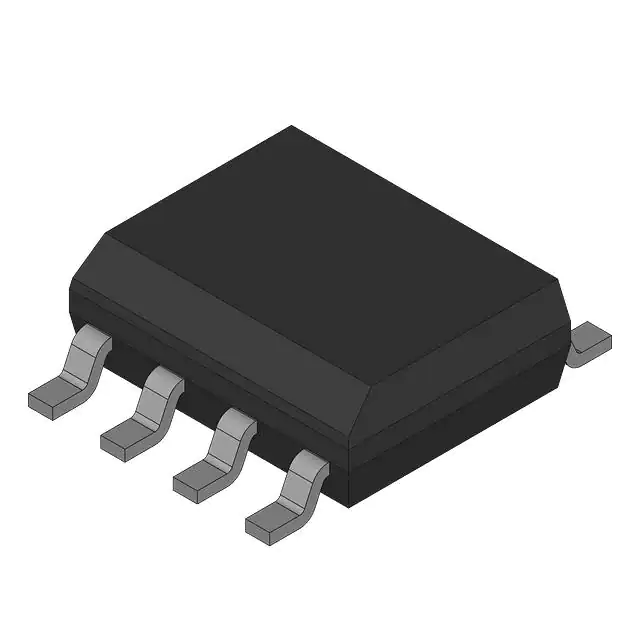
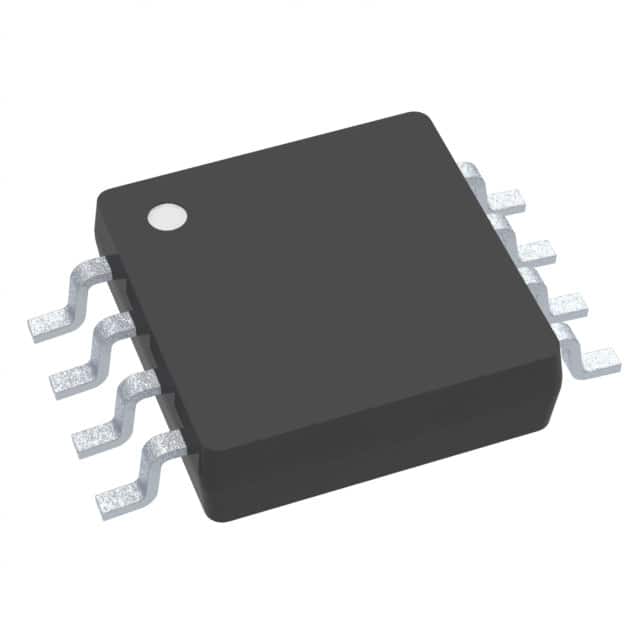
Analog Devices Inc. ADM1032AR-1
- Part No.:
- ADM1032AR-1
- Manufacturer:
- Analog Devices Inc.
- Category:
- Analog and Digital Output
- Package:
- 8-SOIC (0.154", 3.90mm Width)
- Datasheet:
-
 ADM1032AR-1.pdf
- Description:
- SYSTEM TEMPERATURE MONITOR
- Quantity:
- Payment:

- Shipping:

Inventory:5,103
Please send an inquiry. Send us your inquiry, and we will respond immediately.
Product details
Overview
ADM1032AR-1 from Analog Devices is a dual-channel SMBus-compatible digital temperature monitor IC with ±1°C remote and local sensing accuracy, 0.125°C remote resolution, programmable THERM/ALERT outputs, and 3 V to 5.5 V operation - used for CPU thermal throttling and fan control in desktop PCs and embedded systems.
For engineers reviewing the ADM1032AR-1 datasheet, ADM1032AR-1 pinout, ADM1032AR-1 application, or ADM1032AR-1 equivalent, this page delivers verified specifications, calibrated remote diode measurement architecture, SMBus address (0x4C), THERM hysteresis programming, and real-world thermal management use cases without generic assumptions.
Technical Context
The ADM1032AR-1 implements a two-current ΔVBE measurement method on an external thermal diode (e.g., 2N3904/06 or processor substrate transistor) to cancel base-emitter voltage variation, enabling factory-trimmed ideality factor (1.008) and eliminating per-unit calibration. Its on-chip ADC digitizes both local ambient and remote junction temperatures.
It features dual independent limit comparators (local/remote high/low/THERM), a status register with open-circuit detection (D+/D−), and SMBus alert functionality - all operating under a configurable conversion rate (0.0625–64 Hz) with averaging enabled at slower rates and disabled at 32/64 Hz for fast response.
Key Specifications
| Parameter | Value and Actual Design Meaning |
|---|---|
| Remote Accuracy | ±1°C (60°C–100°C); enables reliable CPU die temperature monitoring without system-level calibration |
| Local Accuracy | ±1°C (0°C–100°C); supports precise ambient board-temperature tracking for thermal margining |
| Remote Resolution | 0.125°C; allows fine-grained thermal trend analysis and hysteresis tuning (e.g., 10°C default, programmable) |
| SMBus Address | 0x4C (7-bit); fixed for ADM1032AR-1, distinct from ADM1032-2 (0x4D), preventing bus conflicts in multi-sensor systems |
| Supply Range | 3.0 V to 5.5 V; interoperable with 3.3 V and 5 V logic domains without level-shifting |
| Operating Current | 170 μA typical at 0.0625 conv/sec; supports low-power thermal monitoring in always-on subsystems |
| Standby Current | 5.5 μA; permits background thermal surveillance during host sleep states |
| THERM Output | Open-drain, active-low comparator output; directly drives CPU THERM# input or fan controller enable pin |
Pinout & Package
ADM1032AR-1 is housed in an 8-lead SOIC package (JEDEC MS-012AA, 150 mil width), thermally characterized with θJA = 121°C/W, suitable for surface-mount reflow (Pb-free peak: 260°C).
| Pin/Terminal | Circuit Role | Design Meaning |
|---|---|---|
| VDD (Pin 1) | Positive supply input | Accepts 3.0–5.5 V; powers internal ADC, SMBus interface, and bias circuits for D+/D− sensing |
| D+ (Pin 2) | Remote sensor positive terminal | Connects to collector/base of discrete NPN (2N3904) or processor substrate diode; carries 230 μA source current |
| D− (Pin 3) | Remote sensor negative terminal | Biased ~0.6 V above GND via internal diode; rejects ground noise and enables accurate ΔVBE measurement |
| THERM (Pin 4) | Fail-safe overtemperature output | Open-drain, active-low; asserts when local or remote exceeds programmed THERM limit - no software polling required |
| GND (Pin 5) | Supply return | Reference for all analog measurements and digital I/O; must be low-impedance path to minimize sensing error |
| ALERT (Pin 6) | Configurable interrupt/alert output | Open-drain SMBus alert or host interrupt; latched until status register read and condition cleared |
| SDATA (Pin 7) | SMBus bidirectional data line | Open-drain, requires external pull-up; supports standard SMBus packet error checking and timeout (programmable) |
| SCLK (Pin 8) | SMBus clock input | Asynchronous edge-triggered; accepts up to 400 kHz clock; timing compliant with SMBus v1.1 |
Key Features
| Feature | Design Value |
|---|---|
| ΔVBE remote sensing | Eliminates need for per-board VBE calibration by measuring voltage difference at two currents (I and N×I), rejecting process variation |
| Programmable THERM hysteresis | Adjustable from 0°C to >10°C via register 0x21; prevents oscillation during thermal transitions near trip point |
| Remote sensor open-circuit detection | Status bit OPEN1 (bit 2) flags D+/D− disconnect; avoids false overtemperature alarms in failed sensor conditions |
| Consecutive ALERT filtering | Configurable fault queue (1–4 out-of-limit readings) suppresses transient noise-induced interrupts at high conversion rates |
| Offset correction registers | 11-bit twos-complement offset (registers 0x11/0x12) compensates for PCB trace resistance and EMI-induced DC offsets on D+/D− |
| One-shot conversion mode | Initiated via write to address 0x0F; performs single measurement in standby, then returns to low-power state - ideal for event-triggered reads |
Applications
| Desktop PC Thermal Management | Industrial Embedded Controller |
|---|---|
Use Scenario: Real-time monitoring of CPU die temperature and motherboard ambient temperature in x86-based desktop systems. IC Role / Device Role / Timing Role: Dual-channel temperature sensor providing local (ambient) and remote (processor diode) readings via SMBus to BIOS/firmware for dynamic fan speed control and thermal throttling. Use Value: Enables hardware-level THERM# assertion within 142.8 ms (max conversion time), bypassing OS latency to prevent CPU thermal shutdown. | Use Scenario: Continuous thermal supervision of power supply MOSFETs and FPGA junctions in programmable logic controllers (PLCs). IC Role / Device Role / Timing Role: Remote diode sensor interfaced to discrete 2N3906 transistors mounted on heat sinks; local sensor monitors enclosure air temperature. Use Value: ±1°C remote accuracy ensures safe derating of power components; programmable limits trigger relay cutoff before thermal runaway occurs. |
| Smart Battery Pack Monitoring | Telecom Line Card Thermal Protection |
Use Scenario: Integration into lithium-ion battery packs to track cell temperature gradients and detect hot spots during charge/discharge cycles. IC Role / Device Role / Timing Role: Measures temperature at multiple points using external diodes; communicates via SMBus to battery management system (BMS) microcontroller. Use Value: 0.125°C remote resolution allows detection of <1°C rise across cells, supporting balanced charging algorithms and early overtemperature warning. | Use Scenario: Thermal guard for high-density optical transceivers and DSP ASICs on telecom line cards operating in NEBS-compliant cabinets. IC Role / Device Role / Timing Role: Local sensor tracks card ambient; remote sensors monitor ASIC junctions via substrate diodes; THERM output directly gates 48 V cooling fans. Use Value: 5.5 μA standby current extends uptime during low-traffic periods; SMBus address 0x4C enables daisy-chaining with other ADM1032AR-1 units on same bus. |
Equivalent & Alternatives
The following parts are listed as comparable options for similar dual-channel temperature monitoring applications.
| Alternative Part | Technical Difference | Application Difference | Selection Advice |
|---|---|---|---|
| LM94022QDCNTQ1 | ±0.7°C remote accuracy (−25°C to +125°C), 12-bit resolution, automotive AEC-Q100 Grade 1 qualified | Targeted for automotive ECUs; lacks THERM output; uses I²C not SMBus | Select when automotive qualification and higher accuracy are mandatory; avoid if SMBus alert/THERM integration is required |
| MAX6642AESA+ | ±2°C remote accuracy, 11-bit resolution, fixed 0x48 SMBus address, no offset registers | Lower-cost alternative with reduced calibration flexibility; no open-circuit detection | Choose for cost-sensitive industrial designs where ±2°C tolerance is acceptable and sensor reliability is assured |
Compared with LM94022QDCNTQ1 and MAX6642AESA+, the ADM1032AR-1 uniquely combines SMBus-native alert/THERM signaling, programmable hysteresis, and open-circuit fault detection - making it optimal for PC and embedded thermal safety systems requiring fail-safe hardware responses.
Availability
ADM1032AR-1 is available at Aetrix Electronics and suitable for desktop PC thermal management, industrial embedded controllers, smart battery packs, telecom line cards, and instrumentation requiring stable component supply and long-term lifecycle support.
Supply support for ADM1032AR-1 includes scheduled delivery planning, volume procurement assistance, BOM continuity management, traceable sourcing, and lifecycle availability coordination for OEM customers, industrial embedded developers, connected-device designers, and electronics production programs.
Manufacturer
Analog Devices is a U.S.-based semiconductor company specializing in high-performance analog, mixed-signal, and digital signal processing technologies for precision measurement and control.
The ADM1032 product line was designed specifically for PC and embedded thermal management systems requiring dual-channel, SMBus-compatible temperature monitoring with hardware fail-safe outputs and robust remote diode sensing.
FAQ
What is the SMBus address of the ADM1032AR-1?
The ADM1032AR-1 has a fixed 7-bit SMBus address of 0x4C (1001100b). This distinguishes it from the ADM1032-2 variant (0x4D) and ensures deterministic bus arbitration in multi-device configurations. The address is hardwired and cannot be altered via pins or registers. All communication with the ADM1032AR-1 - including reading local/remote temperature values, writing limit thresholds, or configuring the THERM hysteresis - must use this address.
How does the ADM1032AR-1 achieve ±1°C remote accuracy without calibration?
The ADM1032AR-1 achieves ±1°C remote accuracy through a patented two-current ΔVBE measurement technique that cancels process-dependent variations in the base-emitter voltage of the external thermal diode. It operates the diode at two precise currents (I and N×I), measures the resulting voltage difference, and converts that to temperature using Boltzmann's constant and a factory-trimmed ideality factor of 1.008. This eliminates the need for board-level calibration while maintaining accuracy across temperature and supply voltage ranges - a core capability of the ADM1032AR-1.
Can the ADM1032AR-1 detect an open remote sensor connection?
Yes, the ADM1032AR-1 includes dedicated open-circuit detection on the D+ and D− inputs. When the remote sensor is disconnected or fails open, bit 2 (OPEN1) in the status register (address 0x02) is set high. This flag persists until the sensor is restored and the status register is read - ensuring reliable fault reporting without false positives from transient noise. This feature is integral to the ADM1032AR-1's robustness in mission-critical thermal monitoring applications.
What is the function of the THERM output on the ADM1032AR-1?
The THERM output on the ADM1032AR-1 is an open-drain, active-low comparator output that asserts when either the local or remote temperature exceeds its respective programmable THERM limit. Unlike the ALERT output, THERM requires no software servicing - it self-clears automatically once temperatures fall back within limits. This hardware-level response enables direct CPU clock throttling or fan on/off control without firmware intervention, a defining safety feature of the ADM1032AR-1.
Does the ADM1032AR-1 support both 3.3 V and 5 V supply voltages?
Yes, the ADM1032AR-1 operates across a supply range of 3.0 V to 5.5 V, making it compatible with both 3.3 V and 5 V logic domains. Its internal regulators and sensing circuitry maintain specified accuracy (±1°C remote, ±1°C local) and timing compliance (SMBus 400 kHz max) across this full range. The undervoltage lockout threshold (2.35–2.8 V) ensures reliable reset behavior during brownout conditions - a key design attribute confirmed in the ADM1032AR-1 datasheet.
ADM1032AR-1 Specifications
- Product attributes
- Attribute value
- Manufacturer:
- Analog Devices Inc.
- Series:
- -
- Package/Case:
- 8-SOIC (0.154", 3.90mm Width)
- Packaging:
- Bulk
- Product Status:
- Active
- Sensor Type:
- Digital, Local/Remote
- Sensing Temperature - Local:
- 0°C ~ 100°C
- Sensing Temperature - Remote:
- 0°C ~ 120°C
- Output Type:
- SMBus
- Voltage - Supply:
- 3V ~ 5.5V
- Resolution:
- 7 b
- Features:
- Output Switch, Programmable Limit, Standby Mode
- Accuracy - Highest (Lowest):
- ±3°C
- Test Condition:
- 0°C ~ 100°C
- Operating Temperature:
- 0°C ~ 120°C
- Mounting Type:
- Surface Mount
- Grade:
- -
- Qualification:
- -
- Supplier Device Package:
- 8-SOIC
ADM1032AR-1 FAQ
1.How can I place an order for ADM1032AR-1 through Aetrix?
Please submit a Request for Quotation (RFQ) for ADM1032AR-1 on Aetrix. Our sales agent will provide a competitive quotation and guide you through the order confirmation once you accept the terms.
2.Are the price and stock information for ADM1032AR-1 reliable?
The price and inventory of ADM1032AR-1 are updated periodically and may fluctuate due to market conditions. Stock and pricing data are typically refreshed every 24 hours. Quotation validity for ADM1032AR-1 is usually 5 days.
3.What payment methods are accepted for ADM1032AR-1?
We accept Wire Transfer, PayPal, Credit Card, Western Union, MoneyGram, and Escrow for ADM1032AR-1 transactions.
Note: Certain payment methods may incur a processing fee.
4.How is shipping managed for ADM1032AR-1?
ADM1032AR-1 orders can be shipped via leading logistics carriers, including DHL, UPS, FedEx, TNT, or Registered Mail.
Once your ADM1032AR-1 order is processed, you will receive an email with the shipment details and tracking number.
Note: Tracking information may take up to 24 hours to appear. Express delivery typically takes 3–5 business days.
5.How can I obtain technical support or documentation for ADM1032AR-1?
For technical support, including ADM1032AR-1 datasheets, pinout diagrams, or application guidance, please contact our engineering support team. They can provide detailed documentation and assistance for your ADM1032AR-1 requirements.
6.How does Aetrix verify that ADM1032AR-1 is sourced from the original manufacturer or authorized distributors?
All ADM1032AR-1 products on Aetrix are procured from qualified distributors and authorized channels. Our dedicated quality assurance team conducts strict verification, including traceability checks and, if necessary, third-party testing. This ensures that ADM1032AR-1 meets industry standards.
7.What is the process for return or replacement of ADM1032AR-1?
All ADM1032AR-1 units undergo pre-shipment inspection (PSI). If there is an issue with ADM1032AR-1, returns or replacements are accepted under the following conditions:
1.Quantity discrepancies, incorrect items, or visible external defects (such as breakage or corrosion), acknowledged by Aetrix.
2.The issue is reported within 90 days of delivery.
3.The ADM1032AR-1 part is unused and in its original packaging.
Return procedure for ADM1032AR-1:
1.Submit a request within 90 days.
2.Obtain a Return Material Authorization (RMA) from Aetrix.
ADM1032AR-1 Tags
-
MCP9700T-E/TT
Microchip Technology
-
MCP9700T-E/LT
Microchip Technology
-
MCP9701T-E/TT
Microchip Technology
-
MCP9701T-E/LT
Microchip Technology
-
TMP235A4DBZR
Texas Instruments
-
MCP9700AT-E/TT
Microchip Technology
-
MCP9700AT-E/LT
Microchip Technology
-
MCP9701AT-E/LT
Microchip Technology
-
MCP9701AT-E/TT
Microchip Technology
,TO-226_straightlead.jpg)
-
LM335Z
STMicroelectronics
-
TMP1075NDRLR
Texas Instruments
-
TMP1075DGKR
Texas Instruments
Tech Hub

A practical engineering guide to 3.3V and 5V logic compatibility, input thresholds, resistor dividers, translator ICs, MOSFET level shifting, I2C pull-ups, timing limits and power-sequencing risks.

The 74HC595 uses push-pull logic outputs, while the TPIC6B595 uses 50 V open-drain DMOS sinks for higher-power loads. This guide compares timing, current limits, 3.3 V interfacing, load wiring, thermal…

The 74HC595 converts serial data into eight stable parallel outputs. This guide covers pin functions, shift and storage timing, OE and MR behavior, drive-current limits, cascading, voltage compatibilit…

A technical comparison of level-sensitive latches and edge-triggered flip-flops, covering timing windows, setup and hold limits, master–slave operation, time borrowing, race-through, HDL inference and…

A D latch stores one bit while Enable controls when data can pass. This reference covers gate-level operation, truth tables, transparency, setup and hold timing, LE versus OE, common ICs and practical …

An SR latch stores one bit through cross-coupled feedback. This engineering reference covers NOR and NAND implementations, truth tables, forbidden-state recovery, gated operation, switch debouncing, fa…

Latch circuits retain one bit through feedback. This technical reference covers SR and D latches, truth tables, transparency, timing limits, latch-versus-flip-flop behavior, applications and common log…

An engineering guide to LED driver operation, constant-current and constant-voltage outputs, linear and switching topologies, dimming, IC selection, calculations, replacement compatibility, and fault c…

Operational amplifier guide covering op amp basics, feedback, ideal vs real op amps, common configurations, buffer circuits, offset, bias current, gain-bandwidth, slew rate, rail-to-rail limits and sel…

Jumper cables guide covering safe connection order, red and black clamp placement, final ground connection, cable gauge, length, clamp quality, copper vs CCA cables, jump starter comparison and battery…


