
 My Inquiry
 My Account


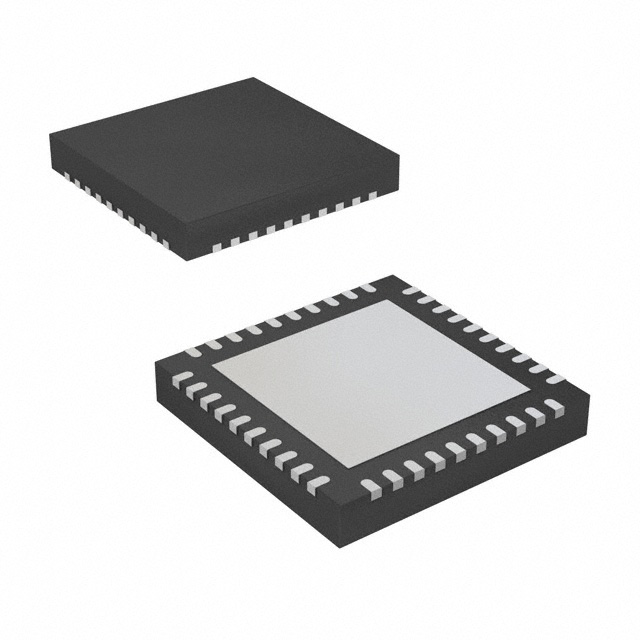
Analog Devices Inc. ADM1064ACP
- Part No.:
- ADM1064ACP
- Manufacturer:
- Analog Devices Inc.
- Category:
- Supervisors
- Package:
- 40-VFQFN Exposed Pad, CSP
- Datasheet:
-
 ADM1064ACP.pdf
- Description:
- IC SEQUENCER/SUPERVISOR 40LFCSP
- Quantity:
- Payment:

- Shipping:

Inventory:2,235
Please send an inquiry. Send us your inquiry, and we will respond immediately.
Product details
Overview
ADM1064ACP from Analog Devices is a configurable supervisory and sequencing IC for multivoltage systems, integrating 10 supply fault detectors (±1.0% accuracy across −40°C to +85°C), a 12-bit SAR ADC for voltage readback of up to 12 channels, and 10 programmable driver outputs (PDOs) with dual-mode operation (LV logic or HV FET gate drive). It enables precise power-up/down sequencing in DSP/FPGA boards and telecom line cards.
For engineers reviewing the ADM1064ACP datasheet, ADM1064ACP pinout, ADM1064ACP application, or ADM1064ACP equivalent, key selection considerations include its 40-lead LFCSP package, VH/VPx/VXx input flexibility (0.573 V–14.4 V supervision range), SMBus-programmable sequencing engine, charge-pumped PDO1–PDO6 capable of 12.5 V output, and integrated EEPROM for configuration persistence.
Technical Context
The ADM1064ACP implements a state-machine-based Sequencing Engine (SE) supporting up to 63 programmable states, enabling conditional output transitions based on input events (e.g., supply OK, fault, timeout). Its power arbitration selects the highest valid supply among VH (3.0–14.4 V) or VPx (3.0–6.0 V) to generate a regulated 4.75 V VDDCAP, ensuring redundancy without external biasing.
Input supervision uses selectable attenuators (for VH/VPx) and high-impedance paths (1 MΩ for VXx), with digital glitch filtering (0–100 μs) and 8-bit threshold resolution. The 12-bit ADC supports round-robin conversion across all supervised inputs plus two auxiliary channels, referenced to either internal 2.048 V REFOUT or an external reference for improved accuracy.
Key Specifications
| Parameter | Value and Actual Design Meaning |
|---|---|
| VDDCAP Output | 4.75 V regulated LDO; powers internal circuitry from highest VPx or VH rail - eliminates need for dedicated system VCC. |
| Supply Fault Accuracy | ±1.0% over −40°C to +85°C; enables reliable margin testing and brownout detection in server/routing power rails. |
| ADC Resolution | 12-bit SAR; reads back VH, VPx, VXx, AUX1, AUX2 - supports closed-loop voltage monitoring and calibration traceability. |
| PDO Drive Modes | 6 outputs (PDO1–PDO6) support charge-pumped HV mode (up to 12.5 V @ 1 μA); all 10 support LV push-pull or open-collector - drives N-FET gates or logic enables directly. |
| Input Voltage Ranges | VH: 2.5–14.4 V (2 ranges); VPx: 0.573–6.0 V (3 ranges); VXx: 0.573–1.375 V (ultralow range, no attenuation) - covers core, I/O, and analog supply domains. |
| SMBus Interface | 400 kHz compliant; supports configuration download at power-up, real-time register updates, and EEPROM write/erase - enables field reprogramming without hardware change. |
| Package | 40-lead LFCSP (6 mm × 6 mm, 0.5 mm pitch); exposed pad for thermal/mechanical stability - suitable for dense PCB layouts in telecom and computing applications. |
Pinout & Package
ADM1064ACP is housed in a 40-lead Lead Frame Chip Scale Package (LFCSP) with 6 mm × 6 mm footprint and 0.5 mm pitch. The exposed pad is NC but recommended for soldering to improve mechanical stability and thermal dissipation (θJA = 25°C/W).
| Pin/Terminal | Circuit Role | Design Meaning |
|---|---|---|
| VH (Pin 10) | High-voltage supply input / fault detector | Accepts 3.0–14.4 V; powers VDDCAP and enables supervision of 12 V backplane rails with selectable attenuation. |
| VP1–VP4 (Pins 6–9) | Low-voltage supply inputs / fault detectors | Each supports 3 ranges (e.g., 1.25–3.0 V, 2.5–6.0 V); supervise core voltages like 1.8 V, 3.3 V, or 5 V with ±1% accuracy. |
| VX1–VX5 (Pins 1–5) | Dual-function inputs (analog SFD or digital logic) | 1 MΩ impedance; configurable as ultralow-threshold fault detectors (0.573–1.375 V) or CMOS/TTL inputs - adds flexibility without extra pins. |
| PDO1–PDO10 (Pins 21–30) | Programmable driver outputs | PDO1–PDO6: charge-pumped HV mode (12.5 V max) for N-FET gate drive; all 10 support LV push-pull/open-collector - enables direct control of enable signals or FETs. |
| SDA/SCL (Pins 36/35) | SMBus bidirectional interface | Open-drain with external pull-ups; supports configuration loading, real-time monitoring, and fault reporting via industry-standard 2-wire bus. |
| REFIN/REFOUT (Pins 13/14) | ADC reference input/output | REFOUT provides 2.048 V ±0.25%; REFIN accepts internal REFOUT or external reference - determines ADC absolute accuracy and noise floor. |
Key Features
| Feature | Design Value |
|---|---|
| 10-channel supply supervision | Configurable undervoltage/overvoltage/out-of-window detection per channel with 8-bit threshold resolution - enables precise margining and fault isolation in complex power trees. |
| Charge-pumped PDO drivers (PDO1–PDO6) | Internally generates up to 12.5 V from VPx/VH rails - eliminates need for external charge pumps when driving high-side N-FETs in hot-swap or sequencing paths. |
| Sequencing Engine (SE) with 63 states | State-machine logic executes conditional transitions (e.g., "wait for VP1 OK, then assert PDO2, then monitor VX3") - replaces discrete timers and logic for robust, repeatable sequencing. |
| 12-bit ADC with round-robin readback | Converts all supervised supplies plus AUX1/AUX2 in <84 ms (12 channels, averaging enabled) - provides real-time telemetry for health monitoring and diagnostics. |
| User EEPROM (256 bytes) | Persists full configuration (fault thresholds, sequencing states, PDO modes) across power cycles - ensures deterministic startup without host intervention. |
Applications
| Server Power Sequencing | DSP/FPGA Board Supervision |
|---|---|
Use Scenario: Coordinating power-up order of CPU core, memory, I/O, and auxiliary rails in 1U/2U rack servers with multiple PMICs. IC Role / Device Role / Timing Role: Central sequencing controller that asserts enable signals to downstream regulators based on measured rail readiness and timing constraints. Use Value: Prevents latch-up and inrush current surges by enforcing strict sequence windows (e.g., VCCINT before VCCAUX), verified via ADC readback. |
Use Scenario: Managing power sequencing and voltage margining for Xilinx Virtex or Intel Stratix FPGA platforms with >8 supply domains. IC Role / Device Role / Timing Role: Supervisory hub that monitors rail tolerances (±3%), triggers fault interrupts, and adjusts sequencing dynamically during in-circuit test. Use Value: Enables automated margin testing (±5% VDD) using VXx inputs as programmable references, reducing manual probe time by >70%. |
| Telecom Line Card Control | Redundant Power System Monitoring |
Use Scenario: Controlling hot-swap insertion of line cards into central office shelves with dual 48 V inputs and isolated DC/DC converters. IC Role / Device Role / Timing Role: Fault detector and sequencer that validates input voltage pre-insertion, sequences converter enables, and asserts reset on overcurrent. Use Value: Uses VH input to supervise 48 V backplane (via attenuator) and charge-pumped PDOs to drive hot-swap MOSFET gates - eliminates external supervisors. |
Use Scenario: Ensuring continuous operation in industrial PLCs where primary and backup 24 V supplies must be monitored and switched without glitch. IC Role / Device Role / Timing Role: Redundancy manager that arbitrates between VP1 (primary) and VP2 (backup), initiates seamless switchover on failure, and logs event timestamps. Use Value: Leverages VDDCAP arbitration and EEPROM-stored fault history to maintain uptime during brownouts - no host software dependency. |
Equivalent & Alternatives
The following parts are listed as comparable options for similar supply supervision and sequencing applications.
| Alternative Part | Technical Difference | Application Difference | Selection Advice |
|---|---|---|---|
| ADM1168ACPZ | 8-input sequencer with 10-bit ADC, no charge-pump PDOs; supports only VPx/VH (no VXx dual-function inputs) | Limited to simpler 8-rail systems; lacks ultralow-voltage supervision (<0.573 V) and HV FET drive capability | Select when cost sensitivity outweighs need for 10-rail coverage or N-FET gate drive - reduces BOM count in entry-level servers. |
| TPS40400RHLR | Texas Instruments 6-rail sequencer with 12-bit ADC, no EEPROM; relies on external MCU for configuration storage | Requires host processor for sequencing logic; no autonomous state-machine execution or persistent config | Choose for designs with existing firmware infrastructure and tight space constraints - 32-pin QFN vs. 40-pin LFCSP. |
Compared with ADM1064ACP, ADM1168ACPZ offers lower channel count and no HV drive but simplifies layout with smaller footprint, while TPS40400RHLR shifts sequencing intelligence to firmware and removes EEPROM dependency - ADM1064ACP remains optimal for autonomous, high-channel-count, FET-driven systems requiring zero-host startup.
Availability
ADM1064ACP is available at Aetrix Electronics and suitable for server/routers, DSP/FPGA supply sequencing, and telecom line card control requiring stable component supply, long-term lifecycle support, and guaranteed traceable sourcing.
Supply support for ADM1064ACP includes scheduled delivery planning, volume procurement assistance, BOM continuity management, traceable sourcing, and lifecycle availability coordination for OEM customers, industrial embedded developers, connected-device designers, and electronics production programs.
Manufacturer
Analog Devices, Inc. is a global leader in high-performance analog, mixed-signal, and digital signal processing semiconductors, headquartered in Norwood, MA, with design centers worldwide.
The ADM1064ACP belongs to Analog Devices' Super Sequencer® family, engineered specifically for autonomous, multirail power management in high-reliability computing and communications infrastructure where deterministic sequencing and precision voltage telemetry are critical.
FAQ
What is the maximum input voltage the ADM1064ACP can supervise on its VH pin?
The ADM1064ACP VH pin supports supervision of supply voltages up to 14.4 V with ±1.0% accuracy across temperature. This allows direct monitoring of 12 V backplane rails in telecom and server applications without external level-shifting. The VH pin also serves as a power source for the internal VDDCAP regulator, enhancing system redundancy. ADM1064ACP achieves this using an internal selectable attenuator and high-precision comparator architecture documented in the Rev. E datasheet.
How does the ADM1064ACP handle power supply arbitration between multiple rails?
The ADM1064ACP uses an internal VDD arbitrator that selects the highest valid voltage among VH (3.0–14.4 V) or VPx (3.0–6.0 V) inputs to generate a regulated 4.75 V VDDCAP supply. If two supplies differ by less than 100 mV, the first to reach regulation retains control. This architecture ensures uninterrupted operation during brownouts, as the VDDCAP decoupling capacitor acts as a reservoir. ADM1064ACP's arbitration is fully autonomous and requires no external components or configuration.
Can the ADM1064ACP drive N-channel MOSFET gates directly, and which pins support this?
Yes, ADM1064ACP PDO1 through PDO6 support internally charge-pumped high-voltage mode, delivering up to 12.5 V at 1 μA to directly drive the gates of N-channel MOSFETs used in hot-swap or power-path control. This eliminates external charge pumps or level shifters. PDO7–PDO10 operate in LV mode only (push-pull or open-collector). The charge-pump function is enabled per-PDO via configuration registers and is independent of the VPx rail voltage - ADM1064ACP maintains this capability even when VPx is as low as 3.0 V.
What ADC performance specifications apply to the ADM1064ACP's voltage readback function?
The ADM1064ACP integrates a 12-bit SAR ADC with ±2.5 LSB INL, ±0.05% gain error, and 0.25 LSB RMS noise when using the internal 2.048 V reference. Conversion time is 0.44 ms per channel or 84 ms for all 12 channels (including VH, VPx, VXx, AUX1, AUX2) with averaging enabled. ADC accuracy is referenced to REFIN, which may be driven by the internal REFOUT or a higher-precision external source - ADM1064ACP's ADC supports both configurations without hardware change.
Does the ADM1064ACP require external programming hardware, or can it be configured in-system?
The ADM1064ACP supports full in-system configuration via its SMBus interface: initial setup, runtime parameter updates, and EEPROM writes (256-byte user memory) can all be performed after soldering using standard SMBus commands. Analog Devices provides GUI-based software for intuitive register mapping and sequencing logic definition. No JTAG, debug port, or external programmer is needed - ADM1064ACP loads its configuration automatically at power-up from EEPROM, enabling true "set-and-forget" deployment.
ADM1064ACP Specifications
- Product attributes
- Attribute value
- Manufacturer:
- Analog Devices Inc.
- Series:
- -
- Package/Case:
- 40-VFQFN Exposed Pad, CSP
- Packaging:
- Tray
- Product Status:
- Obsolete
- Programmable:
- Not Verified
- Type:
- Sequencer
- Number of Voltages Monitored:
- 10
- Voltage - Threshold:
- Adjustable/Selectable
- Output:
- Programmable
- Reset:
- -
- Reset Timeout:
- -
- Operating Temperature:
- -40°C ~ 85°C
- Grade:
- -
- Qualification:
- -
- Mounting Type:
- Surface Mount
- Supplier Device Package:
- 40-LFCSP-VQ (6x6)
ADM1064ACP FAQ
1.How can I place an order for ADM1064ACP through Aetrix?
Please submit a Request for Quotation (RFQ) for ADM1064ACP on Aetrix. Our sales agent will provide a competitive quotation and guide you through the order confirmation once you accept the terms.
2.Are the price and stock information for ADM1064ACP reliable?
The price and inventory of ADM1064ACP are updated periodically and may fluctuate due to market conditions. Stock and pricing data are typically refreshed every 24 hours. Quotation validity for ADM1064ACP is usually 5 days.
3.What payment methods are accepted for ADM1064ACP?
We accept Wire Transfer, PayPal, Credit Card, Western Union, MoneyGram, and Escrow for ADM1064ACP transactions.
Note: Certain payment methods may incur a processing fee.
4.How is shipping managed for ADM1064ACP?
ADM1064ACP orders can be shipped via leading logistics carriers, including DHL, UPS, FedEx, TNT, or Registered Mail.
Once your ADM1064ACP order is processed, you will receive an email with the shipment details and tracking number.
Note: Tracking information may take up to 24 hours to appear. Express delivery typically takes 3–5 business days.
5.How can I obtain technical support or documentation for ADM1064ACP?
For technical support, including ADM1064ACP datasheets, pinout diagrams, or application guidance, please contact our engineering support team. They can provide detailed documentation and assistance for your ADM1064ACP requirements.
6.How does Aetrix verify that ADM1064ACP is sourced from the original manufacturer or authorized distributors?
All ADM1064ACP products on Aetrix are procured from qualified distributors and authorized channels. Our dedicated quality assurance team conducts strict verification, including traceability checks and, if necessary, third-party testing. This ensures that ADM1064ACP meets industry standards.
7.What is the process for return or replacement of ADM1064ACP?
All ADM1064ACP units undergo pre-shipment inspection (PSI). If there is an issue with ADM1064ACP, returns or replacements are accepted under the following conditions:
1.Quantity discrepancies, incorrect items, or visible external defects (such as breakage or corrosion), acknowledged by Aetrix.
2.The issue is reported within 90 days of delivery.
3.The ADM1064ACP part is unused and in its original packaging.
Return procedure for ADM1064ACP:
1.Submit a request within 90 days.
2.Obtain a Return Material Authorization (RMA) from Aetrix.
ADM1064ACP Tags
-
MIC826SYMT-TR
Microchip Technology
-
APX803S-31SA-7
Diodes Incorporated
-
APX803L20-29SA-7
Diodes Incorporated
-
TPS3828-33DBVR
Texas Instruments

-
V6340RSP3B+
EM Microelectronic
-
EM6325CXSP5B-2.9+
EM Microelectronic
-
MCP120T-300I/TT
Microchip Technology
-
MCP130T-315I/TT
Microchip Technology
-
MCP120T-475I/TT
Microchip Technology
-
MCP111T-300E/TT
Microchip Technology
-
MCP120T-315I/TT
Microchip Technology
-
MCP809T-315I/TT
Microchip Technology
Tech Hub

A practical engineering guide to 3.3V and 5V logic compatibility, input thresholds, resistor dividers, translator ICs, MOSFET level shifting, I2C pull-ups, timing limits and power-sequencing risks.

The 74HC595 uses push-pull logic outputs, while the TPIC6B595 uses 50 V open-drain DMOS sinks for higher-power loads. This guide compares timing, current limits, 3.3 V interfacing, load wiring, thermal…

The 74HC595 converts serial data into eight stable parallel outputs. This guide covers pin functions, shift and storage timing, OE and MR behavior, drive-current limits, cascading, voltage compatibilit…

A technical comparison of level-sensitive latches and edge-triggered flip-flops, covering timing windows, setup and hold limits, master–slave operation, time borrowing, race-through, HDL inference and…

A D latch stores one bit while Enable controls when data can pass. This reference covers gate-level operation, truth tables, transparency, setup and hold timing, LE versus OE, common ICs and practical …

An SR latch stores one bit through cross-coupled feedback. This engineering reference covers NOR and NAND implementations, truth tables, forbidden-state recovery, gated operation, switch debouncing, fa…

Latch circuits retain one bit through feedback. This technical reference covers SR and D latches, truth tables, transparency, timing limits, latch-versus-flip-flop behavior, applications and common log…

An engineering guide to LED driver operation, constant-current and constant-voltage outputs, linear and switching topologies, dimming, IC selection, calculations, replacement compatibility, and fault c…

Operational amplifier guide covering op amp basics, feedback, ideal vs real op amps, common configurations, buffer circuits, offset, bias current, gain-bandwidth, slew rate, rail-to-rail limits and sel…

Jumper cables guide covering safe connection order, red and black clamp placement, final ground connection, cable gauge, length, clamp quality, copper vs CCA cables, jump starter comparison and battery…


