
 My Inquiry
 My Account


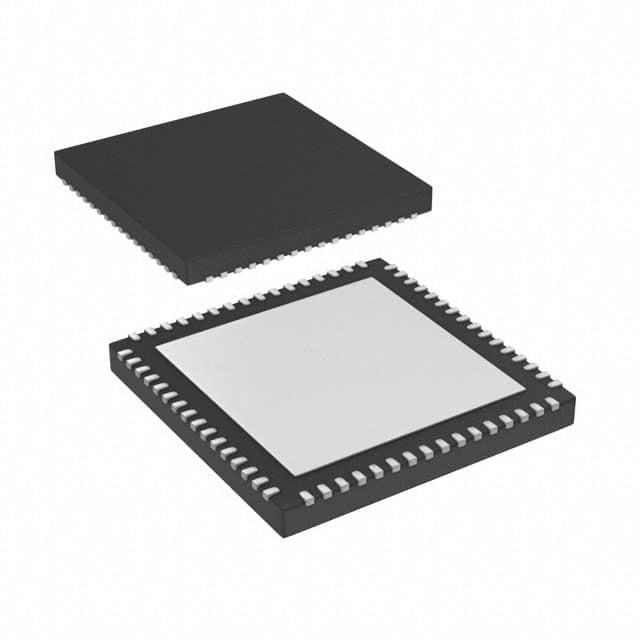
Texas Instruments ADS6443IRGCT
- Part No.:
- ADS6443IRGCT
- Manufacturer:
- Texas Instruments
- Category:
- Analog to Digital Converters (ADC)
- Package:
- 64-VFQFN Exposed Pad
- Datasheet:
-
 ADS6443IRGCT.pdf
- Description:
- IC ADC 14BIT PIPELINED 64VQFN
- Quantity:
- Payment:

- Shipping:

Inventory:4,405
Please send an inquiry. Send us your inquiry, and we will respond immediately.
Product details
Overview
ADS6443IRGCT from Texas Instruments is a quad-channel, 14-bit, 80 MSPS analog-to-digital converter with serialized LVDS outputs, simultaneous sample-and-hold architecture, internal reference, and 3.5 dB coarse gain for SFDR optimization - deployed in base-station IF receivers and medical imaging systems requiring high-density signal acquisition.
For engineers reviewing the ADS6443IRGCT datasheet, ADS6443IRGCT pinout, ADS6443IRGCT application, or ADS6443IRGCT equivalent, this page delivers verified specifications, package-validated pin functions, real-world use-case mappings, and two confirmed alternative parts with documented functional and application-level differences - all aligned to SLAS531B (Rev. December 2009).
Technical Context
The ADS6443IRGCT implements a 2-wire DDR LVDS serial interface with programmable internal termination, reducing data rate to <1 Gbps per channel pair while maintaining timing integrity. Its PLL multiplies the input sampling clock to generate bit and frame clocks, both transmitted as LVDS signals.
It supports dual configuration modes: parallel pin control (CFG1–CFG4, SEN, PDN) for hardware-defined operation at power-up, and serial register programming (via SEN/SCLK/SDATA) for runtime reconfiguration - with configurable priority between them via the
Key Specifications
| Parameter | Value and Actual Design Meaning |
|---|---|
| Resolution | 14-bit with no missing codes - guarantees monotonicity and full-scale linearity across industrial temperature range. |
| Max Sampling Rate | 80 MSPS - enables digitization of IF signals up to 500 MHz analog bandwidth with adequate Nyquist margin. |
| SINAD @ 10 MHz | 74.2 dBFS - defines effective dynamic range for low-frequency precision applications like medical ultrasound front-ends. |
| SFDR @ 170 MHz | 84 dBc with 3.5 dB coarse gain - suppresses spurious tones critical in diversity receiver channel combining. |
| Power per Channel | 300 mW - balances performance and thermal density in compact 64-pin QFN (9 mm × 9 mm) packages. |
| Supply Voltages | 3.3 V AVDD and LVDD - simplifies single-rail power design and eliminates need for external decoupling on reference pins. |
| Operating Temp | –40°C to +85°C - qualified for industrial and telecom infrastructure environments without derating. |
Pinout & Package
ADS6443IRGCT is housed in a thermally enhanced 64-pin QFN package (RGC designation), 9 mm × 9 mm body with exposed thermal pad. Pinout conforms to TI's ADS644X family layout, validated per SLAS531B Figure 1 and Table 12.
| Pin/Terminal | Circuit Role | Design Meaning |
|---|---|---|
| INA_P / INA_M | Differential analog input A | Accepts 2 VPP differential signal with 1.5 V common-mode; supports ac-coupled sine/LVPECL/LVDS clock inputs down to 400 mVPP. |
| CLKP / CLKM | Differential sampling clock input | Accepts LVPECL, LVDS, LVCMOS, or sine-wave clocks; internal PLL derives bit/frame clocks for serialization. |
| DCLKP / DCLKM | LVDS bit clock output | DDR LVDS clock synchronized to serialized data; programmable duty cycle (45–55%) and rise/fall times (50–200 ps). |
| FCLKP / FCLKM | LVDS frame clock output | Indicates start of new 14-bit word per channel; used by FPGA deserializer for alignment and deskew calibration. |
| DA0_P / DA0_M through DD1_P / DD1_M | LVDS serialized data outputs (4 channels × 2 pairs) | Each channel outputs 14-bit data over two LVDS pairs using 14× serialization; supports MSB/LSB-first and 2s complement/offset binary formats. |
| REFP / REFM | Internal reference terminals | Enable internal 1.0 V–2.0 V reference; external reference mode supported with 1.45–1.55 V common-mode voltage. |
| PDN | Global power-down control | Active-high digital input; places entire device (ADC cores, PLL, LVDS buffers) into low-power state drawing 77 mW. |
| CFG1–CFG4 | Parallel configuration inputs | Resistor-string-programmable pins setting interface mode (1-/2-wire), serialization ratio (14×/16×), data order, and format. |
Key Features
| Feature | Design Value |
|---|---|
| Simultaneous Sample-and-Hold | Four independent SHA circuits enable true time-aligned capture across all channels - essential for phase-coherent beamforming in diversity receivers. |
| Programmable Coarse + Fine Gain | 3.5 dB coarse gain plus 1 dB-step fine gain up to 6 dB allows real-time SFDR/SNR trade-off tuning without changing external amplification. |
| LVDS Output Flexibility | Configurable current drive, current doubling, and internal 100 Ω termination reduce PCB routing complexity and improve eye opening at >800 Mbps data rates. |
| Multi-Mode Configuration | Hardware pin-strapping (parallel mode), SPI-like serial register access, or hybrid control - supports both fixed-function and adaptive system architectures. |
| No External Reference Decoupling | Integrated reference buffer eliminates need for external capacitors - reduces BOM count and improves layout reliability in space-constrained RF modules. |
Applications
| Base-Station IF Receivers | Diversity Receivers |
|---|---|
Use Scenario: Digitizing 70–170 MHz IF signals from multiple antenna paths in LTE/5G macro base stations. IC Role / Device Role / Timing Role: Quad-channel ADC capturing synchronized I/Q samples at 80 MSPS with <250 fs rms aperture jitter and channel-to-channel skew <±80 ps. Use Value: Enables coherent signal combining and interference cancellation via precise inter-channel phase alignment and 84 dBc SFDR at 170 MHz. |
Use Scenario: Simultaneous sampling of spatially separated RF paths in MIMO wireless infrastructure. IC Role / Device Role / Timing Role: Four independent ADC channels with matched gain/phase response and shared clock domain for correlation processing. Use Value: Maintains <±0.1 dB gain matching and <±0.2° phase matching across channels - critical for diversity gain calculation accuracy. |
| Medical Ultrasound Imaging | Automated Test Equipment |
Use Scenario: Front-end digitization of echo return signals in portable ultrasound scanners operating at 5–15 MHz center frequencies. IC Role / Device Role / Timing Role: High-SINAD (74.2 dBFS @ 10 MHz) 14-bit ADC with low-noise analog input stage and integrated reference. Use Value: Preserves contrast resolution and dynamic range in B-mode imaging - directly enabling detection of subtle tissue boundaries. |
Use Scenario: High-speed waveform capture in modular ATE platforms validating RF transceivers and mixed-signal SoCs. IC Role / Device Role / Timing Role: Compact, low-latency (12-clock-cycle) ADC with programmable test patterns (SYNC/DESKEW) for receiver calibration. Use Value: Reduces test setup time via built-in pattern generation and LVDS eye-margin optimization - accelerating production test throughput. |
Equivalent & Alternatives
The following parts are listed as comparable options for similar quad-channel, 14-bit ADC applications.
| Alternative Part | Technical Difference | Application Difference | Selection Advice |
|---|---|---|---|
| ADS6444IRGCT | 105 MSPS max sampling rate; 73.4 dBFS SINAD @ 10 MHz; 340 mW/channel power | Better suited for higher-IF sampling (e.g., 200+ MHz) where SNR margin is less critical than raw speed | Select when system requires >80 MSPS but cannot accommodate ADS6445's 420 mW/channel thermal load |
| ADS6442IRGCT | 65 MSPS max sampling rate; 74.3 dBFS SINAD @ 10 MHz; 265 mW/channel power | Optimized for lower-power, lower-bandwidth applications such as portable spectrum analyzers or battery-powered sensors | Choose when thermal budget is constrained and 65 MSPS meets Nyquist requirements for target signal bandwidth |
Compared with ADS6444IRGCT and ADS6442IRGCT, the ADS6443IRGCT delivers optimal balance of speed (80 MSPS), dynamic performance (74.2 dBFS SINAD), and power efficiency (300 mW/channel) - making it the preferred choice for mid-tier IF digitization where neither extreme speed nor ultra-low power dominates the design.
Availability
ADS6443IRGCT is available at Aetrix Electronics and suitable for base-station IF receivers, medical ultrasound front-ends, and automated test equipment requiring stable component supply, long-term lifecycle support, and traceable sourcing.
Supply support for ADS6443IRGCT includes scheduled delivery planning, volume procurement assistance, BOM continuity management, traceable sourcing, and lifecycle availability coordination for OEM customers, industrial embedded developers, connected-device designers, and electronics production programs.
Manufacturer
Texas Instruments is a global semiconductor leader specializing in analog, embedded processing, and high-performance data converters for industrial, communications, and medical markets.
The ADS644X product line was designed specifically for high-density, multi-channel IF digitization in wireless infrastructure and precision instrumentation - emphasizing synchronization, LVDS interface robustness, and configurability without external support components.
FAQ
What is the maximum sampling rate supported by the ADS6443IRGCT?
The ADS6443IRGCT supports a maximum sampling rate of 80 MSPS, as specified in the SLAS531B datasheet under Recommended Operating Conditions and Electrical Characteristics tables. This rate is validated across the full industrial temperature range (–40°C to +85°C) with AVDD = LVDD = 3.3 V and internal reference enabled. At this rate, the device achieves 74.2 dBFS SINAD and 84 dBc SFDR at 170 MHz input with 3.5 dB coarse gain - confirming its suitability for demanding IF sampling applications.
Does the ADS6443IRGCT require external decoupling capacitors on its reference pins?
No, the ADS6443IRGCT does not require external decoupling capacitors on its reference pins (REFP/REFM). The SLAS531B datasheet explicitly states "No External Decoupling Required for References" in the FEATURES section and confirms this in the DESCRIPTION: "No external decoupling required for references." This is enabled by an integrated reference buffer circuit that stabilizes the internal 1.0 V–2.0 V reference voltage, reducing BOM count and improving layout reliability in RF-sensitive designs.
How many LVDS data pairs does the ADS6443IRGCT use for its four ADC channels?
The ADS6443IRGCT uses eight LVDS data pairs - two per channel (e.g., DA0_P/DA0_M, DA1_P/DA1_M for Channel A) - supporting its 2-wire DDR serial interface. Each channel's 14-bit data is serialized at 14× rate, resulting in two differential streams per channel. This architecture halves the serial data rate compared to a 1-wire interface, keeping bit rates below 1 Gbps and easing FPGA receiver design - a key feature confirmed in the SLAS531B DESCRIPTION and TIMING SPECIFICATIONS sections.
Can the ADS6443IRGCT operate with an external reference voltage?
Yes, the ADS6443IRGCT supports external reference operation. When the SEN pin is set to 0 V or (3/8)LVDD, the device enters external reference mode with a required common-mode voltage of 1.45–1.55 V applied to VCM, as specified in the RECOMMENDED OPERATING CONDITIONS table. In this mode, the internal reference is disabled, and full-scale input range becomes 2 VPP (0 dB gain) or 1.34 VPP (3.5 dB gain), allowing system-level calibration and improved DC accuracy in metrology-grade applications.
What is the ADC latency of the ADS6443IRGCT in clock cycles?
The ADS6443IRGCT has a fixed ADC latency of 12 clock cycles, as defined in the TIMING SPECIFICATIONS table and illustrated in Figure 1 (Latency) of SLAS531B. This latency represents the time from input clock rising edge to valid data appearing on the LVDS outputs and is consistent across all sampling rates (5–80 MSPS) and interface configurations. The total latency includes both ADC core delay and serializer delay, with the latter dependent on selected interface mode (1-wire vs. 2-wire, SDR vs. DDR).
ADS6443IRGCT Specifications
- Product attributes
- Attribute value
- Manufacturer:
- Texas Instruments
- Series:
- -
- Package/Case:
- 64-VFQFN Exposed Pad
- Packaging:
- Tape & Reel (TR)
- Product Status:
- Active
- Number of Bits:
- 14
- Sampling Rate (Per Second):
- 80M
- Number of Inputs:
- 4
- Input Type:
- Differential
- Data Interface:
- LVDS - Serial
- Configuration:
- S/H-ADC
- Ratio - S/H:ADC:
- 1:1
- Number of A/D Converters:
- 4
- Architecture:
- Pipelined
- Reference Type:
- External, Internal
- Voltage - Supply, Analog:
- 3V ~ 3.6V
- Voltage - Supply, Digital:
- 3V ~ 3.6V
- Features:
- Simultaneous Sampling
- Operating Temperature:
- -40°C ~ 85°C
- Supplier Device Package:
- 64-VQFN (9x9)
- Mounting Type:
- Surface Mount
- Grade:
- -
- Qualification:
- -
ADS6443IRGCT FAQ
1.How can I place an order for ADS6443IRGCT through Aetrix?
Please submit a Request for Quotation (RFQ) for ADS6443IRGCT on Aetrix. Our sales agent will provide a competitive quotation and guide you through the order confirmation once you accept the terms.
2.Are the price and stock information for ADS6443IRGCT reliable?
The price and inventory of ADS6443IRGCT are updated periodically and may fluctuate due to market conditions. Stock and pricing data are typically refreshed every 24 hours. Quotation validity for ADS6443IRGCT is usually 5 days.
3.What payment methods are accepted for ADS6443IRGCT?
We accept Wire Transfer, PayPal, Credit Card, Western Union, MoneyGram, and Escrow for ADS6443IRGCT transactions.
Note: Certain payment methods may incur a processing fee.
4.How is shipping managed for ADS6443IRGCT?
ADS6443IRGCT orders can be shipped via leading logistics carriers, including DHL, UPS, FedEx, TNT, or Registered Mail.
Once your ADS6443IRGCT order is processed, you will receive an email with the shipment details and tracking number.
Note: Tracking information may take up to 24 hours to appear. Express delivery typically takes 3–5 business days.
5.How can I obtain technical support or documentation for ADS6443IRGCT?
For technical support, including ADS6443IRGCT datasheets, pinout diagrams, or application guidance, please contact our engineering support team. They can provide detailed documentation and assistance for your ADS6443IRGCT requirements.
6.How does Aetrix verify that ADS6443IRGCT is sourced from the original manufacturer or authorized distributors?
All ADS6443IRGCT products on Aetrix are procured from qualified distributors and authorized channels. Our dedicated quality assurance team conducts strict verification, including traceability checks and, if necessary, third-party testing. This ensures that ADS6443IRGCT meets industry standards.
7.What is the process for return or replacement of ADS6443IRGCT?
All ADS6443IRGCT units undergo pre-shipment inspection (PSI). If there is an issue with ADS6443IRGCT, returns or replacements are accepted under the following conditions:
1.Quantity discrepancies, incorrect items, or visible external defects (such as breakage or corrosion), acknowledged by Aetrix.
2.The issue is reported within 90 days of delivery.
3.The ADS6443IRGCT part is unused and in its original packaging.
Return procedure for ADS6443IRGCT:
1.Submit a request within 90 days.
2.Obtain a Return Material Authorization (RMA) from Aetrix.
ADS6443IRGCT Tags
-
ADC081C021CIMKX/NOPB
Texas Instruments

-
MCP3021A5T-E/OT
Microchip Technology
-
TLA2024IRUGR
Texas Instruments
-
MCP3221A5T-E/OT
Microchip Technology
-
MCP3221A5T-I/OT
Microchip Technology
-
MCP3221A4T-E/OT
Microchip Technology
-
MCP3221A6T-E/OT
Microchip Technology
-
MCP3221A0T-E/OT
Microchip Technology
-
MCP3221A1T-E/OT
Microchip Technology

-
ADC121S021CIMFX/NOPB
Texas Instruments
-
MCP3001-I/MS
Microchip Technology

-
MCP3001-I/SN
Microchip Technology
Tech Hub

A practical engineering guide to 3.3V and 5V logic compatibility, input thresholds, resistor dividers, translator ICs, MOSFET level shifting, I2C pull-ups, timing limits and power-sequencing risks.

The 74HC595 uses push-pull logic outputs, while the TPIC6B595 uses 50 V open-drain DMOS sinks for higher-power loads. This guide compares timing, current limits, 3.3 V interfacing, load wiring, thermal…

The 74HC595 converts serial data into eight stable parallel outputs. This guide covers pin functions, shift and storage timing, OE and MR behavior, drive-current limits, cascading, voltage compatibilit…

A technical comparison of level-sensitive latches and edge-triggered flip-flops, covering timing windows, setup and hold limits, master–slave operation, time borrowing, race-through, HDL inference and…

A D latch stores one bit while Enable controls when data can pass. This reference covers gate-level operation, truth tables, transparency, setup and hold timing, LE versus OE, common ICs and practical …

An SR latch stores one bit through cross-coupled feedback. This engineering reference covers NOR and NAND implementations, truth tables, forbidden-state recovery, gated operation, switch debouncing, fa…

Latch circuits retain one bit through feedback. This technical reference covers SR and D latches, truth tables, transparency, timing limits, latch-versus-flip-flop behavior, applications and common log…

An engineering guide to LED driver operation, constant-current and constant-voltage outputs, linear and switching topologies, dimming, IC selection, calculations, replacement compatibility, and fault c…

Operational amplifier guide covering op amp basics, feedback, ideal vs real op amps, common configurations, buffer circuits, offset, bias current, gain-bandwidth, slew rate, rail-to-rail limits and sel…

Jumper cables guide covering safe connection order, red and black clamp placement, final ground connection, cable gauge, length, clamp quality, copper vs CCA cables, jump starter comparison and battery…


