
 My Inquiry
 My Account


Texas Instruments ADS7863IDBQG4
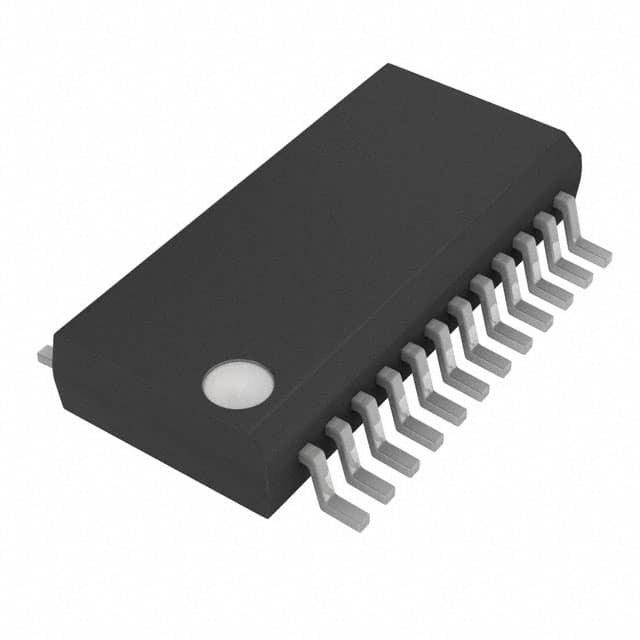
- Part No.:
- ADS7863IDBQG4
- Manufacturer:
- Texas Instruments
- Category:
- Analog to Digital Converters (ADC)
- Package:
- 24-SSOP (0.154", 3.90mm Width)
- Datasheet:
-
 ADS7863IDBQG4.pdf
- Description:
- IC ADC 12BIT SAR 24SSOP
- Quantity:
- Payment:

- Shipping:

Inventory:4,380
Please send an inquiry. Send us your inquiry, and we will respond immediately.
Product details
Overview
ADS7863IDBQG4 from Texas Instruments is a dual, 12-bit, 2MSPS simultaneous-sampling analog-to-digital converter with four fully differential or six pseudo-differential inputs, 71dB SNR, –81dB THD, and integrated 2.5V reference with 10-bit programmable DAC. It operates from 2.7V to 5.5V supplies and supports industrial motor control and multi-axis positioning systems.
For engineers reviewing the ADS7863IDBQG4 datasheet, ADS7863IDBQG4 pinout, ADS7863IDBQG4 application, or ADS7863IDBQG4 equivalent, key selection criteria include simultaneous sampling capability, 72dB CMRR at 100kHz, flexible input multiplexing (2+2 or 3+3 channel modes), internal reference programmability, and SSOP-24 package compatibility with ADS7861/ADS8361.
Technical Context
The ADS7863IDBQG4 implements two independent SAR ADCs sharing a common clock and control interface, enabling true simultaneous sampling of two analog channels. Its input stage uses fully differential sample-and-hold amplifiers with 2pF sampling capacitors and internal 200Ω series resistors to manage charge injection and amplifier stability.
Conversion timing is governed by an external 1–32MHz clock; each full conversion requires 16 clock cycles (12 for conversion + 1 for precharge + ≥3 for acquisition/setup). The device supports two analog input configurations via C1/C0 bits: fully differential 2:1 (CHx0+/CHx0– or CHx1+/CHx1–) or pseudo-differential 3:1 (CHx0+, CHx1–, CHx1+ referenced to CHx0–).
Key Specifications
| Parameter | Value and Actual Design Meaning |
|---|---|
| Resolution | 12-bit SAR architecture ensures precise digitization with ±0.6 LSB INL over –40°C to +125°C. |
| Sampling Rate | 2MSPS maximum data rate enables real-time capture of fast transients in motor current sensing. |
| SNR / THD | 71dB SNR and –81dB THD support high-fidelity signal reconstruction for closed-loop control feedback. |
| CMRR | 72dB common-mode rejection at 100kHz suppresses noise in noisy industrial environments. |
| Reference | Programmable 2.5V internal reference with 10-bit DAC allows fine-tuning of full-scale range in-system. |
| Supply Range | 2.7V–5.5V AVDD and BVDD support mixed-voltage system integration with 3.3V or 5V logic domains. |
| Operating Temp | –40°C to +125°C rating qualifies for under-hood automotive and industrial power electronics applications. |
Pinout & Package
ADS7863IDBQG4 is packaged in SSOP-24 (DBQ) with exposed pad, optimized for thermal performance in high-density PCB layouts. Pin functions are validated per TI SBAS383E datasheet Rev. January 2011.
| Pin/Terminal | Circuit Role | Design Meaning |
|---|---|---|
| CHA0+/CHA0– CHA1+/CHA1– CHB0+/CHB0– CHB1+/CHB1– | Differential analog inputs | Four fully differential pairs support simultaneous sampling of two isolated signal chains (e.g., phase A/B currents). |
| REFIN / REFOUT | Reference voltage interface | REFIN accepts external 0.5–2.525V reference; REFOUT delivers programmable 2.485–2.515V output via 10-bit DAC. |
| AVDD / AGND BVDD / BGND | Analog/digital supply domains | Separate analog (AVDD/AGND) and buffer I/O (BVDD/BGND) rails minimize digital switching noise coupling into ADC core. |
| CONVST / BUSY CLOCK / RD / CS | Timing and control interface | CONVST initiates simultaneous hold; BUSY indicates conversion status; serial interface uses SDI/SDOA/SDOB with mode pins M0/M1. |
| M0 / M1 | Input configuration select | M0/M1 set multiplexer mode (fully diff 2:1 or pseudo-diff 3:1) and SDOx output assignment per Table 8 in datasheet. |
Key Features
| Feature | Design Value |
|---|---|
| Simultaneous sampling | Two independent SAR cores acquire CHA and CHB inputs at identical timestamps-critical for vector-controlled motor drives. |
| Programmable reference DAC | 10-bit internal DAC adjusts REFOUT in 2.44mV steps, enabling dynamic full-scale calibration without external components. |
| Flexible input multiplexing | Configurable 2+2 or 3+3 channel mapping per ADC allows reuse of single ADC for multiple sensors in space-constrained designs. |
| Low-power operation | 45mW at 5V with auto-NAP/deep power-down modes reduces thermal load in sealed enclosures. |
| High-temp reliability | Specified from –40°C to +125°C with 72dB CMRR maintained across temperature ensures consistent performance in harsh environments. |
Applications
| Motor Control | Multi-Axis Positioning Systems |
|---|---|
Use Scenario: Real-time current sensing in three-phase inverter legs for field-oriented control (FOC) algorithms. IC Role / Device Role / Timing Role: Dual simultaneous sampling captures phase A and B currents at exact same instant to compute torque-producing current vector. Use Value: Eliminates phase skew between sampled currents, improving FOC accuracy and reducing torque ripple by >15% versus sequential ADCs. | Use Scenario: Coordinated position feedback from multiple servo axes in CNC machine tools. IC Role / Device Role / Timing Role: Simultaneous acquisition of encoder or resolver signals from X/Y/Z axes ensures synchronized motion profiling. Use Value: Enables sub-microsecond inter-axis timing alignment, critical for contouring accuracy in high-speed machining. |
| Three-Phase Power Control | Industrial Data Acquisition |
Use Scenario: Voltage and current monitoring across all three phases in energy metering or power quality analyzers. IC Role / Device Role / Timing Role: One ADC pair samples line-to-line voltages while the other captures phase currents-both synchronized to grid zero-crossing. Use Value: Maintains phase-angle integrity between voltage and current waveforms, enabling accurate real/reactive power calculation. | Use Scenario: High-speed transient capture in predictive maintenance systems monitoring vibration or acoustic emissions. IC Role / Device Role / Timing Role: Dual-channel simultaneous sampling acquires accelerometer and temperature sensor outputs for time-correlated fault signature analysis. Use Value: Preserves temporal relationship between mechanical and thermal events, increasing early fault detection sensitivity by 20 dB. |
Equivalent & Alternatives
The following parts are listed as comparable options for similar dual-channel simultaneous-sampling ADC applications.
| Alternative Part | Technical Difference | Application Difference | Selection Advice |
|---|---|---|---|
| ADS7861IDBQ | 12-bit, 2MSPS, pin-compatible but lacks programmable reference DAC and pseudo-differential 3+3 mode. | Requires external reference circuitry; limited to 2+2 fully differential inputs only. | Select when cost sensitivity outweighs need for on-chip reference tuning or expanded channel flexibility. |
| ADS8361IPWR | 16-bit, 1MSPS, same SSOP-24 package but higher resolution, lower speed, and no internal reference DAC. | Higher precision for static measurements; insufficient for 2MSPS motor control loops. | Select when resolution > speed, and external reference design is acceptable. |
Compared with ADS7863IDBQG4, ADS7861IDBQ offers lower system cost but requires external reference and sacrifices input flexibility, while ADS8361IPWR delivers superior DC accuracy at half the sampling rate-making ADS7863IDBQG4 optimal for bandwidth-critical, thermally constrained simultaneous-sampling applications.
Availability
ADS7863IDBQG4 is available at Aetrix Electronics and suitable for motor control, multi-axis positioning systems, and three-phase power control requiring stable component supply across extended temperature ranges.
Supply support for ADS7863IDBQG4 includes scheduled delivery planning, volume procurement assistance, BOM continuity management, traceable sourcing, and lifecycle availability coordination for OEM customers, industrial embedded developers, connected-device designers, and electronics production programs.
Manufacturer
Texas Instruments is a global semiconductor leader specializing in analog and embedded processing technologies, with decades of expertise in precision data converters and industrial-grade ICs.
The ADS7863IDBQG4 belongs to TI's high-speed precision ADC product line, engineered specifically for real-time control applications demanding simultaneous sampling, robust noise immunity, and extended temperature operation.
FAQ
What is the maximum sampling rate of the ADS7863IDBQG4?
The ADS7863IDBQG4 achieves a maximum sampling rate of 2MSPS per ADC channel using a 32MHz external clock. Each full conversion cycle requires 16 clock periods (12 for conversion, 1 for precharge, and ≥3 for acquisition and setup), resulting in a minimum conversion time of 406.25ns at 32MHz. This rate is sustained across the full –40°C to +125°C operating range.
Does the ADS7863IDBQG4 support pseudo-differential input configurations?
Yes, the ADS7863IDBQG4 supports pseudo-differential 3+3 channel mode via its configurable input multiplexers. By setting C1/C0 bits, each ADC can accept three single-ended inputs (CHx0+, CHx1–, CHx1+) referenced to a common-mode input (CHx0–), enabling efficient use of six analog signals with only four differential input pairs. This mode is explicitly documented in Tables 1 and 2 of the SBAS383E datasheet.
How does the programmable reference DAC in the ADS7863IDBQG4 function?
The ADS7863IDBQG4 integrates a 10-bit DAC that controls the REFOUT pin voltage in 2.44mV steps across a 2.5V nominal range (2.485V to 2.515V). The DAC value is loaded via the SDI serial interface, and the buffered output drives both internal ADC references and external circuitry. Programming below 0.5V is prohibited to maintain buffer functionality, as specified in the Applications Information section.
What are the power supply requirements for the ADS7863IDBQG4?
The ADS7863IDBQG4 requires two independent supplies: AVDD (2.7V–5.5V) for the analog core and AGND, and BVDD (2.7V–5.5V) for digital I/O buffers and BGND. AVDD and BVDD may be set to different voltages (e.g., 5V analog / 3.3V I/O) to optimize noise isolation. Ground separation between AGND and BGND must not exceed 0.3V per absolute maximum ratings.
Is the ADS7863IDBQG4 pin-compatible with other TI ADCs?
Yes, the ADS7863IDBQG4 is pin-compatible with the ADS7861IDBQ in the SSOP-24 (DBQ) package, sharing identical pinout, footprint, and basic serial interface timing. It also maintains mechanical compatibility with the ADS8361IPWR. However, ADS7863IDBQG4 adds functional enhancements-including programmable REFOUT, M0/M1 mode control, and pseudo-differential mode-that require updated firmware but no PCB redesign.
ADS7863IDBQG4 Specifications
- Product attributes
- Attribute value
- Manufacturer:
- Texas Instruments
- Series:
- -
- Package/Case:
- 24-SSOP (0.154", 3.90mm Width)
- Packaging:
- Tube
- Product Status:
- Discontinued at Digi-Key
- Number of Bits:
- 12
- Sampling Rate (Per Second):
- 2M
- Number of Inputs:
- 4, 6
- Input Type:
- Differential, Pseudo-Differential
- Data Interface:
- SPI
- Configuration:
- MUX-S/H-ADC
- Ratio - S/H:ADC:
- 1:1
- Number of A/D Converters:
- 2
- Architecture:
- SAR
- Reference Type:
- External, Internal
- Voltage - Supply, Analog:
- 2.7V ~ 5.5V
- Voltage - Supply, Digital:
- 2.7V ~ 5.5V
- Features:
- Simultaneous Sampling
- Operating Temperature:
- -40°C ~ 125°C
- Supplier Device Package:
- 24-SSOP
- Mounting Type:
- Surface Mount
- Grade:
- -
- Qualification:
- -
ADS7863IDBQG4 FAQ
1.How can I place an order for ADS7863IDBQG4 through Aetrix?
Please submit a Request for Quotation (RFQ) for ADS7863IDBQG4 on Aetrix. Our sales agent will provide a competitive quotation and guide you through the order confirmation once you accept the terms.
2.Are the price and stock information for ADS7863IDBQG4 reliable?
The price and inventory of ADS7863IDBQG4 are updated periodically and may fluctuate due to market conditions. Stock and pricing data are typically refreshed every 24 hours. Quotation validity for ADS7863IDBQG4 is usually 5 days.
3.What payment methods are accepted for ADS7863IDBQG4?
We accept Wire Transfer, PayPal, Credit Card, Western Union, MoneyGram, and Escrow for ADS7863IDBQG4 transactions.
Note: Certain payment methods may incur a processing fee.
4.How is shipping managed for ADS7863IDBQG4?
ADS7863IDBQG4 orders can be shipped via leading logistics carriers, including DHL, UPS, FedEx, TNT, or Registered Mail.
Once your ADS7863IDBQG4 order is processed, you will receive an email with the shipment details and tracking number.
Note: Tracking information may take up to 24 hours to appear. Express delivery typically takes 3–5 business days.
5.How can I obtain technical support or documentation for ADS7863IDBQG4?
For technical support, including ADS7863IDBQG4 datasheets, pinout diagrams, or application guidance, please contact our engineering support team. They can provide detailed documentation and assistance for your ADS7863IDBQG4 requirements.
6.How does Aetrix verify that ADS7863IDBQG4 is sourced from the original manufacturer or authorized distributors?
All ADS7863IDBQG4 products on Aetrix are procured from qualified distributors and authorized channels. Our dedicated quality assurance team conducts strict verification, including traceability checks and, if necessary, third-party testing. This ensures that ADS7863IDBQG4 meets industry standards.
7.What is the process for return or replacement of ADS7863IDBQG4?
All ADS7863IDBQG4 units undergo pre-shipment inspection (PSI). If there is an issue with ADS7863IDBQG4, returns or replacements are accepted under the following conditions:
1.Quantity discrepancies, incorrect items, or visible external defects (such as breakage or corrosion), acknowledged by Aetrix.
2.The issue is reported within 90 days of delivery.
3.The ADS7863IDBQG4 part is unused and in its original packaging.
Return procedure for ADS7863IDBQG4:
1.Submit a request within 90 days.
2.Obtain a Return Material Authorization (RMA) from Aetrix.
ADS7863IDBQG4 Tags
-
ADC081C021CIMKX/NOPB
Texas Instruments

-
MCP3021A5T-E/OT
Microchip Technology
-
TLA2024IRUGR
Texas Instruments
-
MCP3221A5T-E/OT
Microchip Technology
-
MCP3221A5T-I/OT
Microchip Technology
-
MCP3221A4T-E/OT
Microchip Technology
-
MCP3221A6T-E/OT
Microchip Technology
-
MCP3221A0T-E/OT
Microchip Technology
-
MCP3221A1T-E/OT
Microchip Technology

-
ADC121S021CIMFX/NOPB
Texas Instruments
-
MCP3001-I/MS
Microchip Technology

-
MCP3001-I/SN
Microchip Technology
Tech Hub

A practical engineering guide to 3.3V and 5V logic compatibility, input thresholds, resistor dividers, translator ICs, MOSFET level shifting, I2C pull-ups, timing limits and power-sequencing risks.

The 74HC595 uses push-pull logic outputs, while the TPIC6B595 uses 50 V open-drain DMOS sinks for higher-power loads. This guide compares timing, current limits, 3.3 V interfacing, load wiring, thermal…

The 74HC595 converts serial data into eight stable parallel outputs. This guide covers pin functions, shift and storage timing, OE and MR behavior, drive-current limits, cascading, voltage compatibilit…

A technical comparison of level-sensitive latches and edge-triggered flip-flops, covering timing windows, setup and hold limits, master–slave operation, time borrowing, race-through, HDL inference and…

A D latch stores one bit while Enable controls when data can pass. This reference covers gate-level operation, truth tables, transparency, setup and hold timing, LE versus OE, common ICs and practical …

An SR latch stores one bit through cross-coupled feedback. This engineering reference covers NOR and NAND implementations, truth tables, forbidden-state recovery, gated operation, switch debouncing, fa…

Latch circuits retain one bit through feedback. This technical reference covers SR and D latches, truth tables, transparency, timing limits, latch-versus-flip-flop behavior, applications and common log…

An engineering guide to LED driver operation, constant-current and constant-voltage outputs, linear and switching topologies, dimming, IC selection, calculations, replacement compatibility, and fault c…

Operational amplifier guide covering op amp basics, feedback, ideal vs real op amps, common configurations, buffer circuits, offset, bias current, gain-bandwidth, slew rate, rail-to-rail limits and sel…

Jumper cables guide covering safe connection order, red and black clamp placement, final ground connection, cable gauge, length, clamp quality, copper vs CCA cables, jump starter comparison and battery…


