
 My Inquiry
 My Account


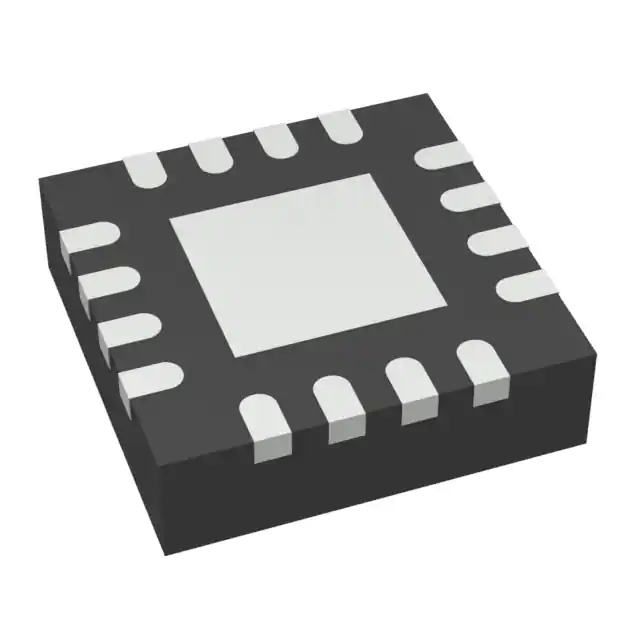
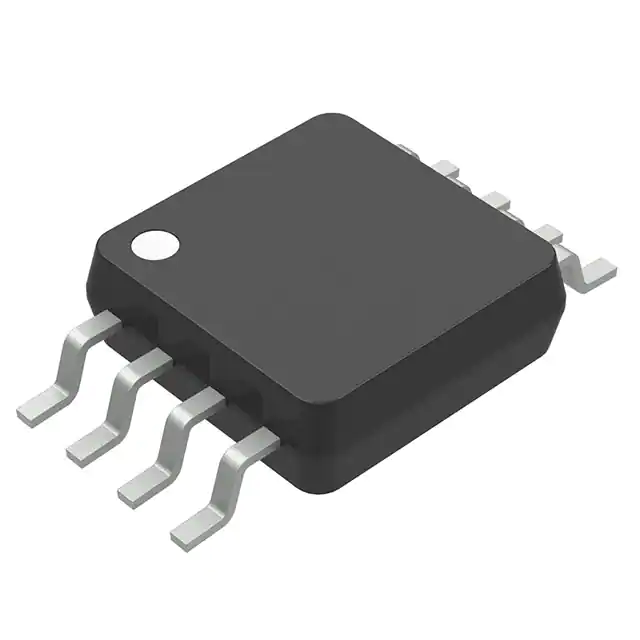
Texas Instruments ADS8350IRTER
- Part No.:
- ADS8350IRTER
- Manufacturer:
- Texas Instruments
- Category:
- Analog to Digital Converters (ADC)
- Package:
- 16-WFQFN Exposed Pad
- Datasheet:
-
 ADS8350IRTER.pdf
- Description:
- IC ADC 16BIT SAR 16WQFN
- Quantity:
- Payment:

- Shipping:

Inventory:2,958
Please send an inquiry. Send us your inquiry, and we will respond immediately.
Product details
Overview
ADS8350IRTER from Texas Instruments is a dual, 16-bit, simultaneous-sampling analog-to-digital converter (ADC) with pseudo-differential inputs, 750 kSPS throughput, ±2.5 LSB max INL, 85-dB SNR, and WQFN-16 (3 mm × 3 mm) package - used in motor control position measurement with SinCos encoders.
For engineers reviewing the ADS8350IRTER datasheet, ADS8350IRTER pinout, ADS8350IRTER application, or ADS8350IRTER equivalent, this page delivers verified electrical specs, thermal performance at –40°C to 125°C, dual-channel timing matching (40 ps), and real-world implementation guidance for industrial automation and power quality systems.
Technical Context
The ADS8350IRTER implements successive approximation register (SAR) architecture with independent sample-and-hold for each of two ADC channels, enabling true simultaneous sampling. Its pseudo-differential input structure accepts AINP_x/AINM_x pairs referenced to dedicated REFGND_x pins, supporting flexible external reference configurations (REFIN-A/REFIN-B).
It uses a simple 4-wire SPI-compatible serial interface (SCLK, CS, SDO-A, SDO-B) operating up to 24 MHz, with deterministic conversion time of 590 ns and acquisition time of 120 ns. All timing parameters are fully specified across the extended industrial temperature range.
Key Specifications
| Parameter | Value and Actual Design Meaning |
|---|---|
| Resolution | 16-bit - delivers 65,536 distinct output codes for high-precision voltage digitization |
| Sampling Rate | 750 kSPS - supports real-time capture of fast transients in motor current or voltage waveforms |
| INL (Max) | ±2.5 LSB - ensures accurate end-point linearity critical for closed-loop feedback accuracy |
| SNR | 85 dB - enables >13.8 effective number of bits (ENOB) for clean signal reconstruction |
| THD | –96 dB - minimizes harmonic distortion in precision measurement of sinusoidal inputs |
| Aperture Jitter | 10 ps - limits sampling uncertainty to <0.025% of full-scale error at 100 kHz input |
| Channel Matching | tA match ≤40 ps - guarantees sub-degree phase alignment between dual channels for vector control |
Pinout & Package
ADS8350IRTER is housed in a thermally enhanced 16-pin WQFN package (3 mm × 3 mm, 0.5-mm pitch) with exposed thermal pad. The package supports high-density PCB layouts and efficient heat dissipation under continuous 40–45 mW operation.
| Pin/Terminal | Circuit Role | Design Meaning |
|---|---|---|
| AINP-A / AINP-B | Positive analog input (ADC_A / ADC_B) | Differential pair inputs accepting up to ±VREF swing relative to respective REFGND |
| AINM-A / AINM-B | Negative analog input (ADC_A / ADC_B) | Completes pseudo-differential pair; referenced to same REFGND as corresponding AINP |
| REFIN-A / REFIN-B | Reference voltage input (ADC_A / ADC_B) | Accepts 2.25 V to AVDD/2; sets full-scale range independently per channel |
| REFGND-A / REFGND-B | Reference ground (ADC_A / ADC_B) | Isolated analog ground return for reference and input circuitry - must be routed separately from main GND |
| SDO-A / SDO-B | Serial data output (ADC_A / ADC_B) | 3-state outputs delivering 16-bit conversion results MSB-first on separate lines |
| SCLK / CS | Serial clock / chip select | Standard SPI interface signals; CS falling edge initiates conversion sequence |
| AVDD / DVDD | Analog / digital supply | AVDD = 4.5–5.5 V (5 V typical); DVDD = 1.65–5.5 V - allows mixed-voltage host interfacing |
| GND (Pins 8, 13) | Power ground | Common return for AVDD and DVDD; requires low-impedance connection to thermal pad |
Key Features
| Feature | Design Value |
|---|---|
| Pseudo-differential inputs | Enables rejection of common-mode noise on motor-phase or current-sense signals without requiring differential amplifiers |
| Simultaneous sampling | Eliminates inter-channel phase skew - essential for accurate Park/Clarke transforms in FOC motor drives |
| Extended temperature range | Full 16-bit performance guaranteed from –40°C to +125°C - suitable for under-hood or factory-floor deployment |
| Low aperture jitter (10 ps) | Preserves signal integrity at high input frequencies, enabling accurate FFT-based power quality analysis |
| Independent reference inputs | Allows channel-specific gain scaling - e.g., one channel for voltage, another for current with different shunt ranges |
Applications
| Motor Control | Power Quality Measurement |
|---|---|
Use Scenario: Real-time position sensing in servo drives using SinCos encoder feedback signals. IC Role / Device Role / Timing Role: Dual ADC simultaneously digitizes sine and cosine encoder outputs to compute absolute angular position with <0.01° resolution. Use Value: 40-ps inter-channel timing match ensures zero phase-induced angle error during rapid rotor acceleration. | Use Scenario: Monitoring voltage and current waveforms in three-phase distribution panels for harmonic distortion analysis. IC Role / Device Role / Timing Role: Simultaneously samples line voltage and neutral current on two phases to compute true RMS, THD, and flicker metrics. Use Value: 85-dB SNR and –96-dB THD enable detection of 0.001% harmonic content per IEC 61000-4-30 Class A compliance. |
| Protection Relays | Industrial Automation |
Use Scenario: Fault detection in medium-voltage breakers by monitoring current transients during short-circuit events. IC Role / Device Role / Timing Role: Captures pre-fault and fault-current waveforms at 750 kSPS to identify asymmetrical faults and trip within 1 ms. Use Value: 590-ns conversion time plus deterministic timing enables sub-cycle response for IEEE C37.112-2018 relay compliance. | Use Scenario: High-speed analog data acquisition in programmable logic controllers handling analog I/O modules. IC Role / Device Role / Timing Role: Digitizes multiple sensor inputs (pressure, temperature, strain) with synchronized timestamps for deterministic control loops. Use Value: Pin-compatible family (ADS7250/ADS7850/ADS8350) allows resolution scalability without PCB redesign. |
Equivalent & Alternatives
The following parts are listed as comparable options for similar dual-channel, simultaneous-sampling ADC applications.
| Alternative Part | Technical Difference | Application Difference | Selection Advice |
|---|---|---|---|
| ADS7850IRTER | 14-bit resolution, ±1.5 LSB max INL, 81-dB SNR, identical pinout and timing | Lower dynamic range suits cost-sensitive motor control where 12–14 bit precision suffices | Select when ENOB ≥13.2 bits is sufficient and system SNR budget allows 4-dB penalty |
| ADS8363IPWR | 16-bit, 1-MSPS, single-supply (2.7–5.5 V), but only 125°C max temp and no REFGND separation | Lacks isolated reference grounds - unsuitable for high-common-mode-noise environments like VFDs | Choose only for space-constrained designs needing higher speed and relaxed thermal/noise requirements |
Compared with ADS7850IRTER and ADS8363IPWR, the ADS8350IRTER uniquely combines 16-bit precision, simultaneous sampling with matched apertures, and dual isolated reference grounds - making it the only option for high-fidelity, noise-immune dual-channel acquisition in safety-critical industrial systems.
Availability
ADS8350IRTER is available at Aetrix Electronics and suitable for motor control, protection relays, and power quality measurement requiring stable component supply across extended temperature and long product lifecycles.
Supply support for ADS8350IRTER includes scheduled delivery planning, volume procurement assistance, BOM continuity management, traceable sourcing, and lifecycle availability coordination for OEM customers, industrial embedded developers, connected-device designers, and electronics production programs.
Manufacturer
Texas Instruments is a global semiconductor leader delivering analog, embedded processing, and connectivity solutions for industrial, automotive, and communications markets.
The ADSxx50 family was designed specifically for high-accuracy, dual-channel simultaneous sampling in harsh industrial environments - emphasizing timing fidelity, thermal robustness, and noise immunity over generic data acquisition.
FAQ
What is the maximum recommended reference voltage for ADS8350IRTER?
The ADS8350IRTER supports a reference input voltage (REFIN-A/REFIN-B) from 2.25 V to AVDD/2. With nominal AVDD = 5 V, the maximum usable reference is 2.5 V. Exceeding this limit risks violating the absolute maximum rating for analog input voltage (AINP_x to REFGND_x ≤ AVDD + 0.3 V), potentially causing measurement saturation or damage. Always maintain AVDD ≥ 2 × VREF for full-scale linearity.
Does ADS8350IRTER require external op-amps for pseudo-differential input conditioning?
No, the ADS8350IRTER accepts pseudo-differential inputs directly - AINP-x and AINM-x are referenced to their respective REFGND-x pins, eliminating the need for external instrumentation amplifiers in many applications. However, if the source impedance exceeds 1 kΩ or common-mode voltage exceeds the REFGND-x tolerance, an op-amp buffer (e.g., OPA322 as shown in TI's reference schematics) is recommended to maintain DC accuracy and settling performance.
How does the thermal pad on ADS8350IRTER affect PCB layout?
The exposed thermal pad on the ADS8350IRTER (WQFN-16) must be soldered to a solid copper pour connected to GND for optimal thermal performance. TI specifies RθJB = 7.3°C/W when properly attached - reducing junction temperature rise by ~30°C versus floating pad. Use ≥4 thermal vias (0.3-mm diameter) under the pad, filled or capped, and avoid splitting the GND plane beneath the device to prevent EMI coupling into sensitive analog inputs.
Can ADS8350IRTER operate with DVDD = 1.8 V while AVDD = 5 V?
Yes, ADS8350IRTER supports DVDD from 1.65 V to 5.5 V independently of AVDD (4.5–5.5 V). At DVDD = 1.8 V, digital I/O levels scale accordingly: VIH(min) = 1.26 V and VOL(max) = 0.36 V. This enables direct interfacing with 1.8-V microcontrollers or FPGAs without level shifters, provided timing margins (e.g., tD_CKDO = 3–20 ns) are validated under actual load conditions.
What is the significance of separate REFGND-A and REFGND-B pins on ADS8350IRTER?
Separate REFGND-A and REFGND-B pins provide independent analog ground returns for each ADC channel's reference and input circuitry. This isolation prevents crosstalk between channels caused by shared ground impedance - critical when measuring high-current and high-voltage signals simultaneously (e.g., motor phase current and bus voltage). Routing each REFGND to its own low-impedance path minimizes offset drift and improves CMRR beyond 74 dB across dc to 20 kHz.
ADS8350IRTER Specifications
- Product attributes
- Attribute value
- Manufacturer:
- Texas Instruments
- Series:
- -
- Package/Case:
- 16-WFQFN Exposed Pad
- Packaging:
- Tape & Reel (TR)
- Product Status:
- Active
- Number of Bits:
- 16
- Sampling Rate (Per Second):
- 750k
- Number of Inputs:
- 2
- Input Type:
- Pseudo-Differential
- Data Interface:
- SPI
- Configuration:
- S/H-ADC
- Ratio - S/H:ADC:
- 1:1
- Number of A/D Converters:
- 2
- Architecture:
- SAR
- Reference Type:
- External
- Voltage - Supply, Analog:
- 5V
- Voltage - Supply, Digital:
- 1.65V ~ 5.25V
- Features:
- Simultaneous Sampling
- Operating Temperature:
- -40°C ~ 125°C
- Supplier Device Package:
- 16-WQFN (3x3)
- Mounting Type:
- Surface Mount
- Grade:
- -
- Qualification:
- -
ADS8350IRTER FAQ
1.How can I place an order for ADS8350IRTER through Aetrix?
Please submit a Request for Quotation (RFQ) for ADS8350IRTER on Aetrix. Our sales agent will provide a competitive quotation and guide you through the order confirmation once you accept the terms.
2.Are the price and stock information for ADS8350IRTER reliable?
The price and inventory of ADS8350IRTER are updated periodically and may fluctuate due to market conditions. Stock and pricing data are typically refreshed every 24 hours. Quotation validity for ADS8350IRTER is usually 5 days.
3.What payment methods are accepted for ADS8350IRTER?
We accept Wire Transfer, PayPal, Credit Card, Western Union, MoneyGram, and Escrow for ADS8350IRTER transactions.
Note: Certain payment methods may incur a processing fee.
4.How is shipping managed for ADS8350IRTER?
ADS8350IRTER orders can be shipped via leading logistics carriers, including DHL, UPS, FedEx, TNT, or Registered Mail.
Once your ADS8350IRTER order is processed, you will receive an email with the shipment details and tracking number.
Note: Tracking information may take up to 24 hours to appear. Express delivery typically takes 3–5 business days.
5.How can I obtain technical support or documentation for ADS8350IRTER?
For technical support, including ADS8350IRTER datasheets, pinout diagrams, or application guidance, please contact our engineering support team. They can provide detailed documentation and assistance for your ADS8350IRTER requirements.
6.How does Aetrix verify that ADS8350IRTER is sourced from the original manufacturer or authorized distributors?
All ADS8350IRTER products on Aetrix are procured from qualified distributors and authorized channels. Our dedicated quality assurance team conducts strict verification, including traceability checks and, if necessary, third-party testing. This ensures that ADS8350IRTER meets industry standards.
7.What is the process for return or replacement of ADS8350IRTER?
All ADS8350IRTER units undergo pre-shipment inspection (PSI). If there is an issue with ADS8350IRTER, returns or replacements are accepted under the following conditions:
1.Quantity discrepancies, incorrect items, or visible external defects (such as breakage or corrosion), acknowledged by Aetrix.
2.The issue is reported within 90 days of delivery.
3.The ADS8350IRTER part is unused and in its original packaging.
Return procedure for ADS8350IRTER:
1.Submit a request within 90 days.
2.Obtain a Return Material Authorization (RMA) from Aetrix.
ADS8350IRTER Tags
-
ADC081C021CIMKX/NOPB
Texas Instruments
-
MCP3021A5T-E/OT
Microchip Technology
-
TLA2024IRUGR
Texas Instruments
-
MCP3221A5T-E/OT
Microchip Technology
-
MCP3221A5T-I/OT
Microchip Technology
-
MCP3221A4T-E/OT
Microchip Technology
-
MCP3221A6T-E/OT
Microchip Technology
-
MCP3221A0T-E/OT
Microchip Technology
-
MCP3221A1T-E/OT
Microchip Technology

-
ADC121S021CIMFX/NOPB
Texas Instruments
-
MCP3001-I/MS
Microchip Technology

-
MCP3001-I/SN
Microchip Technology
Tech Hub

A practical engineering guide to 3.3V and 5V logic compatibility, input thresholds, resistor dividers, translator ICs, MOSFET level shifting, I2C pull-ups, timing limits and power-sequencing risks.

The 74HC595 uses push-pull logic outputs, while the TPIC6B595 uses 50 V open-drain DMOS sinks for higher-power loads. This guide compares timing, current limits, 3.3 V interfacing, load wiring, thermal…

The 74HC595 converts serial data into eight stable parallel outputs. This guide covers pin functions, shift and storage timing, OE and MR behavior, drive-current limits, cascading, voltage compatibilit…

A technical comparison of level-sensitive latches and edge-triggered flip-flops, covering timing windows, setup and hold limits, master–slave operation, time borrowing, race-through, HDL inference and…

A D latch stores one bit while Enable controls when data can pass. This reference covers gate-level operation, truth tables, transparency, setup and hold timing, LE versus OE, common ICs and practical …

An SR latch stores one bit through cross-coupled feedback. This engineering reference covers NOR and NAND implementations, truth tables, forbidden-state recovery, gated operation, switch debouncing, fa…

Latch circuits retain one bit through feedback. This technical reference covers SR and D latches, truth tables, transparency, timing limits, latch-versus-flip-flop behavior, applications and common log…

An engineering guide to LED driver operation, constant-current and constant-voltage outputs, linear and switching topologies, dimming, IC selection, calculations, replacement compatibility, and fault c…

Operational amplifier guide covering op amp basics, feedback, ideal vs real op amps, common configurations, buffer circuits, offset, bias current, gain-bandwidth, slew rate, rail-to-rail limits and sel…

Jumper cables guide covering safe connection order, red and black clamp placement, final ground connection, cable gauge, length, clamp quality, copper vs CCA cables, jump starter comparison and battery…


