
 My Inquiry
 My Account


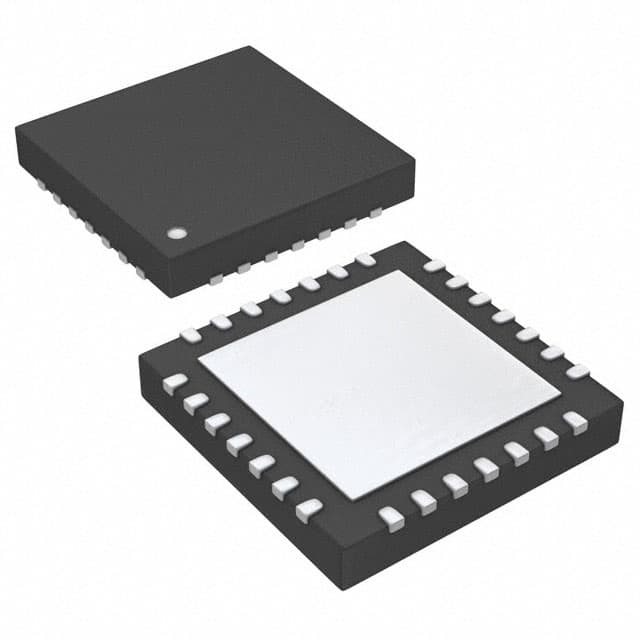
Texas Instruments ADS8380IBRHPT
- Part No.:
- ADS8380IBRHPT
- Manufacturer:
- Texas Instruments
- Category:
- Analog to Digital Converters (ADC)
- Package:
- 28-VQFN Exposed Pad
- Datasheet:
-
 ADS8380IBRHPT.pdf
- Description:
- IC ADC 18BIT SAR 28VQFN
- Quantity:
- Payment:

- Shipping:

Inventory:4,626
Please send an inquiry. Send us your inquiry, and we will respond immediately.
Product details
Overview
ADS8380IBRHPT from Texas Instruments is an 18-bit, 600-kHz pseudo-differential SAR analog-to-digital converter with integrated 4.096-V reference, onboard reference buffer, and high-speed serial interface (up to 40 MHz). It delivers ±4 LSB max INL, 91 dB SINAD at 1 kHz, and 119 dB SFDR - enabling precision data acquisition in medical instruments and optical networking systems.
For engineers reviewing the ADS838380IBRHPT datasheet, ADS8380IBRHPT pinout, ADS8380IBRHPT application, or ADS8380IBRHPT equivalent, key selection considerations include its 28-pin 6×6 QFN package, 18-bit NMC guarantee over –40°C to +85°C, zero-latency operation, selectable 2's complement/straight binary output format, and micropower nap mode (3 mA) and power-down (2 µA) states.
Technical Context
The ADS8380IBRHPT implements a capacitor-based successive-approximation register (SAR) architecture with inherent sample-and-hold, supporting pseudo-differential input (0 V to 4.2 V) and internal reference buffering. Its conversion control uses qualified CONVST and CS signals, with three defined quiet zones (tquiet1–tquiet3) required to maintain specified AC performance.
Digital interface operates in SPI-compatible mode with frame sync (FS) and serial clock (SCLK) up to 40 MHz, delivering 18-bit MSB-first data on SDO. Power management includes nap mode (3 mA, 300 ns wake-up) and full power-down (2 µA), with internal reference settling time of 4 ms when resuming from power-down with 1-µF||0.1-µF on REFOUT.
Key Specifications
| Parameter | Value and Actual Design Meaning |
|---|---|
| Resolution | 18-bit NMC guaranteed over –40°C to +85°C - ensures no missing codes in full industrial temperature range. |
| Sample Rate | 600 kHz maximum throughput - supports real-time acquisition in high-bandwidth transducer interfaces. |
| INL | ±4 LSB max endpoint INL - defines absolute accuracy for calibration-critical applications like magnetometers. |
| SINAD / SFDR | 91 dB / 119 dB at 1 kHz - enables >14.9 ENOB for high-fidelity signal reconstruction in optical networking. |
| Reference | Integrated 4.096-V reference with 25 ppm/°C drift and 10 µA source capability - eliminates external reference component count. |
| Power Modes | 115 mW (active), 15 mW (nap), 10 µW (power-down) - allows dynamic power scaling in battery-powered instrumentation. |
| Interface Speed | Up to 40 MHz SCLK - supports low-latency readout without requiring external FIFO or DMA assistance. |
Pinout & Package
ADS8380IBRHPT is housed in a 28-pin, 6 mm × 6 mm, 0.5-mm pitch QFN package (RHP designation) with exposed thermal pad. Pin functions are validated per TI SLAS387A datasheet Figure 1 and Terminal Functions table.
| Pin/Terminal | Circuit Role | Design Meaning |
|---|---|---|
| +IN / –IN | Analog input pair | Pseudo-differential input channel accepting 0 V to 4.2 V span - rejects common-mode noise while simplifying sensor interfacing vs fully differential. |
| REFIN / REFM / REFOUT | Reference interface | REFIN accepts 2.5–4.2 V external reference; REFOUT provides buffered 4.096 V internal reference; REFM is dedicated analog ground return. |
| CONVST / CS / FS | Conversion control | CONVST initiates sampling when qualified by low CS; FS enables frame-sync readout - supports deterministic timing in synchronized multi-channel systems. |
| SDO / SCLK / SB/2C | Digital output interface | MSB-first serial output with programmable format (2's complement or straight binary via SB/2C pin) - simplifies FPGA/CPU data parsing without software bit manipulation. |
| BUSY / PD | Status & power control | BUSY indicates active conversion; PD forces hardware reset and ultra-low-power state - enables precise power gating and interrupt-driven readout. |
| +VA / +VBD / AGND / BDGND | Supply & ground | +VA (4.75–5.25 V) powers analog core; +VBD (2.7–5.25 V) powers digital I/O; separate AGND/BDGND pins enforce clean analog-digital partitioning. |
Key Features
| Feature | Design Value |
|---|---|
| Onboard 4.096-V reference | Eliminates need for external precision reference IC and associated decoupling, reducing BOM count and layout area by ≥3 components. |
| Zero-latency operation | Delivers conversion result immediately after BUSY deassertion - enables real-time closed-loop control without pipeline delay penalties. |
| Selectably formatted output | SB/2C pin selects 2's complement (for bipolar signals) or straight binary (for unipolar sensors) - avoids firmware sign-extension or offset subtraction. |
| Quiet-zone timing compliance | Defined tquiet1/tquiet2/tquiet3 windows ensure specified AC performance is met without iterative board-level timing tuning. |
| Nap mode with fast wake-up | 300 ns resume time from 3 mA nap state - allows microsecond-scale duty cycling between conversions without sacrificing throughput. |
Applications
| Medical Instrumentation | Optical Networking |
|---|---|
Use Scenario: High-resolution ECG/EEG front-end digitizing low-amplitude bio-signals with minimal noise injection. IC Role / Device Role / Timing Role: Primary ADC capturing 18-bit samples at 600 kHz with onboard reference stability and low THD (–112 dB). Use Value: Enables detection of sub-microvolt neural activity without external reference drift compensation or post-acquisition linearization. | Use Scenario: Monitoring laser diode bias current and photodiode feedback in DWDM transceivers. IC Role / Device Role / Timing Role: Precision current/voltage monitor ADC with 91 dB SINAD and 119 dB SFDR at 1 kHz. Use Value: Supports accurate real-time power control and fault detection across C-band wavelengths without SNR degradation from reference noise. |
| Transducer Interface | Magnetometer Systems |
Use Scenario: Digitizing outputs from strain-gauge bridges and RTDs in industrial process control loops. IC Role / Device Role / Timing Role: Pseudo-differential ADC rejecting common-mode noise from long sensor cables while maintaining 18-bit linearity. Use Value: Achieves ±4 LSB INL over temperature without system-level calibration, reducing factory test time and firmware complexity. | Use Scenario: Reading fluxgate or AMR magnetometer outputs requiring ultra-low noise and high DC stability. IC Role / Device Role / Timing Role: Low-drift (25 ppm/°C), low-noise (40 µV RMS) ADC with integrated reference for absolute field measurement. Use Value: Delivers <150 nT resolution in handheld compass modules without external reference trimming or temperature lookup tables. |
Equivalent & Alternatives
The following parts are listed as comparable options for similar high-precision SAR ADC applications.
| Alternative Part | Technical Difference | Application Difference | Selection Advice |
|---|---|---|---|
| ADS8381IRHPT | 18-bit, 500-kHz, same 28-pin QFN but ±4 LSB max INL spec applies only at 25°C - not guaranteed over full –40°C to +85°C range. | Less suitable for uncalibrated industrial environments where temperature-induced INL drift must be bounded. | Choose ADS8380IBRHPT when full-temperature NMC and INL guarantee are mandatory for production calibration. |
| ADS8382IRHPT | 16-bit, 600-kHz, pseudo-differential, identical package and interface - but lower resolution and ±2 LSB max INL. | Appropriate for cost-sensitive applications where 16-bit ENOB suffices and 18-bit linearity is noncritical. | Choose ADS8380IBRHPT when 18-bit absolute accuracy and >14.9 ENOB at 1 kHz are required for signal fidelity. |
Compared with ADS8381IRHPT and ADS8382IRHPT, the ADS8380IBRHPT uniquely guarantees 18-bit no-missing-codes and ±4 LSB INL across –40°C to +85°C, supports higher sample rate than ADS8381, and delivers superior dynamic performance (91 dB SINAD vs ≤89 dB) essential for metrology-grade acquisition.
Availability
ADS8380IBRHPT is available at Aetrix Electronics and suitable for medical instrumentation, optical networking, transducer interface, and magnetometer systems requiring stable component supply, long-term lifecycle support, and guaranteed industrial-temperature performance.
Supply support for ADS8380IBRHPT includes scheduled delivery planning, volume procurement assistance, BOM continuity management, traceable sourcing, and lifecycle availability coordination for OEM customers, industrial embedded developers, connected-device designers, and electronics production programs.
Manufacturer
Texas Instruments is a global semiconductor company specializing in analog and embedded processing technologies, with leadership in precision data converters and high-reliability industrial ICs.
The ADS8380IBRHPT belongs to TI's high-speed SAR ADC family designed for applications demanding 18-bit accuracy, low power, and integrated reference - targeting medical diagnostics, test equipment, and high-end industrial sensing.
FAQ
What is the guaranteed integral nonlinearity (INL) specification for ADS8380IBRHPT over temperature?
The ADS8380IBRHPT guarantees ±4 LSB maximum integral nonlinearity over the full industrial temperature range of –40°C to +85°C, as specified in the SLAS387A datasheet Table 1. This endpoint INL specification ensures consistent absolute accuracy without requiring system-level calibration across operating conditions, distinguishing it from variants like ADS8381 that specify tighter INL only at 25°C.
Does ADS8380IBRHPT require an external reference, or does it include an internal one?
The ADS8380IBRHPT includes an onboard 4.096-V internal voltage reference with 25 ppm/°C drift and 10 µA source capability, eliminating the need for an external reference in most applications. The device also supports external reference operation via the REFIN pin (2.5 V to 4.2 V range), providing design flexibility for systems requiring ultra-low-drift or custom reference voltages.
What power-saving modes does ADS8380IBRHPT support, and what are their current draw values?
The ADS8380IBRHPT supports three power states: active mode (25 mA at 600 kHz), nap mode (3 mA with 300 ns wake-up), and power-down mode (2 µA). Nap mode reduces power during inter-conversion intervals while retaining configuration and reference bias; power-down resets internal logic and disables all outputs, requiring 4 ms for internal reference re-stabilization upon wake-up.
How is the output data format selected on ADS8380IBRHPT?
The output data format of ADS8380IBRHPT is selected using the SB/2C pin: logic low configures straight binary output (0x00000 to 0x3FFFF for 0 V to full scale), while logic high selects 2's complement format (0x20000 to 0x3FFFF for positive, 0x00000 to 0x1FFFF for negative values). This hardware-selectable format avoids firmware overhead for sign handling in bipolar sensor applications.
What package type and pin count does ADS8380IBRHPT use, and are thermal pads supported?
The ADS8380IBRHPT uses a 28-pin, 6 mm × 6 mm QFN package (RHP designation) with 0.5-mm pitch and an exposed thermal pad. The thermal pad must be soldered to a PCB thermal plane for proper heat dissipation and electrical grounding, as specified in TI's packaging guidelines - critical for maintaining 115 mW power dissipation within safe junction temperature limits.
ADS8380IBRHPT Specifications
- Product attributes
- Attribute value
- Manufacturer:
- Texas Instruments
- Series:
- microPOWER™
- Package/Case:
- 28-VQFN Exposed Pad
- Packaging:
- Tape & Reel (TR)
- Product Status:
- Active
- Number of Bits:
- 18
- Sampling Rate (Per Second):
- 600k
- Number of Inputs:
- 1
- Input Type:
- Pseudo-Differential, Single Ended
- Data Interface:
- SPI
- Configuration:
- S/H-ADC
- Ratio - S/H:ADC:
- 1:1
- Number of A/D Converters:
- 1
- Architecture:
- SAR
- Reference Type:
- External, Internal
- Voltage - Supply, Analog:
- 5V
- Voltage - Supply, Digital:
- 2.7V ~ 5.25V
- Features:
- -
- Operating Temperature:
- -40°C ~ 85°C
- Supplier Device Package:
- 28-QFN (6x6)
- Mounting Type:
- Surface Mount
- Grade:
- -
- Qualification:
- -
ADS8380IBRHPT FAQ
1.How can I place an order for ADS8380IBRHPT through Aetrix?
Please submit a Request for Quotation (RFQ) for ADS8380IBRHPT on Aetrix. Our sales agent will provide a competitive quotation and guide you through the order confirmation once you accept the terms.
2.Are the price and stock information for ADS8380IBRHPT reliable?
The price and inventory of ADS8380IBRHPT are updated periodically and may fluctuate due to market conditions. Stock and pricing data are typically refreshed every 24 hours. Quotation validity for ADS8380IBRHPT is usually 5 days.
3.What payment methods are accepted for ADS8380IBRHPT?
We accept Wire Transfer, PayPal, Credit Card, Western Union, MoneyGram, and Escrow for ADS8380IBRHPT transactions.
Note: Certain payment methods may incur a processing fee.
4.How is shipping managed for ADS8380IBRHPT?
ADS8380IBRHPT orders can be shipped via leading logistics carriers, including DHL, UPS, FedEx, TNT, or Registered Mail.
Once your ADS8380IBRHPT order is processed, you will receive an email with the shipment details and tracking number.
Note: Tracking information may take up to 24 hours to appear. Express delivery typically takes 3–5 business days.
5.How can I obtain technical support or documentation for ADS8380IBRHPT?
For technical support, including ADS8380IBRHPT datasheets, pinout diagrams, or application guidance, please contact our engineering support team. They can provide detailed documentation and assistance for your ADS8380IBRHPT requirements.
6.How does Aetrix verify that ADS8380IBRHPT is sourced from the original manufacturer or authorized distributors?
All ADS8380IBRHPT products on Aetrix are procured from qualified distributors and authorized channels. Our dedicated quality assurance team conducts strict verification, including traceability checks and, if necessary, third-party testing. This ensures that ADS8380IBRHPT meets industry standards.
7.What is the process for return or replacement of ADS8380IBRHPT?
All ADS8380IBRHPT units undergo pre-shipment inspection (PSI). If there is an issue with ADS8380IBRHPT, returns or replacements are accepted under the following conditions:
1.Quantity discrepancies, incorrect items, or visible external defects (such as breakage or corrosion), acknowledged by Aetrix.
2.The issue is reported within 90 days of delivery.
3.The ADS8380IBRHPT part is unused and in its original packaging.
Return procedure for ADS8380IBRHPT:
1.Submit a request within 90 days.
2.Obtain a Return Material Authorization (RMA) from Aetrix.
ADS8380IBRHPT Tags
-
ADC081C021CIMKX/NOPB
Texas Instruments

-
MCP3021A5T-E/OT
Microchip Technology
-
TLA2024IRUGR
Texas Instruments
-
MCP3221A5T-E/OT
Microchip Technology
-
MCP3221A5T-I/OT
Microchip Technology
-
MCP3221A4T-E/OT
Microchip Technology
-
MCP3221A6T-E/OT
Microchip Technology
-
MCP3221A0T-E/OT
Microchip Technology
-
MCP3221A1T-E/OT
Microchip Technology

-
ADC121S021CIMFX/NOPB
Texas Instruments
-
MCP3001-I/MS
Microchip Technology

-
MCP3001-I/SN
Microchip Technology
Tech Hub

A practical engineering guide to 3.3V and 5V logic compatibility, input thresholds, resistor dividers, translator ICs, MOSFET level shifting, I2C pull-ups, timing limits and power-sequencing risks.

The 74HC595 uses push-pull logic outputs, while the TPIC6B595 uses 50 V open-drain DMOS sinks for higher-power loads. This guide compares timing, current limits, 3.3 V interfacing, load wiring, thermal…

The 74HC595 converts serial data into eight stable parallel outputs. This guide covers pin functions, shift and storage timing, OE and MR behavior, drive-current limits, cascading, voltage compatibilit…

A technical comparison of level-sensitive latches and edge-triggered flip-flops, covering timing windows, setup and hold limits, master–slave operation, time borrowing, race-through, HDL inference and…

A D latch stores one bit while Enable controls when data can pass. This reference covers gate-level operation, truth tables, transparency, setup and hold timing, LE versus OE, common ICs and practical …

An SR latch stores one bit through cross-coupled feedback. This engineering reference covers NOR and NAND implementations, truth tables, forbidden-state recovery, gated operation, switch debouncing, fa…

Latch circuits retain one bit through feedback. This technical reference covers SR and D latches, truth tables, transparency, timing limits, latch-versus-flip-flop behavior, applications and common log…

An engineering guide to LED driver operation, constant-current and constant-voltage outputs, linear and switching topologies, dimming, IC selection, calculations, replacement compatibility, and fault c…

Operational amplifier guide covering op amp basics, feedback, ideal vs real op amps, common configurations, buffer circuits, offset, bias current, gain-bandwidth, slew rate, rail-to-rail limits and sel…

Jumper cables guide covering safe connection order, red and black clamp placement, final ground connection, cable gauge, length, clamp quality, copper vs CCA cables, jump starter comparison and battery…


