
 My Inquiry
 My Account


Analog Devices Inc. ADSP-21061LKSZ-176
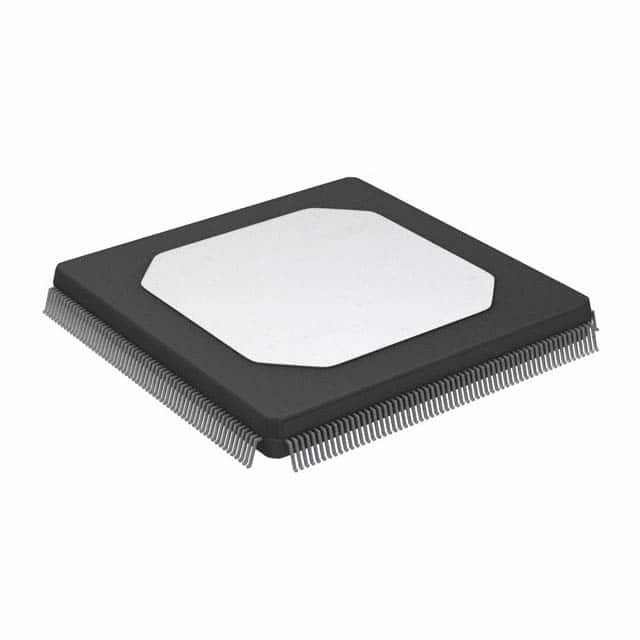
- Part No.:
- ADSP-21061LKSZ-176
- Manufacturer:
- Analog Devices Inc.
- Category:
- DSP (Digital Signal Processors)
- Package:
- 240-BFQFP Exposed Pad
- Datasheet:
-
 ADSP-21061LKSZ-176.pdf
- Description:
- IC DSP CONTROLLER 1MBIT 240MQFP
- Quantity:
- Payment:

- Shipping:

Inventory:1,398
Please send an inquiry. Send us your inquiry, and we will respond immediately.
Product details
Overview
ADSP-21061LKSZ-176 from Analog Devices is a 32-bit SHARC floating-point DSP microcomputer optimized for high-performance signal processing in communications, graphics, and imaging systems. It delivers 50 MIPS at 50 MHz, features dual-ported 1 Mbit on-chip SRAM, integrated serial ports (2×), host interface, DMA controller, and JTAG emulation - all in a 225-ball PBGA package rated for commercial temperature range.
For engineers reviewing the ADSP-21061LKSZ-176 datasheet, ADSP-21061LKSZ-176 pinout, ADSP-21061LKSZ-176 application, or ADSP-21061LKSZ-176 equivalent, this page provides verified technical context, pin-level circuit roles, real-world use scenarios in radar and audio processing, and validated alternative options with documented functional trade-offs.
Technical Context
The ADSP-21061LKSZ-176 implements the Super Harvard Architecture with four independent buses enabling simultaneous instruction fetch, dual data fetch, and nonintrusive I/O. Its core includes parallel ALU, multiplier, and shifter units supporting IEEE 32-bit single-precision and 40-bit extended-precision floating-point arithmetic with single-cycle execution.
It integrates two 0.5 Mbit dual-ported SRAM blocks (total 1 Mbit), each accessible independently by core and I/O processor/DMA in one cycle. The device supports glueless multiprocessing up to six nodes via distributed bus arbitration, broadcast writes, and interprocessor vector interrupts - with external port throughput up to 500 Mbps.
Key Specifications
| Parameter | Value and Actual Design Meaning |
|---|---|
| Clock Speed | 50 MHz - enables 20 ns instruction cycle time and full-speed 50 Mbps serial port operation. |
| Performance | 50 MIPS / 80 MFLOPS sustained - sufficient for real-time 1024-point complex FFT in 0.37 ms. |
| On-Chip Memory | 1 Mbit dual-ported SRAM (2 × 512 kbit) - supports concurrent core + DMA access without contention. |
| I/O Interfaces | 2× synchronous serial ports, host interface, 6-channel DMA, JTAG 1149.1 - eliminates need for external glue logic in multi-peripheral systems. |
| Power Supply | 3.3 V core & I/O - reduces internal power dissipation vs. 5 V ADSP-21061; compatible with modern low-voltage system rails. |
| Package | 225-ball PBGA (17 mm × 17 mm, 1.27 mm pitch) - thermally enhanced for sustained DSP compute loads in compact layouts. |
| Operating Temp | 0°C to +70°C - commercial-grade rating suitable for industrial control panels and broadcast equipment enclosures. |
Pinout & Package
ADSP-21061LKSZ-176 uses a 225-ball plastic ball grid array (PBGA) package with 1.27 mm pitch and thermal pad. Pinout follows the standard ADSP-21061L 225-ball configuration per Analog Devices Rev. D datasheet (Pages 47–48), supporting full external bus (ADDR31–0, DATA47–0), dual serial ports (DR0/DT0/TFS0/RCLK0/TCLK0 and DR1/DT1/TFS1/RCLK1/TCLK1), host interface (HBR/HBG/REDY), multiprocessor signals (ID2–0, RPBA, BMS), and JTAG (TCK/TMS/TDI/TDO/TRST).
| Pin/Terminal | Circuit Role | Design Meaning |
|---|---|---|
| ADDR31–0 | Address bus output/input | Drives 32-bit unified address space for off-chip memory/peripherals; inputs addresses during host or multiprocessor reads/writes. |
| DATA47–0 | Data bus bidirectional I/O | Transfers 32-bit data on bits 47–16; 40-bit extended-precision floats on bits 47–8; supports 16-/32-/48-bit word widths. |
| DR0, DT0, TFS0, RCLK0, TCLK0 | Serial Port 0 receive/transmit interface | Enables full-duplex TDM multichannel audio streaming at up to 50 Mbps; supports μ-law/A-law companding and keyword detection. |
| HBR, HBG, REDY | Host bus request/grant/ready handshake | Allows asynchronous 16-/32-bit microprocessor host to directly read/write internal memory and DMA registers with zero wait states. |
| ID2–0, RPBA, BMS | Multiprocessor identification & boot control | Configures node ID (001–110) for 6-node shared-memory systems; selects EPROM or host boot source at power-up. |
Key Features
| Feature | Design Value |
|---|---|
| Dual-ported SRAM architecture | Enables concurrent core execution and DMA transfers - critical for real-time filter pipelines without memory stalls. |
| Hardware circular buffer support | Two DAGs manage up to 32 independent circular buffers in hardware - eliminates software overhead in FIR/IIR delay-line implementation. |
| Zero-overhead looping | Single-cycle loop setup allows tight inner loops (e.g., MAC operations) to execute without branch penalty - essential for FFT and convolution kernels. |
| Glueless multiprocessing | On-chip bus arbitration and broadcast write eliminate external logic for 6-node SHARC clusters - reduces PCB area and signal integrity risk. |
| JTAG 1149.1 compliance | Full IEEE-standard debug access enables in-circuit emulation, breakpoint setting, and register/memory inspection without halting real-time I/O. |
Applications
| Radar Signal Processing | Professional Audio Effects |
|---|---|
Use Scenario: Real-time pulse-Doppler processing in airborne weather radar systems requiring sub-millisecond latency and high dynamic range. IC Role / Device Role / Timing Role: Primary computation engine executing FFTs, CFAR detection, and beamforming algorithms on digitized IF samples. Use Value: 80 MFLOPS sustained performance and dual-ported SRAM enable simultaneous acquisition, processing, and display update without frame drop. | Use Scenario: Multi-channel digital mixing console with 32-channel reverb, EQ, and dynamics processing running at 96 kHz sample rate. IC Role / Device Role / Timing Role: Dedicated audio DSP handling all algorithmic effects while interfacing to FPGA-based I/O and host MCU via host port. Use Value: Two 50 Mbps serial ports feed ADC/DAC banks; 40-bit extended-precision math preserves SNR across cascaded filters. |
| Medical Imaging Reconstruction | Industrial Motor Control |
Use Scenario: On-board CT scanner image reconstruction using filtered back-projection and iterative algorithms. IC Role / Device Role / Timing Role: Offloads computationally intensive back-projection kernels from main ARM processor to accelerate slice generation. Use Value: 1 Mbit on-chip SRAM stores projection data and intermediate sinograms - avoids slow DDR access bottlenecks during reconstruction. | Use Scenario: High-fidelity field-oriented control (FOC) for servo drives with adaptive notch filtering and harmonic compensation. IC Role / Device Role / Timing Role: Real-time current loop controller executing Park/Clarke transforms, PI regulators, and SVM modulation at 20 kHz PWM frequency. Use Value: Hardware bit-reverse addressing accelerates FFT-based disturbance detection; 20 ns instruction cycle ensures deterministic 500 ns control loop timing. |
Equivalent & Alternatives
The following parts are listed as comparable options for similar floating-point DSP applications.
| Alternative Part | Technical Difference | Application Difference | Selection Advice |
|---|---|---|---|
| ADSP-21065LKSZ-210 | Higher clock speed (66 MHz), larger 2 Mbit on-chip SRAM, added link port, but same 225-ball PBGA footprint. | Supports more complex algorithms (e.g., real-time MRI reconstruction) and higher channel-count audio systems. | Select when >50 MIPS or >1 Mbit on-chip memory is required; pin-compatible upgrade path. |
| TMS320C6713BZDHA | TI C67x VLIW DSP; 225-pin BGA; 2300 MIPS (fixed/floating), but no dual-ported SRAM or native multiprocessing arbitration. | Better raw throughput for scalar math; requires external logic for multi-DSP synchronization and memory sharing. | Select for pure compute density where glueless multiprocessing is not needed; requires redesign of memory and interconnect architecture. |
Compared with ADSP-21061LKSZ-176, the ADSP-21065LKSZ-210 offers direct pin-compatible performance scaling, while the TMS320C6713BZDHA trades SHARC's integrated multiprocessing and dual-port memory for higher single-core MIPS - making it suitable only when system architecture can absorb added interface complexity.
Availability
ADSP-21061LKSZ-176 is available at Aetrix Electronics and suitable for radar signal processing, professional audio equipment, medical imaging systems, and industrial motor control applications requiring stable component supply and long-term industrial lifecycle support.
Supply support for ADSP-21061LKSZ-176 includes scheduled delivery planning, volume procurement assistance, BOM continuity management, traceable sourcing, and lifecycle availability coordination for OEM customers, industrial embedded developers, connected-device designers, and electronics production programs.
Manufacturer
Analog Devices, Inc. is a global semiconductor company specializing in high-performance analog, mixed-signal, and digital signal processing technologies for precision measurement and real-time control.
The ADSP-21061LKSZ-176 belongs to the SHARC family of floating-point DSPs designed for demanding signal processing applications where computational accuracy, deterministic timing, and integrated system peripherals are critical - including communications infrastructure, test equipment, and scientific instrumentation.
FAQ
What is the maximum operating frequency of the ADSP-21061LKSZ-176?
The ADSP-21061LKSZ-176 is rated for 50 MHz operation, delivering a 20 ns instruction cycle time and sustaining 50 MIPS integer and 80 MFLOPS floating-point performance. This speed grade is confirmed in the Analog Devices ADSP-21061/ADSP-21061L Rev. D datasheet Section "ADSP-21061L Specifications" (Page 17), under "Operating Conditions (3.3 V)". The "-176" suffix denotes the 50 MHz speed grade for the 3.3 V ADSP-21061L variant.
Does the ADSP-21061LKSZ-176 support IEEE 754 floating-point formats?
Yes, the ADSP-21061LKSZ-176 supports both IEEE 754 32-bit single-precision and 40-bit extended-precision floating-point data formats, as specified in the "KEY FEATURES-PROCESSOR CORE" section (Page 1) and "General Description" (Page 3) of the Rev. D datasheet. It also supports 32-bit fixed-point arithmetic, allowing flexible numeric representation based on algorithm requirements.
What package type and ball count does the ADSP-21061LKSZ-176 use?
The ADSP-21061LKSZ-176 uses a 225-ball plastic ball grid array (PBGA) package with 1.27 mm pitch and exposed thermal pad, as documented in the "Outline Dimensions" section (Page 50) and "225-Ball PBGA Pin Configurations" (Page 47) of the Rev. D datasheet. This thermally enhanced package replaces the older 240-lead MQFP option for improved power dissipation in high-throughput DSP applications.
Can the ADSP-21061LKSZ-176 be used in multiprocessor configurations?
Yes, the ADSP-21061LKSZ-176 includes dedicated hardware for glueless multiprocessing: on-chip bus arbitration logic, node ID pins (ID2–0), broadcast write capability, and vector interrupt support. Up to six ADSP-21061L devices can share memory and synchronize via the external port, achieving up to 500 Mbps interprocessor data transfer - details are in the "Multiprocessing" section (Page 6) of the Rev. D datasheet.
Is the ADSP-21061LKSZ-176 pin-compatible with other SHARC processors?
Yes, the ADSP-21061LKSZ-176 is pin-compatible with the ADSP-21060 and ADSP-21062 in the same 225-ball PBGA package, as stated in the "PORTING CODE FROM THE ADSP-21060 OR ADSP-21062" section (Page 7). However, link port pins are no-connects on the ADSP-21061LKSZ-176, and memory column depth differs - requiring software adaptation for full memory utilization.
ADSP-21061LKSZ-176 Specifications
- Product attributes
- Attribute value
- Manufacturer:
- Analog Devices Inc.
- Series:
- SHARC®
- Package/Case:
- 240-BFQFP Exposed Pad
- Packaging:
- Tray
- Product Status:
- Obsolete
- Type:
- Floating Point
- Interface:
- Synchronous Serial Port (SSP)
- Clock Rate:
- 44MHz
- Non-Volatile Memory:
- External
- On-Chip RAM:
- 128kB
- Voltage - I/O:
- 3.30V
- Voltage - Core:
- 3.30V
- Operating Temperature:
- 0°C ~ 85°C
- Grade:
- -
- Qualification:
- -
- Mounting Type:
- Surface Mount
- Supplier Device Package:
- 240-MQFP-EP (32x32)
ADSP-21061LKSZ-176 FAQ
1.How can I place an order for ADSP-21061LKSZ-176 through Aetrix?
Please submit a Request for Quotation (RFQ) for ADSP-21061LKSZ-176 on Aetrix. Our sales agent will provide a competitive quotation and guide you through the order confirmation once you accept the terms.
2.Are the price and stock information for ADSP-21061LKSZ-176 reliable?
The price and inventory of ADSP-21061LKSZ-176 are updated periodically and may fluctuate due to market conditions. Stock and pricing data are typically refreshed every 24 hours. Quotation validity for ADSP-21061LKSZ-176 is usually 5 days.
3.What payment methods are accepted for ADSP-21061LKSZ-176?
We accept Wire Transfer, PayPal, Credit Card, Western Union, MoneyGram, and Escrow for ADSP-21061LKSZ-176 transactions.
Note: Certain payment methods may incur a processing fee.
4.How is shipping managed for ADSP-21061LKSZ-176?
ADSP-21061LKSZ-176 orders can be shipped via leading logistics carriers, including DHL, UPS, FedEx, TNT, or Registered Mail.
Once your ADSP-21061LKSZ-176 order is processed, you will receive an email with the shipment details and tracking number.
Note: Tracking information may take up to 24 hours to appear. Express delivery typically takes 3–5 business days.
5.How can I obtain technical support or documentation for ADSP-21061LKSZ-176?
For technical support, including ADSP-21061LKSZ-176 datasheets, pinout diagrams, or application guidance, please contact our engineering support team. They can provide detailed documentation and assistance for your ADSP-21061LKSZ-176 requirements.
6.How does Aetrix verify that ADSP-21061LKSZ-176 is sourced from the original manufacturer or authorized distributors?
All ADSP-21061LKSZ-176 products on Aetrix are procured from qualified distributors and authorized channels. Our dedicated quality assurance team conducts strict verification, including traceability checks and, if necessary, third-party testing. This ensures that ADSP-21061LKSZ-176 meets industry standards.
7.What is the process for return or replacement of ADSP-21061LKSZ-176?
All ADSP-21061LKSZ-176 units undergo pre-shipment inspection (PSI). If there is an issue with ADSP-21061LKSZ-176, returns or replacements are accepted under the following conditions:
1.Quantity discrepancies, incorrect items, or visible external defects (such as breakage or corrosion), acknowledged by Aetrix.
2.The issue is reported within 90 days of delivery.
3.The ADSP-21061LKSZ-176 part is unused and in its original packaging.
Return procedure for ADSP-21061LKSZ-176:
1.Submit a request within 90 days.
2.Obtain a Return Material Authorization (RMA) from Aetrix.
ADSP-21061LKSZ-176 Tags
-
TMS320C5535AZAY10
Texas Instruments
-
TMS320VC5501PGF300
Texas Instruments
-
ADSP-BF592KCPZ
Analog Devices Inc.
-
ADAU1463WBCPZ150
Analog Devices Inc.
-
TMS320VC5402PGE100
Texas Instruments
-
ADAU1701JSTZ-RL
Analog Devices Inc.
-
ADAU1701JSTZ
Analog Devices Inc.
-
TMS320VC5502PGF300
Texas Instruments
-
ADAU1462WBCPZ300RL
Analog Devices Inc.
-
ADAU1452KCPZRL
Analog Devices Inc.
-
ADAU1452WBCPZ-RL
Analog Devices Inc.
-
TMS320C6747DZKB3
Texas Instruments
Tech Hub

A practical engineering guide to 3.3V and 5V logic compatibility, input thresholds, resistor dividers, translator ICs, MOSFET level shifting, I2C pull-ups, timing limits and power-sequencing risks.

The 74HC595 uses push-pull logic outputs, while the TPIC6B595 uses 50 V open-drain DMOS sinks for higher-power loads. This guide compares timing, current limits, 3.3 V interfacing, load wiring, thermal…

The 74HC595 converts serial data into eight stable parallel outputs. This guide covers pin functions, shift and storage timing, OE and MR behavior, drive-current limits, cascading, voltage compatibilit…

A technical comparison of level-sensitive latches and edge-triggered flip-flops, covering timing windows, setup and hold limits, master–slave operation, time borrowing, race-through, HDL inference and…

A D latch stores one bit while Enable controls when data can pass. This reference covers gate-level operation, truth tables, transparency, setup and hold timing, LE versus OE, common ICs and practical …

An SR latch stores one bit through cross-coupled feedback. This engineering reference covers NOR and NAND implementations, truth tables, forbidden-state recovery, gated operation, switch debouncing, fa…

Latch circuits retain one bit through feedback. This technical reference covers SR and D latches, truth tables, transparency, timing limits, latch-versus-flip-flop behavior, applications and common log…

An engineering guide to LED driver operation, constant-current and constant-voltage outputs, linear and switching topologies, dimming, IC selection, calculations, replacement compatibility, and fault c…

Operational amplifier guide covering op amp basics, feedback, ideal vs real op amps, common configurations, buffer circuits, offset, bias current, gain-bandwidth, slew rate, rail-to-rail limits and sel…

Jumper cables guide covering safe connection order, red and black clamp placement, final ground connection, cable gauge, length, clamp quality, copper vs CCA cables, jump starter comparison and battery…


