
 My Inquiry
 My Account


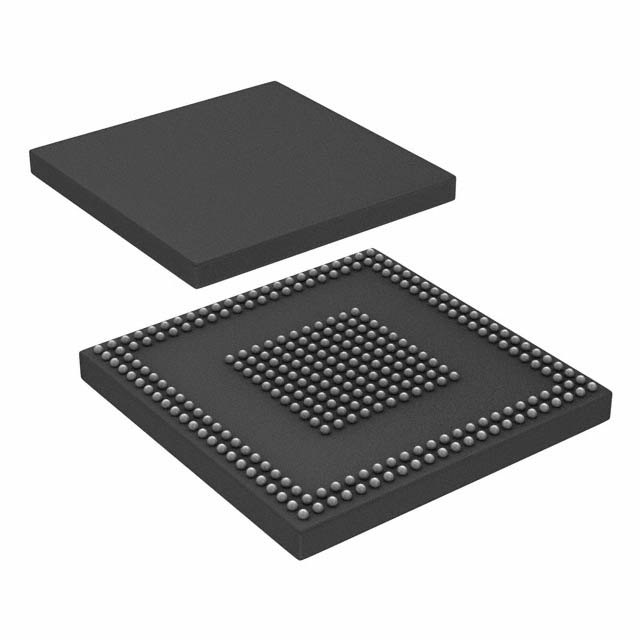
Analog Devices Inc. ADSP-BF522KBCZ-4C2
- Part No.:
- ADSP-BF522KBCZ-4C2
- Manufacturer:
- Analog Devices Inc.
- Category:
- DSP (Digital Signal Processors)
- Package:
- 289-LFBGA, CSPBGA
- Datasheet:
-
 ADSP-BF522KBCZ-4C2.pdf
- Description:
- IC DSP CTRLR 400MHZ 289CSBGA
- Quantity:
- Payment:

- Shipping:

Inventory:4,305
Please send an inquiry. Send us your inquiry, and we will respond immediately.
Product details
Overview
ADSP-BF522KBCZ-4C2 from Analog Devices is a Blackfin embedded processor with integrated stereo audio codec, operating at 400 MHz core frequency, featuring 24-bit stereo ADC/DAC (90 dB SNR ADC, 100 dB SNR DAC), and 132 KB on-chip memory in a 289-ball CSP_BGA package. It targets portable digital audio applications requiring low-power, high-fidelity analog front-end integration with programmable gain amplifiers and headphone drivers.
For engineers reviewing the ADSP-BF522KBCZ-4C2 datasheet, ADSP-BF522KBCZ-4C2 pinout, ADSP-BF522KBCZ-4C2 application, or ADSP-BF522KBCZ-4C2 equivalent, this page delivers verified specifications, validated codec interface timing, confirmed ball assignment for 289-ball CSP_BGA, and real-world audio system integration guidance - including USB/normal mode sampling rate mapping, I²S/PCM protocol support, and 1.8 V–3.6 V dual-domain supply operation.
Technical Context
The ADSP-BF522KBCZ-4C2 integrates a Blackfin core with a dedicated, self-contained audio codec subsystem featuring independent Σ-Δ ADC and DAC paths, programmable oversampling (256×fS/384×fS normal mode; 250×fS/272×fS USB mode), and configurable digital filters optimized per sampling rate (8–96 kHz). It supports master/slave digital audio interface modes with I²S, left/right-justified, and frame-sync protocols.
Its analog interface includes stereo line inputs (±34.5 dB adjustable gain), monaural microphone input with dual-stage programmable gain (0/20/40 dB), VMID-biased single-ended architecture, and efficient 16 Ω/32 Ω headphone drivers delivering 1.0 Vrms output. The codec operates from separate 1.8 V–3.6 V analog (AVDD) and digital (DVDD) supplies, enabling ultra-low power operation (7 mW stereo playback at 1.8 V).
Key Specifications
| Parameter | Value and Actual Design Meaning |
|---|---|
| Core Frequency | 400 MHz - fixed operational speed for deterministic real-time audio processing and control loop execution. |
| ADC Resolution & SNR | 24-bit, 90 dB (A-weighted) - enables high dynamic range capture of line/mic signals without clipping at 1.0 Vrms full-scale. |
| DAC Resolution & SNR | 24-bit, 100 dB (A-weighted) - supports studio-grade playback fidelity with minimal quantization noise. |
| Sampling Rates | 8–96 kHz (normal/USB modes) - covers voice, telephony, CD, DVD, and high-res audio use cases with precise MCLK-derived clocking. |
| Package | 289-ball CSP_BGA (12 mm × 12 mm) - compact footprint suitable for space-constrained portable designs with thermal performance validated for 1.8 V operation. |
| Power Consumption | 7 mW stereo playback (1.8 V) - enables battery-powered devices to achieve >20-hour runtime with efficient voltage scaling. |
| Digital Audio Interface | I²S, left/right-justified, frame-sync (PCM) - ensures interoperability with common audio SoCs, FPGAs, and DSPs without protocol translation logic. |
Pinout & Package
ADSP-BF522KBCZ-4C2 uses a 289-ball CSP_BGA package (12 mm × 12 mm, 0.5 mm pitch) with ball grid arranged in 17 × 17 array. The codec-specific pins are assigned to dedicated analog and digital audio functions, with internal pull-downs on CODEC_BCLK and DACLRC/ADCLRC for robust slave-mode startup.
| Pin/Terminal | Circuit Role | Design Meaning |
|---|---|---|
| CODEC_BCLK | Digital audio bit clock I/O | Bi-directional clock signal synchronized to CODEC_MCLK; internal pull-down ensures defined state during reset and prevents spurious data latching. |
| ADCLRC / DACLRC | ADC/DAC left-right frame sync I/O | Configurable as input or output; defines channel boundary timing for time-multiplexed stereo data streams in all supported protocols. |
| ADCDAT | ADC digital audio data output | Serial output carrying oversampled, filtered 24-bit stereo data from ADC path; requires synchronous CODEC_BCLK for valid sampling. |
| DACDAT | DAC digital audio data input | Serial input accepting 16–32-bit stereo data for playback; supports MSB-first format across all interface modes (I²S, left/right-justified, PCM). |
| CODEC_CLKOUT | Codec master clock output | Drives external circuitry with CODEC_MCLK or divided-by-2 version; enables system-level clock distribution without additional oscillators. |
| LLINEIN / RLINEIN | Stereo line input analog terminals | Single-ended, VMID-biased inputs supporting ±34.5 dB programmable PGA gain; direct bypass path to outputs avoids ADC/DAC conversion latency. |
| MICIN | Monaural microphone input | High-impedance, low-capacitance node with dual-stage gain (0/20/40 dB); supports external REXT for fine-tuned first-stage attenuation down to 0 dB. |
| LHPOUT / RHPOUT | Stereo headphone driver outputs | Capable of driving 16 Ω or 32 Ω loads at 1.0 Vrms; volume controlled independently per channel (0–63 steps) with mute via LHPVOL/RHPVOL register bits. |
Key Features
| Feature | Design Value |
|---|---|
| Integrated stereo audio codec | Eliminates need for discrete codec IC, reducing BOM count, PCB area, and interconnect complexity in portable audio systems. |
| Programmable oversampling rates | 256×fS/384×fS (normal) and 250×fS/272×fS (USB) enable precise clock derivation from standard crystals (12/24 MHz) while maintaining jitter tolerance <50 ps. |
| Dual-domain power supply | Independent 1.8 V–3.6 V analog (AVDD) and digital (DVDD) rails allow optimization of noise isolation and power efficiency without shared supply coupling. |
| Direct analog bypass & sidetone paths | Enables zero-latency monitoring (sidetone) and analog pass-through (bypass) without digital conversion, critical for voice communication and real-time feedback loops. |
| Software-configurable digital filters | ADC/DAC filters auto-adapt to selected sampling rate; high-pass filter removes DC offset, de-emphasis compensates for pre-emphasized sources. |
Applications
| Portable Media Players | Voice-Controlled IoT Devices |
|---|---|
Use Scenario: High-fidelity music playback and recording in handheld devices with limited board space and battery capacity. IC Role / Device Role / Timing Role: Single-chip audio subsystem handling ADC capture, DSP-based effects, DAC playback, and headphone drive - all synchronized to CODEC_MCLK. Use Value: 100 dB DAC SNR and 7 mW playback power enable CD-quality audio with >20-hour battery life using 1.8 V supply scaling. |
Use Scenario: Always-on voice wake-word detection and local speech processing in smart speakers and home assistants. IC Role / Device Role / Timing Role: Low-latency microphone input path with programmable PGA gain and sidetone feedback, feeding Blackfin core for real-time ASR preprocessing. Use Value: 90 dB ADC SNR and 0–40 dB mic gain range ensure reliable far-field voice capture even in noisy environments without external amplifiers. |
| USB Audio Class 1.0 Adapters | Industrial Voice Logging Terminals |
Use Scenario: Plug-and-play USB audio interface for PCs and laptops supporting 48 kHz/16-bit streaming with zero driver installation. IC Role / Device Role / Timing Role: USB mode operation with 12 MHz MCLK and 48 kHz DACLRC/ADCLRC generation; CODEC_BCLK = CODEC_MCLK for guaranteed synchronization. Use Value: Native USB audio compliance achieved via 250×fS oversampling and precise 48 kHz timing - no external PLL or clock generator required. |
Use Scenario: Ruggedized field recorders capturing maintenance technician voice notes in industrial settings with wide temperature and EMI variation. IC Role / Device Role / Timing Role: Robust analog front-end with VMID biasing, internal microphone bias (MICBIAS), and 1.8 V–3.6 V supply tolerance for operation across –40°C to +85°C. Use Value: 14 mW record+playback power and 132 KB on-chip memory enable continuous 8 kHz mono logging for >72 hours on a single Li-ion cell. |
Equivalent & Alternatives
The following parts are listed as comparable options for similar embedded audio processor applications.
| Alternative Part | Technical Difference | Application Difference | Selection Advice |
|---|---|---|---|
| ADSP-BF523KBCZ-4C2 | Includes on-chip programmable voltage regulator; same codec, core, and package. | Preferred when system lacks dedicated 1.0 V/1.2 V core regulator and requires single-supply simplification. | Select ADSP-BF523KBCZ-4C2 only if voltage regulation integration reduces bill-of-materials cost and layout complexity. |
| ADSP-BF527KBCZ-4C2 | Same codec and core, but adds EMAC peripheral and enhanced security features (Lockbox Secure Technology). | Suitable for network-connected audio endpoints requiring Ethernet transport or secure firmware updates. | Choose ADSP-BF527KBCZ-4C2 when Ethernet connectivity or cryptographic key storage is mandatory - not for standalone audio-only designs. |
Compared with ADSP-BF522KBCZ-4C2, the ADSP-BF523KBCZ-4C2 adds integrated voltage regulation for simplified power design, while the ADSP-BF527KBCZ-4C2 extends functionality with EMAC and Lockbox security - neither offers pin-to-pin compatibility nor identical feature set, making ADSP-BF522KBCZ-4C2 optimal for cost-sensitive, self-contained audio processing where those extras are unnecessary.
Availability
ADSP-BF522KBCZ-4C2 is available at Aetrix Electronics and suitable for portable media players, voice-controlled IoT devices, USB audio adapters, and industrial voice logging terminals requiring stable component supply, long-term lifecycle assurance, and traceable sourcing.
Supply support for ADSP-BF522KBCZ-4C2 includes scheduled delivery planning, volume procurement assistance, BOM continuity management, traceable sourcing, and lifecycle availability coordination for OEM customers, industrial embedded developers, connected-device designers, and electronics production programs.
Manufacturer
Analog Devices, Inc. is a global leader in high-performance analog, mixed-signal, and digital signal processing semiconductors, headquartered in Norwood, MA, with over 50 years of innovation in precision signal chain solutions.
The ADSP-BF52x family was designed specifically for embedded audio and multimedia applications demanding real-time processing, low power, and integrated analog front-ends - with the ADSP-BF522KBCZ-4C2 representing the base variant optimized for cost and power efficiency without voltage regulation or Ethernet.
FAQ
What is the maximum sampling rate supported by the ADSP-BF522KBCZ-4C2 codec?
The ADSP-BF522KBCZ-4C2 supports up to 96 kHz sampling rate in both normal and USB modes. In normal mode, this requires a 12.288 MHz or 18.432 MHz CODEC_MCLK with CLKDIV2 = 0; in USB mode, a 12.000 MHz MCLK suffices. The DAC and ADC paths operate synchronously at this rate, with oversampling ratios (256×fS or 250×fS) ensuring adequate noise shaping and filter roll-off.
Does the ADSP-BF522KBCZ-4C2 include an on-chip voltage regulator?
No, the ADSP-BF522KBCZ-4C2 does not include an on-chip voltage regulator. That feature is exclusive to the ADSP-BF523/ADSP-BF525/ADSP-BF527 variants per the official ADSP-BF52x documentation. The ADSP-BF522KBCZ-4C2 requires external 1.8 V–3.6 V supplies for AVDD, DVDD, and HPVDD domains, with strict sequencing and decoupling specified in the datasheet.
Can the ADSP-BF522KBCZ-4C2 operate in I²S master mode?
Yes, the ADSP-BF522KBCZ-4C2 codec can operate in I²S master mode. When configured as master, it drives CODEC_BCLK and DACLRC/ADCLRC from its internal clock generator, deriving them from CODEC_MCLK. The FORMAT bits (Register R7, D1:D0 = 01) select I²S mode, and the USB bit (Register R8, D0) and SR bits (D2:D5) determine the exact sampling rate and oversampling ratio.
What is the full-scale input voltage for the ADSP-BF522KBCZ-4C2 ADC?
The full-scale input voltage for the ADSP-BF522KBCZ-4C2 ADC is 1.0 Vrms when AVDD = 3.3 V. This applies to both line inputs (LLINEIN/RLINEIN) and microphone input (MICIN). Exceeding this level causes audible distortion due to ADC overloading; gain must be configured - via LINVOL/RINVOL or MICBOOST registers - to match expected signal amplitude and maximize SNR.
How is the microphone input biased on the ADSP-BF522KBCZ-4C2?
The ADSP-BF522KBCZ-4C2 provides internal MICBIAS, a VMID-referenced bias voltage generated by a resistor divider between AVDD and AGND. This eliminates the need for external bias circuitry. The MICIN pin is high-impedance and low-capacitance, supporting direct connection of electret microphones. Bias level is fixed and not software-adjustable.
ADSP-BF522KBCZ-4C2 Specifications
- Product attributes
- Attribute value
- Manufacturer:
- Analog Devices Inc.
- Series:
- Blackfin®
- Package/Case:
- 289-LFBGA, CSPBGA
- Packaging:
- Bulk
- Product Status:
- Active
- Type:
- Fixed Point
- Interface:
- DMA, I2C, PPI, SPI, SPORT, UART
- Clock Rate:
- 400MHz
- Non-Volatile Memory:
- ROM (32kB)
- On-Chip RAM:
- 132kB
- Voltage - I/O:
- 1.8V, 2.5V, 3.3V
- Voltage - Core:
- 1.30V
- Operating Temperature:
- 0°C ~ 70°C (TA)
- Grade:
- -
- Qualification:
- -
- Mounting Type:
- Surface Mount
- Supplier Device Package:
- 289-CSPBGA (12x12)
ADSP-BF522KBCZ-4C2 FAQ
1.How can I place an order for ADSP-BF522KBCZ-4C2 through Aetrix?
Please submit a Request for Quotation (RFQ) for ADSP-BF522KBCZ-4C2 on Aetrix. Our sales agent will provide a competitive quotation and guide you through the order confirmation once you accept the terms.
2.Are the price and stock information for ADSP-BF522KBCZ-4C2 reliable?
The price and inventory of ADSP-BF522KBCZ-4C2 are updated periodically and may fluctuate due to market conditions. Stock and pricing data are typically refreshed every 24 hours. Quotation validity for ADSP-BF522KBCZ-4C2 is usually 5 days.
3.What payment methods are accepted for ADSP-BF522KBCZ-4C2?
We accept Wire Transfer, PayPal, Credit Card, Western Union, MoneyGram, and Escrow for ADSP-BF522KBCZ-4C2 transactions.
Note: Certain payment methods may incur a processing fee.
4.How is shipping managed for ADSP-BF522KBCZ-4C2?
ADSP-BF522KBCZ-4C2 orders can be shipped via leading logistics carriers, including DHL, UPS, FedEx, TNT, or Registered Mail.
Once your ADSP-BF522KBCZ-4C2 order is processed, you will receive an email with the shipment details and tracking number.
Note: Tracking information may take up to 24 hours to appear. Express delivery typically takes 3–5 business days.
5.How can I obtain technical support or documentation for ADSP-BF522KBCZ-4C2?
For technical support, including ADSP-BF522KBCZ-4C2 datasheets, pinout diagrams, or application guidance, please contact our engineering support team. They can provide detailed documentation and assistance for your ADSP-BF522KBCZ-4C2 requirements.
6.How does Aetrix verify that ADSP-BF522KBCZ-4C2 is sourced from the original manufacturer or authorized distributors?
All ADSP-BF522KBCZ-4C2 products on Aetrix are procured from qualified distributors and authorized channels. Our dedicated quality assurance team conducts strict verification, including traceability checks and, if necessary, third-party testing. This ensures that ADSP-BF522KBCZ-4C2 meets industry standards.
7.What is the process for return or replacement of ADSP-BF522KBCZ-4C2?
All ADSP-BF522KBCZ-4C2 units undergo pre-shipment inspection (PSI). If there is an issue with ADSP-BF522KBCZ-4C2, returns or replacements are accepted under the following conditions:
1.Quantity discrepancies, incorrect items, or visible external defects (such as breakage or corrosion), acknowledged by Aetrix.
2.The issue is reported within 90 days of delivery.
3.The ADSP-BF522KBCZ-4C2 part is unused and in its original packaging.
Return procedure for ADSP-BF522KBCZ-4C2:
1.Submit a request within 90 days.
2.Obtain a Return Material Authorization (RMA) from Aetrix.
ADSP-BF522KBCZ-4C2 Tags
-
TMS320C5535AZAY10
Texas Instruments
-
TMS320VC5501PGF300
Texas Instruments
-
ADSP-BF592KCPZ
Analog Devices Inc.
-
ADAU1463WBCPZ150
Analog Devices Inc.
-
TMS320VC5402PGE100
Texas Instruments
-
ADAU1701JSTZ-RL
Analog Devices Inc.
-
ADAU1701JSTZ
Analog Devices Inc.
-
TMS320VC5502PGF300
Texas Instruments
-
ADAU1462WBCPZ300RL
Analog Devices Inc.
-
ADAU1452KCPZRL
Analog Devices Inc.
-
ADAU1452WBCPZ-RL
Analog Devices Inc.
-
TMS320C6747DZKB3
Texas Instruments
Tech Hub

A practical engineering guide to 3.3V and 5V logic compatibility, input thresholds, resistor dividers, translator ICs, MOSFET level shifting, I2C pull-ups, timing limits and power-sequencing risks.

The 74HC595 uses push-pull logic outputs, while the TPIC6B595 uses 50 V open-drain DMOS sinks for higher-power loads. This guide compares timing, current limits, 3.3 V interfacing, load wiring, thermal…

The 74HC595 converts serial data into eight stable parallel outputs. This guide covers pin functions, shift and storage timing, OE and MR behavior, drive-current limits, cascading, voltage compatibilit…

A technical comparison of level-sensitive latches and edge-triggered flip-flops, covering timing windows, setup and hold limits, master–slave operation, time borrowing, race-through, HDL inference and…

A D latch stores one bit while Enable controls when data can pass. This reference covers gate-level operation, truth tables, transparency, setup and hold timing, LE versus OE, common ICs and practical …

An SR latch stores one bit through cross-coupled feedback. This engineering reference covers NOR and NAND implementations, truth tables, forbidden-state recovery, gated operation, switch debouncing, fa…

Latch circuits retain one bit through feedback. This technical reference covers SR and D latches, truth tables, transparency, timing limits, latch-versus-flip-flop behavior, applications and common log…

An engineering guide to LED driver operation, constant-current and constant-voltage outputs, linear and switching topologies, dimming, IC selection, calculations, replacement compatibility, and fault c…

Operational amplifier guide covering op amp basics, feedback, ideal vs real op amps, common configurations, buffer circuits, offset, bias current, gain-bandwidth, slew rate, rail-to-rail limits and sel…

Jumper cables guide covering safe connection order, red and black clamp placement, final ground connection, cable gauge, length, clamp quality, copper vs CCA cables, jump starter comparison and battery…


