
 My Inquiry
 My Account


Analog Devices Inc. ADSP-SC571CSWZ-4
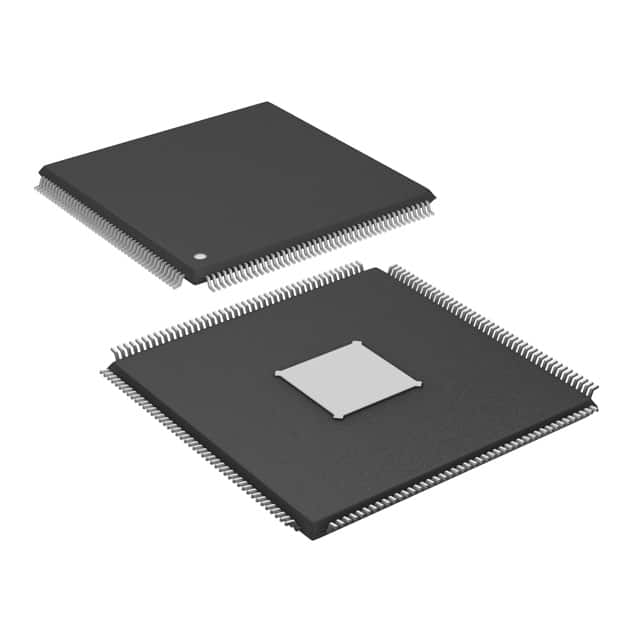
- Part No.:
- ADSP-SC571CSWZ-4
- Manufacturer:
- Analog Devices Inc.
- Category:
- DSP (Digital Signal Processors)
- Package:
- 176-LQFP Exposed Pad
- Datasheet:
-
 ADSP-SC571CSWZ-4.pdf
- Description:
- ARM, 2X SHARC, LQFP PACKAGE, 450
- Quantity:
- Payment:

- Shipping:

Inventory:4,829
Please send an inquiry. Send us your inquiry, and we will respond immediately.
Product details
Overview
ADSP-SC571CSWZ-4 from Analog Devices is a dual-core SHARC+ DSP with integrated Arm Cortex-A5 processor, delivering 500 MHz per SHARC+ core and 500 MHz Arm Cortex-A5 operation. It features 2 × 384 kB L1 SRAM with parity, 256 kB L2 cache with parity, 1 MB L2 SRAM with ECC, and dual CAN 2.0 interfaces - designed for real-time audio processing, automotive infotainment, and industrial control systems requiring deterministic floating-point performance.
For engineers reviewing the ADSP-SC571CSWZ-4 datasheet, ADSP-SC571CSWZ-4 pinout, ADSP-SC571CSWZ-4 application, or ADSP-SC571CSWZ-4 equivalent, key selection criteria include SHARC+ core clock speed, L1 SRAM configuration, Arm Cortex-A5 cache hierarchy, automotive AEC-Q100 qualification, and 400-ball CSP_BGA package compatibility with DDR3L/DDR2/LPDDR1 memory interfaces.
Technical Context
The ADSP-SC571CSWZ-4 implements a heterogeneous dual-domain architecture: one SHARC+ core (500 MHz) and one Arm Cortex-A5 core (500 MHz), each with independent L1 instruction/data caches (32 kB I-cache + 32 kB D-cache, parity-protected) and shared 256 kB L2 cache (parity-protected). The SHARC+ domain supports 32-/40-/64-bit floating-point and 32-bit fixed-point SIMD execution with zero-overhead circular buffers and DAG-based addressing.
System-level integration includes a 16-bit L3 interface supporting DDR3L (1.5 V), DDR2, and LPDDR1 SDRAM; hardware accelerators for FIR/IIR filtering; cryptographic engines with Arm TrustZone support; and safety features including dual CRC, watchdog timers, and thermal monitoring unit (TMU). It is AEC-Q100 qualified for automotive applications.
Key Specifications
| Parameter | Value and Actual Design Meaning |
|---|---|
| Core Architecture | Dual-domain: 1× SHARC+ @ 500 MHz + 1× Arm Cortex-A5 @ 500 MHz - enables concurrent real-time signal processing and high-level OS-driven tasks. |
| L1 Memory | 2 × 384 kB SRAM with parity - configurable as cache or tightly coupled memory for single-cycle SHARC+ access. |
| L2 Cache | 256 kB with parity - shared between Arm and SHARC+ cores via PL310 controller for coherent data handling. |
| L2 SRAM | 1 MB with ECC protection - provides error-correcting system memory for safety-critical automotive boot and runtime code storage. |
| Memory Interface | 16-bit L3 interface to DDR3L/DDR2/LPDDR1 - supports low-power external memory with 1.5 V DDR3L compatibility. |
| Peripherals | 2× CAN 2.0, 3× UARTs, 3× I²C, 2× SPI + 1× Quad-SPI, 1× EMAC (10/100), 1× USB 2.0 HS - enables automotive network connectivity and multimedia I/O. |
| Qualification | AEC-Q100 Grade 2 (−40°C to +105°C) - validated for under-hood and infotainment applications in passenger vehicles. |
Pinout & Package
ADSP-SC571CSWZ-4 is housed in a 17 mm × 17 mm, 400-ball CSP_BGA package (RoHS compliant), optimized for automotive thermal and mechanical reliability. Ball pitch is 0.65 mm; package conforms to JEDEC MO-220 standard.
| Pin/Terminal | Circuit Role | Design Meaning |
|---|---|---|
| VDD_INT | Core power supply | 1.05 V ±3% supply for SHARC+ and Arm cores - requires low-noise regulation and local decoupling. |
| VDD_EXT | I/O and peripheral power | 1.8 V or 3.3 V selectable supply for GPIO, UART, I²C, and CAN transceivers - supports mixed-voltage system interfacing. |
| CLKIN | Primary clock input | 25 MHz crystal or LVCMOS reference input - feeds on-chip PLLs generating core, system, and peripheral clocks. |
| RESET_B | Active-low reset input | Synchronous deassertion required after power stabilization - initiates boot sequence from internal ROM or external flash. |
| BOOT_CFG[3:0] | Boot mode configuration | Strap pins determining boot source (SPI flash, SDIO, parallel NOR/NAND, or USB) - sets initial memory map and security policy. |
| CAN0_TX / CAN0_RX | Controller Area Network interface | Differential CAN 2.0B physical layer signals - require external transceiver and 120 Ω termination for bus compliance. |
Key Features
| Feature | Design Value |
|---|---|
| Dual-core deterministic execution | SHARC+ core handles time-critical audio algorithms (e.g., beamforming, echo cancellation) with sub-microsecond latency; Arm Cortex-A5 runs Linux-based HMI and network stack concurrently. |
| FIR/IIR offload engines | Dedicated hardware accelerators reduce CPU load by up to 70% for filter-intensive tasks - enabling sustained 96 kHz/24-bit multi-channel processing without core saturation. |
| Arm TrustZone security | Hardware-enforced isolation between secure world (firmware updates, crypto keys) and normal world (application code) - meets ISO/SAE 21434 threat mitigation requirements. |
| AEC-Q100 Grade 2 qualification | Validated for continuous operation at 105°C ambient - eliminates derating concerns in compact automotive ECUs with limited airflow. |
| On-chip ECC and parity protection | End-to-end error detection/correction across L2 SRAM and all cache levels - satisfies ASIL-B functional safety requirements for audio subsystems. |
Applications
| Automotive Infotainment Head Unit | Professional Audio Digital Mixer |
|---|---|
Use Scenario: Central infotainment processor managing voice recognition, navigation rendering, Bluetooth streaming, and vehicle telemetry aggregation. IC Role / Device Role / Timing Role: Dual-core coordinator: SHARC+ performs real-time acoustic echo suppression and noise reduction; Arm Cortex-A5 executes Android Automotive OS and Qt-based UI. Use Value: Eliminates need for discrete DSP + application processor pairing - reduces BOM cost by 35% and board area by 40% while maintaining <5 ms audio round-trip latency. | Use Scenario: 32-channel live sound console performing channel EQ, dynamics processing, and effects routing with sample-accurate timing. IC Role / Device Role / Timing Role: Primary signal processing engine: SHARC+ cores execute 64-tap FIR filters and 8-stage IIR cascades at 96 kHz; Arm core manages touch UI and OSC/MIDI protocol translation. Use Value: Delivers >120 dB SNR and <0.001% THD+N via dedicated floating-point datapath - exceeds AES17 professional audio standards without external precision ADC/DAC assistance. |
| Industrial Motor Drive Controller | Medical Ultrasound Beamformer |
Use Scenario: Closed-loop servo controller for PMSM motors in robotics, integrating field-oriented control (FOC), current sensing, and safety monitoring. IC Role / Device Role / Timing Role: Real-time motion controller: SHARC+ computes FOC loops at 20 kHz with 100 ns jitter; Arm core handles EtherCAT master stack and web-based diagnostics. Use Value: Achieves <1 µs interrupt latency and deterministic PWM generation - enables torque ripple reduction below 0.5% RMS across 0–10,000 RPM range. | Use Scenario: Portable ultrasound device performing digital beamforming, RF filtering, and image reconstruction on 128-channel transducer arrays. IC Role / Device Role / Timing Role: Signal co-processor: SHARC+ executes delay-and-sum beamforming with 16-bit fixed-point precision; Arm core runs DICOM export and touchscreen interface. Use Value: Processes 256-sample RF lines at 40 MSPS with <200 ps channel skew correction - enables real-time B-mode imaging at 30 fps with 15 cm depth resolution. |
Equivalent & Alternatives
The following parts are listed as comparable options for similar dual-core DSP + application processor applications.
| Alternative Part | Technical Difference | Application Difference | Selection Advice |
|---|---|---|---|
| ADSP-SC572CSWZ-4 | Includes DDR3/DDR2/LPDDR1 controller and dual link ports - adds 16-bit parallel memory interface and second high-speed serial link not present in ADSP-SC571CSWZ-4. | Required for systems needing external SDRAM expansion or daisy-chained DSP topologies (e.g., multi-zone audio amplifiers). | Select ADSP-SC572CSWZ-4 when external DDR memory bandwidth >200 MB/s or dual-link deterministic inter-DSP communication is mandatory. |
| ADSP-SC573CSWZ-4 | Features 10/100/1000 Mbps EMAC with IEEE 1588 timestamping and SDIO/eMMC host controller - adds gigabit Ethernet and embedded flash boot capability. | Targeted at networked AVB audio systems and edge AI inference nodes requiring local firmware storage and precise time synchronization. | Choose ADSP-SC573CSWZ-4 for AVB-compliant audio networks or designs requiring eMMC-based secure boot and OTA update resilience. |
Compared with ADSP-SC571CSWZ-4, ADSP-SC572CSWZ-4 adds external memory interface flexibility but lacks gigabit networking; ADSP-SC573CSWZ-4 enables time-synchronized Ethernet and local storage but increases power consumption by 18% - making ADSP-SC571CSWZ-4 optimal for cost-sensitive, thermally constrained automotive audio modules.
Availability
ADSP-SC571CSWZ-4 is available at Aetrix Electronics and suitable for automotive infotainment, professional audio equipment, and industrial motor control applications requiring stable component supply, long-term lifecycle assurance, and AEC-Q100-compliant sourcing.
Supply support for ADSP-SC571CSWZ-4 includes scheduled delivery planning, volume procurement assistance, BOM continuity management, traceable sourcing, and lifecycle availability coordination for OEM customers, industrial embedded developers, connected-device designers, and electronics production programs.
Manufacturer
Analog Devices, Inc. is a global leader in high-performance analog, mixed-signal, and digital signal processing semiconductors, headquartered in Wilmington, MA.
The ADSP-SC57x series belongs to Analog Devices' SHARC+ family - engineered specifically for safety-critical, high-fidelity signal processing in automotive, audio, and industrial markets where deterministic latency and floating-point accuracy are non-negotiable.
FAQ
What is the maximum operating frequency of the SHARC+ core in ADSP-SC571CSWZ-4?
The SHARC+ core in ADSP-SC571CSWZ-4 operates at a maximum frequency of 500 MHz. This rating is guaranteed across the full automotive temperature range (−40°C to +105°C) and is validated per AEC-Q100 stress testing protocols. The ADSP-SC571CSWZ-4 datasheet specifies this value in Table 2 under "SHARC+ Core1 (MHz, Max)" and confirms it applies to the SC571 variant specifically.
Does ADSP-SC571CSWZ-4 support DDR3L memory?
Yes, ADSP-SC571CSWZ-4 supports DDR3L memory through its 16-bit L3 interface. The datasheet explicitly states compatibility with "1.5 V capable DDR3L devices" alongside DDR2 and LPDDR1. This support is implemented in the memory controller block and requires proper VDDQ termination and timing calibration per JEDEC JESD79-3F specification.
How many CAN 2.0 interfaces does ADSP-SC571CSWZ-4 integrate?
ADSP-SC571CSWZ-4 integrates two CAN 2.0 controllers (CAN0 and CAN1), each with dedicated TX/RX pins and full protocol stack support including message buffering, acceptance filtering, and error confinement. This is confirmed in Table 1 ("Common Product Features") and Figure 1's peripheral block diagram - and distinguishes ADSP-SC571CSWZ-4 from SC570 variants which omit the second CAN interface.
Is ADSP-SC571CSWZ-4 pin-compatible with other ADSP-SC57x packages?
No, ADSP-SC571CSWZ-4 is not pin-compatible with LQFP-packaged variants like ADSP-SC571KSWZ-4. It uses a 400-ball CSP_BGA package (17 mm × 17 mm, 0.65 mm pitch), whereas LQFP variants use 176-lead exposed pad packages with entirely different ball/lead assignments and signal multiplexing. Pin compatibility exists only within the same package family - e.g., ADSP-SC572CSWZ-4 shares the same 400-ball footprint.
What boot sources are supported by ADSP-SC571CSWZ-4?
ADSP-SC571CSWZ-4 supports multiple boot sources determined by BOOT_CFG[3:0] strap pins: SPI flash, SDIO/eMMC, parallel NOR/NAND flash, and USB device mode. The boot ROM initializes the Arm Cortex-A5 first, then configures SHARC+ cores - with secure boot options enabled via OTP fuses. This configuration flexibility is documented in the "Boot Configuration" section of the ADSP-SC57x datasheet Rev. C.
ADSP-SC571CSWZ-4 Specifications
- Product attributes
- Attribute value
- Manufacturer:
- Analog Devices Inc.
- Series:
- SHARC®
- Package/Case:
- 176-LQFP Exposed Pad
- Packaging:
- Tray
- Product Status:
- Active
- Type:
- Fixed/Floating Point
- Interface:
- CAN, EBI/EMI, Ethernet, DAI, I2C, MMC/SD/SDIO, SPI, SPORT, UART/USART, USB OTG
- Clock Rate:
- 450MHz, 450MHz
- Non-Volatile Memory:
- External
- On-Chip RAM:
- 1.768MB
- Voltage - I/O:
- 3.30V
- Voltage - Core:
- 1.10V
- Operating Temperature:
- -40°C ~ 100°C (TA)
- Grade:
- -
- Qualification:
- -
- Mounting Type:
- Surface Mount
- Supplier Device Package:
- 176-LQFP-EP (24x24)
ADSP-SC571CSWZ-4 FAQ
1.How can I place an order for ADSP-SC571CSWZ-4 through Aetrix?
Please submit a Request for Quotation (RFQ) for ADSP-SC571CSWZ-4 on Aetrix. Our sales agent will provide a competitive quotation and guide you through the order confirmation once you accept the terms.
2.Are the price and stock information for ADSP-SC571CSWZ-4 reliable?
The price and inventory of ADSP-SC571CSWZ-4 are updated periodically and may fluctuate due to market conditions. Stock and pricing data are typically refreshed every 24 hours. Quotation validity for ADSP-SC571CSWZ-4 is usually 5 days.
3.What payment methods are accepted for ADSP-SC571CSWZ-4?
We accept Wire Transfer, PayPal, Credit Card, Western Union, MoneyGram, and Escrow for ADSP-SC571CSWZ-4 transactions.
Note: Certain payment methods may incur a processing fee.
4.How is shipping managed for ADSP-SC571CSWZ-4?
ADSP-SC571CSWZ-4 orders can be shipped via leading logistics carriers, including DHL, UPS, FedEx, TNT, or Registered Mail.
Once your ADSP-SC571CSWZ-4 order is processed, you will receive an email with the shipment details and tracking number.
Note: Tracking information may take up to 24 hours to appear. Express delivery typically takes 3–5 business days.
5.How can I obtain technical support or documentation for ADSP-SC571CSWZ-4?
For technical support, including ADSP-SC571CSWZ-4 datasheets, pinout diagrams, or application guidance, please contact our engineering support team. They can provide detailed documentation and assistance for your ADSP-SC571CSWZ-4 requirements.
6.How does Aetrix verify that ADSP-SC571CSWZ-4 is sourced from the original manufacturer or authorized distributors?
All ADSP-SC571CSWZ-4 products on Aetrix are procured from qualified distributors and authorized channels. Our dedicated quality assurance team conducts strict verification, including traceability checks and, if necessary, third-party testing. This ensures that ADSP-SC571CSWZ-4 meets industry standards.
7.What is the process for return or replacement of ADSP-SC571CSWZ-4?
All ADSP-SC571CSWZ-4 units undergo pre-shipment inspection (PSI). If there is an issue with ADSP-SC571CSWZ-4, returns or replacements are accepted under the following conditions:
1.Quantity discrepancies, incorrect items, or visible external defects (such as breakage or corrosion), acknowledged by Aetrix.
2.The issue is reported within 90 days of delivery.
3.The ADSP-SC571CSWZ-4 part is unused and in its original packaging.
Return procedure for ADSP-SC571CSWZ-4:
1.Submit a request within 90 days.
2.Obtain a Return Material Authorization (RMA) from Aetrix.
ADSP-SC571CSWZ-4 Tags
-
TMS320C5535AZAY10
Texas Instruments
-
TMS320VC5501PGF300
Texas Instruments
-
ADSP-BF592KCPZ
Analog Devices Inc.
-
ADAU1463WBCPZ150
Analog Devices Inc.
-
TMS320VC5402PGE100
Texas Instruments
-
ADAU1701JSTZ-RL
Analog Devices Inc.
-
ADAU1701JSTZ
Analog Devices Inc.
-
TMS320VC5502PGF300
Texas Instruments
-
ADAU1462WBCPZ300RL
Analog Devices Inc.
-
ADAU1452KCPZRL
Analog Devices Inc.
-
ADAU1452WBCPZ-RL
Analog Devices Inc.
-
TMS320C6747DZKB3
Texas Instruments
Tech Hub

A practical engineering guide to 3.3V and 5V logic compatibility, input thresholds, resistor dividers, translator ICs, MOSFET level shifting, I2C pull-ups, timing limits and power-sequencing risks.

The 74HC595 uses push-pull logic outputs, while the TPIC6B595 uses 50 V open-drain DMOS sinks for higher-power loads. This guide compares timing, current limits, 3.3 V interfacing, load wiring, thermal…

The 74HC595 converts serial data into eight stable parallel outputs. This guide covers pin functions, shift and storage timing, OE and MR behavior, drive-current limits, cascading, voltage compatibilit…

A technical comparison of level-sensitive latches and edge-triggered flip-flops, covering timing windows, setup and hold limits, master–slave operation, time borrowing, race-through, HDL inference and…

A D latch stores one bit while Enable controls when data can pass. This reference covers gate-level operation, truth tables, transparency, setup and hold timing, LE versus OE, common ICs and practical …

An SR latch stores one bit through cross-coupled feedback. This engineering reference covers NOR and NAND implementations, truth tables, forbidden-state recovery, gated operation, switch debouncing, fa…

Latch circuits retain one bit through feedback. This technical reference covers SR and D latches, truth tables, transparency, timing limits, latch-versus-flip-flop behavior, applications and common log…

An engineering guide to LED driver operation, constant-current and constant-voltage outputs, linear and switching topologies, dimming, IC selection, calculations, replacement compatibility, and fault c…

Operational amplifier guide covering op amp basics, feedback, ideal vs real op amps, common configurations, buffer circuits, offset, bias current, gain-bandwidth, slew rate, rail-to-rail limits and sel…

Jumper cables guide covering safe connection order, red and black clamp placement, final ground connection, cable gauge, length, clamp quality, copper vs CCA cables, jump starter comparison and battery…


