
 My Inquiry
 My Account


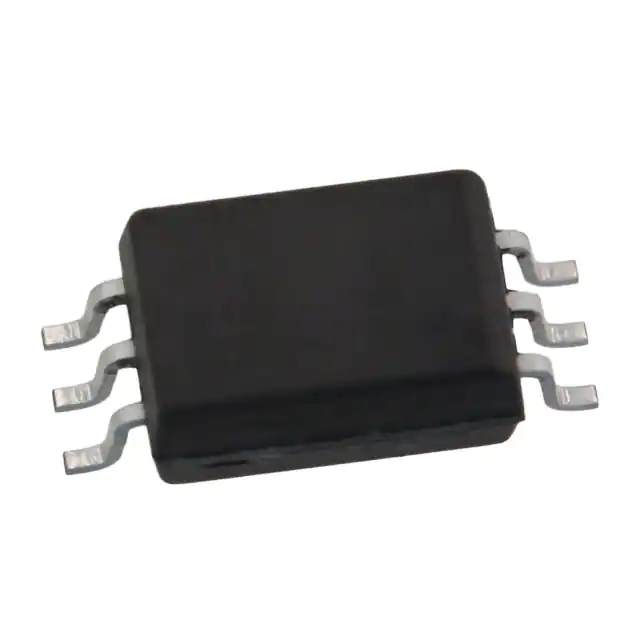
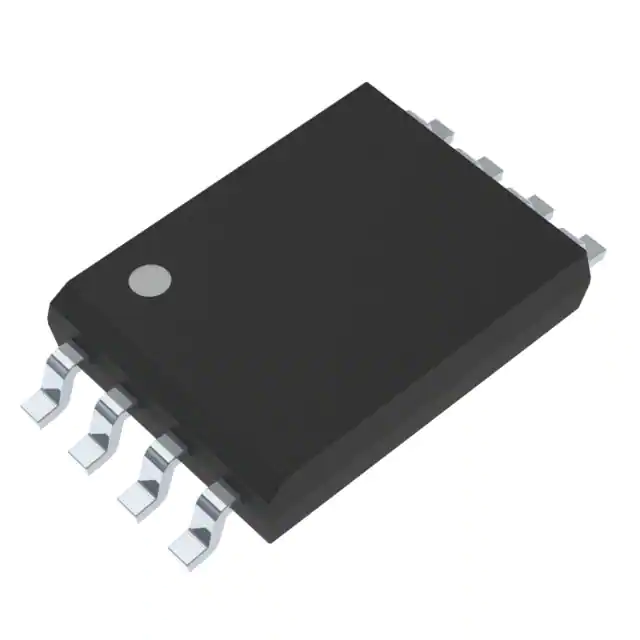
Analog Devices Inc. ADUM4120-1BRIZ
- Part No.:
- ADUM4120-1BRIZ
- Manufacturer:
- Analog Devices Inc.
- Category:
- Isolators - Gate Drivers
- Package:
- 6-SOIC (0.295", 7.50mm Width)
- Datasheet:
-
 ADUM4120-1BRIZ.pdf
- Description:
- DGTL ISO 5KV 1CH GATE DRVR 6SOIC
- Quantity:
- Payment:

- Shipping:

Inventory:104
Please send an inquiry. Send us your inquiry, and we will respond immediately.
Product details
Overview
ADUM4120-1BRIZ from Analog Devices is a single-channel, isolated gate driver IC with 2.3 A peak output current, 7.3 V VDD2 UVLO threshold (Grade B), and 42 ns maximum rising-edge propagation delay. It delivers galvanic isolation between low-voltage control logic (2.5–6.5 V) and high-side power stages (4.5–35 V), enabling robust IGBT/MOSFET switching in industrial inverters and GaN/SiC-based power supplies.
For engineers reviewing the ADUM4120-1BRIZ datasheet, ADUM4120-1BRIZ pinout, ADUM4120-1BRIZ application, or ADUM4120-1BRIZ equivalent, this device is selected for high-CMTI (>150 kV/μs), precise timing-critical gate drive where input glitch filtering is disabled and secondary-side undervoltage lockout must trigger at 7.3 V (typical positive-going).
Technical Context
The ADUM4120-1BRIZ uses iCoupler® chip-scale transformer isolation with OOK encoding to transmit CMOS-level logic across a reinforced insulation barrier. Its architecture integrates isolated power domain management, thermal shutdown (155°C), and dual UVLO-fixed 2.5 V on VDD1 and selectable Grade B (7.3 V) on VDD2-to ensure fail-safe operation during brownout conditions.
Unlike optocoupler-based drivers, it eliminates LED aging and current transfer ratio drift, while delivering sub-50 ns propagation delay matching and <17 ns pulse width distortion under 2 nF load. The default-low output state and internal NMOS/PMOS gate resistances (0.6–1.8 Ω) support direct connection to enhancement-mode power devices without external pull-downs.
Key Specifications
| Parameter | Value and Actual Design Meaning |
|---|---|
| VDD1 Range | 2.5 V to 6.5 V - supports 3.3 V and 5 V logic families without level shifters |
| VDD2 Range | 4.5 V to 35 V - powers gate of IGBTs, SiC, and GaN FETs directly |
| VDD2 UVLO Threshold | 7.3 V (typical positive-going) - Grade B option prevents false turn-on during startup transients |
| Propagation Delay (Rising) | 22–42 ns - enables >10 MHz switching in hard-switched topologies |
| Peak Output Current | 2.3 A - drives gates with ≤4 Ω total resistance at 12 V supply |
| CMTI | 150 kV/μs - maintains signal integrity in noisy motor drive and PFC environments |
| Isolation Rating | 5 kV rms (1 min), VIORM = 849 V peak - certified for reinforced insulation per VDE V 0884-10 |
| Package | 6-lead wide-body SOIC - 8 mm creepage meets IEC 60601-1 (2 MOPP) and IEC 61010-1 requirements |
Pinout & Package
ADUM4120-1BRIZ is housed in a wide-body 6-lead SOIC package (SOIC_WB) with 8 mm minimum creepage and clearance, optimized for reinforced isolation in high-voltage systems.
| Pin/Terminal | Circuit Role | Design Meaning |
|---|---|---|
| 1 - VDD1 | Input-side supply | Provides power to isolator logic and input buffer; UVLO triggers at 2.5 V falling edge |
| 2 - VIN | CMOS logic input | Accepts 0.7×VDD1 high / 0.3×VDD1 low thresholds; no glitch filter enabled (per -1 suffix) |
| 3 - GND1 | Input-side reference | Return path for VDD1 and VIN; forms primary side of isolation barrier |
| 4 - GND2 | Output-side reference | Return path for VDD2 and VOUT; electrically isolated from GND1 by polyimide barrier |
| 5 - VOUT | Gate drive output | Sinks/sourcing 2.3 A peak; default-low behavior ensures safe-off state during fault or power loss |
| 6 - VDD2 | Output-side supply | Powers high-side driver stage; Grade B UVLO (7.3 V) disables output until stable rail is established |
Key Features
| Feature | Design Value |
|---|---|
| Glitch filter disabled | Enables fastest possible response to input edges; suitable for high-frequency PWM with minimal latency |
| Grade B VDD2 UVLO | 7.3 V rising-edge threshold prevents premature gate turn-on during slow-ramp DC bus startup |
| High CMTI (150 kV/μs) | Rejects fast dV/dt noise from adjacent power switches, eliminating false triggering in half-bridge layouts |
| Default-low output | Guarantees MOSFET/IGBT remains off during power-up, brownout, or isolator failure - critical for safety compliance |
| iCoupler® transformer isolation | Eliminates LED degradation and CTR variation; supports 125°C junction temperature and >50-year insulation lifetime |
| Thermal shutdown (155°C) | Clamps output low before silicon damage occurs; 30°C hysteresis enables automatic recovery after cooling |
Applications
| Industrial Motor Drives | Switch-Mode Power Supplies |
|---|---|
|
Use Scenario: Driving high-side IGBTs in three-phase VFD inverters operating at 10–20 kHz with 600 V DC bus. IC Role / Device Role / Timing Role: Isolated gate driver providing timing-controlled, noise-immune turn-on/turn-off signals across floating high-side rails. Use Value: 150 kV/μs CMTI prevents shoot-through during commutation; 42 ns max tDLH enables tight dead-time control. |
Use Scenario: Controlling SiC MOSFETs in 1–3 kW telecom rectifiers with 400 V input and 12 V/100 A output. IC Role / Device Role / Timing Role: High-speed isolated driver interfacing MCU PWM outputs to 35 V gate supply for fast-switching power devices. Use Value: 2.3 A peak current reduces gate charge time; Grade B UVLO avoids partial turn-on during soft-start ramp. |
| Gallium Nitride (GaN) Power Converters | Renewable Energy Inverters |
|
Use Scenario: Gate driving enhancement-mode GaN HEMTs in 100–500 kHz LLC resonant converters with 65 V bus. IC Role / Device Role / Timing Role: Low-propagation-delay isolator ensuring precise edge alignment between complementary half-bridge switches. Use Value: 22 ns min tDLH and <17 ns pulse width distortion preserve ZVS/ZCS timing margins critical for GaN efficiency. |
Use Scenario: Controlling 1200 V IGBTs in solar string inverters exposed to outdoor temperature cycling (−40°C to +85°C ambient). IC Role / Device Role / Timing Role: Robust isolated driver maintaining gate control integrity under high dv/dt, humidity, and thermal stress. Use Value: 125°C max junction rating and VDE-certified 5 kV rms isolation meet IEC 62109 and UL 1741 safety requirements. |
Equivalent & Alternatives
The following parts are listed as comparable options for similar isolated gate driver applications.
| Alternative Part | Technical Difference | Application Difference | Selection Advice |
|---|---|---|---|
| ADUM4120-1ARIZ | VDD2 UVLO set to 4.4 V (Grade A); otherwise identical pinout, timing, and isolation specs | Better suited for 5–12 V gate drive rails where lower UVLO prevents unnecessary disable during nominal operation | Select when system VDD2 rail is stable near 5–10 V and early turn-on risk is low |
| ADUM4120-1CRIZ | VDD2 UVLO set to 11.3 V (Grade C); same package, propagation delay, and output drive capability | Required for 15–35 V gate supplies where higher UVLO avoids false lockout during transient dips | Select for SiC/GaN drivers with 15–24 V gate bias where 11.3 V UVLO provides margin against ripple-induced dropout |
Compared with ADUM4120-1ARIZ and ADUM4120-1CRIZ, the ADUM4120-1BRIZ offers intermediate VDD2 UVLO (7.3 V) ideal for 12–15 V gate drive systems-balancing immunity to supply sag while avoiding premature enable in mid-range rails.
Availability
ADUM4120-1BRIZ is available at Aetrix Electronics and suitable for industrial motor drives, switch-mode power supplies, GaN power converters, and renewable energy inverters requiring stable component supply with full traceability and long-term lifecycle support.
Supply support for ADUM4120-1BRIZ includes scheduled delivery planning, volume procurement assistance, BOM continuity management, traceable sourcing, and lifecycle availability coordination for OEM customers, industrial embedded developers, connected-device designers, and electronics production programs.
Manufacturer
Analog Devices, Inc. is a global leader in high-performance analog, mixed-signal, and digital signal processing semiconductors, headquartered in Norwood, MA.
The ADUM4120/ADUM4120-1 product line was designed specifically for isolated gate driving in high-reliability power conversion systems-emphasizing precision timing, reinforced safety certification, and immunity to harsh electrical environments.
FAQ
What is the key functional difference between ADUM4120-1BRIZ and ADUM4120BRIZ?
The ADUM4120-1BRIZ has the input glitch filter disabled, resulting in lower propagation delay (22–42 ns rising edge) compared to the ADUM4120BRIZ (44–68 ns). Both share identical Grade B VDD2 UVLO (7.3 V), 2.3 A output, and 6-lead SOIC packaging. The -1 suffix denotes absence of the internal input noise filter, making ADUM4120-1BRIZ optimal for ultra-fast switching applications where minimal latency is critical.
Does ADUM4120-1BRIZ support both high-side and low-side gate driving configurations?
Yes, ADUM4120-1BRIZ is a single-channel, unidirectional isolated gate driver capable of driving either high-side or low-side N-channel MOSFETs, IGBTs, or GaN FETs. Its VOUT pin sources and sinks 2.3 A peak current, and its isolated GND2 reference allows direct connection to floating source/emitter nodes in half-bridge or three-phase inverter topologies without additional level-shifting circuitry.
What safety certifications apply to ADUM4120-1BRIZ?
ADUM4120-1BRIZ carries pending UL 1577 recognition (5 kV rms, 1 min), CSA Component Acceptance Notice 5A, and VDE V 0884-10 certification (VIORM = 849 V peak, reinforced insulation). It meets IEC 60601-1 (2 MOPP), IEC 61010-1, and GB4943.1-2011 requirements. Final certificates are issued upon completion of qualification testing, and design-in may proceed using pending status per Analog Devices' compliance documentation.
How does the Grade B UVLO setting impact system startup behavior in ADUM4120-1BRIZ?
In ADUM4120-1BRIZ, the Grade B UVLO sets the VDD2 rising-edge threshold to 7.3 V (typical), meaning the output remains disabled until the high-side supply reaches ≥7.3 V. This prevents partial gate turn-on during slow-ramping DC bus voltages-common in soft-start PFC stages-and ensures full gate drive strength is available before switching begins, reducing conduction losses and thermal stress on power devices.
Can ADUM4120-1BRIZ drive SiC MOSFETs directly without external components?
Yes, ADUM4120-1BRIZ can directly drive most discrete SiC MOSFETs with gate thresholds ≤4 V and Qg ≤50 nC using its 2.3 A peak output and 0.6–1.8 Ω internal RDSON. For optimal ringing suppression, a 5 Ω external series gate resistor is recommended with typical 2–5 nF gate capacitance loads. No level shifter, bootstrap diode, or auxiliary supply is required due to its integrated isolated VDD2 domain.
ADUM4120-1BRIZ Specifications
- Product attributes
- Attribute value
- Manufacturer:
- Analog Devices Inc.
- Series:
- iCoupler®
- Package/Case:
- 6-SOIC (0.295", 7.50mm Width)
- Packaging:
- Tube
- Product Status:
- Active
- Technology:
- Magnetic Coupling
- Number of Channels:
- 1
- Voltage - Isolation:
- 5000Vrms
- Common Mode Transient Immunity (Min):
- 150kV/µs
- Propagation Delay tpLH / tpHL (Max):
- 42ns, 58ns
- Pulse Width Distortion (Max):
- 16.5ns
- Rise / Fall Time (Typ):
- 18ns, 18ns
- Current - Output High, Low:
- -
- Current - Peak Output:
- 2.3A
- Voltage - Forward (Vf) (Typ):
- -
- Current - DC Forward (If) (Max):
- -
- Voltage - Output Supply:
- 7.5V ~ 35V
- Grade:
- -
- Qualification:
- -
- Operating Temperature:
- -40°C ~ 125°C
- Mounting Type:
- Surface Mount
- Supplier Device Package:
- 6-SOIC-IC
- Approval Agency:
- CSA, UR, VDE
ADUM4120-1BRIZ FAQ
1.How can I place an order for ADUM4120-1BRIZ through Aetrix?
Please submit a Request for Quotation (RFQ) for ADUM4120-1BRIZ on Aetrix. Our sales agent will provide a competitive quotation and guide you through the order confirmation once you accept the terms.
2.Are the price and stock information for ADUM4120-1BRIZ reliable?
The price and inventory of ADUM4120-1BRIZ are updated periodically and may fluctuate due to market conditions. Stock and pricing data are typically refreshed every 24 hours. Quotation validity for ADUM4120-1BRIZ is usually 5 days.
3.What payment methods are accepted for ADUM4120-1BRIZ?
We accept Wire Transfer, PayPal, Credit Card, Western Union, MoneyGram, and Escrow for ADUM4120-1BRIZ transactions.
Note: Certain payment methods may incur a processing fee.
4.How is shipping managed for ADUM4120-1BRIZ?
ADUM4120-1BRIZ orders can be shipped via leading logistics carriers, including DHL, UPS, FedEx, TNT, or Registered Mail.
Once your ADUM4120-1BRIZ order is processed, you will receive an email with the shipment details and tracking number.
Note: Tracking information may take up to 24 hours to appear. Express delivery typically takes 3–5 business days.
5.How can I obtain technical support or documentation for ADUM4120-1BRIZ?
For technical support, including ADUM4120-1BRIZ datasheets, pinout diagrams, or application guidance, please contact our engineering support team. They can provide detailed documentation and assistance for your ADUM4120-1BRIZ requirements.
6.How does Aetrix verify that ADUM4120-1BRIZ is sourced from the original manufacturer or authorized distributors?
All ADUM4120-1BRIZ products on Aetrix are procured from qualified distributors and authorized channels. Our dedicated quality assurance team conducts strict verification, including traceability checks and, if necessary, third-party testing. This ensures that ADUM4120-1BRIZ meets industry standards.
7.What is the process for return or replacement of ADUM4120-1BRIZ?
All ADUM4120-1BRIZ units undergo pre-shipment inspection (PSI). If there is an issue with ADUM4120-1BRIZ, returns or replacements are accepted under the following conditions:
1.Quantity discrepancies, incorrect items, or visible external defects (such as breakage or corrosion), acknowledged by Aetrix.
2.The issue is reported within 90 days of delivery.
3.The ADUM4120-1BRIZ part is unused and in its original packaging.
Return procedure for ADUM4120-1BRIZ:
1.Submit a request within 90 days.
2.Obtain a Return Material Authorization (RMA) from Aetrix.
ADUM4120-1BRIZ Tags
.JPG)
-
TLP152(TPL,E
Toshiba Semiconductor and Storage

-
HT0740LG-G
Microchip Technology
-
FOD8314TR2
onsemi
-
1EDI60N12AFXUMA1
Infineon Technologies
-
1EDB7275FXUMA1
Infineon Technologies
-
UCC5350MCDR
Texas Instruments

-
2EDB7259KXUMA1
Infineon Technologies

-
UCC5304DWVR
Texas Instruments
-
SI8261BBC-C-ISR
Skyworks Solutions Inc.
-
HT0440LG-G
Microchip Technology
-
HCPL-0302-500E
Broadcom Limited
-
STGAP2HSCMTR
STMicroelectronics
Tech Hub

A practical engineering guide to 3.3V and 5V logic compatibility, input thresholds, resistor dividers, translator ICs, MOSFET level shifting, I2C pull-ups, timing limits and power-sequencing risks.

The 74HC595 uses push-pull logic outputs, while the TPIC6B595 uses 50 V open-drain DMOS sinks for higher-power loads. This guide compares timing, current limits, 3.3 V interfacing, load wiring, thermal…

The 74HC595 converts serial data into eight stable parallel outputs. This guide covers pin functions, shift and storage timing, OE and MR behavior, drive-current limits, cascading, voltage compatibilit…

A technical comparison of level-sensitive latches and edge-triggered flip-flops, covering timing windows, setup and hold limits, master–slave operation, time borrowing, race-through, HDL inference and…

A D latch stores one bit while Enable controls when data can pass. This reference covers gate-level operation, truth tables, transparency, setup and hold timing, LE versus OE, common ICs and practical …

An SR latch stores one bit through cross-coupled feedback. This engineering reference covers NOR and NAND implementations, truth tables, forbidden-state recovery, gated operation, switch debouncing, fa…

Latch circuits retain one bit through feedback. This technical reference covers SR and D latches, truth tables, transparency, timing limits, latch-versus-flip-flop behavior, applications and common log…

An engineering guide to LED driver operation, constant-current and constant-voltage outputs, linear and switching topologies, dimming, IC selection, calculations, replacement compatibility, and fault c…

Operational amplifier guide covering op amp basics, feedback, ideal vs real op amps, common configurations, buffer circuits, offset, bias current, gain-bandwidth, slew rate, rail-to-rail limits and sel…

Jumper cables guide covering safe connection order, red and black clamp placement, final ground connection, cable gauge, length, clamp quality, copper vs CCA cables, jump starter comparison and battery…


